
In the modern landscape of industrial technology, the term “die” refers to a specialized, high-precision machine tool used to cut, shape, or form materials—typically metal—into a specific profile. While the average consumer may never see a die, these instruments are the invisible architects of the physical world. From the sleek aluminum casing of a smartphone to the intricate structural components of an electric vehicle, dies are the foundational technology that enables mass production at a scale and precision previously unimaginable.
As manufacturing transitions into the era of Industry 4.0, the “die” has evolved from a simple mechanical block into a sophisticated piece of tech-driven hardware, often integrated with sensors, designed via advanced software, and maintained through predictive algorithms. Understanding what a die is requires an exploration of the intersection between materials science, digital design, and mechanical engineering.

The Engineering and Mechanics of Industrial Dies
At its most fundamental level, a die is a customized template. However, unlike a simple stencil, a die must withstand immense pressure, often reaching hundreds of tons, while maintaining tolerances measured in microns. To understand the tech behind a die, one must first understand its anatomy and the materials science that permits its function.
How Dies Function as Precision Templates
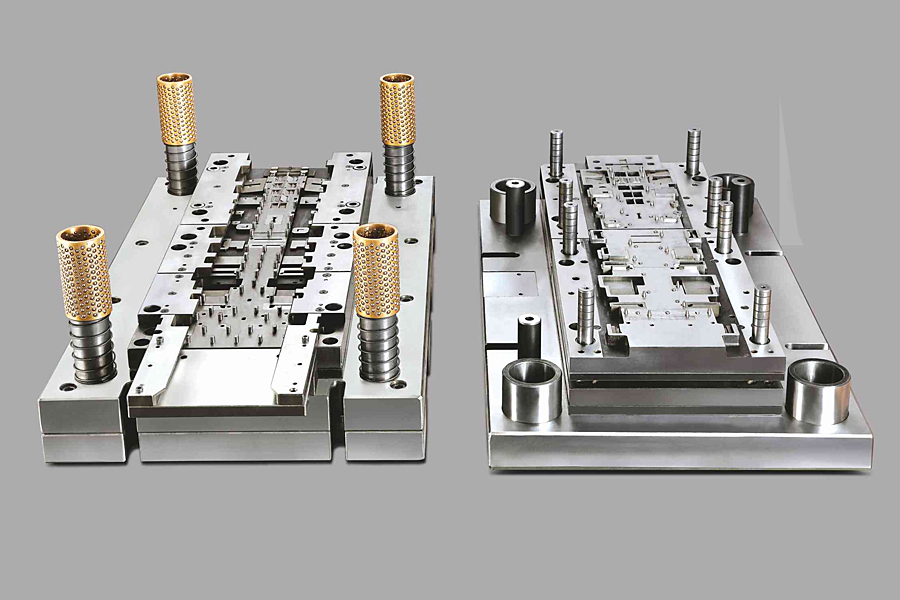
A die typically operates in pairs within a press. The “male” part (the punch) and the “female” part (the die block) work in tandem. When the press closes, the material—often a sheet of metal—is placed between them. The punch forces the material into the cavity of the die block. The resulting shape is a perfect replica of the die’s internal geometry. This process is the cornerstone of repeatability in technology; it ensures that the millionth part produced is identical to the first.
Materials Science: From Hardened Steel to Tungsten Carbide
The technology of die-making is heavily reliant on metallurgy. Because dies are subjected to extreme friction and heat, they cannot be made of ordinary steel. High-tech “tool steels” are utilized, often alloyed with vanadium, tungsten, or molybdenum to increase hardness and thermal stability. In high-volume production environments, manufacturers utilize tungsten carbide or ceramic inserts. These materials are chosen for their “red hardness”—the ability to maintain a sharp cutting edge even when the tool is glowing hot from the friction of a high-speed production line.
The CAD/CAM Revolution in Die Design
The creation of a die no longer begins on a drafting table but in a digital environment. Computer-Aided Design (CAD) software allows engineers to create complex 3D models of the die. These models are then subjected to Finite Element Analysis (FEA), a simulation tech that predicts how the metal will flow and where the die might fail under stress. Once the design is perfected, Computer-Aided Manufacturing (CAM) software translates the digital model into code for CNC (Computer Numerical Control) machines, which carve the die out of solid blocks of steel with surgical precision.
Core Categorization: Types of Dies in Modern Tech
Not all dies are created equal. Depending on the technological requirement of the end product—whether it be a micro-component for a laptop or a heavy-duty frame for a server rack—different types of dies are employed.
Cutting Dies: Precision and Shearing
Cutting dies are designed to “blank” or “pierce” material. In the tech industry, these are used to create the base shapes of circuit boards or the intricate mesh of a laptop’s cooling vent. A cutting die must have an incredibly sharp edge and a precise “clearance” between the punch and the die. If the clearance is off by a fraction of a millimeter, the metal will burr or warp, ruining the structural integrity of the component.
Forming Dies: Shaping through Compression
Forming dies do not cut the material; instead, they bend or “draw” it into a three-dimensional shape. This is the technology used to create the seamless unibody chassis of premium gadgets. Through a process called “deep drawing,” a flat sheet of metal is stretched into a cup or box shape. The tech challenge here is managing “springback”—the tendency of metal to return to its original shape. Advanced simulation software is used to over-bend the material in the die design to account for this physical phenomenon.
Progressive Dies: The Peak of Automation
Progressive dies represent the pinnacle of mechanical automation. In a progressive die setup, a strip of metal is fed through a series of stations within a single die set. At each station, a different operation is performed: one station might pierce a hole, the next might bend an edge, and the final station cuts the finished part from the strip. This is high-speed tech at its finest, capable of producing hundreds of finished components per minute with minimal human intervention.
The Intersection of Hardware and Software: Digital Manufacturing
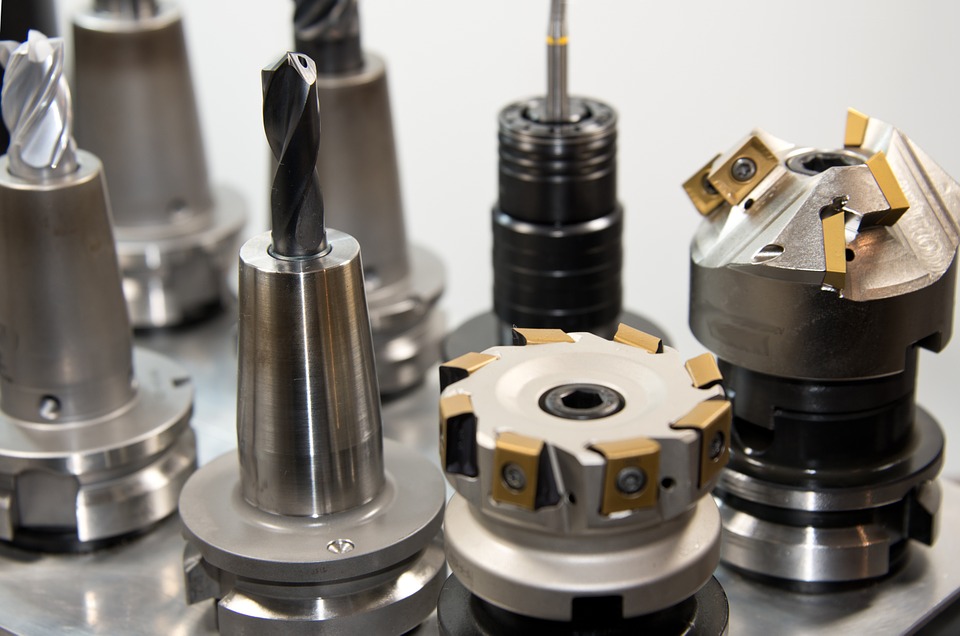
As we move deeper into the 21st century, the boundary between mechanical die-making and digital technology is blurring. The manufacturing floor is no longer just about gears and grease; it is about data and connectivity.
CNC Machining and Die Fabrication
The fabrication of the die itself is a masterclass in modern machining tech. Electrical Discharge Machining (EDM) is often used to create the most intricate die shapes. Instead of a physical blade, EDM uses a thin wire and electrical sparks to “burn” through the tool steel. This allows for the creation of sharp internal corners and complex geometries that would be impossible to achieve with traditional milling bits.
The Role of AI in Predictive Die Maintenance
A significant trend in manufacturing tech is the integration of AI into the lifecycle of a die. Sensors embedded within the die can monitor temperature, vibration, and pressure in real-time. This data is fed into AI-driven software that can predict when a die is about to wear out or crack. By identifying these issues before they happen, manufacturers can perform “predictive maintenance,” reducing downtime and preventing the production of defective hardware.
Additive Manufacturing (3D Printing) vs. Traditional Dies
There is a growing technological debate regarding the role of 3D printing in die-making. While 3D printing (additive manufacturing) is excellent for rapid prototyping, traditional dies (subtractive and formative) still reign supreme for high-volume production. However, a hybrid approach is emerging: “3D printed tooling.” Engineers are now 3D printing dies with internal cooling channels that follow the contour of the die face—something impossible to drill with a straight bit. This tech allows the die to cool faster, increasing production speeds by up to 30%.
Technical Applications Across the Tech Industry
The die is the silent partner in almost every major technological advancement. Without the precision of die-based manufacturing, the “tech” we use daily would be prohibitively expensive or physically impossible to build.
Semiconductor Lead Frames and Micro-Tech
In the world of microelectronics, dies are used to create “lead frames”—the thin metal structures that support the silicon chip and connect it to the circuit board. These dies operate at a level of precision that rivals the chips themselves, handling metal strips thinner than a human hair and punching thousands of microscopic holes without a single error.
Automotive Precision Engineering
The shift toward Electric Vehicles (EVs) has revolutionized die technology. EVs require lightweight materials like high-strength aluminum and specialized alloys to maximize battery range. These materials are difficult to form. Consequently, the automotive tech sector has invested heavily in “Hot Stamping” dies, where the metal is heated to over 900 degrees Celsius before being formed and rapidly quenched inside the die to create ultra-strong, lightweight safety components.
Aerospace Structural Integrity
In aerospace, the “tech” isn’t just about the software in the cockpit; it’s about the structural integrity of the airframe. Large-scale forging dies are used to create turbine blades and structural ribs for aircraft. These dies must be able to withstand the massive forces required to shape “superalloys” that are designed specifically to resist deformation at high temperatures.
The Future of Tooling: Smart Dies and Digital Twins
Looking forward, the die is set to become even more “intelligent.” The future of manufacturing lies in the total synchronization of the physical tool and its digital counterpart.
Sensors and IoT Integration in Tooling
The “Smart Die” is the next evolution. By integrating Internet of Things (IoT) sensors directly into the die’s structure, the tool becomes a data-generating node on the factory network. It can communicate its status to the cloud, allowing engineers to monitor the health of the production line from a smartphone or tablet anywhere in the world.
Digital Twins for Simulation and Stress Testing
The concept of the “Digital Twin” is perhaps the most exciting trend in die technology. A digital twin is a virtual clone of a physical die that exists in a simulation environment. By running the digital twin through millions of cycles in a virtual space, engineers can identify potential fatigue points or “hot spots” before the physical die is even built. This saves millions of dollars in research and development and ensures that when the physical tool finally hits the factory floor, it is optimized for maximum efficiency and longevity.
In conclusion, a die in manufacturing is far more than a simple piece of shaped steel. It is a sophisticated technological instrument that bridges the gap between digital design and physical reality. As software continues to eat the world, the humble die remains the essential hardware that allows us to build the future, one precision-formed part at a time.
aViewFromTheCave is a participant in the Amazon Services LLC Associates Program, an affiliate advertising program designed to provide a means for sites to earn advertising fees by advertising and linking to Amazon.com. Amazon, the Amazon logo, AmazonSupply, and the AmazonSupply logo are trademarks of Amazon.com, Inc. or its affiliates. As an Amazon Associate we earn affiliate commissions from qualifying purchases.