
The allure of collecting coins extends far beyond their face value, offering a tangible connection to history and the potential for significant financial gain. Among the myriad of collectible coins, the humble quarter holds a special place for many enthusiasts. When one delves into the world of numismatics, specific years often stand out, and the 1965 quarter is one such coin that frequently sparks curiosity about its monetary and collectible value. Understanding the worth of a 1965 quarter involves a multifaceted approach, considering its composition, minting, condition, rarity, and the ever-present dynamics of the collector’s market.
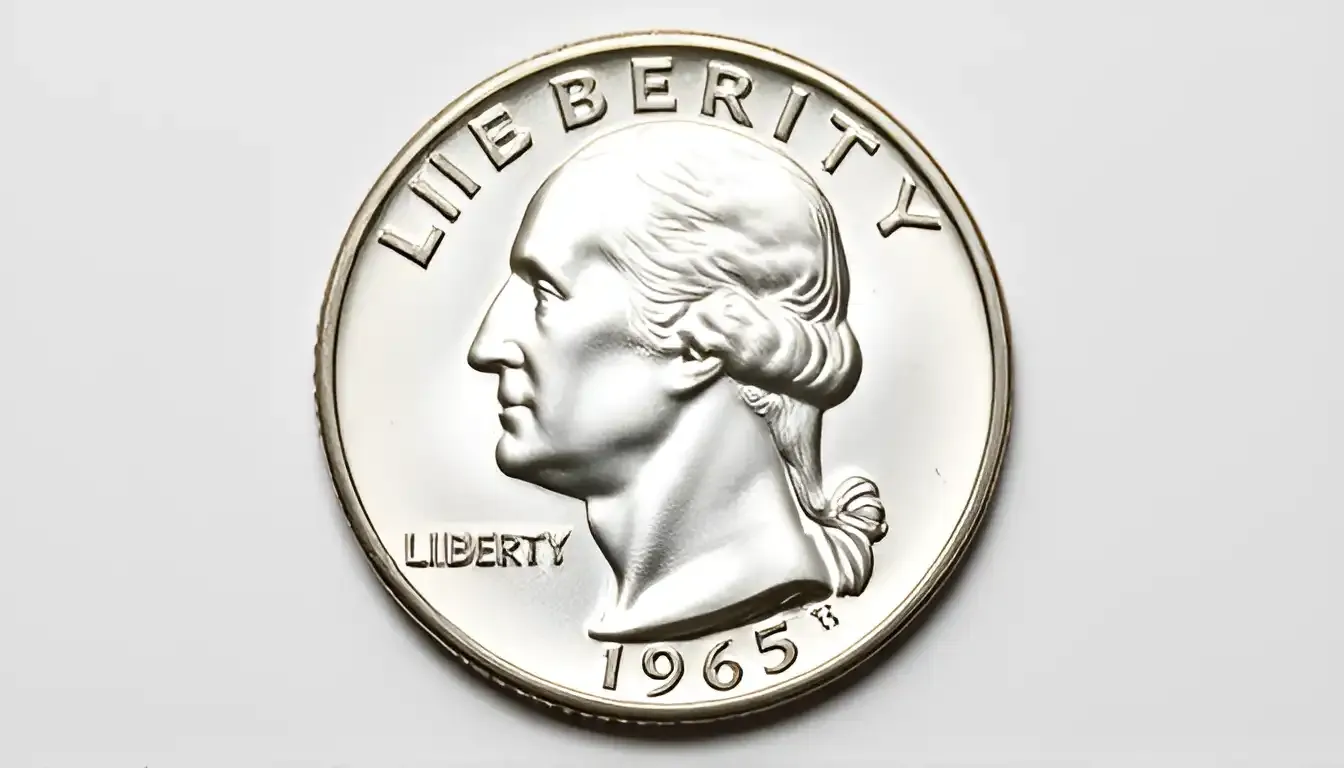
The Compositional Shift: A Tale of Silver and Clad
The year 1965 marks a pivotal moment in the history of United States coinage, particularly for the quarter. Prior to this year, quarters were primarily composed of 90% silver, a precious metal that contributed significantly to their intrinsic value. However, rising silver prices and a national shortage of silver coins led to a monumental legislative change: the Coinage Act of 1965. This act effectively eliminated silver from circulating dimes, quarters, and half-dollars. Therefore, understanding the composition of a 1965 quarter is the first and perhaps most crucial step in determining its worth.
The Demise of Silver Quarters
For collectors and investors interested in silver coinage, 1964 and earlier quarters are highly sought after due to their silver content. A 1965 quarter, however, represents the transition. While the U.S. Mint did produce some silver-clad proof quarters for collectors in 1965, the vast majority of circulating 1965 quarters are made of a clad composition. This means they consist of a copper core sandwiched between two layers of cupronickel (an alloy of copper and nickel). This change dramatically reduced the intrinsic metallic value of the coin, as cupronickel is far less valuable than silver.
Identifying Silver vs. Clad 1965 Quarters
Distinguishing between a silver and a clad 1965 quarter is straightforward once you know what to look for. The most obvious indicator is the edge of the coin. A silver quarter will have a solid silver-colored edge, whereas a clad quarter will exhibit a reddish-brown copper stripe sandwiched between the two silver-colored cupronickel layers. Visually, the silver quarters tend to have a brighter, more lustrous appearance. It is essential to correctly identify the composition, as this will immediately differentiate between a coin whose value is tied to its silver content and one whose value is primarily based on its numismatic appeal.
Minting Varieties and Their Impact on Value
Beyond composition, the location of minting and the presence of any errors or special designations can significantly influence the value of a 1965 quarter. The U.S. Mint operated facilities in Philadelphia, Denver, and San Francisco during this era, and the mint mark on a coin provides vital information about its origin.
Philadelphia Mint Strikes (No Mint Mark)
Quarters minted in Philadelphia do not bear a mint mark. The Philadelphia Mint produced a substantial number of 1965 quarters for circulation. While generally not considered rare, uncirculated examples from Philadelphia can still hold some value, especially if they possess exceptional eye appeal. The sheer volume of these coins means that most circulated 1965 Philadelphia quarters are worth very little beyond their face value.
Denver Mint Strikes (D Mint Mark)
The Denver Mint also produced a large quantity of 1965 quarters. These are identified by a “D” mint mark, typically found on the reverse side of the coin, below the eagle. Similar to the Philadelphia mintages, circulated 1965-D quarters are common and usually trade at or near their face value. However, uncirculated specimens, particularly those with vibrant luster and sharp details, can command a slightly higher price among collectors.
San Francisco Mint Proof Strikes (S Mint Mark)
The San Francisco Mint played a unique role in 1965 by producing special collector proof coins. These coins were not intended for general circulation but were struck specifically for collectors and are known for their exceptionally high quality and mirrored surfaces. 1965-S quarters were initially minted with a silver composition as part of the special silver clad proof sets. However, for general circulation, the San Francisco Mint also produced clad proof quarters in 1965. It is crucial to distinguish between the silver clad proof quarters (which have residual silver value) and the regular clad proof quarters. While the clad proof quarters are more common than their silver counterparts, a well-preserved 1965-S proof quarter, especially in its original mint packaging, can be worth considerably more than a standard circulating coin.
The Significance of Mint Errors
Coin minting is a complex process, and occasionally, errors occur, leading to unique and often valuable collectibles. While major mint errors on 1965 quarters are not as widely documented as on some other series, collectors often seek out coins with anomalies such as off-center strikes, double dies, or clipped planchets. The rarity and appeal of a specific mint error can dramatically increase a 1965 quarter’s value, transforming a common coin into a prized numismatic item. However, distinguishing genuine mint errors from damage sustained after minting is paramount.
Condition and Grading: The Key Determinants of Value
The physical condition of a coin is arguably the most significant factor influencing its worth. For collectors, a coin’s state of preservation dictates whether it is a common circulated piece or a valuable uncirculated specimen. This is where the science and art of coin grading come into play.

Understanding Coin Grading Scales
Coin grading is a systematic process of evaluating a coin’s condition based on various criteria, including the amount of wear, the presence of scratches or other damage, the sharpness of the strike, and the overall eye appeal. The most widely used grading scale is the Sheldon scale, which ranges from 1 (Poor) to 70 (Perfect Uncirculated). For most circulating coins like the 1965 quarter, collectors are typically interested in coins graded from G-4 (Good) upwards, with uncirculated grades (MS-60 to MS-70) being the most desirable.
Circulated vs. Uncirculated 1965 Quarters
A circulated 1965 quarter will show signs of wear from its time in commerce. Details may be softened, and the luster will likely be gone, replaced by a dull patina. The value of such coins, regardless of mint mark or composition (unless it’s a rare silver proof), is usually very low, often just a few cents over face value or essentially face value.
An uncirculated 1965 quarter, on the other hand, has never been used in commerce. It will retain its original mint luster, and all the design elements will be sharp and well-defined. The value of an uncirculated 1965 quarter can range from a few dollars for a lower uncirculated grade to considerably more for high-grade examples (MS-65 and above), especially if they exhibit exceptional toning or eye appeal.
The Role of Third-Party Grading Services
For coins intended for serious investment or high-end collecting, professional, third-party grading services like Professional Coin Grading Service (PCGS) and Numismatic Guaranty Company (NGC) play a crucial role. These services authenticate coins and assign them a precise grade, which adds a layer of confidence and marketability. A 1965 quarter that has been professionally graded and encapsulated in a tamper-evident holder can command a higher price than an equivalent ungraded coin, as its condition is independently verified.
Market Dynamics and Collector Demand
The worth of any collectible item, including coins, is ultimately determined by the forces of supply and demand. The collector market for 1965 quarters is not as robust as for coins from earlier, more silver-rich eras, but it still exists and is influenced by several factors.
The Appeal of Transitional Years
The year 1965 is a transitional year, which can sometimes lend a unique appeal to coins from this period. For collectors who focus on specific historical periods or coinage changes, the 1965 quarter represents the end of an era of silver coinage and the beginning of the clad coinage that continues to this day. This historical significance can drive some collector interest, particularly for uncirculated or proof examples.
Bulk Silver Value vs. Numismatic Value
For any 1965 quarter that happens to be a silver proof issue (which are rare), its value will be influenced by the prevailing market price of silver. In such cases, the intrinsic silver content can set a floor for the coin’s value. However, for the vast majority of 1965 clad quarters, their worth is purely numismatic, meaning it’s based on collector demand and their condition, rather than the value of the metals they contain.
Factors Influencing Collector Demand
Several elements contribute to collector demand for a coin:
- Rarity: While most 1965 quarters are common, exceptional uncirculated grades, rare mint errors, or specific proof issues can be relatively scarce.
- Historical Significance: The transition to clad coinage makes 1965 a notable year in U.S. numismatic history.
- Popularity of Series: Quarters are a popular denomination for collectors, making them accessible and widely recognized.
- Eye Appeal: Coins with attractive toning, sharp strikes, and minimal flaws are more desirable.
- Market Trends: Overall interest in coin collecting and the performance of the numismatic market can also affect prices.

Where to Find Value: Focusing on the Exceptional
For the average collector seeking to understand the worth of a 1965 quarter, the conclusion is generally straightforward: most circulated 1965 quarters are worth their face value. However, opportunities for finding significant value lie in identifying:
- Uncirculated coins: Look for coins with full mint luster and sharp details.
- Proof coins: Especially the rarer silver clad proofs from San Francisco.
- Coins with verifiable mint errors.
- Coins graded by reputable third-party services in high uncirculated grades.
By understanding the composition, minting origins, condition, and the broader market, one can accurately assess the potential worth of a 1965 quarter, moving beyond its simple face value to appreciate its place in the fascinating world of numismatics.
aViewFromTheCave is a participant in the Amazon Services LLC Associates Program, an affiliate advertising program designed to provide a means for sites to earn advertising fees by advertising and linking to Amazon.com. Amazon, the Amazon logo, AmazonSupply, and the AmazonSupply logo are trademarks of Amazon.com, Inc. or its affiliates. As an Amazon Associate we earn affiliate commissions from qualifying purchases.