
The concept of subliminal messaging, the presentation of stimuli below the threshold of conscious perception, has long captivated public imagination, fueled by dystopian fiction and sensationalized media portrayals. From whispers in movie theaters to hidden images in advertisements, the idea that our minds can be manipulated without our awareness is both intriguing and unsettling. However, the scientific reality of subliminal message processing is far more nuanced and, for the most part, less potent than popular culture suggests. Decades of research have delved into whether these undetectable stimuli can truly influence our thoughts, feelings, and behaviors, revealing a complex interplay of factors that determine their efficacy.
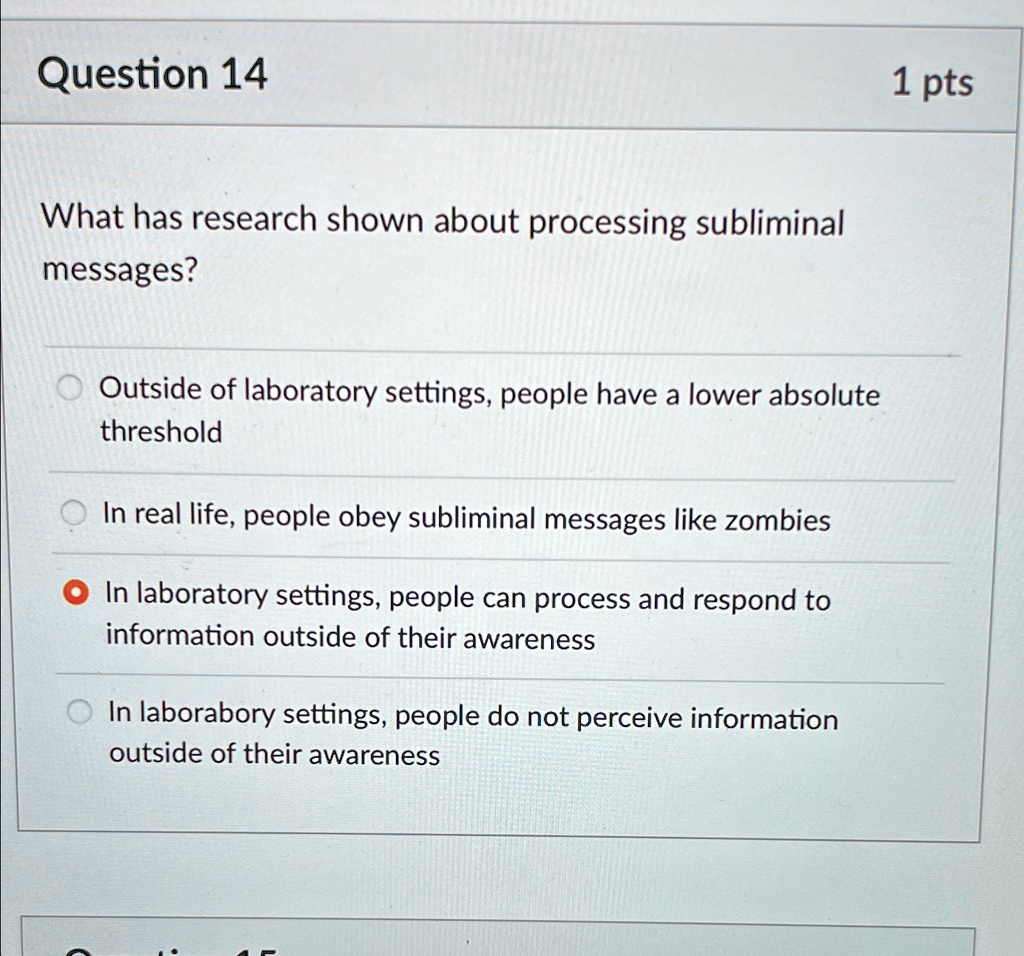
While the notion of covertly implanting desires or commands remains largely in the realm of science fiction, research has established that the brain can process information presented subliminally. The key questions then become: what is the nature of this processing, what are the limits of its influence, and what are the practical implications, particularly in the context of technology? This exploration delves into the scientific findings surrounding subliminal message processing, focusing on its technological applications and limitations within the realm of Tech.
The Neuroscience of Subliminal Perception: How the Brain Processes the Unseen
The human brain is a remarkable organ, constantly bombarded with sensory information. Not all of this information reaches conscious awareness; a significant portion is processed at a subconscious level. Subliminal stimuli are, by definition, those that fall below this conscious threshold. Research in neuroscience and cognitive psychology has sought to understand how these imperceptible signals are received and interpreted by the brain.
Defining the Threshold: What Constitutes “Subliminal”?
The precise threshold for subliminal perception is not a fixed point but rather a dynamic measure influenced by individual differences, the nature of the stimulus, and the experimental context. Traditionally, subliminal stimuli are presented for such a short duration (typically less than 50 milliseconds) or with such low intensity that they cannot be consciously identified. However, even when consciously inaccessible, these stimuli can still activate neural pathways.
For instance, fMRI studies have demonstrated that presenting words or images subliminally can elicit specific brain responses in areas associated with processing that type of content. If a word like “thirsty” is flashed too quickly for conscious recognition, the brain regions involved in thirst perception and motivation might still show increased activity. This indicates that the brain is indeed registering and, to some extent, processing the information, even if it doesn’t enter our conscious awareness.
Automatic vs. Controlled Processing: The Brain’s Dual Pathways
Cognitive psychology distinguishes between automatic and controlled processing. Automatic processes are rapid, effortless, and occur without conscious intent, such as breathing or recognizing a familiar face. Controlled processes, on the other hand, are slower, require effort and attention, and are subject to conscious control, like solving a complex math problem.
Subliminal processing largely falls into the realm of automatic processing. The brain’s initial sensory registration and basic interpretation of a subliminal stimulus can happen automatically. This means that even if you don’t consciously see or hear something, your brain might still categorize it, associate it with existing memories or emotions, or trigger a basic physiological response. However, this automatic processing is generally limited in its complexity and direct behavioral control. It’s akin to a brief, unconscious nudge rather than a fully formed directive.
Priming Effects: Subtle Influences on Subsequent Cognition
One of the most consistently demonstrated effects of subliminal stimuli is “priming.” Priming occurs when exposure to one stimulus influences the response to a subsequent stimulus, without the individual being aware of the initial influence. This can manifest in various ways:
- Lexical Priming: Exposure to a subliminally presented word can make it easier to recognize that word, or related words, when presented later. For example, subliminally flashing “doctor” might make someone slightly faster at recognizing the word “nurse” when it’s presented consciously.
- Conceptual Priming: Subliminal exposure to concepts can influence subsequent judgments or associations. If a subliminal image related to aggression is presented, individuals might be more likely to interpret ambiguous social cues as hostile.
- Affective Priming: Subliminal emotional stimuli can influence our feelings. Brief flashes of positive images might lead to slightly more positive evaluations of neutral objects or faces presented afterward, and vice-versa for negative stimuli.
These priming effects are generally subtle and transient. They don’t involve forced behavior change but rather a slight bias in perception, judgment, or recall. The magnitude of these effects is often small and highly dependent on the individual, the type of priming, and the experimental conditions.
Technological Applications and Limitations of Subliminal Processing
The understanding of subliminal processing has inevitably led to discussions about its potential applications, particularly within the tech industry. While the overt manipulation depicted in fiction is unrealistic, subtle influences are a more plausible area of exploration for technological integration. However, ethical considerations and practical limitations heavily shape these possibilities.
The Digital Landscape: Subliminal Cues in User Interfaces and Digital Content

In the digital realm, subliminal messages could, in theory, be embedded within interfaces, advertisements, or even video games. This could involve:
- Subtle Visual Cues: Extremely brief flashes of logos, product images, or even colors associated with a brand, integrated into video streams or website designs. The idea would be to create a faint, unconscious association between the content and the brand.
- Auditory “Whispers”: Very low-volume or masked auditory stimuli embedded within background music or sound effects. For example, a subliminal suggestion of a product name or a positive attribute might be incorporated into a game’s soundtrack.
- Color Psychology and Aesthetics: While not strictly “subliminal” in the sense of being below perception, the deliberate use of colors, fonts, and visual arrangements in user interfaces can evoke unconscious emotional responses and influence user behavior. For instance, using warm colors might promote feelings of comfort, while sharp angles might convey urgency.
However, the effectiveness of these digital applications is highly debated and often overstated. Research suggests that the impact of such subtle cues is minimal and easily overridden by conscious thought, existing biases, and the overall user experience. Furthermore, the ethical implications of embedding such stimuli, even if minimally effective, are significant, raising concerns about user autonomy and transparency.
The “Backfire Effect” and Resistance to Subliminal Influence
It’s crucial to acknowledge that the human mind is not a passive recipient of information. We possess sophisticated cognitive defenses that often counteract or ignore even conscious persuasive attempts. This resilience extends, to some degree, to subliminal influences.
One phenomenon is the “backfire effect,” where attempts at manipulation, even if subliminal, can sometimes lead to the opposite of the intended outcome if they are detected or perceived as intrusive, even at a subconscious level. If a user develops a sense of unease or suspicion associated with a particular interface or piece of content, even without knowing why, it can lead to negative associations and avoidance.
Moreover, individual differences play a substantial role. Some individuals are more susceptible to suggestion than others, but there is no evidence of a universal susceptibility to subliminal manipulation. Factors like personality, current mood, and prior beliefs all mediate how any subtle cue might be processed.
Ethical Considerations and Regulatory Landscape
The potential for subliminal messaging, however limited, raises significant ethical questions. If technology could be used to subtly influence purchasing decisions, political opinions, or personal behaviors without conscious consent, it would represent a serious breach of autonomy. This has led to calls for regulation and strict ethical guidelines for the development and deployment of persuasive technologies.
Currently, there are no specific laws directly prohibiting subliminal advertising in many jurisdictions, partly because its proven effectiveness is so questionable. However, broader consumer protection laws related to deceptive practices can, in principle, apply. The ethical debate often centers on the principle of informed consent and the right of individuals to make decisions free from covert manipulation. Tech companies developing persuasive technologies must navigate this complex ethical terrain, prioritizing transparency and user well-being.
The Scientific Consensus: Subliminality is Not Mind Control
Despite the allure of mind control, the overwhelming scientific consensus is that subliminal messages, as typically understood, do not have the power to force individuals to act against their will or to implant complex desires. The research landscape, while acknowledging that the brain processes subliminal information, consistently points to limitations in its influence.
Magnitude and Transience of Effects
The effects observed in laboratory settings are almost always small in magnitude and short-lived. Priming effects, for example, typically disappear within minutes, and their impact on complex behaviors in real-world scenarios is negligible. A subliminally presented “buy now” message is highly unlikely to compel a purchase without conscious deliberation, existing desire, or other contextual factors. The “subliminal” nudge is simply too weak to overcome conscious processing and decision-making.
Context Dependency and Individual Differences
The impact of any subliminal stimulus is heavily dependent on the context in which it is presented and the individual receiving it. A subliminal message might have a slight effect on someone who is already predisposed to the suggested behavior or feeling, but it is unlikely to create new motivations or override strong pre-existing beliefs or intentions. This makes generalized, mass-scale manipulation through subliminal means practically impossible with current understanding.

The “Myth” of Subliminal Persuasion: A Cautionary Tale for Tech Development
The persistent myth of powerful subliminal persuasion, often perpetuated by media and pop psychology, serves as a cautionary tale for technological development. It highlights the gap between scientific reality and public perception. While researchers continue to explore the nuances of subconscious processing and its subtle influences, it is essential for developers and marketers in the tech industry to ground their strategies in empirical evidence rather than sensationalized notions.
The focus in technology should be on transparent, ethical, and consciously perceivable design that enhances user experience, rather than attempting to exploit poorly understood and largely ineffective subliminal channels. The pursuit of truly persuasive technologies lies in understanding human psychology at a conscious level, building trust, and providing genuine value, not in the pursuit of covert manipulation. The research, thus far, strongly suggests that the power of the subliminal is far more subtle and elusive than once imagined, particularly within the sophisticated landscape of modern technology.
aViewFromTheCave is a participant in the Amazon Services LLC Associates Program, an affiliate advertising program designed to provide a means for sites to earn advertising fees by advertising and linking to Amazon.com. Amazon, the Amazon logo, AmazonSupply, and the AmazonSupply logo are trademarks of Amazon.com, Inc. or its affiliates. As an Amazon Associate we earn affiliate commissions from qualifying purchases.