
The galaxy is a vast and intricate place, teeming with stories that extend far beyond the grand pronouncements of emperors and the dramatic clashes of Jedi and Sith. Among the most poignant and often overlooked narratives are those of the Republic’s clone troopers. Created for a singular purpose – to fight and win the Clone Wars – their existence was intrinsically tied to the very conflict that birthed them. When Supreme Chancellor Palpatine issued Order 66, a galaxy-altering command designed to purge the Jedi Order, it marked not only the end of an era but also a profound existential crisis for the millions of soldiers who had faithfully served the Republic. This article delves into the technological and strategic implications of Order 66, examining how the manufactured soldiers, once the backbone of galactic security, were re-purposed, decommissioned, or tragically eliminated in the wake of the Republic’s transformation into the Galactic Empire.

The Technological Foundation of Compliance and Control
The clone troopers were not merely soldiers; they were a testament to advanced biological engineering and sophisticated technological integration. Their creation by the Kaminoans involved meticulous genetic manipulation and the implantation of control chips, a covert contingency that would prove instrumental in the execution of Order 66. Understanding the technology behind their creation and control is crucial to grasping their fate.
Genetic Design and the Purpose of Obedience
The Kaminoan cloners, under the clandestine direction of Sith Lord Darth Sidious, engineered the clone troopers with a specific set of traits. While designed for combat effectiveness, loyalty, and rapid deployment, they were also deliberately engineered to be compliant. This meant a predisposition to follow orders without question, a trait amplified by the behavioral modification protocols integrated into their development. The “clone template” was not simply about creating a fighting force; it was about forging an instrument of absolute control, ready to serve any master who wielded the ultimate authority. This inherent designed obedience made them vulnerable to manipulation on a mass scale.
The Inhibitor Chip: The Ultimate Control Mechanism
The cornerstone of Palpatine’s plan was the bio-technological inhibitor chip, implanted in the brain of every clone trooper during their gestation. This chip served multiple purposes. Primarily, it ensured the clones’ unwavering loyalty to the Republic and, by extension, to the Supreme Chancellor. It also allowed for subtle behavioral modifications and, critically, provided a direct override mechanism. When Order 66 was transmitted, the inhibitor chips were activated, triggering a cascade of neurological signals that suppressed the clones’ independent thought and directed them to execute the purge of the Jedi. The technology was remarkably effective, transforming an army built to protect the Republic into the primary instrument of its tyrannical takeover. The chips essentially rewrote their core programming, forcing them to view their former allies, the Jedi, as traitors.
The Shift from Republic Asset to Imperial Tool
Following Order 66, the inhibitor chips remained a crucial component of Imperial control. While the Jedi threat was eliminated, the vast clone army still posed a potential risk. The chips ensured continued loyalty to the new Imperial regime. However, as the Empire solidified its power, the reliance on clones began to diminish. The technology behind their creation, while impressive, was expensive and time-consuming. Furthermore, the Imperial ideology favored a more centralized and human-led military structure. This technological shift in military doctrine would eventually lead to the decommissioning and displacement of many clone units.
Post-Order 66: The Tactical Re-evaluation and Decommissioning of Clone Forces
The immediate aftermath of Order 66 saw the clone troopers at the zenith of their operational capacity, albeit under a new, sinister directive. However, the long-term strategy of the burgeoning Galactic Empire involved a significant overhaul of its military infrastructure, a process that profoundly impacted the fate of the clone legions. This re-evaluation was driven by both ideological shifts and pragmatic considerations regarding the sustainability and future direction of the Imperial military.
The Integration into the Imperial Army: A Gradual Obsolescence

The initial phase after Order 66 involved integrating the clone troopers directly into the nascent Imperial military structure. They continued to serve in various capacities, often forming the backbone of newly established Imperial garrisons and front-line assault units. However, this was a transitional period. The Empire’s ideology, which championed human dominance and a more rigid hierarchical structure, did not intrinsically value the existence of a manufactured soldiery in the long term. Emperor Palpatine, increasingly consolidating his power and laying the groundwork for the Stormtrooper Corps, saw the clones as a temporary solution. The sheer cost and complexity of continued clone production were also significant factors.
The Rise of the Stormtrooper Corps: A Technological and Ideological Replacement
The development and eventual widespread deployment of the Imperial Stormtrooper Corps represented a fundamental shift in Imperial military technology and strategy. Stormtroopers were recruited from the general population, offering a seemingly inexhaustible and less resource-intensive supply of soldiers. While the initial stormtrooper units likely incorporated some cloning technology and training methodologies derived from the clone program, the overarching goal was to move away from the specialized, genetically identical units. This transition was not instantaneous but a gradual process that saw the clone legions being systematically phased out. The white armor, the iconic symbol of Imperial might, began to replace the distinct markings of clone units.
Decommissioning Protocols and the Fate of Dissident Clones
As the Empire solidified its grip, formal decommissioning protocols were implemented for clone units. This often involved being reassigned to non-combat roles, serving in specialized units that were gradually phased out, or, in more unfortunate circumstances, being simply eliminated. The technological infrastructure that supported clone production and maintenance was repurposed or dismantled. For clones who showed any signs of questioning their new reality or who retained memories of their past allegiances, their inhibitor chips still ensured compliance. However, the growing focus on stormtroopers meant that many clone units were simply deemed surplus to requirements. The ethical implications of this large-scale decommissioning were, of course, largely ignored by the new regime.
The Fading Echoes: Clones in Retirement, Resistance, and Remembrance
While the vast majority of clones were absorbed into the Imperial machine or systematically removed, a segment of these genetically engineered soldiers found their way into more unconventional paths. Their unique experiences, often marked by a sense of purpose lost and a brotherhood forged in war, led some to seek lives beyond Imperial service, while others found themselves in positions of unexpected resistance or became the subject of historical footnotes, their legacies slowly fading from galactic memory.
Retirement and Civilian Life: Seeking Peace After War
For many clone troopers, the end of the Clone Wars and the subsequent transition to the Empire meant the end of their mandated service. Rather than facing decommissioning or potential elimination, some clones were granted their pensions and allowed to retire. These individuals, having served with distinction for years, sought to build civilian lives for themselves. They often gravitated towards professions that utilized their skills, such as security, law enforcement, or specialized labor. However, the psychological toll of their experiences, particularly the trauma of Order 66 and the subsequent loss of their Jedi allies, often left indelible marks. Many struggled to adapt to a peacetime galaxy, haunted by the memories of war and the ethical quandaries of their roles. The technological advancements that defined their creation also meant that their aging process was accelerated, often leading to shorter lifespans compared to baseline humans, meaning many retired clones did not live to see the later eras of the Galactic Empire.
The Unthinkable Resistance: Clones Who Broke the Mold
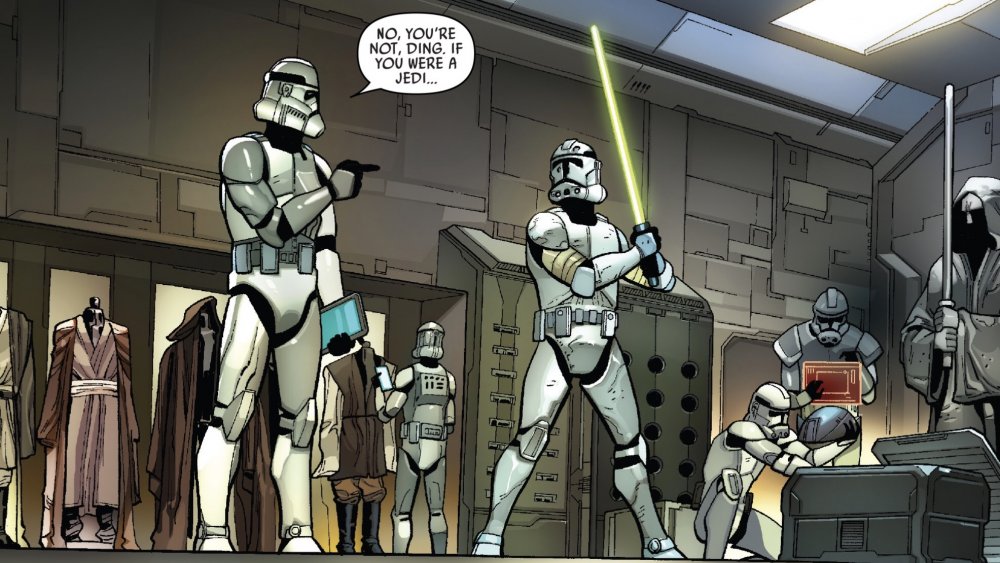
While the inhibitor chips were remarkably effective, the sheer individuality that emerged among some clone troopers during the Clone Wars, coupled with the profound moral implications of Order 66, led to rare instances of defiance. These were clones who, for various reasons – perhaps a stronger individual will, a deeper connection with specific Jedi, or a glitch in their inhibitor chip – managed to resist the direct programming of Order 66. These rare individuals often found themselves on the run, hunted by their former comrades and the burgeoning Imperial security forces. Their survival was precarious, relying on cunning, stealth, and the assistance of those who understood the true nature of the clone program. These acts of resistance, though few in number, represent a testament to the potential for individual agency even within a technologically controlled system. Their stories, often lost to the annals of Imperial history, are a powerful reminder of the complex interplay between technology, programming, and the enduring spirit of sentience.
The Legacy of the Clones: Technological Oddities and Historical Ambiguities
As the Galactic Empire grew and its narrative of galactic dominion took hold, the story of the clone troopers began to fade. The Empire actively suppressed information about their origins, seeking to erase the embarrassing truth of its own inception. The clone troopers were largely rebranded as common stormtroopers, their unique identities and contributions obscured. However, the technology that created them – the advanced genetic engineering, the sophisticated control mechanisms, and the sheer scale of their production – remained a significant technological achievement. In the later years of the Empire, and certainly in the time of the Rebel Alliance and the New Republic, the existence of the clone army became something of a historical curiosity, a technological marvel of a bygone era. While individual clones may have achieved peace or lived in obscurity, their collective impact on galactic history, and the technological prowess that defined their existence, became a fading echo, a reminder of a critical, albeit tragic, chapter in the galaxy’s story. The unique biometric identifiers and genetic signatures of the clones, once crucial for their identification and control, became obsolete as the Empire sought to homogenize its military.
aViewFromTheCave is a participant in the Amazon Services LLC Associates Program, an affiliate advertising program designed to provide a means for sites to earn advertising fees by advertising and linking to Amazon.com. Amazon, the Amazon logo, AmazonSupply, and the AmazonSupply logo are trademarks of Amazon.com, Inc. or its affiliates. As an Amazon Associate we earn affiliate commissions from qualifying purchases.