
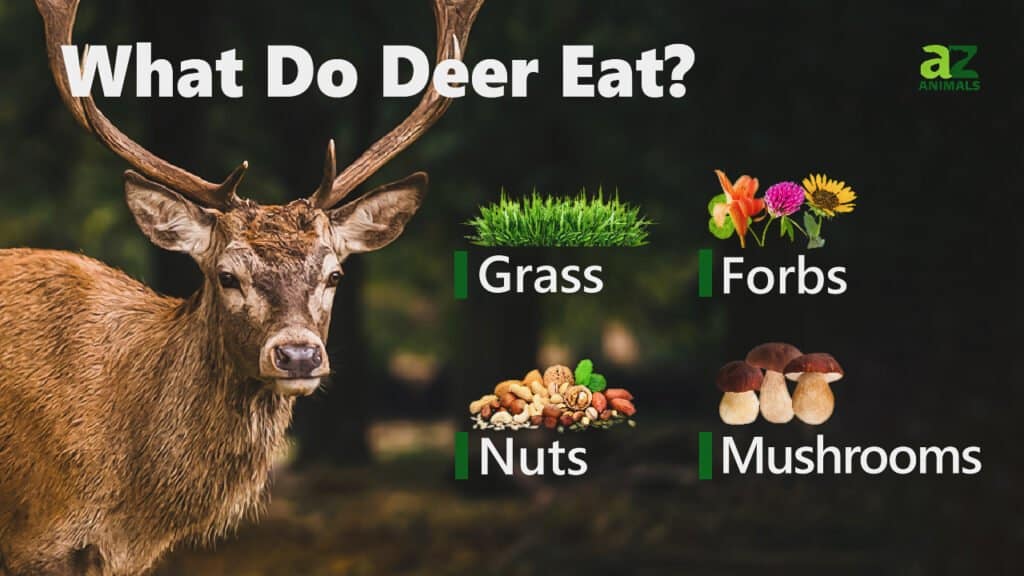
The seemingly simple question, “What does a deer eat?” opens a surprisingly complex window into the intricate workings of ecosystems. Far from being a mere biological curiosity, understanding the dietary habits of a species like the deer has profound implications for wildlife management, conservation efforts, and even agricultural sustainability. In the modern era, technology plays a pivotal role in unraveling these dietary mysteries, transforming how we gather, analyze, and act upon this crucial ecological data. This article will explore the sophisticated technological approaches employed to answer this fundamental question, showcasing how data science, sensor technology, and AI are revolutionizing our understanding of animal diets and their broader ecological significance.
The Data Nexus: Gathering Dietary Intelligence
The foundation of understanding any animal’s diet lies in meticulously collecting data. Historically, this involved direct observation, scat analysis, and stomach content examination – methods that are still valuable but are now being augmented and, in some cases, superseded by advanced technological solutions. The “what” of a deer’s diet is not a static list; it’s a dynamic interplay of availability, seasonality, and environmental factors, all of which can be captured and analyzed with greater precision than ever before.
Precision Monitoring: From GPS Collars to Smart Sensors
Modern wildlife research leverages a suite of sophisticated tracking and monitoring technologies. GPS collars, once primarily used to track movement patterns, now incorporate accelerometers and other sensors that can provide insights into an animal’s activity levels and even behavioral proxies related to foraging. By correlating GPS locations with vegetation maps, researchers can infer where deer are spending their time and what types of plants are likely available.
Beyond movement, innovative sensor technologies are emerging. “Smart collars” are being developed with integrated sensors capable of analyzing mastication patterns or even detecting specific chemical compounds in an animal’s breath or expelled food particles. While still in advanced research phases, these technologies promise a future where direct dietary intake can be monitored non-invasively in real-time. Furthermore, camera traps, equipped with AI-powered object recognition, can identify deer and, in some instances, the plants they are interacting with, providing valuable visual data points to supplement other monitoring methods.
Remote Sensing and Geospatial Analysis: Mapping Food Landscapes
The environment in which deer forage is as crucial as the plants themselves. Satellite imagery and aerial photography, processed through advanced geospatial analysis software, create detailed maps of vegetation types, densities, and health. This “remote sensing” provides a macro-level view of the food landscape. By overlaying deer population data with these vegetation maps, ecologists can identify areas of high nutritional value and predict how changes in land use or climate might impact food availability.
For instance, analyzing Normalized Difference Vegetation Index (NDVI) data from satellites can reveal the greenness and photosynthetic activity of plant communities, offering a proxy for forage quality. Machine learning algorithms can then be trained to identify specific plant species or functional groups (like legumes or grasses) from spectral signatures, allowing for more granular analysis of what constitutes the deer’s buffet. This data-driven approach moves beyond anecdotal evidence to provide quantitative insights into the ecological carrying capacity of different regions.
Deciphering the Digestive Code: Analytical Technologies
Once data on foraging locations and available vegetation is gathered, sophisticated analytical tools are employed to decipher what, precisely, constitutes a deer’s diet and how it changes. This involves a multi-faceted approach, combining laboratory analyses with computational modeling.
Isotopic and Genetic Tracers: The Silent Witnesses
Technological advancements in laboratory analysis have revolutionized our ability to identify dietary components. Stable isotope analysis, for example, examines the ratios of different isotopes (e.g., carbon, nitrogen) in an animal’s tissues (hair, blood, antlers) and compares them to known isotopic signatures of various plants. This allows researchers to reconstruct long-term dietary patterns with remarkable accuracy. Different plants, growing in different soil types or atmospheric conditions, will absorb and incorporate isotopes at varying rates, leaving a unique isotopic fingerprint in the tissues of the animals that consume them.
Similarly, DNA metabarcoding of fecal samples is a powerful technique. By extracting DNA from scat, researchers can amplify specific genetic markers present in the plant matter ingested by the deer. This allows for the identification of plant species, even if they are only present in small quantities or are highly fragmented. This genetic detective work provides a detailed snapshot of recent dietary intake, complementing the long-term perspective offered by isotopic analysis.
Big Data and Machine Learning: Pattern Recognition for Predictive Insights
The sheer volume of data generated by modern monitoring techniques necessitates advanced computational tools. Big data platforms are used to store and manage diverse datasets, from GPS tracks and sensor readings to laboratory results and remotely sensed imagery. Machine learning (ML) algorithms are then applied to identify complex patterns and correlations within this data.
For example, ML models can be trained to predict the most probable food items a deer will consume based on its location, the time of year, and the prevailing vegetation conditions. These models can help answer questions like: “During a drought, which plant species are deer more likely to rely on?” or “How does the presence of invasive plant species alter traditional deer diets?” By analyzing vast historical datasets, ML can also help predict future dietary shifts in response to climate change or habitat alteration, providing invaluable foresight for conservation and land management agencies.
The Technological Imperative: Applications and Implications
Understanding what a deer eats is not an academic exercise; it has tangible, technology-driven applications that impact our environment and economies. The insights gleaned from these technological endeavors inform a wide range of decisions, from managing agricultural damage to preserving biodiversity.
Predictive Modeling for Wildlife Management and Conservation
Accurate dietary data, analyzed through technological means, is fundamental to effective wildlife management. For instance, knowing that deer in a particular region heavily rely on specific agricultural crops during certain seasons allows for the development of targeted deterrents or management strategies that minimize conflict. Predictive models, powered by data analytics, can forecast population dynamics based on forage availability and quality, helping wildlife managers to set appropriate hunting quotas or implement habitat improvement projects.
In conservation, understanding dietary niches helps us identify vulnerable species. If a particular plant that is a staple for a deer population is threatened by invasive species or habitat loss, conservationists can prioritize efforts to protect that plant resource. Technologies like ecological niche modeling, which often incorporate dietary data, can predict areas where deer populations are likely to thrive or decline, guiding conservation investments.
Sustainable Agriculture and Land Use Planning
The impact of deer populations on agricultural lands is a significant economic concern. By precisely identifying which crops deer prefer and when, technology enables more effective and less intrusive management strategies. This can include the development of smart fencing technologies that are triggered by animal detection sensors, or targeted repellents informed by chemical analysis of deer preferences.
Furthermore, understanding deer diets informs broader land use planning. When planning new developments or agricultural expansions, the potential impact on deer foraging grounds and their dietary resources must be considered. Data analytics derived from dietary studies can help planners assess the ecological footprint of their decisions, promoting more sustainable land use practices that balance human needs with wildlife conservation.

Public Health and Invasive Species Management
In some regions, deer can act as reservoirs for diseases like Lyme disease. Understanding their diet can indirectly inform public health strategies by helping to predict where deer populations are likely to concentrate and, consequently, where disease vectors might be more prevalent. This allows for targeted public health advisures and control efforts.
Moreover, deer can play a role in the spread of invasive plant species, either by consuming native plants and opening up ecological niches or by directly dispersing the seeds of invasives. Technological tools that map deer movement and dietary preferences can help identify “hotspots” for invasive species spread, enabling more efficient and effective eradication or control programs.
In conclusion, the question of “what does a deer eat?” is a gateway to a sophisticated technological undertaking. From the precision of GPS collars and genetic sequencing to the predictive power of machine learning and remote sensing, technology provides the essential tools for unraveling the complex dietary ecology of these ubiquitous animals. The insights gained are not merely academic; they are crucial for informing effective wildlife management, safeguarding biodiversity, promoting sustainable agriculture, and ultimately, fostering a more harmonious coexistence between humans and the natural world. The humble deer, in its dietary habits, serves as a powerful case study for the transformative impact of technology in understanding and stewarding our planet.
aViewFromTheCave is a participant in the Amazon Services LLC Associates Program, an affiliate advertising program designed to provide a means for sites to earn advertising fees by advertising and linking to Amazon.com. Amazon, the Amazon logo, AmazonSupply, and the AmazonSupply logo are trademarks of Amazon.com, Inc. or its affiliates. As an Amazon Associate we earn affiliate commissions from qualifying purchases.