
In the current era of the “streaming wars,” the question “What’s on AMC?” has transitioned from a simple inquiry about cable television schedules to a complex interaction with sophisticated digital infrastructure. AMC Networks, once a traditional linear broadcaster, has undergone a massive technological pivot to stay competitive in a landscape dominated by tech giants. The transition to AMC+ represents more than just a content shift; it is a case study in how legacy media integrates modern software engineering, cloud computing, and data science to deliver high-fidelity entertainment to millions of global users.
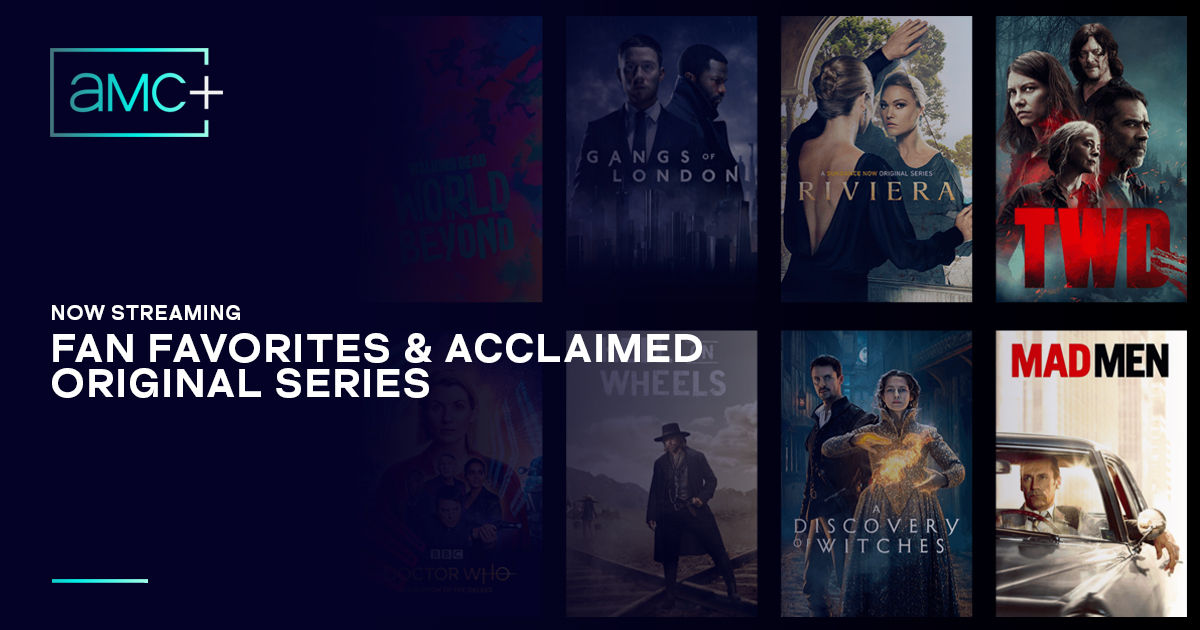
Understanding what is “on” AMC today requires an exploration of the underlying technology that powers the experience. From content delivery networks (CDNs) to machine learning-driven recommendation engines, the platform is a marvel of contemporary software architecture designed to handle the massive bandwidth demands of 4K streaming while ensuring a seamless user experience across a fragmented device ecosystem.
The Architecture of On-Demand: How AMC+ Delivers High-Fidelity Content
At the heart of the AMC+ experience is a robust backend architecture designed for scalability and reliability. When a user clicks “play” on a hit series like The Walking Dead or Interview with the Vampire, a series of invisible technical processes are triggered to ensure the video starts instantly and maintains quality.
Cloud Infrastructure and Scalability
AMC utilizes cloud service providers—primarily Amazon Web Services (AWS)—to manage its massive library of high-definition assets. By leveraging cloud-native tools, AMC can scale its server capacity dynamically. This is particularly crucial during season finales or major premieres when traffic spikes could potentially crash a traditional server environment. Through auto-scaling groups, the infrastructure expands to meet demand and contracts during off-peak hours, optimizing both performance and operational costs.
Content Delivery Networks (CDNs) and Edge Computing
To minimize latency—the delay between a user requesting a video and the video starting—AMC employs global CDNs. These networks consist of geographically distributed servers that store copies of the content. Instead of a user in London pulling data from a server in New York, the CDN identifies the server closest to the user (the “edge”). This proximity reduces packet loss and buffering, ensuring that “what’s on AMC” is delivered at the highest possible bitrate allowed by the user’s connection.
Adaptive Bitrate Streaming (ABS)
One of the most critical technologies in the AMC+ arsenal is Adaptive Bitrate Streaming. The platform uses protocols like HLS (HTTP Live Streaming) or DASH (Dynamic Adaptive Streaming over HTTP). These protocols break video files into small, multi-second segments at various resolution levels (from 480p to 4K). As the user’s internet speed fluctuates, the AMC+ player automatically switches between these segments. If a user’s Wi-Fi drops, the software intelligently downgrades the quality to prevent a total freeze, providing a continuous, albeit lower-resolution, viewing experience.
User Experience and Interface Design: The Software Behind the Binge
The front-end of the AMC+ application is where technology meets human psychology. The interface is not merely a gallery of posters; it is a data-driven environment optimized for discovery and engagement.
The Power of Metadata and Discovery Algorithms
When browsing what’s on AMC, users interact with a sophisticated tagging system. Every piece of content is enriched with deep metadata—including genre, mood, cast, and even “micro-tags” like “post-apocalyptic” or “slow-burn drama.” This metadata feeds into recommendation algorithms. Unlike the linear days where everyone saw the same schedule, the digital AMC+ dashboard is increasingly personalized. Machine learning models analyze viewing history to predict what a user might enjoy next, effectively reducing “search fatigue” and increasing time-spent-on-app.
UI/UX Design for Multi-Platform Consistency
Developing for the “Big Screen” (Smart TVs), mobile devices, and web browsers requires a flexible UI (User Interface) framework. AMC employs responsive design principles and often utilizes cross-platform development tools like React Native or Flutter. These frameworks allow developers to write code once and deploy it across iOS, Android, and various TV operating systems while maintaining a consistent “look and feel.” The goal is a frictionless transition: a user should be able to start a show on their phone during a commute and pick up exactly where they left off on their Apple TV at home.
The Role of APIs in Integration
AMC+ doesn’t exist in a vacuum; it is often bundled with other services like Amazon Prime Video Channels or Apple TV Channels. This requires a robust set of APIs (Application Programming Interfaces). These APIs allow different software systems to communicate, ensuring that subscription status, watchlists, and “continue watching” data are synchronized across third-party platforms. This technical interoperability is essential for the modern “hub” style of media consumption.

Platform Synergy and Cross-Device Compatibility
A major technical challenge for AMC is the sheer variety of hardware used to access its content. From a five-year-old Roku stick to the latest iPad Pro, the software must perform reliably across different processing power levels and screen resolutions.
Encoding and Transcoding Workflows
Before a show goes live on AMC+, it must be transcoded into dozens of different formats. This process involves compressing the raw video files using codecs like H.264, H.265 (HEVC), or VP9. Each codec offers a different balance between file size and image quality. By using HEVC, for instance, AMC can deliver 4K content at lower bitrates, making high-quality streaming accessible even to users with moderate internet speeds.
Handling Device Fragmentation
The Android ecosystem alone features thousands of different device configurations. AMC’s engineering team must conduct extensive automated testing using “device farms” to ensure that the app doesn’t crash on specific versions of an OS. Furthermore, Smart TV platforms like Samsung’s Tizen or LG’s webOS have their own proprietary technical requirements. Navigating this fragmentation is a constant cycle of updates and patches, ensuring that the question of “what’s on AMC” is never met with a “system error” message.
Digital Rights Management (DRM)
Protecting premium content is a high-tech necessity. AMC utilizes advanced DRM systems like Google’s Widevine, Apple’s FairPlay, and Microsoft’s PlayReady. These technologies encrypt the video stream and require a “key” to unlock it, which is only provided to authorized, subscribed devices. This happens in milliseconds in the background, ensuring that while the content is secure from piracy, the legitimate user experiences no delay in playback.
The Future of AMC Tech: AI, Interactivity, and Next-Gen Security
As technology evolves, the definition of “what’s on AMC” will expand beyond passive viewing into more interactive and AI-enhanced experiences. The network is already looking toward the next frontier of digital media.
AI-Driven Content Creation and Optimization
Beyond recommendations, AI is being used in the “post-production” tech stack. AI tools can now assist in automated closed-captioning, language translation, and even visual effects optimization. This allows AMC to localize its content for global markets faster than ever before. Additionally, AI can analyze viewer drop-off points within an episode, providing creators with data-driven insights into pacing and engagement that were impossible in the era of Nielsen boxes.
The Move Toward Interactivity and Personalization
We are seeing a trend toward “lean-forward” technology. Future iterations of the AMC+ app may include interactive overlays—similar to Amazon’s “X-Ray” feature—powered by real-time data feeds. Imagine watching a period drama and being able to click on a character’s outfit to see historical context or related tech specs, all without leaving the stream. This requires a sophisticated “state management” within the app’s software architecture to track user interactions without interrupting the video buffer.
Enhanced Security and Privacy Protocols
With the rise of data privacy regulations like GDPR and CCPA, the tech stack behind AMC must prioritize user data security. This involves implementing zero-trust architecture and robust encryption for user credentials. As AMC+ moves toward more ad-supported tiers (AVOD), the technology must also manage “Server-Side Ad Insertion” (SSAI). SSAI stitches advertisements directly into the video stream on the server side, rather than the client side, which bypasses ad-blockers and provides a smoother, TV-like transition between the show and the commercial.

Conclusion: The Silicon Valley of Storytelling
When we ask “What’s on AMC?”, we are no longer just talking about stories; we are talking about a sophisticated digital ecosystem. The transition from a cable channel to a tech-forward streaming platform has required AMC to rethink its entire operational model. By embracing cloud scalability, sophisticated UI/UX design, and complex video engineering, AMC has ensured that its prestige content is accessible, secure, and high-quality across any device.
The “tech” of AMC is the silent engine that allows the “art” to shine. As the platform continues to integrate artificial intelligence and refine its delivery protocols, the boundary between a media company and a software company continues to blur. In the end, the success of AMC+ depends as much on its lines of code as it does on its scripts, proving that in the modern age, content may be king, but technology is the kingdom.
aViewFromTheCave is a participant in the Amazon Services LLC Associates Program, an affiliate advertising program designed to provide a means for sites to earn advertising fees by advertising and linking to Amazon.com. Amazon, the Amazon logo, AmazonSupply, and the AmazonSupply logo are trademarks of Amazon.com, Inc. or its affiliates. As an Amazon Associate we earn affiliate commissions from qualifying purchases.