
In the landscape of modern technology, we often focus on silicon chips, cloud computing, and neural networks. However, one of the most sophisticated “technologies” currently being mastered by scientists and engineers is not made of copper or code, but of deoxyribonucleic acid (DNA). At the heart of this biological revolution lies a specific molecular mechanism known as “sticky ends.”
While the term might sound like something from a culinary disaster, in the world of biotechnology, sticky ends are the high-precision connectors that allow us to rewrite the software of life. To understand what sticky ends allow is to understand the foundation of recombinant DNA technology—the breakthrough that turned biology into a programmable, modular tech stack.
The Mechanics of Molecular Glue: Understanding Sticky Ends
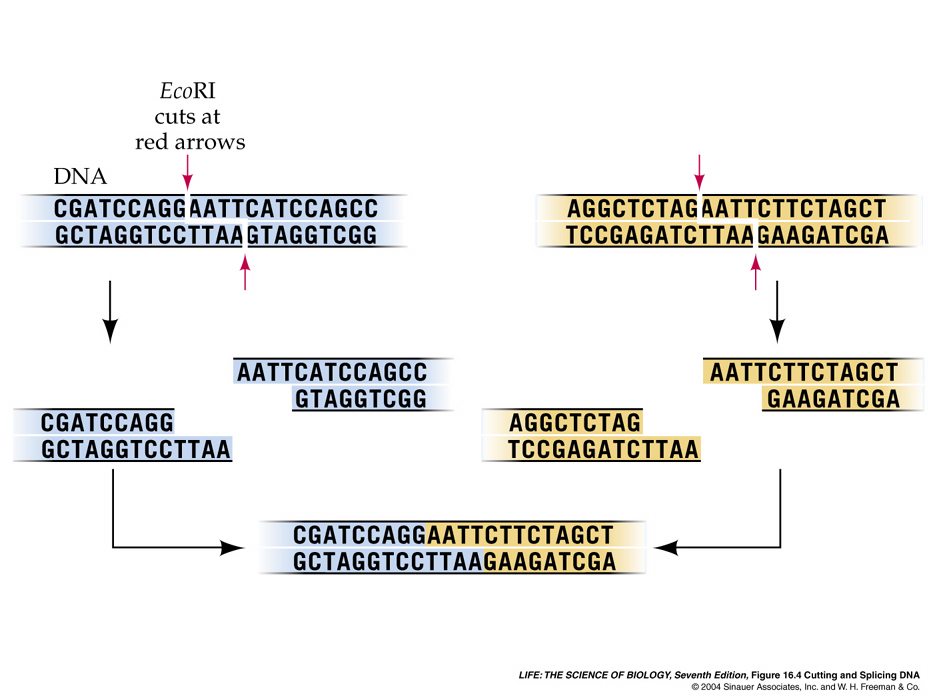
Before we can explore the vast technological implications, we must define the “hardware” involved. In the context of genomic engineering, sticky ends are short, overhanging sequences of single-stranded DNA produced by the action of restriction enzymes.
From Restriction Enzymes to Precision Splicing
Restriction enzymes are the “scissors” of the biotech world. They are programmed to recognize specific sequences of nucleotides and cut the DNA backbone at those precise locations. When these enzymes make a staggered cut rather than a straight “blunt” cut, they leave behind a few unpaired bases—the sticky ends.
These ends are “sticky” because they are eager to find their complementary counterparts. This isn’t just a chemical accident; it is a fundamental property of hydrogen bonding between base pairs (Adenine with Thymine, and Cytosine with Guanine). This natural inclination to bond provides the precision required for genetic engineering.
Why Complementary Base Pairing is the Original “Programming Language”
In computer science, we use binary—zeros and ones—to encode instructions. In biology, the “code” is quaternary (A, T, C, G). Sticky ends allow for a form of “logical verification” in genetic splicing. Because a sticky end will only bond with its exact complementary sequence, researchers can ensure that a gene from one organism (like a human) fits perfectly into the genome of another (like a bacterium).
This modularity is the cornerstone of synthetic biology. It allows scientists to treat genetic sequences as “parts” that can be assembled into larger systems, much like a developer uses libraries of code to build an application.
Transforming the Software of Life: Genetic Engineering and Recombinant DNA
The primary function that sticky ends allow is the creation of recombinant DNA. This is the process of combining DNA from two or more different sources. This capability has moved biology from a descriptive science to a generative technology.
Creating Synthetic Insulin: A Case Study in Biotech Efficiency
Perhaps the most famous “killer app” enabled by sticky ends is the production of synthetic human insulin. Before the late 1970s, diabetic patients relied on insulin extracted from the pancreases of slaughtered cows and pigs. This was inefficient, expensive, and often caused allergic reactions.
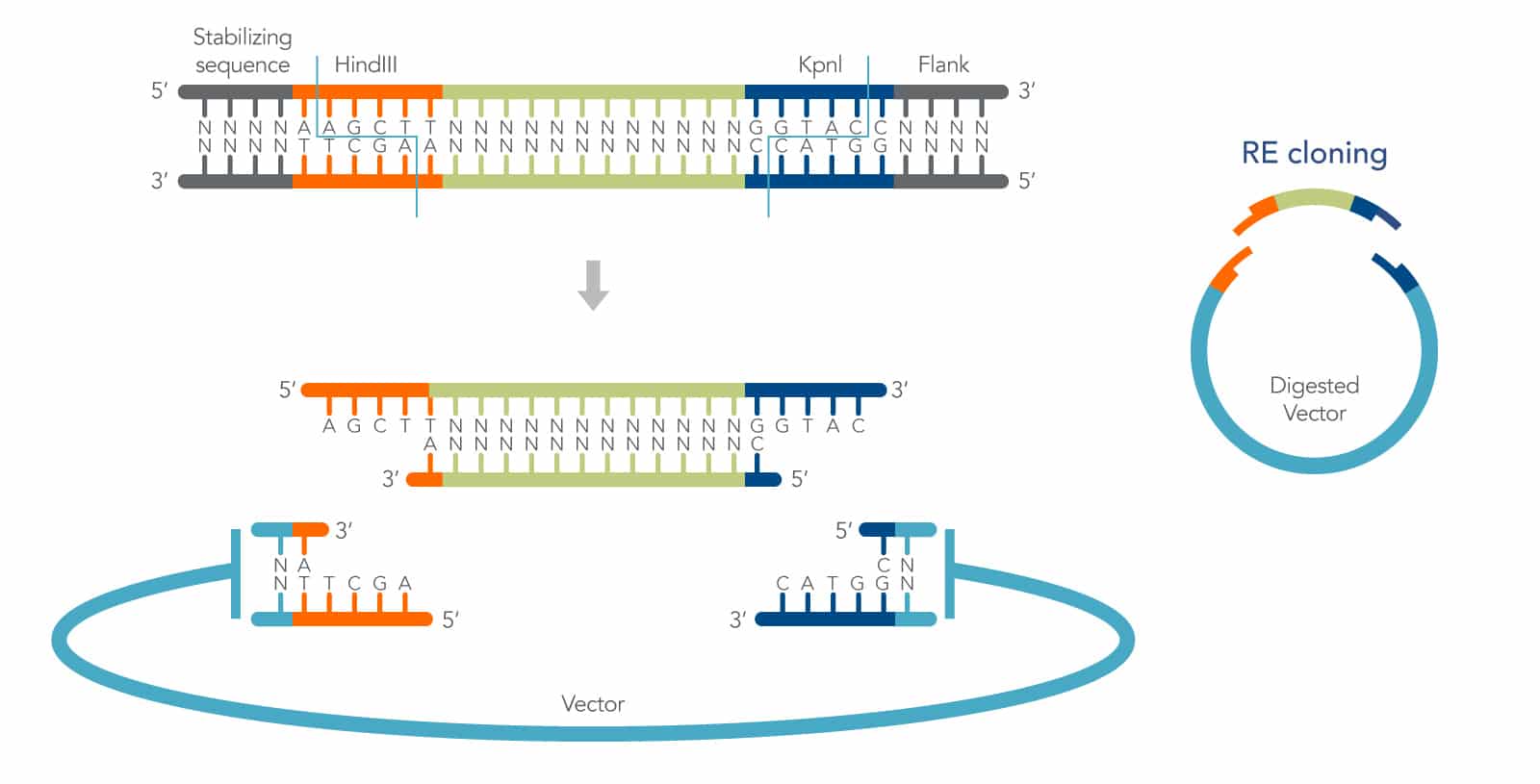
By using restriction enzymes to create sticky ends, scientists were able to cut the human insulin gene and “paste” it into a circular piece of bacterial DNA called a plasmid. Because the sticky ends on both the human gene and the bacterial plasmid were complementary, they snapped together with high fidelity. The result was a “factory” (the bacteria) that could read the human code and produce human insulin at scale. This marked the birth of the modern biotech industry.
Gene Therapy and the Digitization of Medicine
The precision allowed by sticky ends has paved the way for gene therapy—the ability to “patch” or “update” the human genome to treat genetic disorders. Much like a software update fixes a bug in an operating system, gene therapy aims to replace a faulty gene with a functional one.
While newer technologies like CRISPR-Cas9 have introduced even more precise ways to edit DNA, the fundamental concept remains the same: identifying a site, making a cut, and using the natural affinity of DNA sequences (the “stickiness”) to integrate new information. This has transitioned medicine from a focus on chemical intervention (pharmaceuticals) to a focus on informational intervention (genomics).
Beyond the Lab: How Sticky Ends Fuel Industrial Biotech Trends
As we move further into the 21st century, the ability to manipulate DNA is no longer confined to medical research. It is becoming a core component of industrial technology, driving trends in sustainability, manufacturing, and materials science.
Bio-Manufacturing and Sustainable Tech
One of the most significant tech trends today is the shift toward “green” manufacturing. Traditional chemical manufacturing is often energy-intensive and produces toxic waste. Bio-manufacturing, however, uses engineered microorganisms to “grow” products.
Sticky ends are the tools that allow us to engineer these microorganisms. We can now program yeast or bacteria to produce spider silk for high-strength fabrics, biofuels to replace petroleum, or even lab-grown meat. By inserting metabolic pathways into these organisms via sticky-end ligation, we are essentially turning living cells into micro-factories that run on sugar and sunlight rather than fossil fuels.
The Role of AI in Predicting Protein Folding and Genetic Sequences
The intersection of Artificial Intelligence and biotechnology is currently one of the hottest sectors in tech. While sticky ends provide the physical means to join DNA, AI tools like Google DeepMind’s AlphaFold are providing the blueprints.
AI can now predict how a genetic sequence will fold into a three-dimensional protein. This allows engineers to design “custom” proteins that don’t exist in nature and then work backward to determine the DNA sequence needed to create them. Sticky ends then act as the physical assembly mechanism to bring these AI-designed blueprints to life. This synergy is accelerating the pace of innovation in drug discovery and materials science by orders of magnitude.
The Security Protocols of the Genome: Digital Security Meets Bio-Security
As biology becomes more like information technology, it begins to share the same risks and challenges as the digital world. When we talk about what sticky ends allow, we must also consider the security implications of programmable life.
Safeguarding the Bio-Tech Stack
In the world of software, we worry about “code injection” attacks. In biotechnology, the ability to easily “paste” DNA using sticky ends creates a different kind of vulnerability. As DNA synthesis becomes cheaper and more accessible, the barrier to creating harmful pathogens or invasive species lowers.
This has led to the rise of “Bio-Security Tech.” Companies are now developing sophisticated screening algorithms to scan DNA orders for “sequences of concern.” Just as a firewall inspects incoming data packets for malicious code, these systems inspect genetic sequences to ensure that the tools of recombinant DNA aren’t being used to “reboot” dangerous viruses.
Ethical Tech: The Governance of Genetic Modification
The power to “cut and paste” life carries profound ethical weight. The tech industry is currently grappling with the governance of AI, and the biotech industry faces a similar reckoning with genomic editing. What sticky ends allow—the seamless blending of species—challenges our traditional definitions of nature.
Technological trends are now leaning toward “Explainable Bio-Tech,” where the modifications made to an organism are tracked and watermarked within the DNA itself. Using “barcode” sequences (inserted via sticky ends), scientists can trace the origin of a modified organism, ensuring accountability and transparency in the global supply chain.

Conclusion: The Future of Programmable Biology
What do sticky ends allow? They allow us to treat the biological world not as a fixed reality, but as a manageable and programmable medium. They are the essential link that converted biology from an observational discipline into a foundational technology.
As we look to the future, the distinction between “Tech” and “Bio” will continue to blur. We are entering an era of “Bio-Convergence,” where software-driven design, AI-optimized sequences, and sticky-end physical assembly will allow us to solve some of the world’s most pressing problems—from curing hereditary diseases to creating carbon-negative materials.
Sticky ends may be a microscopic biological phenomenon, but their impact is gargantuan. They are the molecular hinges upon which the door to the next industrial revolution is swinging open. In the same way that the transistor defined the 20th century, the ability to precisely engineer DNA—facilitated by the simple, elegant mechanism of sticky ends—is set to define the 21st.
aViewFromTheCave is a participant in the Amazon Services LLC Associates Program, an affiliate advertising program designed to provide a means for sites to earn advertising fees by advertising and linking to Amazon.com. Amazon, the Amazon logo, AmazonSupply, and the AmazonSupply logo are trademarks of Amazon.com, Inc. or its affiliates. As an Amazon Associate we earn affiliate commissions from qualifying purchases.