
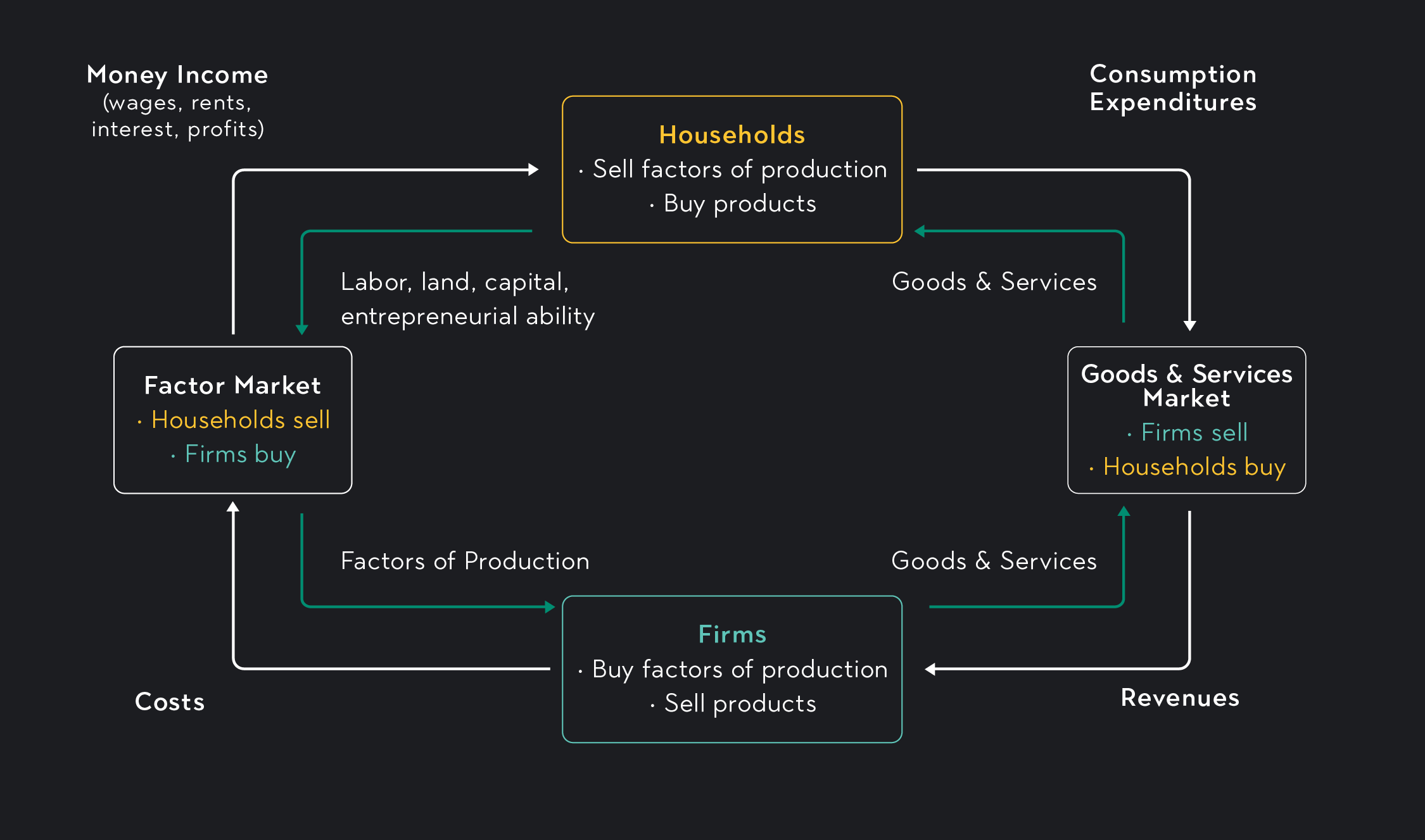
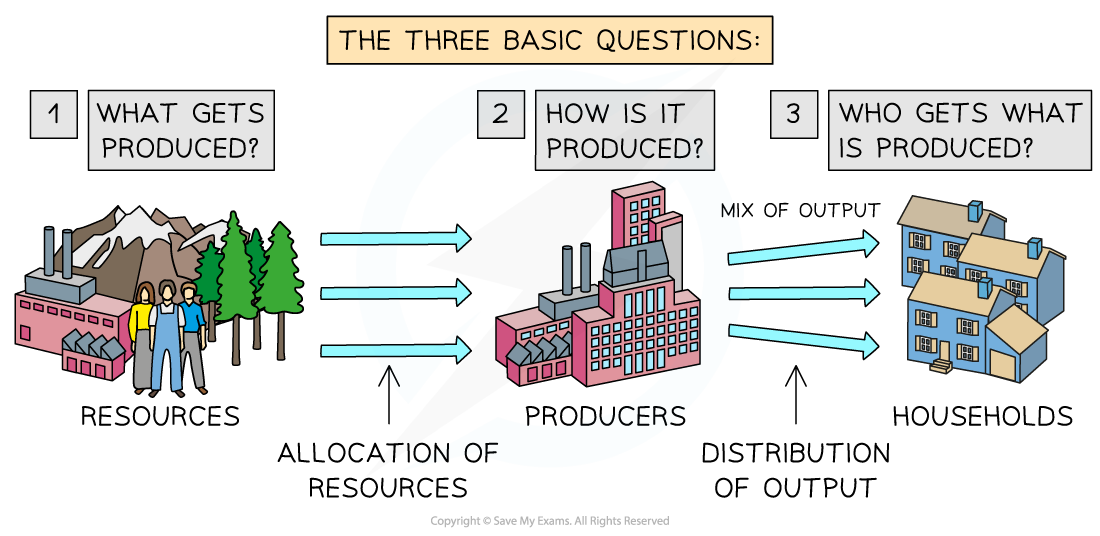
The foundation of all economic systems, regardless of their complexity or the societies they serve, rests upon answering three fundamental questions. These questions are not merely academic exercises; they are the bedrock upon which every decision about resource allocation, production, and consumption is built. Understanding these basic economic questions is crucial for comprehending how economies function, why certain goods and services are produced, and how wealth is distributed. They provide a framework for analyzing the choices societies make in the face of scarcity – the omnipresent reality that human wants and needs are virtually limitless, while the resources available to satisfy them are finite.
1. What to Produce?
The first and arguably most critical economic question is: What to produce? This question directly addresses the allocation of scarce resources towards the creation of specific goods and services. In a world of limited land, labor, capital, and entrepreneurship, societies must make choices about which products and services will be prioritized. The answer to this question is deeply intertwined with the values, priorities, and needs of a given society.
Consumer Demand and Market Signals
In market-based economies, the answer to “what to produce” is largely driven by consumer demand. Consumers, through their purchasing decisions, signal to producers what they want. If a significant number of people are willing to pay for a particular product or service, businesses have an incentive to produce it. This is often referred to as “consumer sovereignty,” where the collective preferences of consumers ultimately dictate what is offered in the marketplace.
- Market Research and Trend Analysis: Businesses invest heavily in understanding consumer behavior, market trends, and unmet needs. This research helps them identify potential opportunities for new products or services that are likely to be in demand.
- Profit Motive: The desire for profit serves as a powerful incentive for producers. If a product can be manufactured and sold at a price that exceeds its production costs, businesses will be motivated to undertake its production.
- Innovation and New Technologies: Technological advancements often create opportunities for new types of products and services. For example, the development of smartphones led to a boom in app development and mobile-based services.
Societal Needs and Government Intervention
In some cases, societal needs or priorities may lead to the production of certain goods and services, even if they are not directly dictated by immediate consumer demand or profit potential. This is particularly relevant in mixed economies and centrally planned economies where governments play a more active role.
- Public Goods and Services: Governments often provide essential public goods and services such as education, healthcare, national defense, and infrastructure (roads, bridges, public transportation). These are often difficult for the private sector to provide efficiently or equitably due to their non-excludable and non-rivalrous nature.
- Addressing Externalities: When the production or consumption of a good or service creates external costs or benefits (externalities), governments might intervene to encourage or discourage its production. For instance, pollution from factories (a negative externality) might lead to regulations or taxes to reduce production. Conversely, subsidies might be offered for renewable energy (a positive externality).
- Strategic Industries: Some governments may choose to support or directly control industries deemed strategically important for national security, economic stability, or technological advancement.
Resource Constraints and Opportunity Costs
Ultimately, the decision of “what to produce” is constrained by the availability of resources. Every choice to produce one good or service means foregoing the opportunity to produce another. This concept is known as opportunity cost. If a country dedicates its skilled labor and capital to producing automobiles, it cannot simultaneously use those same resources to produce airplanes or invest in advanced medical research. The more a society chooses to produce in one area, the more it must give up in another. This trade-off is a fundamental aspect of economic decision-making.
2. How to Produce?
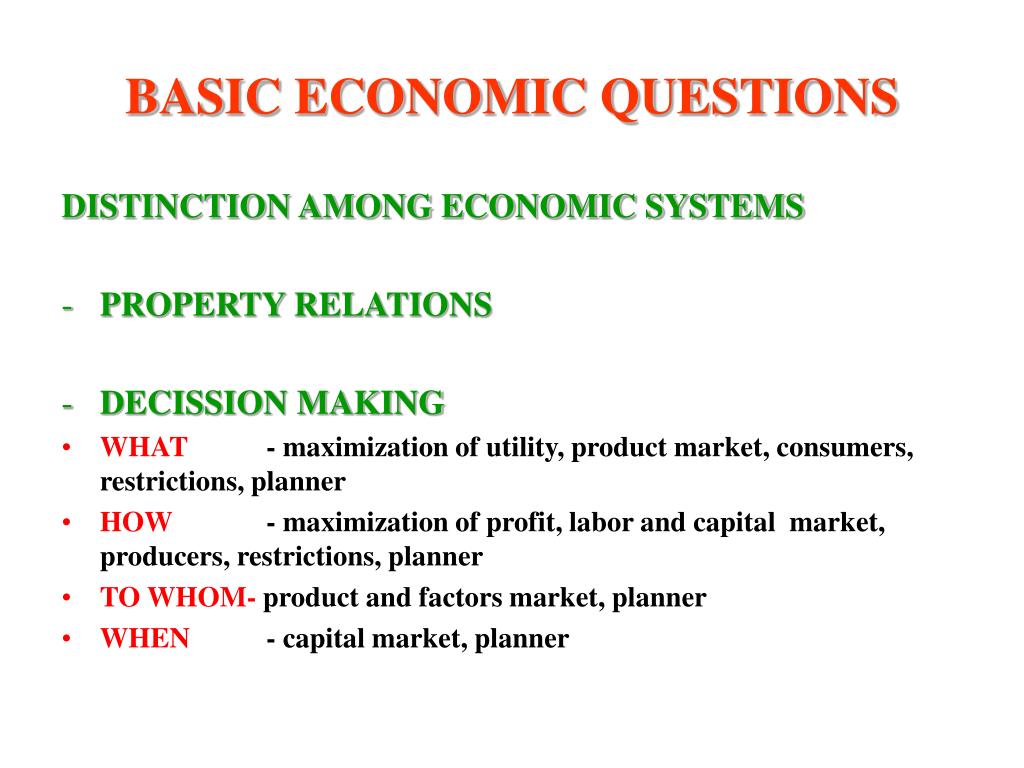
Once a society has determined what goods and services to produce, the next critical question arises: How to produce? This question delves into the methods, technologies, and combinations of resources that will be employed in the production process. The choice of production methods has significant implications for efficiency, cost, environmental impact, and employment.
Technology and Production Methods
The availability and adoption of technology are central to answering “how to produce.” Different technologies offer varying levels of efficiency, labor intensity, and capital intensity.
- Labor-Intensive Production: This method relies heavily on human labor. It might be favored in countries with abundant and relatively inexpensive labor. While it can create more employment opportunities, it might also be less efficient and more prone to human error compared to capital-intensive methods.
- Capital-Intensive Production: This method emphasizes the use of machinery, equipment, and automation. It often leads to higher productivity, greater consistency, and lower per-unit costs in the long run. However, it requires significant upfront investment in capital and may lead to fewer direct employment opportunities.
- Technological Advancements: Continuous innovation in technology allows for the development of more efficient and sustainable production methods. Robotics, artificial intelligence, and advanced manufacturing techniques are transforming “how” goods are produced across various industries.
Factor Combinations and Efficiency
Producers must decide on the optimal combination of the factors of production – land, labor, and capital – to produce their goods and services. This decision is guided by the relative costs and productivity of each factor.
- Minimizing Costs: Businesses aim to produce at the lowest possible cost while maintaining the desired quality. This involves finding the most efficient combination of inputs. For example, if the cost of labor rises significantly, a company might invest in more automated machinery.
- Maximizing Output: The goal is often to maximize output for a given level of input, or to achieve a specific output level with the least amount of input. This relates directly to productivity.
- Economies of Scale: As production volume increases, companies may achieve economies of scale, where the average cost of production decreases. This influences decisions about the size of production facilities and the methods employed.
Environmental and Social Considerations
Increasingly, the “how to produce” question also incorporates environmental and social considerations. The impact of production processes on the environment and the well-being of workers and communities are becoming significant factors.
- Sustainable Production: There is a growing emphasis on developing and adopting production methods that minimize waste, reduce pollution, conserve resources, and use renewable energy sources. This aligns with principles of environmental sustainability.
- Ethical Labor Practices: Societies and consumers are increasingly concerned about ethical labor practices, including fair wages, safe working conditions, and the absence of child labor or forced labor. Companies must decide how to integrate these ethical considerations into their production processes.
- Circular Economy Principles: The concept of a circular economy, where products and materials are reused, repaired, and recycled, is influencing production methods to minimize resource depletion and waste generation.
3. For Whom to Produce?
The third fundamental economic question, For Whom to Produce?, addresses the distribution of goods and services within a society. Once goods and services are produced, societies must decide how they will be allocated among their members. This question is inherently linked to issues of income, wealth, equity, and social justice.
Income and Purchasing Power
In most market economies, the primary determinant of “for whom to produce” is income and purchasing power. Those with higher incomes can afford to purchase more goods and services, while those with lower incomes have less access.
- Wages and Salaries: The income earned through employment is a major factor in determining who can access produced goods and services. The level of wages and salaries is influenced by factors such as skills, education, demand for specific professions, and collective bargaining.
- Profits and Returns on Investment: Individuals and entities that own businesses or have invested capital earn profits and returns, which further enhance their purchasing power.
- Rent and Royalties: Owners of land or intellectual property can earn income through rent or royalties, contributing to their ability to consume.
Government Redistribution and Social Safety Nets
To address inequalities in income and purchasing power, governments often implement policies aimed at redistributing wealth and ensuring a basic standard of living for all citizens.
- Progressive Taxation: Tax systems where higher earners pay a larger percentage of their income in taxes can generate revenue that is then used to fund public services and social programs.
- Transfer Payments: This includes social security benefits, unemployment insurance, welfare programs, and food stamps. These payments provide a safety net for vulnerable populations and increase their access to essential goods and services.
- Subsidies for Essential Goods: Governments may subsidize the cost of essential goods like housing, healthcare, or education to make them more accessible to lower-income individuals and families.
Market Mechanisms vs. Social Equity
The tension between market-driven distribution and social equity is a constant theme in economic policy. While market mechanisms tend to reward those who are most productive or possess in-demand skills, they can also lead to significant disparities.
- Meritocracy vs. Equality of Opportunity: Some economic systems emphasize meritocracy, where rewards are based on individual effort and ability. Others prioritize equality of opportunity, aiming to ensure that everyone has a fair chance regardless of their background.
- Social Welfare Goals: The degree to which a society values social welfare and aims for equitable distribution influences its approach to the “for whom to produce” question. Nations with strong social welfare traditions often have more robust redistribution mechanisms.
- The Role of Markets: Even in economies with significant social safety nets, markets play a crucial role in allocating many goods and services. The question becomes one of balance: how much should be left to market forces, and how much should be guided by social objectives?
In conclusion, the three basic economic questions – what to produce, how to produce, and for whom to produce – are fundamental to understanding any economic system. They are not static but evolve with technological advancements, societal values, and changing resource availability. The answers to these questions shape the character of an economy, influencing everything from the availability of everyday goods to the overall well-being and equity of its citizens.
aViewFromTheCave is a participant in the Amazon Services LLC Associates Program, an affiliate advertising program designed to provide a means for sites to earn advertising fees by advertising and linking to Amazon.com. Amazon, the Amazon logo, AmazonSupply, and the AmazonSupply logo are trademarks of Amazon.com, Inc. or its affiliates. As an Amazon Associate we earn affiliate commissions from qualifying purchases.