
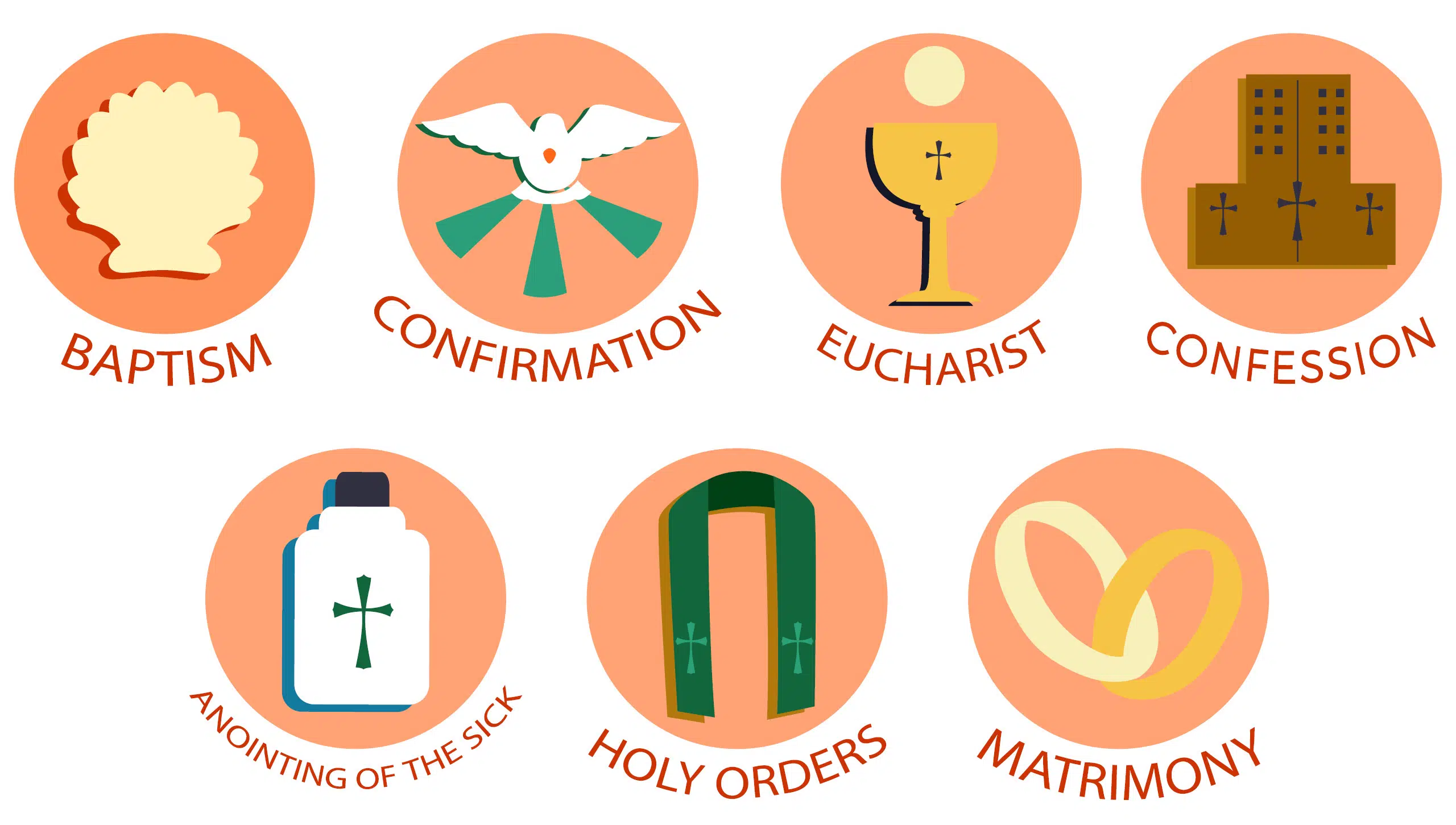
The Catholic Church recognizes seven sacraments, which are understood as outward signs instituted by Christ to give grace. These sacred rituals are central to the spiritual lives of Catholics, marking significant moments of faith and offering divine assistance. They are not mere symbols, but efficacious signs that convey the grace they signify. Understanding the nature and purpose of each sacrament is crucial for a deeper appreciation of Catholic theology and practice.
Understanding Sacraments: Divine Encounters and Spiritual Growth
The concept of sacraments is deeply rooted in the belief that God interacts with humanity through tangible means. In the Catholic tradition, sacraments are seen as moments where the divine touches the human, bestowing spiritual benefits and strengthening the bond between believers and God. They are channels of God’s grace, essential for the journey of faith.
The Nature and Purpose of Sacraments
Sacraments are more than just religious ceremonies; they are perceived as instrumental causes of grace. This means that through the proper administration and reception of a sacrament, God’s grace is directly imparted to the recipient. Theologians often distinguish between the “matter” (a physical element like water or oil), the “form” (the words spoken), and the “intention” (the minister’s intention to do what the Church does) as essential components for a valid sacrament.
The primary purpose of the sacraments is to sanctify believers, build up the Body of Christ, and provide for the worship of God. They are seen as divine encounters that nourish the soul, strengthen the will, and enable Catholics to live out their faith more fully. Each sacrament has a specific role in the life of an individual and the community of the Church.
Sacraments as Visible Signs of Invisible Grace
Jesus Christ, in his earthly ministry, often used physical actions and objects – like touching the sick or washing feet – to convey spiritual healing and love. The sacraments are considered a continuation of this salvific work. They make God’s invisible grace visible and tangible. For instance, the washing with water in Baptism symbolizes the cleansing of sin and rebirth into a new life in Christ. The anointing with oil in Confirmation and Anointing of the Sick signifies the strengthening presence of the Holy Spirit.
This understanding of sacraments as visible signs of invisible grace is fundamental to Catholic sacramental theology. It underscores the belief that God’s power is actively at work in the world through these sacred rites, offering spiritual transformation and empowerment to those who receive them with faith.
The Sacraments of Initiation: Entry into the Christian Life
The Sacraments of Initiation form the foundation of a Catholic’s spiritual journey, marking their formal entry into the Church and their ongoing commitment to Christ. These sacraments are Baptism, Confirmation, and the Eucharist. They are considered “initiation” because they welcome individuals into the community of believers and equip them with the spiritual life necessary to live as Christians.
Baptism: The Gateway to New Life
Baptism is the first and foundational sacrament. Through the pouring of water or immersion, and the invocation of the Trinity, individuals are cleansed of original sin and all personal sins, reborn as children of God, and incorporated into the Church. It is the gateway to the other sacraments and marks a person as a disciple of Christ. Baptism imprints an indelible spiritual mark on the soul, signifying that a person belongs to Christ and can never be re-baptized. For infants, it is received through the faith of their parents and godparents, who promise to raise them in the Catholic faith. Adults who are baptized have typically undergone a period of preparation, often called the Rite of Christian Initiation for Adults (RCIA).
Confirmation: Strengthening with the Holy Spirit
Confirmation is the sacrament that completes Baptism. In Confirmation, the baptized are more perfectly bound to the Church and are enriched with a special strength of the Holy Spirit. This sacrament equips believers with the gifts of the Holy Spirit – such as wisdom, understanding, counsel, fortitude, knowledge, piety, and fear of the Lord – enabling them to be more effective witnesses to Christ in the world. The minister of Confirmation is typically a bishop, who lays hands on the candidate and anoints them with chrism, a consecrated oil. This rite signifies the bestowal of the Holy Spirit’s power, empowering individuals to live out their faith boldly and to participate actively in the mission of the Church.

The Eucharist: The Source and Summit of Christian Life
The Eucharist, also known as Holy Communion, is the “source and summit” of the Christian life. In this sacrament, Jesus Christ himself is truly, really, and substantially present under the appearances of bread and wine. Through the consecration by a priest, the bread and wine become the Body and Blood of Christ. Receiving the Eucharist nourishes the spiritual life, forgives venial sins, and strengthens the bond of unity with Christ and with all the faithful. It is a participation in Christ’s sacrifice on the cross and a foretaste of the heavenly banquet. For Catholics, regular reception of the Eucharist is considered essential for spiritual growth and perseverance in faith.
The Sacraments of Healing: Reconciliation and Anointing of the Sick
The Sacraments of Healing address the spiritual and physical wounds that individuals may experience throughout their lives. These sacraments offer forgiveness, strength, and solace in times of difficulty and illness. They reflect God’s boundless mercy and his desire to restore wholeness to his people.
Reconciliation (Penance and Confession): Restoring God’s Grace
The Sacrament of Reconciliation, often called Confession, is the means by which Catholics can confess their sins to a priest and receive forgiveness from God. It is a sacrament of healing that restores the grace lost through mortal sin and helps to heal the wounds of venial sins. Through contrition (sorrow for sins), confession to a priest, and satisfaction (penance assigned by the priest), individuals are reconciled with God and the Church. This sacrament is vital for maintaining a healthy spiritual life, as it allows believers to continually return to God’s love and mercy, even after falling into sin. The priest acts in persona Christi (in the person of Christ), assuring the penitent of God’s loving forgiveness.
Anointing of the Sick: Spiritual and Physical Restoration
The Anointing of the Sick is a sacrament that offers spiritual strength, comfort, and healing to those who are suffering from serious illness, or who are in danger of death due to old age. While it is often associated with the final moments of life, it can be administered to anyone experiencing a significant health challenge. The sacrament involves anointing the sick person with blessed oil and offering prayers for their recovery and spiritual well-being. It can remit sins if the person is unable to confess them, and it strengthens the individual to unite their sufferings with Christ’s. This sacrament assures the suffering individual that they are not alone in their struggle and that God’s presence and healing power are with them.
The Sacraments at the Service of Communion: Holy Orders and Matrimony
The Sacraments at the Service of Communion, also known as the Sacraments of Vocation, are directed toward the salvation of others rather than toward the sanctification of the individual. They establish a permanent bond and call individuals to serve God and his people in specific ways within the Church.
Holy Orders: Ordination to Service
The Sacrament of Holy Orders consecrates men to the ordained ministry within the Church – as deacons, priests, or bishops. Through the laying on of hands by a bishop and prayer, these men are empowered by the Holy Spirit to serve the People of God as teachers, pastors, and shepherds. Bishops are successors to the Apostles, entrusted with the fullness of the priesthood. Priests share in the priesthood of Christ and are empowered to celebrate the sacraments, preach the Gospel, and guide the faithful. Deacons are ordained for service, assisting bishops and priests in ministry, particularly in works of charity and in the proclamation of the Word. This sacrament imprints an indelible character, signifying that the ordained minister is set apart for a lifelong ministry of service.
Matrimony: The Covenant of Love
The Sacrament of Matrimony establishes an indissoluble covenant between a baptized man and a baptized woman, signifying the union of Christ with his Church. Through their mutual consent, the spouses are called to a lifelong commitment of love, fidelity, and mutual support. Matrimony is a sign of God’s love for humanity and a means by which the spouses can grow in holiness and contribute to the building of God’s kingdom. It is intended for the good of the spouses and for the procreation and education of children. The graces of this sacrament strengthen the couple to overcome difficulties, to love each other selflessly, and to raise their children in the faith.

Conclusion: The Sacraments as Pillars of Catholic Life
The seven Catholic sacraments are not isolated rituals but a cohesive system designed to guide believers through every stage of life, from birth to death and beyond. They are divine encounters that infuse grace, strengthen faith, and empower individuals to live as disciples of Christ. From the initiation that welcomes one into the Church, to the healing that restores and comforts, and the vocations that call one to serve, the sacraments form the very bedrock of Catholic spirituality and practice. Understanding and embracing these sacred signs allows for a richer and more profound participation in the life of the Church and a deeper communion with God.
aViewFromTheCave is a participant in the Amazon Services LLC Associates Program, an affiliate advertising program designed to provide a means for sites to earn advertising fees by advertising and linking to Amazon.com. Amazon, the Amazon logo, AmazonSupply, and the AmazonSupply logo are trademarks of Amazon.com, Inc. or its affiliates. As an Amazon Associate we earn affiliate commissions from qualifying purchases.