
In the realm of global belief systems, “Christianity” often serves as an overarching umbrella term, a vast and diverse marketplace of faith. Within this expansive landscape, various traditions have emerged, each with its unique identity, historical trajectory, and distinct approach to doctrine and practice. Among the most prominent and historically significant of these is Catholicism. Understanding the nuances that differentiate Catholicism from the broader spectrum of Christianity is akin to discerning the distinct brand identity of a leading player within a major industry. It’s not about inherent superiority or inferiority, but about recognizing the specific attributes, historical evolution, and strategic positioning that define Catholicism as a recognizable and enduring brand of faith.
The Foundational Pillars: Shared Identity and Core Messaging
At its heart, any brand is built upon a foundational set of principles that define its essence and appeal to its audience. Similarly, Catholicism and Christianity, in their broadest sense, share fundamental tenets that form the bedrock of their collective identity. This shared foundation is crucial for understanding why Catholicism is considered a part of Christianity in the first place, establishing a common language and set of core beliefs that resonate across various traditions.
The Divinity of Jesus Christ: The Central Narrative
The singular, unifying message that underpins all of Christianity, and thus Catholicism, is the belief in Jesus Christ as the Son of God and the Savior of humanity. This is the central narrative, the compelling origin story that distinguishes this faith tradition from all others. The resurrection of Jesus is not merely a historical event but the ultimate proof of his divine nature and the promise of eternal life for believers. For both Catholic and non-Catholic Christians, this belief is paramount, forming the cornerstone of their theology and the driving force behind their spiritual aspirations. The entire marketing strategy, so to speak, of Christianity hinges on this singular figure and his salvific work.
The Holy Trinity: A Unified Doctrine of Godhead
Another critical element of shared identity is the doctrine of the Holy Trinity. This complex theological concept, which posits God as one being existing in three co-equal persons – the Father, the Son, and the Holy Spirit – is a fundamental tenet of mainstream Christianity, including Catholicism. While the specific theological articulation and emphasis might vary across denominations, the acceptance of the Trinity as the nature of God remains a unifying factor. This doctrine, often challenging to grasp fully, represents a core piece of “messaging” that adherents are expected to understand and embrace. It’s a testament to the profound theological thinking that underpins the Christian brand.
Sacred Scripture: The Authoritative Source of Truth
The Bible, comprising the Old and New Testaments, serves as the divinely inspired word of God and the primary authoritative source of Christian doctrine and practice. While interpretations of scripture can differ significantly among various Christian denominations, the Bible’s status as foundational text is universally recognized. This shared reliance on scripture provides a common reference point and a framework for theological discourse, even as different groups derive distinct interpretations and develop unique theological stances. It’s the primary “product manual” for the Christian faith, guiding believers in their understanding of God’s will and their relationship with Him.
Distinctive Brand Elements: What Sets Catholicism Apart
While sharing foundational beliefs, Catholicism has cultivated a unique brand identity characterized by specific historical developments, institutional structures, and a rich tapestry of traditions. These distinguishing features have shaped its unique appeal and its enduring presence on the global religious stage. Recognizing these elements is key to understanding why one might identify with Catholicism specifically, rather than just “Christianity” in a general sense.
The Papacy and Apostolic Succession: The Authority of the See of Rome
Perhaps the most significant differentiating factor is Catholicism’s strong emphasis on the Papacy and the doctrine of Apostolic Succession. Catholics believe that the Pope, as the Bishop of Rome, is the successor to the Apostle Peter, whom Jesus appointed as the head of his Church. This belief confers upon the Pope a unique authority and role as the visible head of the Church on Earth. Apostolic Succession, the unbroken line of bishops tracing their authority back to the apostles, is seen as ensuring the integrity of doctrine and sacraments. This hierarchical structure and the centralized authority of the Pope are defining characteristics of the Catholic brand, offering a clear chain of command and a visible spiritual leader, which differentiates it from many Protestant denominations that emphasize congregational or presbyterian forms of governance.

Sacramental Theology and Practice: The Seven Sacraments as Channels of Grace
Catholicism places a profound emphasis on the seven sacraments – Baptism, Confirmation, the Eucharist, Penance (Reconciliation), Anointing of the Sick, Holy Orders, and Matrimony – as outward signs instituted by Christ to give grace. These sacraments are not mere symbols but are considered efficacious means through which God’s grace is imparted to believers. The Eucharist, in particular, holds a central place, with the doctrine of transubstantiation asserting that the bread and wine truly become the body and blood of Christ. This rich sacramental life, deeply woven into the fabric of Catholic worship and daily devotion, represents a distinct offering within the Christian faith. It provides a tangible, ritualistic way for adherents to experience and engage with the divine, shaping their spiritual journey and reinforcing their identity as Catholics.
The Role of Tradition and the Magisterium: Unfolding Divine Revelation
Beyond the Bible, Catholicism also places significant importance on Sacred Tradition and the Magisterium – the teaching authority of the Church, vested in the Pope and the bishops in communion with him. Tradition encompasses the teachings and practices passed down from the apostles, which are seen as complementary to scripture in understanding divine revelation. The Magisterium’s role is to interpret both scripture and tradition authoritatively, ensuring that the Church’s teachings remain consistent with the original deposit of faith. This dual reliance on scripture and tradition, interpreted by a living Magisterium, provides a robust framework for theological development and a sense of continuity with the early Church. It acts as a sophisticated brand guide, ensuring that the core message is maintained and articulated faithfully across generations.
Marian Devotion and the Communion of Saints: Extended Family of Faith
Catholicism uniquely emphasizes the veneration of Mary, the mother of Jesus, as the Mother of God and a powerful intercessor. This Marian devotion, while present in other Christian traditions to varying degrees, is a defining characteristic of Catholic spirituality. Furthermore, the doctrine of the Communion of Saints posits a spiritual solidarity among all believers, both living and deceased, who are united in Christ. This includes the veneration of saints, individuals recognized for their exemplary lives of faith, who are believed to pray for believers on Earth. These elements foster a deep sense of community and interconnectedness, extending the spiritual family beyond the earthly realm and providing a rich tapestry of figures to emulate and from whom to seek intercession. This aspect of the Catholic brand offers a profound sense of belonging and a network of spiritual support.
Understanding the Relationship: Denomination vs. Broad Category
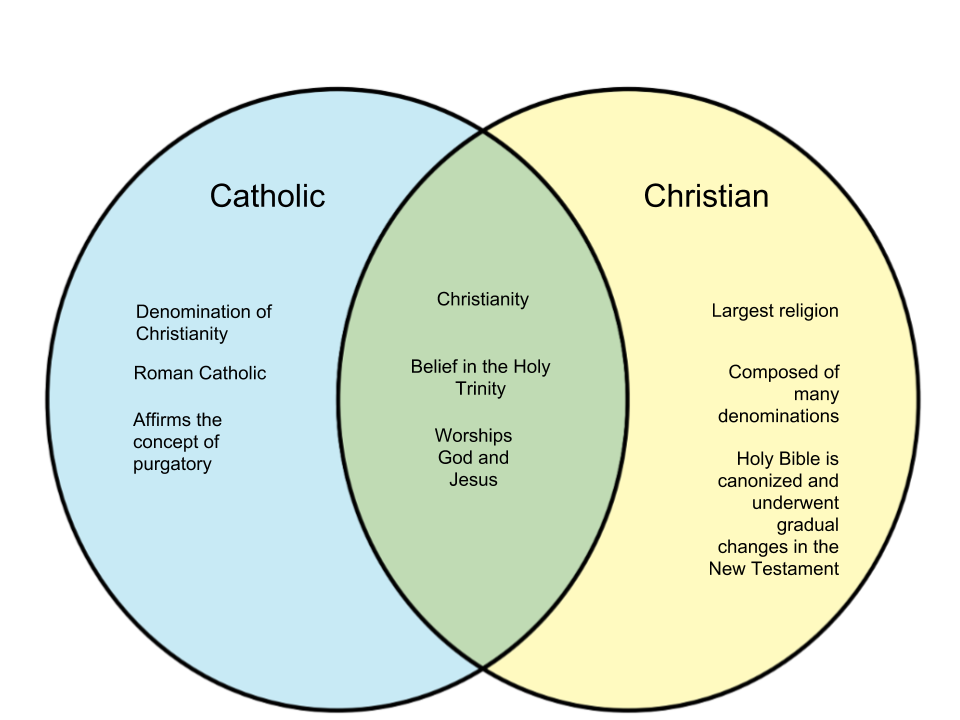
It is crucial to understand that Catholicism is not a separate religion from Christianity. Instead, it is the largest single denomination within the broader Christian faith. Think of “Christianity” as the overarching industry, and “Catholicism” as a leading, historically significant, and highly developed brand within that industry. Other major brands within this industry include Eastern Orthodoxy, Protestantism (with its myriad sub-brands like Lutheranism, Methodism, Baptist, Pentecostalism, etc.), and various independent churches.
Diversity within Christianity: A Spectrum of Expression
The term “Christianity” encompasses a vast spectrum of beliefs, practices, and organizational structures. While all Christians generally affirm the divinity of Jesus Christ and the authority of the Bible, the ways in which these core tenets are understood and lived out can differ significantly. For example, different denominations have varying views on baptism, church governance, the nature of worship, and the interpretation of end-times prophecies. This diversity is a testament to the dynamic and evolving nature of faith communities, each adapting to its historical, cultural, and theological context.
Catholicism’s Historical Trajectory: Continuity and Evolution
Catholicism traces its origins back to the early Christian Church, emphasizing a continuity of leadership and doctrine from the time of the apostles. Its historical trajectory has involved significant theological developments, councils, and periods of reform, all while striving to maintain a consistent identity. This long and unbroken history, coupled with its structured hierarchy and rich tradition, gives Catholicism a distinct place within the Christian landscape. It has consistently presented itself as the original and universal Church, a positioning that has shaped its brand image for centuries.
The “Brand” of Catholicism: Enduring Appeal and Global Reach
The “brand” of Catholicism is characterized by its historical depth, its emphasis on tradition and authority, its rich sacramental life, and its global presence. It offers a comprehensive spiritual system that provides structure, community, and a clear path to salvation for its adherents. For many, the predictability and continuity offered by the Catholic Church, along with its elaborate rituals and profound theological teachings, provide a sense of stability and meaning in a complex world. Its enduring appeal lies in its ability to connect individuals to a historical narrative, a community of faith, and a perceived direct link to the divine.
In conclusion, while sharing the fundamental identity of being Christian, Catholicism distinguishes itself through a unique blend of institutional authority, sacramental richness, and a deep reverence for tradition. Understanding these differences allows for a more nuanced appreciation of the diverse expressions of Christian faith and the distinct positioning of Catholicism as a powerful and enduring brand within the global religious marketplace.
aViewFromTheCave is a participant in the Amazon Services LLC Associates Program, an affiliate advertising program designed to provide a means for sites to earn advertising fees by advertising and linking to Amazon.com. Amazon, the Amazon logo, AmazonSupply, and the AmazonSupply logo are trademarks of Amazon.com, Inc. or its affiliates. As an Amazon Associate we earn affiliate commissions from qualifying purchases.