
Mechanical waves are a fundamental concept in physics, describing disturbances that propagate through a medium. Understanding their categorization is crucial for comprehending a vast array of phenomena, from the seismic rumblings of earthquakes to the delicate vibrations of a musical instrument. While the term “mechanical wave” itself might seem esoteric, its implications touch upon various technological applications, influencing how we design communication systems, medical imaging devices, and even how we analyze structural integrity. This article will delve into the primary classification of mechanical waves, providing a foundational understanding that can be readily applied within the realm of technology.
Understanding the Nature of Mechanical Waves
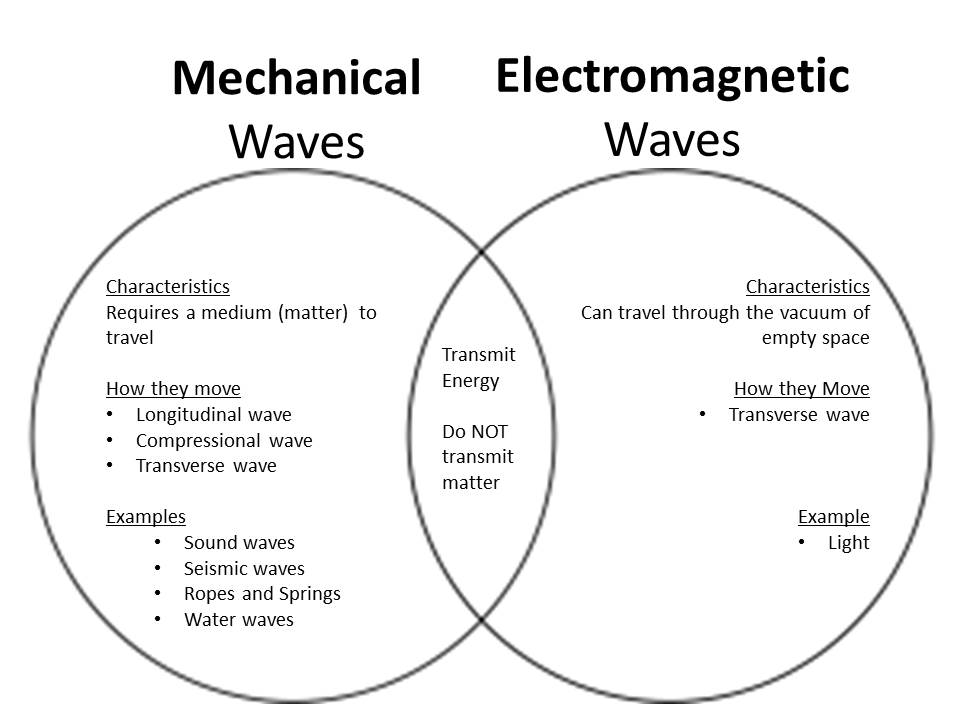
At its core, a mechanical wave is a physical disturbance that necessitates a medium through which to travel. Unlike electromagnetic waves (like light or radio waves) which can propagate through a vacuum, mechanical waves require the presence of matter – be it solid, liquid, or gas – to transmit energy. This reliance on a medium is a defining characteristic and dictates the types of interactions and behaviors these waves exhibit.
The Medium’s Role in Wave Propagation
The medium plays an active role in the existence and behavior of mechanical waves. When a disturbance occurs, it displaces particles within the medium from their equilibrium positions. These displaced particles then exert forces on their neighboring particles, causing them to also move and thus propagating the disturbance. Think of a ripple on a pond: the water molecules themselves are not transported across the pond; rather, the energy of the initial disturbance is transferred from one molecule to the next, creating the visible wave pattern. The properties of the medium – its density, elasticity, and temperature, for instance – significantly influence the speed and characteristics of the wave’s propagation. For example, sound travels faster in solids than in gases because the particles in solids are more closely packed and interact more strongly.
Energy Transfer Without Mass Transfer
A key takeaway regarding mechanical waves is that they transfer energy, not mass, over distances. While the particles of the medium oscillate around their equilibrium positions, they do not undergo a net displacement from one point to another. This distinction is vital in understanding wave phenomena and distinguishing them from bulk fluid flow or the movement of objects. The energy carried by the wave can do work, such as shaking the ground during an earthquake or driving the diaphragm of a loudspeaker. The amount of energy transferred is related to the amplitude and frequency of the wave, concepts that have direct applications in calibrating and understanding the output of various technological devices.
The Two Primary Categories: Transverse and Longitudinal Waves
The primary dichotomy within mechanical waves is based on the direction of particle oscillation relative to the direction of wave propagation. This distinction leads to two fundamental categories: transverse waves and longitudinal waves. Each type exhibits unique characteristics and finds diverse applications in technology.
Transverse Waves: Oscillation Perpendicular to Propagation
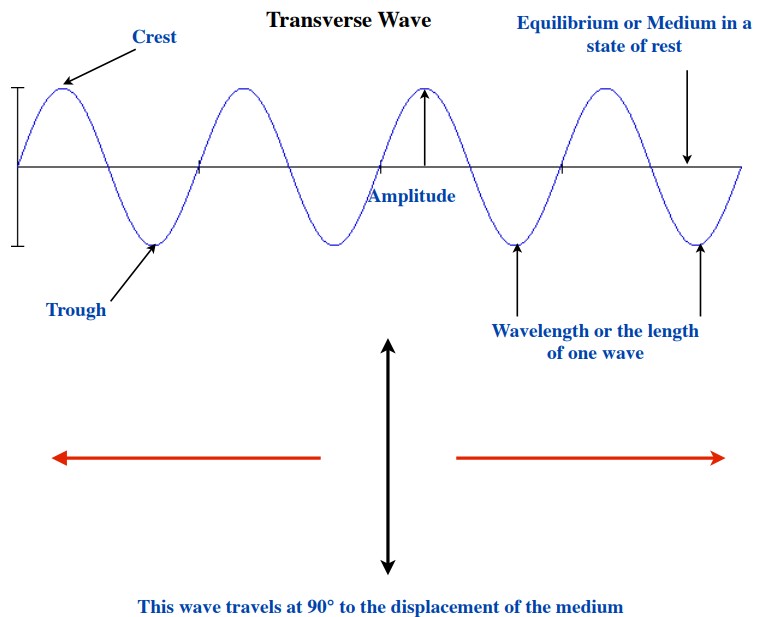
In a transverse wave, the particles of the medium oscillate in a direction perpendicular (at a 90-degree angle) to the direction in which the wave is traveling. Imagine flicking a rope up and down; the wave travels horizontally along the rope, but the individual segments of the rope move vertically. This up-and-down or side-to-side motion creates crests (high points) and troughs (low points) in the wave.
Characteristics of Transverse Waves
The amplitude of a transverse wave refers to the maximum displacement of a particle from its equilibrium position. The wavelength is the distance between two consecutive crests or troughs. The frequency is the number of complete oscillations a particle makes per unit of time. These parameters are critical in analyzing and controlling transverse wave phenomena in technological systems. For instance, in optical fiber communication, light, which is an electromagnetic wave but shares transverse wave characteristics, is guided by the fiber’s properties, with its frequency and amplitude determining the data-carrying capacity.
Technological Applications of Transverse Waves
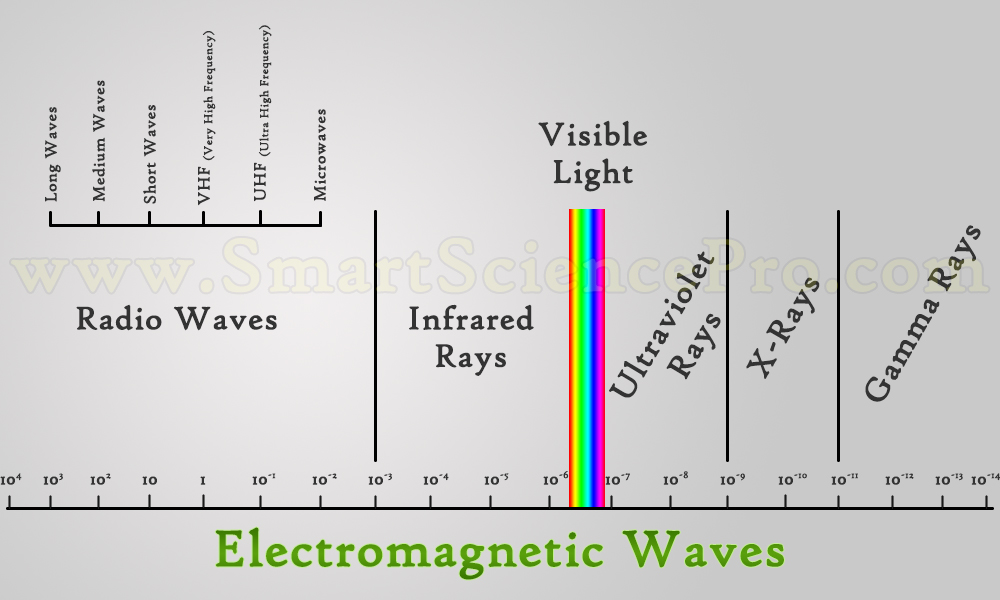
Transverse waves are fundamental to a wide range of technologies. The most familiar example is light, which, as an electromagnetic wave, exhibits transverse behavior and forms the basis of fiber optics, lasers, and digital imaging sensors. In the realm of mechanical waves, seismic S-waves (secondary waves) generated by earthquakes are transverse, causing the ground to shake from side to side. This understanding is crucial for seismological monitoring and structural engineering designed to withstand such vibrations. Another important application is in the design of acoustic transducers, which convert electrical signals into mechanical vibrations (and vice versa) and are often designed to generate or detect transverse displacements for specific sensing or actuation purposes.
Longitudinal Waves: Oscillation Parallel to Propagation
In a longitudinal wave, the particles of the medium oscillate back and forth in a direction parallel to the direction of wave propagation. The classic example is sound waves traveling through air. As a sound source vibrates, it compresses and rarefies the air particles in front of it. These compressions (regions of high pressure) and rarefactions (regions of low pressure) propagate through the air as a wave.
Characteristics of Longitudinal Waves
The key features of longitudinal waves are compressions and rarefactions. Compressions are areas where the particles are crowded together, resulting in higher density and pressure. Rarefactions are areas where the particles are spread apart, leading to lower density and pressure. The wavelength of a longitudinal wave is the distance between two consecutive compressions or rarefactions. The amplitude, in this context, often relates to the maximum pressure variation or displacement from equilibrium.
Technological Applications of Longitudinal Waves
Longitudinal waves are ubiquitous in technology, with sound being the most prominent example. Ultrasound technology, which utilizes high-frequency sound waves, is a prime illustration. In medical imaging, ultrasound probes emit longitudinal sound waves that penetrate the body, reflecting off different tissues. The returning echoes are analyzed to create images, enabling non-invasive diagnostics for a wide array of conditions. In industrial applications, ultrasound is used for non-destructive testing, material inspection, and cleaning. Furthermore, acoustic engineering, which deals with the generation, transmission, and control of sound, relies heavily on understanding the behavior of longitudinal waves in various media, influencing the design of concert halls, noise cancellation systems, and audio equipment. The principles of pressure variation also underpin certain types of pneumatic actuators and sensors used in automation.
Beyond the Primary Classification: Wave Phenomena in Technology
While the distinction between transverse and longitudinal waves is fundamental, the application and understanding of mechanical waves in technology extend to their various behaviors and phenomena. These include reflection, refraction, diffraction, and interference, all of which can be manipulated for technological advancement.
Reflection and Refraction: Guiding and Focusing Waves
Reflection is the bouncing of a wave off a surface. This principle is exploited in sonar systems, where sound waves are reflected off underwater objects to determine their distance and location. Similarly, in medical ultrasound, echoes are reflections that provide imaging data. Refraction, on the other hand, is the bending of a wave as it passes from one medium to another with different properties. This phenomenon is crucial in the design of lenses for optical devices and in understanding how seismic waves change direction as they travel through Earth’s layers. In fiber optics, refraction at the core-cladding interface is what keeps the light waves confined within the fiber.
Diffraction and Interference: Wave Manipulation and Signal Processing
Diffraction is the spreading of waves as they pass through an opening or around an obstacle. This can be both a useful phenomenon and a source of signal degradation. For instance, the diffraction of light through a narrow slit is a key demonstration in wave optics and has applications in spectroscopy. Interference occurs when two or more waves combine. Constructive interference, where wave crests align with crests, amplifies the signal, while destructive interference, where crests align with troughs, cancels the signal. These principles are fundamental to signal processing, noise reduction techniques, and the development of advanced communication systems where precise manipulation of wave patterns is essential for encoding and decoding information. For example, in digital audio processing, interference patterns are carefully managed to achieve desired sound qualities or to eliminate unwanted noise.
Conclusion: The Enduring Relevance of Mechanical Waves in Technology
The categorization of mechanical waves into transverse and longitudinal forms provides a foundational framework for understanding a vast array of physical phenomena. However, their true impact on technology lies in the practical application of their behaviors. From the intricate signaling within optical fibers to the diagnostic imaging capabilities of ultrasound, the principles governing mechanical waves are continuously leveraged and refined. As technology advances, a deeper appreciation for these fundamental wave properties will undoubtedly lead to further innovations, shaping how we communicate, diagnose, and interact with the world around us. The persistent study and application of wave mechanics remain a cornerstone of modern technological progress, underscoring their enduring relevance.
aViewFromTheCave is a participant in the Amazon Services LLC Associates Program, an affiliate advertising program designed to provide a means for sites to earn advertising fees by advertising and linking to Amazon.com. Amazon, the Amazon logo, AmazonSupply, and the AmazonSupply logo are trademarks of Amazon.com, Inc. or its affiliates. As an Amazon Associate we earn affiliate commissions from qualifying purchases.