
The question “how much is 1 BTC” is perhaps one of the most frequently searched queries in the history of modern finance. However, for the seasoned investor and the curious newcomer alike, the answer is rarely a simple numerical value. While a ticker on an exchange might provide a real-time price in US Dollars, Euros, or Yen, the true “cost” and “value” of one Bitcoin are multifaceted concepts rooted in economic theory, market psychology, and the fundamental shift in how humanity perceives wealth.
In the current financial landscape, Bitcoin has transitioned from a niche experiment in cryptography to a legitimate institutional asset class. To understand how much 1 BTC is worth, one must look beyond the daily fluctuations and examine the underlying financial mechanisms that drive its price discovery.
The Mechanics of Bitcoin Pricing: Supply, Demand, and Scarcity
At its most basic level, the price of Bitcoin is determined by the same laws that govern the price of gold, oil, or stocks: supply and demand. However, Bitcoin introduces a unique variable into this equation that traditional fiat currencies—like the Dollar or the Pound—cannot match: absolute, programmatic scarcity.
Market Capitalization and Real-Time Price Discovery
The price you see on an exchange is the “last traded price.” This is the point at which a buyer and a seller agreed on a transaction. Because Bitcoin trades 24/7 on global exchanges, its price is in a state of constant flux. Unlike the stock market, which has opening and closing bells, the valuation of 1 BTC is a global, continuous conversation.
The market capitalization—calculated by multiplying the current price of 1 BTC by the total number of coins in circulation—provides a macro view of Bitcoin’s size relative to other assets. When investors ask “how much is 1 BTC,” they are often unconsciously assessing its “market cap” to see if it has the potential to rival the valuation of gold or the world’s largest tech corporations.
The Role of the “Halving” and the Stock-to-Flow Model
Unlike central banks, which can print more money at will, Bitcoin’s supply is capped at 21 million coins. Approximately every four years, an event known as “The Halving” occurs, where the reward for mining new blocks is cut in half. This reduces the rate at which new Bitcoins enter the market, creating a supply shock.
From a financial perspective, this makes Bitcoin a “disinflationary” asset. Many analysts use the Stock-to-Flow model—originally applied to precious metals—to justify Bitcoin’s high valuation. This model suggests that as the ratio of existing supply (stock) to new annual production (flow) increases, the value of the asset should theoretically rise. Therefore, 1 BTC is not just a unit of currency; it is a share in a finite digital real estate.
Macroeconomic Drivers: Why the Price Moves
Bitcoin does not exist in a vacuum. Its price is heavily influenced by the broader global economy. In recent years, Bitcoin has increasingly become a “macro” asset, responding to shifts in monetary policy and geopolitical stability.
Inflation, Interest Rates, and the “Hedge” Narrative
One of the primary reasons investors are willing to pay a premium for 1 BTC is its reputation as “Digital Gold.” When central banks engage in quantitative easing or when inflation rates climb, the purchasing power of fiat currency diminishes. In this environment, investors seek “hard assets.”
Interestingly, the price of Bitcoin often shows a correlation with global liquidity. When interest rates are low and “easy money” is flowing through the economy, Bitcoin tends to perform exceptionally well. Conversely, when the Federal Reserve raises interest rates to combat inflation, speculative assets—including Bitcoin—often face downward pressure. Understanding the value of 1 BTC requires an understanding of the current “real” yield of the US Dollar.
Institutional Adoption and the Spot ETF Era
The entry of institutional giants like BlackRock, Fidelity, and Franklin Templeton has fundamentally changed the answer to “how much is 1 BTC.” The approval of Spot Bitcoin ETFs (Exchange-Traded Funds) in the United States marked a turning point in the financial history of the asset.
Previously, buying Bitcoin required navigating crypto-native exchanges and managing private keys. Now, trillions of dollars in pension funds and 401(k) accounts have a regulated pathway to invest in Bitcoin. This institutional “on-ramp” creates a massive new source of demand. When a multi-trillion-dollar asset manager adds even a 1% allocation of Bitcoin to their portfolios, the price of 1 BTC can move significantly, regardless of retail sentiment.
Bitcoin as a Portfolio Asset: Strategies for Acquisition
For the average individual, the price of a single Bitcoin might seem prohibitively high. However, the financial beauty of Bitcoin lies in its divisibility. You do not need to buy 1 full BTC to participate in its potential growth.
The “Satoshi” and the Power of Fractional Ownership
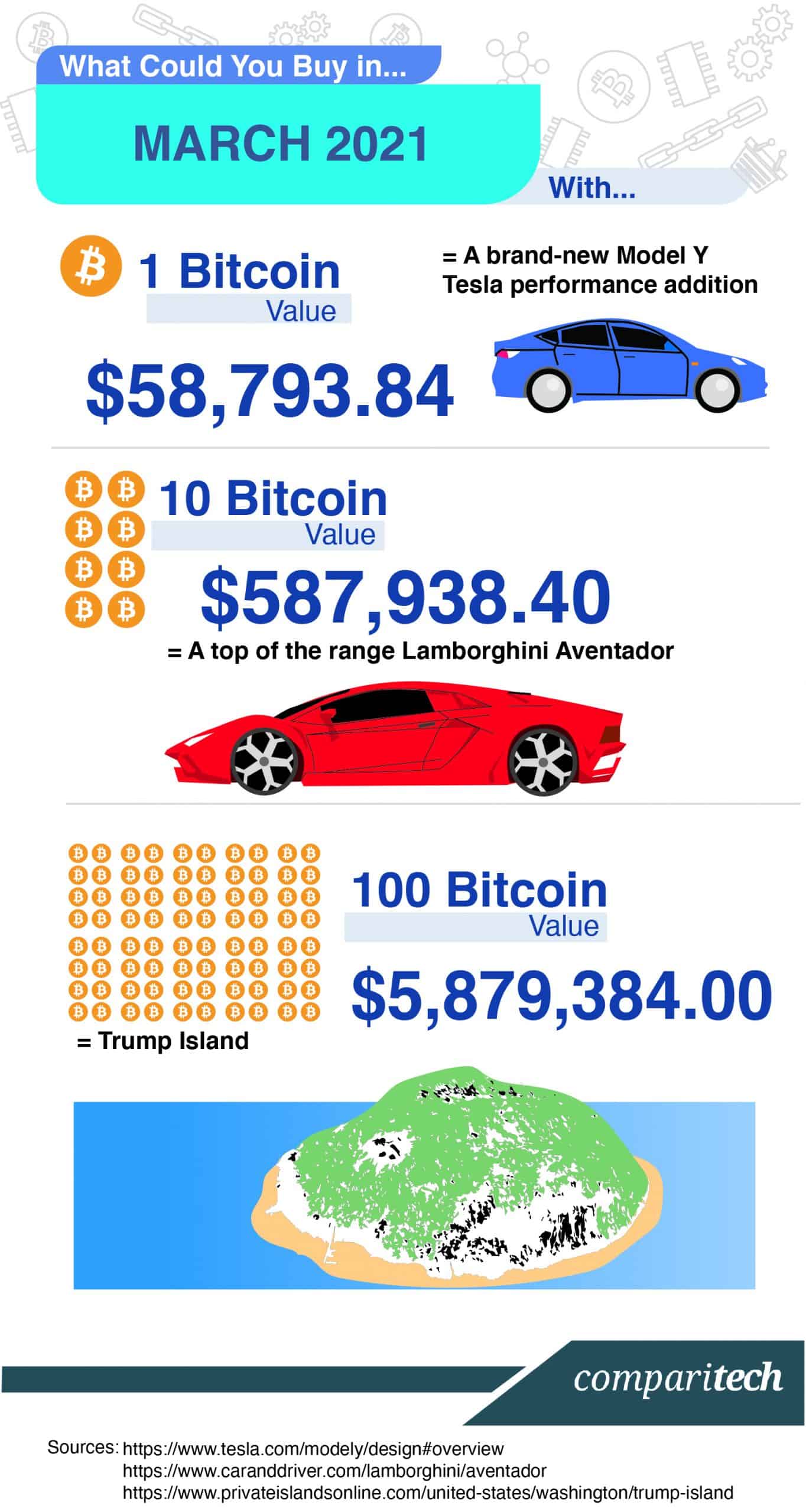
One Bitcoin is divisible into 100 million units called “Satoshis” (or “Sats”). This means that if 1 BTC is priced at $60,000, an investor can still buy $10 worth of Bitcoin. From a personal finance perspective, focusing on “stacking Sats” is often more productive than waiting until one has enough capital to buy a whole coin.
This divisibility allows for a strategy known as Dollar-Cost Averaging (DCA). Instead of trying to “time the market” and buy when the price is low—a task that even professional traders find difficult—DCA involves investing a fixed amount of money at regular intervals (e.g., $50 every week). Over time, this strategy reduces the impact of volatility and lowers the average cost per coin, making the question of “how much is 1 BTC today” less stressful for the long-term saver.
Risk Management and Volatility
It would be remiss to discuss the value of Bitcoin without mentioning its volatility. While Bitcoin has been the best-performing asset class of the last decade, it is prone to dramatic price corrections. A 20% or even 50% drop in price is not uncommon in a “bear market.”
From a financial planning standpoint, Bitcoin should be viewed through the lens of risk-adjusted returns. High volatility is the price investors pay for the potential of high returns. Professionals often recommend a “barbell strategy,” where the majority of a portfolio is held in low-risk assets (like bonds or index funds), with a small, speculative allocation (1% to 5%) in Bitcoin to provide “alpha” or outsized growth.
The Future Outlook: A Store of Value vs. Medium of Exchange
As we look toward the future, the valuation of 1 BTC will likely be determined by which role it ultimately fulfills in the global financial system.
The “Digital Gold” Thesis
Currently, the market largely views Bitcoin as a store of value. In this scenario, Bitcoin doesn’t necessarily need to be used to buy a cup of coffee. Instead, it serves as a digital vault to protect wealth over long periods. If Bitcoin were to reach the market capitalization of the global gold market, the price of 1 BTC would need to climb into the hundreds of thousands, or even millions, of dollars. This “upside potential” is what drives much of the current investment.
The Evolution of the Lightning Network
On the other hand, technological advancements like the Lightning Network are attempting to make Bitcoin a functional medium of exchange. By allowing for nearly instant, low-fee transactions on top of the Bitcoin blockchain, these “Layer 2” solutions could turn 1 BTC from a static asset into a global, borderless payment rail. If Bitcoin becomes the primary currency for international trade and remittances, its value would likely stabilize, but at a much higher plateau than we see today.
Conclusion: The Multi-Dimensional Value of Bitcoin
So, how much is 1 BTC?
If you look at your phone today, you will see a number. But that number is merely a snapshot of a massive, ongoing global shift in financial sovereignty. To the investor, 1 BTC represents a hedge against monetary debasement and an opportunity for unprecedented growth. To the technologist-investor, it is a share in the world’s first successful decentralized financial network. To the saver in a country with a collapsing local currency, 1 BTC is a lifeline—a way to preserve the fruits of their labor in a medium that no government can devalue.
Ultimately, the price of Bitcoin is a reflection of the world’s collective trust in a mathematical protocol over a human institution. As institutional adoption grows and the “digital gold” narrative solidifies, the numerical value of 1 BTC will continue to be a focal point of financial news. However, for those who understand the underlying mechanics of scarcity and the macro-economic environment, the current price is often seen as just the beginning of Bitcoin’s journey into the heart of the global financial system.
aViewFromTheCave is a participant in the Amazon Services LLC Associates Program, an affiliate advertising program designed to provide a means for sites to earn advertising fees by advertising and linking to Amazon.com. Amazon, the Amazon logo, AmazonSupply, and the AmazonSupply logo are trademarks of Amazon.com, Inc. or its affiliates. As an Amazon Associate we earn affiliate commissions from qualifying purchases.