
The question “What’s the biggest thing in the world?” is a deceptively simple one. It can evoke images of colossal geological formations, the vastness of the cosmos, or even the immeasurable power of human emotions. However, when we anchor ourselves within the realm of technology, the answer shifts dramatically, revealing not a singular static object, but a dynamic, ever-expanding, and profoundly influential entity: data.
In the digital age, data has become the new oil, the fundamental building block of innovation, and the ultimate determinant of success. It fuels algorithms, shapes user experiences, drives business decisions, and underpins the very infrastructure of our interconnected world. Understanding the scope, implications, and management of data is paramount for anyone navigating the modern technological landscape. This article delves into the multifaceted nature of data as the biggest “thing” in the technological world, exploring its generation, its profound impact, and the critical challenges it presents.
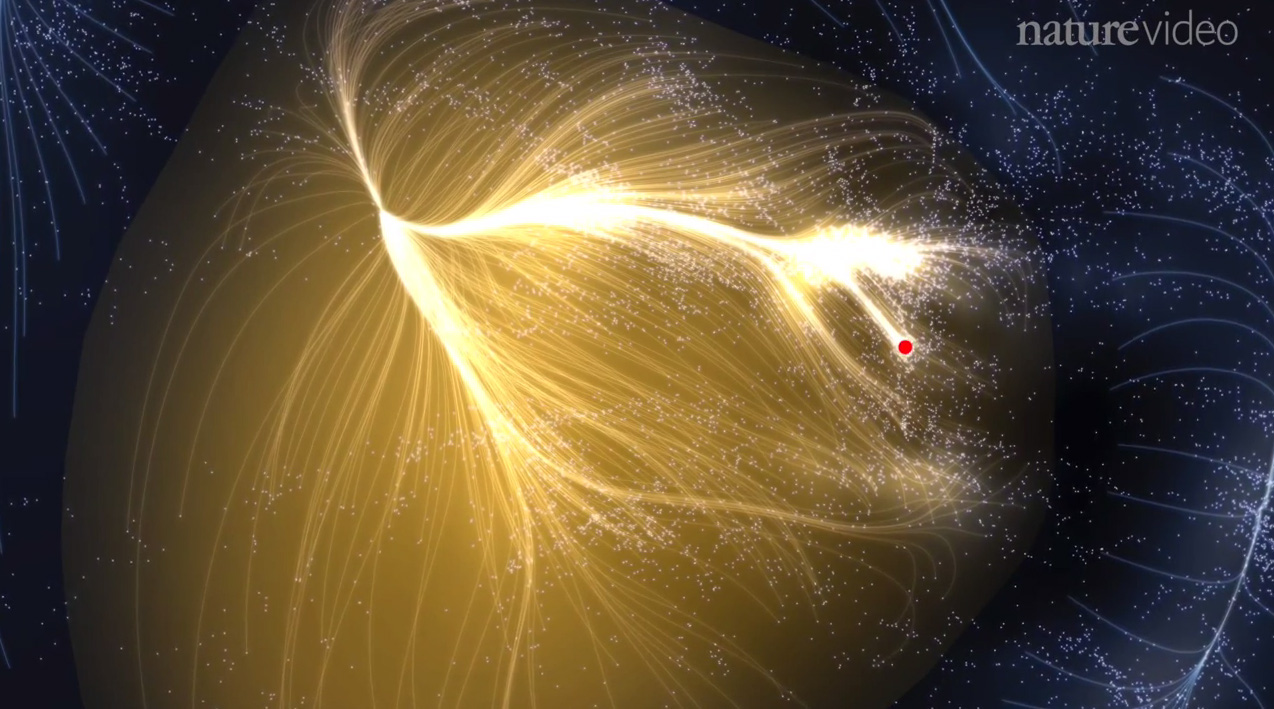
The Ever-Expanding Universe of Data: Generation and Sources
The sheer volume of data being generated today is staggering, and it continues to grow at an exponential rate. This isn’t a gradual increase; it’s a Cambrian explosion of information, driven by an ever-increasing number of interconnected devices and human activities. To truly grasp the “biggest thing” concept, we must first understand where this deluge originates.
The Internet of Things (IoT) and the Sensor Revolution
Perhaps the most significant contributor to data growth is the proliferation of the Internet of Things (IoT). Every smart appliance in our homes, every sensor embedded in industrial machinery, every wearable fitness tracker on our wrists – these are all continuous generators of data. From temperature readings and location pings to usage patterns and biometric information, IoT devices are creating a persistent stream of granular details about our environment and our lives. The interconnectedness of these devices, creating complex networks, amplifies the data output exponentially. Imagine a smart city, with millions of sensors monitoring traffic flow, energy consumption, air quality, and public safety. The data generated by such a system is colossal, offering unprecedented insights but also presenting immense storage and processing challenges.
Social Media and User-Generated Content
The rise of social media platforms has transformed individuals into prolific content creators. Every post, every photo, every video uploaded, every comment, and every “like” contributes to a vast reservoir of user-generated data. This data isn’t just about personal expression; it’s a rich tapestry of opinions, preferences, social interactions, and cultural trends. Social media analytics companies can extract invaluable market intelligence, understand consumer sentiment, and even predict future trends based on this immense dataset. The sheer volume of information shared daily across platforms like Facebook, Instagram, TikTok, and X (formerly Twitter) dwarfs many traditional data sources, making it a central component of the digital world’s biggest “thing.”
Digital Transactions and Online Interactions
Every online purchase, every search query, every website visited, every app downloaded – these are all digital footprints that create valuable data. E-commerce platforms meticulously track customer behavior to personalize recommendations and optimize sales funnels. Search engines analyze our queries to deliver relevant results, constantly refining their understanding of human intent. Even seemingly innocuous interactions, like the time spent on a webpage or the buttons clicked, contribute to a detailed profile of user behavior. This data is crucial for businesses seeking to understand their customers, refine their products, and improve their online presence.
Scientific Research and Big Data Initiatives
Beyond consumer-facing applications, scientific research is increasingly reliant on the analysis of massive datasets. Genomics, particle physics, climate modeling, and astronomical observations all generate terabytes, even petabytes, of data. The Human Genome Project, for instance, produced an enormous amount of genetic information that continues to be analyzed for medical advancements. Large Hadron Collider experiments generate petabytes of data daily, requiring supercomputers and sophisticated algorithms for analysis. These “big data” initiatives are not just about accumulating information; they are about discovering new knowledge and pushing the boundaries of human understanding.
The Profound Impact of Data: Powering Innovation and Transformation
The sheer scale of data generation is only part of the story. The true significance of data lies in its transformative power. When effectively collected, processed, and analyzed, data becomes the engine of innovation, driving advancements across virtually every sector.
Artificial Intelligence (AI) and Machine Learning (ML)
The most prominent application of this massive data pool is the advancement of Artificial Intelligence (AI) and Machine Learning (ML). AI algorithms learn from vast datasets to perform tasks that traditionally required human intelligence, such as recognizing images, understanding natural language, making predictions, and even generating creative content. Machine learning models require enormous quantities of labeled data to train and improve their accuracy. The better and more extensive the dataset, the more sophisticated and capable the AI becomes. From self-driving cars that learn from millions of miles of simulated driving to personalized healthcare solutions that analyze patient data, AI powered by data is revolutionizing industries. The development of Large Language Models (LLMs) like the one you are interacting with is a prime example of how massive datasets are used to create powerful AI systems capable of understanding and generating human-like text.
Business Intelligence and Decision Making
For businesses, data is no longer a secondary consideration; it’s a strategic imperative. Data analytics provides deep insights into customer behavior, market trends, operational efficiency, and potential risks. Companies leverage this information to make informed decisions, optimize marketing campaigns, develop new products, and improve customer satisfaction. Business intelligence tools transform raw data into actionable dashboards and reports, empowering leaders to navigate complex business environments with greater confidence. The ability to predict customer churn, identify upselling opportunities, or forecast demand hinges on the effective analysis of historical and real-time data.
Personalization and Enhanced User Experiences
In the digital realm, personalization is key to engaging users and fostering loyalty. Data allows platforms to tailor content, recommendations, and advertisements to individual preferences. Streaming services learn your viewing habits to suggest movies you’ll enjoy, e-commerce sites remember your past purchases to show you relevant products, and news aggregators curate articles based on your reading history. While concerns about privacy are valid, the ability to deliver a highly personalized and relevant user experience is a direct consequence of sophisticated data utilization.
Scientific Discovery and Problem Solving
As mentioned earlier, data is accelerating scientific discovery. By analyzing massive datasets, researchers can identify patterns, test hypotheses, and uncover new phenomena that would be impossible to detect with smaller data volumes. Climate scientists use vast amounts of weather and environmental data to model climate change and predict its impact. Medical researchers analyze genomic data to understand disease origins and develop targeted therapies. The ability to process and interpret complex datasets is unlocking solutions to some of humanity’s most pressing challenges.
The Challenges of the Data Deluge: Storage, Security, and Ethics
While the potential of data is immense, its scale also presents significant challenges that must be addressed for its responsible and effective utilization. Ignoring these challenges risks undermining the very benefits data promises to deliver.
Data Storage and Management
The sheer volume of data necessitates robust and scalable storage solutions. Traditional on-premises data centers are often insufficient, leading to the widespread adoption of cloud storage. However, managing vast quantities of data, ensuring its accessibility, and maintaining its integrity require sophisticated data management strategies. This includes data warehousing, data lakes, and data governance frameworks. The cost associated with storing and processing petabytes of data is also a significant consideration for organizations.
Data Security and Privacy Concerns
With the exponential growth of data comes an increased risk of data breaches and cyberattacks. Sensitive personal information, financial details, and proprietary business data are all targets for malicious actors. Ensuring data security through encryption, access controls, and regular audits is crucial. Furthermore, the collection and use of personal data raise significant privacy concerns. Regulations like GDPR and CCPA have emerged to give individuals more control over their data and hold organizations accountable for its ethical use. Balancing the benefits of data utilization with the need to protect individual privacy is a complex and ongoing challenge.
Data Quality and Bias
Not all data is created equal. Poor data quality – inaccuracies, inconsistencies, or incompleteness – can lead to flawed analyses and misguided decisions. Furthermore, data can contain inherent biases that, if not addressed, can perpetuate and even amplify societal inequalities. For instance, AI systems trained on biased datasets might exhibit discriminatory behavior in areas like hiring, loan applications, or even criminal justice. Ensuring data accuracy and actively identifying and mitigating biases within datasets are critical ethical and technical imperatives for the responsible use of data.
The Future of “The Biggest Thing”: Evolution and Responsibility
The concept of “the biggest thing in the world” within technology will continue to evolve as data itself transforms. We are moving beyond simply collecting and storing data to more sophisticated forms of analysis, interpretation, and even generation of new data.
The Rise of Synthetic Data and Data Augmentation
As real-world data becomes increasingly sensitive or difficult to obtain, synthetic data – data generated artificially – is emerging as a powerful tool. This allows for the training of AI models in scenarios where real data is scarce or poses privacy risks. Techniques like data augmentation, where existing data is modified to create more training examples, also contribute to the efficient utilization of data.
Edge Computing and Decentralized Data Processing
The increasing volume of data generated by IoT devices is leading to a shift towards edge computing. This involves processing data closer to its source, reducing latency and bandwidth requirements. Decentralized data architectures, where data is not stored in a single central location but distributed across multiple nodes, are also gaining traction, offering enhanced resilience and potentially improved privacy.

The Growing Importance of Data Literacy and Governance
As data becomes more pervasive, data literacy – the ability to understand, interpret, and communicate with data – will become an essential skill for everyone, not just data scientists. Robust data governance frameworks will be crucial for ensuring that data is collected, used, and shared ethically and responsibly. This involves establishing clear policies, defining roles and responsibilities, and implementing mechanisms for accountability.
In conclusion, while “the biggest thing in the world” might conjure images of physical immensity, within the technological landscape, it is undeniably data. Its ceaseless generation, its profound impact on innovation and decision-making, and the critical challenges it presents all point to its central, dominant role. Navigating this data-driven world requires not only technological prowess but also a deep understanding of its implications and a commitment to its responsible and ethical stewardship. The future of technology, and indeed much of our society, will be shaped by how we harness, manage, and understand this ever-expanding universe of information.
aViewFromTheCave is a participant in the Amazon Services LLC Associates Program, an affiliate advertising program designed to provide a means for sites to earn advertising fees by advertising and linking to Amazon.com. Amazon, the Amazon logo, AmazonSupply, and the AmazonSupply logo are trademarks of Amazon.com, Inc. or its affiliates. As an Amazon Associate we earn affiliate commissions from qualifying purchases.