
The perennial question of “the worst state to live in” is often framed through subjective lenses – weather, culture, or personal preference. However, when stripped of its more whimsical interpretations, the underlying concerns often boil down to tangible economic realities. From a financial perspective, the “worst” state to live in is not determined by a single, damning statistic, but rather by a complex interplay of factors that can significantly erode an individual’s disposable income, savings potential, and overall financial well-being. This analysis delves into the financial headwinds that can make a state a challenging place for its residents, focusing on the economic indicators that truly impact personal finance.
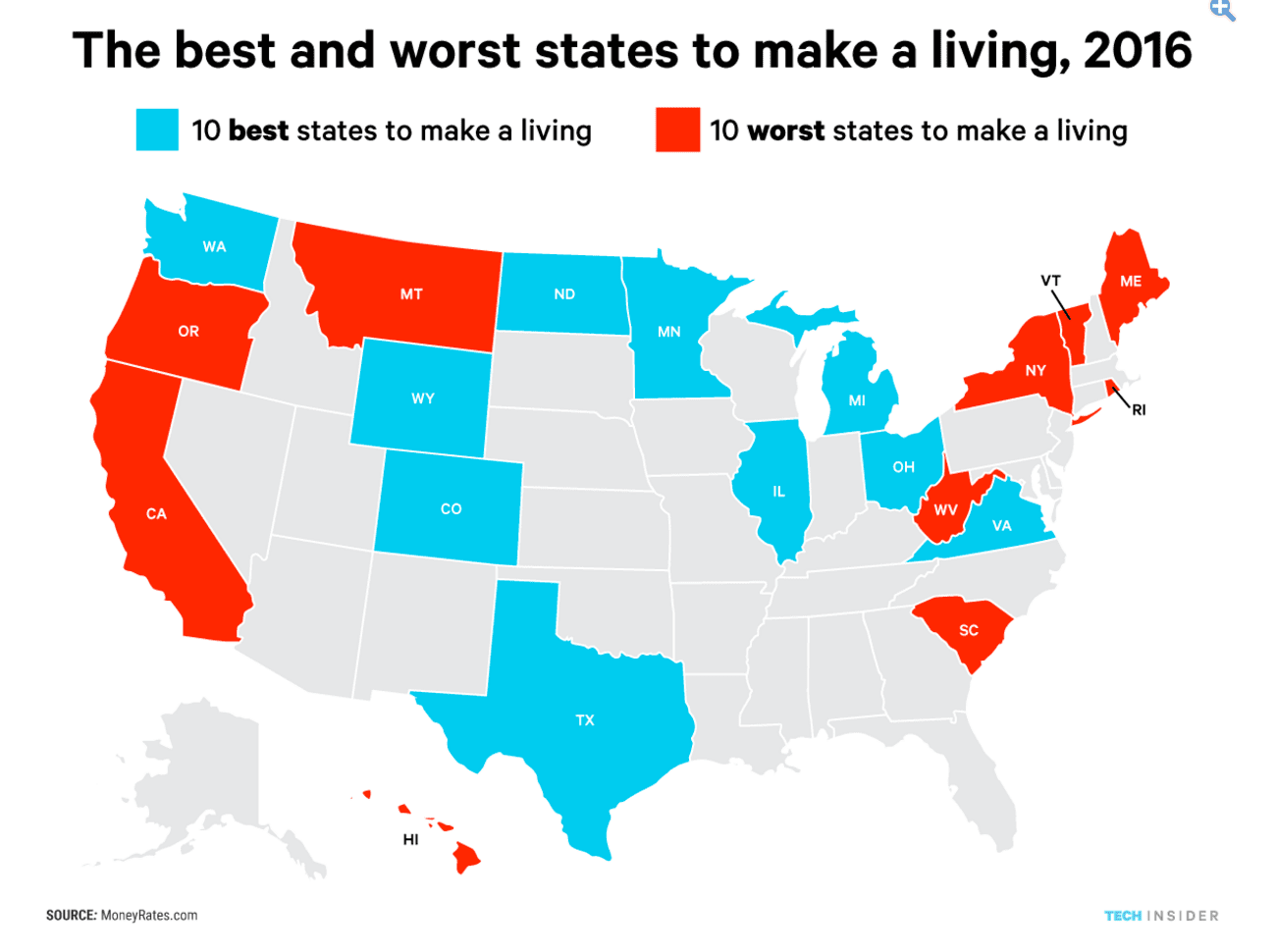
The Erosion of Income: Wages, Job Markets, and Economic Opportunity
The foundation of any individual’s financial health lies in their ability to earn a sustainable income. States that present a weak economic landscape, characterized by stagnant wages, limited job growth, and a lack of diverse employment opportunities, can trap residents in a cycle of financial struggle. These are not simply places with lower nominal salaries; they are environments where the purchasing power of those salaries is consistently undermined.
Stagnant Wage Growth and its Real-World Impact
While some states boast higher average incomes, the crucial metric for financial well-being is not the absolute number, but the rate of growth relative to inflation and the cost of living. States where wages have failed to keep pace with rising expenses create a real-world income squeeze. This means that even if you earn the same amount of money year after year, your ability to afford basic necessities, let alone discretionary spending or savings, diminishes. This stagnation can be attributed to a variety of factors, including an over-reliance on declining industries, a lack of investment in new sectors, or a surplus of labor that suppresses wage negotiation power.
When wages stagnate, crucial financial goals become more elusive. The dream of homeownership shifts further out of reach as down payments become harder to accumulate. Retirement savings falter as more of each paycheck is consumed by immediate needs. Even the ability to handle unexpected expenses, such as medical bills or car repairs, becomes precarious, forcing reliance on high-interest debt that further compounds financial woes.
The Double-Edged Sword of a Limited Job Market
A limited job market, characterized by a lack of diversity in industries and a scarcity of high-paying positions, significantly impacts earning potential. In such states, individuals may find themselves pigeonholed into specific sectors, making it difficult to pivot careers or find comparable employment if laid off. This lack of flexibility can lead to prolonged periods of unemployment or underemployment, draining savings and necessitating drastic lifestyle adjustments.
Furthermore, a concentrated job market can create a competitive landscape where employers hold more power. This can result in lower wages being offered for desirable positions, as candidates are fewer and farther between in terms of specialized skills that might command higher pay elsewhere. The ripple effect extends to entrepreneurial endeavors as well. A state with a limited economic base might also lack the robust ecosystem of suppliers, customers, and investors needed for new businesses to thrive, thus stifling opportunities for individuals seeking to create their own income streams.
The Missed Opportunities of Innovation and Growth Sectors
States that are not actively fostering innovation and investing in burgeoning growth sectors often find themselves left behind. The absence of thriving tech hubs, advanced manufacturing, or cutting-edge research institutions means fewer high-skilled, high-paying jobs are created. These are the engines of economic mobility, offering pathways to upward financial progress. Without them, residents are more likely to remain in lower-wage occupations, perpetuating cycles of financial hardship across generations. The lack of entrepreneurial spirit, often fueled by a vibrant and supportive economic environment, further contributes to this stagnation.
The Insidious Drain: Cost of Living and Taxation
Even with a healthy income, financial well-being can be severely undermined by an excessively high cost of living and burdensome taxation. These are the silent wealth destroyers that can make even a decent salary feel inadequate. It’s not just about how much you earn, but how much of it you get to keep and how far it stretches.
Housing Costs as a Primary Financial Burden
Housing is invariably the largest expense for most households. States with exorbitant housing costs – whether driven by limited supply, high demand, or restrictive zoning laws – can absorb an unsustainable portion of an individual’s income. This forces difficult choices: living in less desirable areas further from work, cramming into smaller living spaces, or dedicating an outsized percentage of one’s budget to rent or mortgage payments.
When housing consumes 30-50% or more of a household’s income, it leaves little room for other essential financial planning. Savings accounts remain thin, investments are neglected, and the ability to weather economic downturns is severely compromised. This can create a persistent sense of financial insecurity, even for those who are employed full-time and earn a respectable wage. The psychological toll of constantly battling high housing costs cannot be overstated, contributing to stress and anxiety that further impacts decision-making.

The Cumulative Impact of High Taxes
Taxation, while necessary for public services, can become a significant drain on personal finances when it is disproportionately high or inefficiently structured. States with a heavy reliance on sales taxes, for instance, can disproportionately burden lower and middle-income individuals who spend a larger percentage of their income on consumption. High income tax rates, without corresponding benefits in public services or a robust economy, can also deter investment and economic growth, further impacting job opportunities and wage potential.
It’s not just the headline tax rates that matter, but the entire tax burden. This includes not only income and sales taxes but also property taxes, which can be particularly onerous for homeowners. When the sum of these taxes significantly outweighs the tangible benefits received in terms of infrastructure, education, healthcare, or public safety, residents are essentially paying a premium for services that may be perceived as inadequate or inefficient. This can lead to a sense of being overtaxed and underserved, a potent recipe for financial frustration.
The Hidden Costs: Utilities, Transportation, and Daily Expenses
Beyond housing and taxes, a multitude of daily expenses can silently chip away at a person’s financial resources. States with exceptionally high utility costs (electricity, gas, water) due to factors like climate, infrastructure, or regulatory policies can significantly increase monthly outlays. Similarly, states with extensive commutes, poor public transportation, and high gasoline prices force individuals to spend more on vehicle maintenance, insurance, and fuel, further eroding disposable income.
These “hidden” costs, while individually small, accumulate into substantial financial burdens over time. They are often overlooked in broad economic analyses but are acutely felt by individuals trying to balance their budgets. In states where these daily necessities are exceptionally expensive, even those with moderate incomes can find themselves living paycheck to paycheck, with little capacity for saving or investing.
The Long-Term Outlook: Economic Stability, Future Prospects, and Quality of Life
Financial well-being is not solely about the present; it is deeply intertwined with the future economic stability and prospects of a state, as well as the overall quality of life that influences long-term financial decision-making. States that exhibit signs of economic decline, lack a clear vision for the future, or offer a poor quality of life can create an environment where financial growth and security are perpetually challenged.
Economic Instability and the Lack of Diversification
States heavily reliant on a single industry or a few dominant companies are inherently more vulnerable to economic downturns. When that industry falters, the entire state’s economy can be thrown into disarray, leading to widespread job losses and reduced economic activity. This lack of economic diversification creates a precarious environment for residents, making it difficult to plan for the future with any degree of certainty.
Periods of economic instability often see a decline in investment, a reduction in consumer spending, and a general atmosphere of uncertainty. For individuals, this translates to increased job insecurity, fewer opportunities for career advancement, and a diminished capacity for long-term financial planning, such as investing in stocks or real estate. The inability to predict future economic conditions makes prudent financial management a significant challenge.
The Emigration of Talent and Capital
A hallmark of economically struggling states is the emigration of talent and capital. Educated and skilled individuals, seeking better opportunities and higher earning potential, often leave these states for more dynamic economic centers. This “brain drain” further depletes the state’s human capital, making it even harder to attract new industries and foster innovation. Similarly, businesses and investors may choose to relocate their operations or capital to states perceived as more stable and profitable.
This outflow of talent and capital creates a vicious cycle. Fewer skilled workers mean less innovation and fewer high-paying jobs. Less investment means less economic growth and fewer opportunities for existing residents. This can leave a state in a state of perpetual economic stagnation, making it incredibly difficult for individuals to build wealth or achieve financial security.

Quality of Life as an Economic Factor
While not directly a financial metric, the quality of life in a state can indirectly impact its economic standing and, consequently, the financial well-being of its residents. Factors such as the quality of education, the accessibility and affordability of healthcare, the state of public infrastructure, and the overall safety and environmental quality all contribute to a state’s attractiveness to both individuals and businesses.
States that lag in these areas may struggle to attract and retain a skilled workforce, hindering economic development. For residents, a poor quality of life can necessitate higher personal expenditures to compensate – for example, paying for private schools if public education is subpar, or incurring higher healthcare costs due to limited access. This can further strain personal finances, making it harder to achieve broader financial goals.
In conclusion, identifying the “worst” state to live in from a financial perspective is not a simple matter of pointing to one or two statistics. It is a nuanced assessment of how various economic forces interact to create headwinds for residents. States characterized by stagnant wages, limited job markets, high costs of living, burdensome taxation, economic instability, and a diminished quality of life present the most significant financial challenges. For individuals navigating their financial futures, understanding these dynamics is crucial in making informed decisions about where to live, work, and invest.
aViewFromTheCave is a participant in the Amazon Services LLC Associates Program, an affiliate advertising program designed to provide a means for sites to earn advertising fees by advertising and linking to Amazon.com. Amazon, the Amazon logo, AmazonSupply, and the AmazonSupply logo are trademarks of Amazon.com, Inc. or its affiliates. As an Amazon Associate we earn affiliate commissions from qualifying purchases.