
The world of anime is vast and varied, encompassing everything from fleeting, action-packed shorts to sprawling sagas that span decades and thousands of episodes. For many enthusiasts, the sheer scale of certain anime series is a significant part of their appeal. The question “what is the longest anime?” isn’t just a trivia point; it opens a fascinating discussion about narrative endurance, production challenges, and the technological advancements that enable the creation and distribution of such monumental works. This exploration delves into the longest anime, not merely as entertainment, but as a testament to sustained creative output and the technical infrastructure that supports it.
The Reigning Champion: Sazae-san and the Marathon of Everyday Life
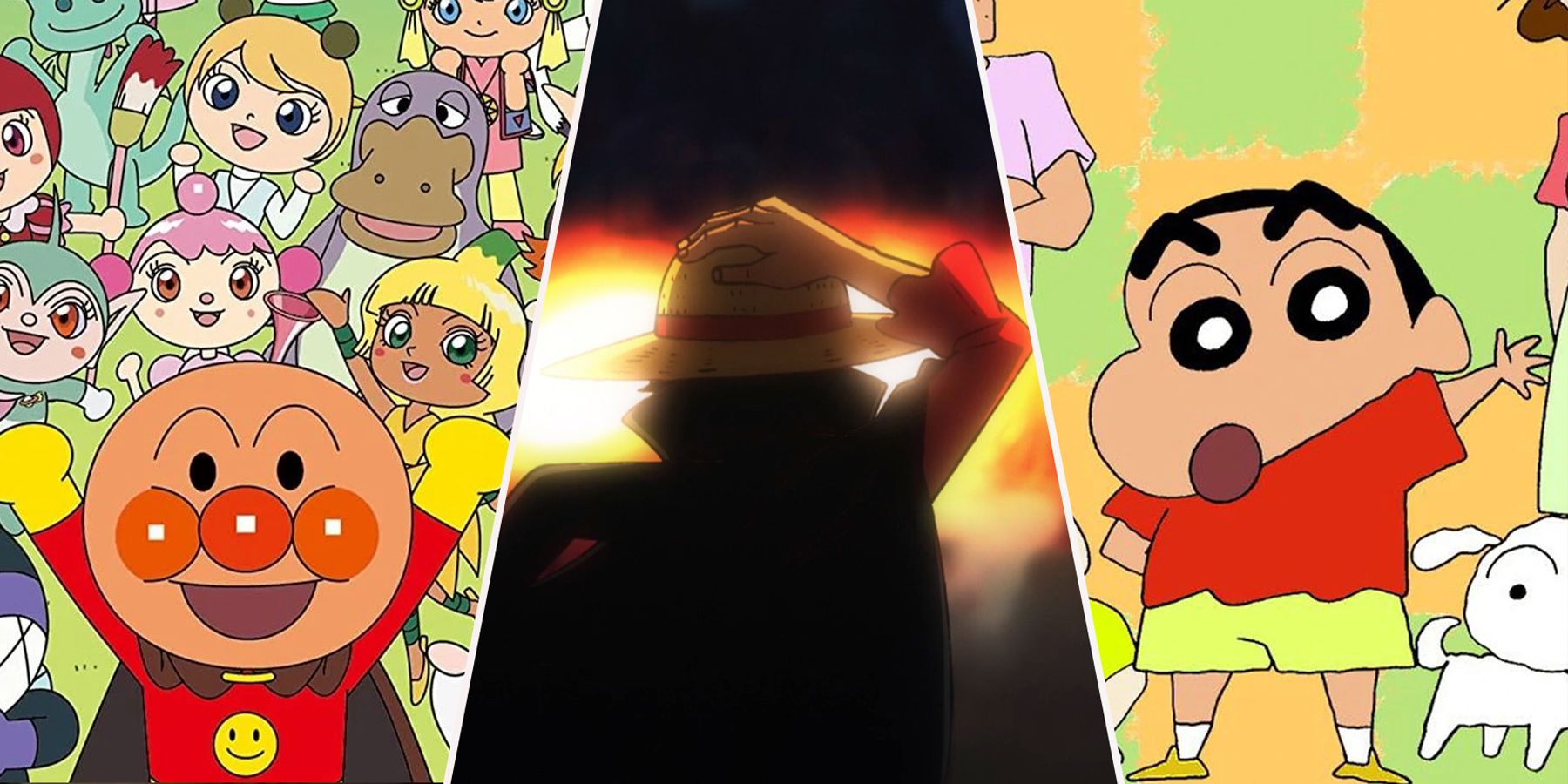
When discussing the longest anime, one title consistently emerges at the forefront: Sazae-san. This beloved Japanese animation has been a fixture in households for generations, its unassuming premise and consistent delivery of lighthearted domestic comedy contributing to its extraordinary longevity. Understanding Sazae-san‘s place in anime history requires a look at its production, its cultural impact, and the technological realities of producing and airing such a voluminous series.
Unpacking the Phenomenal Episode Count
Sazae-san premiered in October 1969 and has been airing continuously ever since. As of its most recent broadcast, it boasts an episode count that dwarfs nearly every other anime ever produced, often exceeding 7,500 individual segments. These segments are typically grouped into three distinct stories within a single broadcast episode, effectively making each week’s airing a mini-anthology. The key to this incredible longevity lies in its episodic nature and its focus on relatable, everyday situations. Unlike anime with overarching plotlines that require intricate development and high stakes, Sazae-san thrives on a formula of simple character interactions, seasonal events, and humorous misunderstandings. This approach allows for a near-infinite wellspring of content, as the mundane experiences of the Isono family provide endless narrative fodder.
Production Pipelines: The Technical Backbone of Longevity
The sustained production of Sazae-san is a remarkable feat of organizational and technical prowess. Maintaining a consistent output of animated content for over five decades necessitates a robust and adaptable production pipeline. In its early years, this would have relied on traditional cel animation techniques, a labor-intensive process. However, the evolution of animation technology has undoubtedly played a crucial role in sustaining the series.
The transition to digital animation workflows, for instance, has streamlined many aspects of production. From digital drawing and coloring to compositing and editing, these technologies have reduced manual labor, improved efficiency, and allowed for greater consistency in visual quality over long periods. The use of digital asset management systems is also critical for an anime with such a vast archive of characters, backgrounds, and recurring visual elements. Maintaining and accessing these assets efficiently ensures that the production team can draw upon established designs without having to recreate them from scratch, thus preserving continuity and saving valuable time and resources. Furthermore, the development of sophisticated animation software allows for greater flexibility and iterative improvement in character design and animation techniques, even within a long-running, formulaic series.
Distribution and Archiving: The Digital Legacy
The sheer volume of Sazae-san also presents significant challenges and opportunities in terms of distribution and archiving. In the pre-digital era, physical media storage for thousands of episodes would have been an insurmountable logistical hurdle. The advent of digital storage solutions has revolutionized this. High-capacity hard drives, cloud storage, and sophisticated database management systems are now essential for preserving such an extensive catalog.
Moreover, the way anime is consumed has also evolved. While traditional broadcast television remains the primary avenue for Sazae-san in Japan, digital streaming platforms have opened new avenues for global accessibility. The technical infrastructure required to host, stream, and manage such a vast library of content on a global scale is immense. This includes robust servers, efficient content delivery networks (CDNs) to ensure smooth playback for viewers worldwide, and sophisticated content management systems that handle metadata, encoding, and regional distribution rights. The ability to offer such a lengthy series on demand, accessible from various devices, is a direct result of advancements in internet infrastructure, compression technologies, and platform development.
Beyond the Champion: Exploring Other Lengthy Anime Narratives
While Sazae-san reigns supreme in terms of episode count, it represents a unique niche of slice-of-life storytelling. Other anime, though not reaching its astronomical numbers, have achieved considerable length by weaving intricate, long-form narratives. These series often push the boundaries of storytelling and require sophisticated technological approaches to manage their complex production and storytelling arcs.
The Epic Storyteller: One Piece and its Unfolding Saga
One Piece, a global phenomenon, exemplifies a different kind of longevity – that of an epic, adventure-driven narrative. Since its debut in 1999, it has consistently delivered new episodes, meticulously building a vast world filled with intricate lore, diverse characters, and a compelling overarching quest. Its length is a testament to the depth of its storytelling and the dedication of its creative team.
World-Building and Narrative Complexity: A Technological Choreography
The technical demands of producing One Piece are considerably different from those of Sazae-san. The series features dynamic action sequences, detailed environments, and a large cast of characters, each with unique designs and abilities. To maintain this level of detail and visual fidelity over hundreds of episodes, modern animation studios rely heavily on sophisticated 3D modeling for complex scenes, character rigging for fluid animation, and advanced rendering techniques.
The sheer volume of story arcs, character development, and plot threads requires an incredibly organized digital asset management system. Every character model, background asset, prop, and animation cycle must be meticulously cataloged and version-controlled to ensure consistency and to facilitate reuse across different scenes and episodes. Furthermore, storyboarding and pre-visualization software play a critical role in mapping out complex fight choreography and narrative sequences, allowing directors to plan and iterate on animation before the costly process of full animation begins. The ability to simulate physics for explosions, water effects, and character movements in real-time during the pre-production phase significantly enhances the quality and efficiency of the animation process.

The Marathon of Shonen: Case Studies in Sustained Popularity
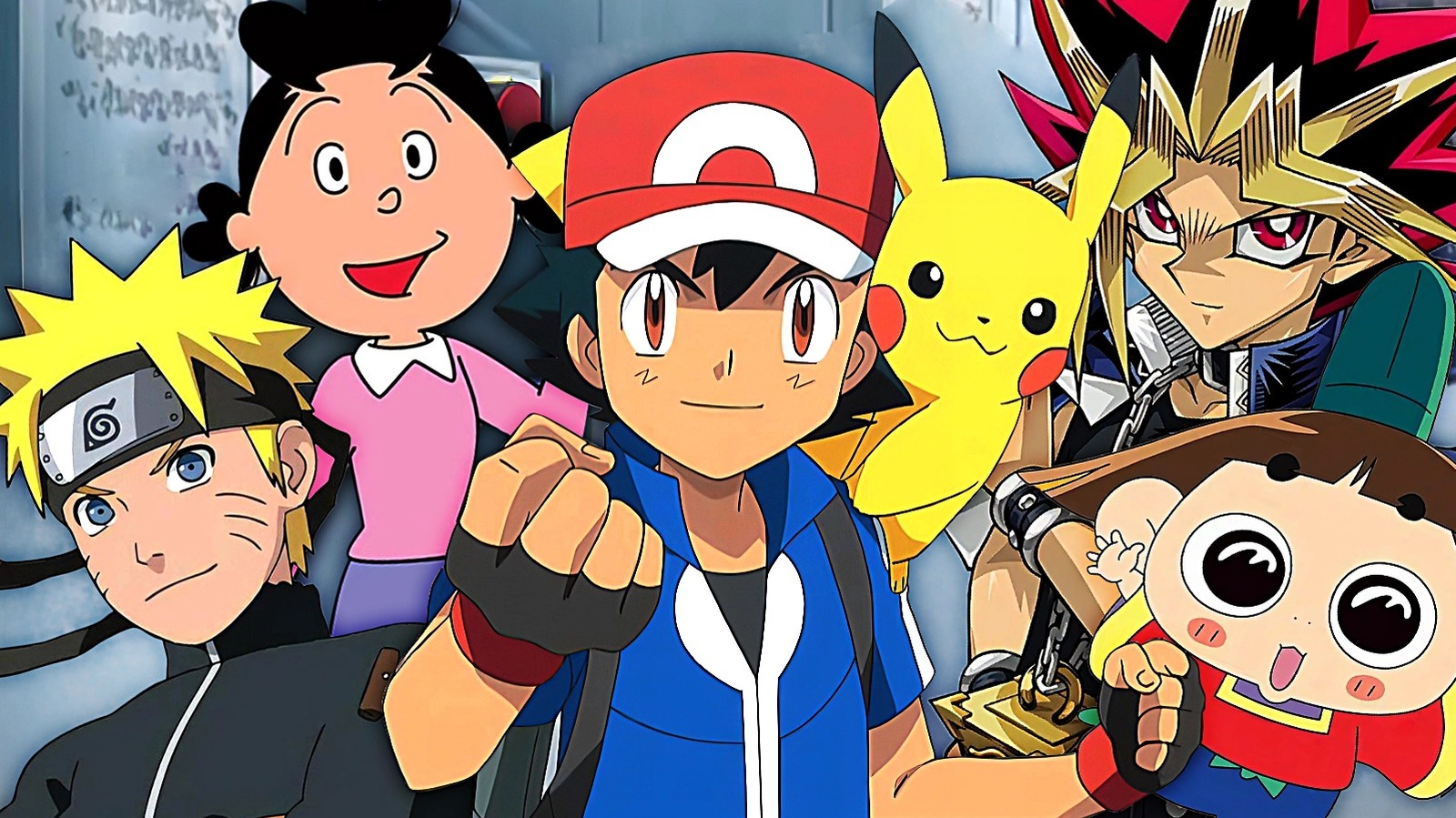
Beyond One Piece, other long-running “shonen” (boy’s genre) anime like Naruto, Bleach, and Dragon Ball Z have captivated audiences for years, often exceeding 100 or even 500 episodes. While some of these series have concluded or taken hiatuses, their extended runs highlight the technical and creative challenges of maintaining audience engagement and production momentum over extended periods.
Adapting to Evolving Animation Standards
As these series progressed, animation technology itself evolved. Early episodes might have featured simpler animation styles compared to later seasons that benefited from more advanced digital tools. Studios had to balance maintaining visual continuity with incorporating new technologies to improve animation quality and efficiency. This often involved retraining animators, investing in new software and hardware, and adapting existing character models and animation rigs. The challenge lies in making these transitions as seamless as possible for the viewer, ensuring that the visual style of the anime doesn’t jarringly shift between eras, thus maintaining the immersive quality of the narrative. The adoption of motion capture technology for certain character animations, for example, can provide a more realistic and fluid movement, especially in action-heavy sequences, while still needing to be integrated with traditional 2D animation techniques for consistency.
The Technological Underpinnings of Anime Longevity
The phenomenon of long-running anime series is intrinsically linked to technological advancements that facilitate both creation and consumption. From the initial design stages to the final broadcast, technology plays a pivotal role in making these ambitious projects feasible.
Digital Workflows and Collaboration Tools
The transition from traditional hand-drawn animation to digital workflows has been a game-changer. Software like Adobe Animate (formerly Flash), Toon Boom Harmony, and TVPaint allow for more efficient animation, coloring, and compositing. These digital tools enable animators to create keyframes, in-betweens, and special effects with greater speed and precision.
Crucially, cloud-based collaboration platforms have become indispensable for large-scale anime productions. These platforms allow geographically dispersed teams of animators, directors, and editors to share assets, review work, and provide feedback in real-time. This facilitates a more agile and iterative production process, essential for maintaining a consistent output of hundreds of episodes. Version control systems are paramount, ensuring that every team member is working with the latest iteration of assets and that mistakes can be easily identified and rectified. The ability to conduct virtual dailies and review sessions, facilitated by high-speed internet and advanced video conferencing tools, further streamlines communication and problem-solving within the production team.
Streaming and Accessibility: The Modern Distribution Model
The rise of streaming services has profoundly impacted how long anime series are distributed and consumed. Platforms like Crunchyroll, Funimation, and Netflix have made it possible for viewers worldwide to access vast libraries of anime, including many of the longest-running shows. This global reach has, in turn, created a larger audience base, which can help justify the significant investment required to produce and maintain these extended series.
From a technical standpoint, streaming platforms rely on sophisticated encoding and delivery systems. High-quality video encoding ensures that viewers receive the best possible visual experience without excessive buffering, even on slower internet connections. Content Delivery Networks (CDNs) are essential for distributing content efficiently across different geographical regions, minimizing latency and maximizing playback performance. Furthermore, robust content management systems are required to handle the metadata, subtitles, dubs, and regional restrictions associated with a diverse catalog of anime. The development of adaptive bitrate streaming technology is also critical, allowing the platform to dynamically adjust video quality based on the viewer’s internet speed, ensuring a smooth viewing experience for everyone.
The Future of Extended Anime Narratives: Technology as the Enabler
As technology continues to advance, the potential for even longer and more complex anime narratives grows. Virtual production techniques, advanced AI-assisted animation tools, and increasingly immersive storytelling platforms could redefine what is possible in animated storytelling.
AI and Automation in Animation Production
The integration of Artificial Intelligence (AI) into the animation pipeline is an emerging trend with the potential to significantly impact the production of long-form content. AI tools are already being explored for tasks such as rotoscoping, in-betweening, and even generating background art, which can significantly reduce the manual labor involved in animation. While AI is unlikely to replace human creativity entirely, it can serve as a powerful assistive tool, allowing animators to focus on higher-level creative decisions and reducing the time spent on repetitive tasks.
Furthermore, AI could be used to analyze viewer engagement data to identify popular story arcs or character trends, potentially informing future narrative directions for long-running series. The development of AI-powered character rigging and motion synthesis tools could also lead to more efficient and realistic character animation, especially for the demanding action sequences found in many popular long-running anime. The ethical considerations and artistic implications of AI in animation are still being explored, but its potential to streamline production and enable new forms of storytelling for extended narratives is undeniable.
Immersive Storytelling and Persistent Worlds
The future might also see anime narratives extending beyond traditional episodic formats into more interactive and persistent digital environments. The development of advanced game engines and virtual reality technologies could enable the creation of anime-inspired worlds that viewers can explore and interact with, blurring the lines between watching and experiencing a story. This could lead to a new generation of “evergreen” anime content that continuously evolves and expands, offering new narratives and experiences to audiences over extended periods. The technical challenges of creating and maintaining such persistent, high-fidelity virtual worlds are immense, requiring sophisticated server infrastructure, real-time rendering capabilities, and robust networking protocols. However, the potential for creating truly enduring and immersive anime experiences is a tantalizing prospect, driven by the relentless march of technological innovation.
aViewFromTheCave is a participant in the Amazon Services LLC Associates Program, an affiliate advertising program designed to provide a means for sites to earn advertising fees by advertising and linking to Amazon.com. Amazon, the Amazon logo, AmazonSupply, and the AmazonSupply logo are trademarks of Amazon.com, Inc. or its affiliates. As an Amazon Associate we earn affiliate commissions from qualifying purchases.