
In the vast landscape of religious and cultural groups, the Amish and Mennonites often evoke images of simple living, distinctive dress, and a departure from modern technological immersion. While these shared visual and philosophical threads are undeniable, to group them as interchangeable would be to overlook significant divergences in their “community brands.” Understanding these differences is crucial not only for accurate sociological and historical comprehension but also for appreciating the nuanced ways in which distinct communities establish and maintain their unique identities and “market positions” within the broader human narrative. This exploration will delve into the core distinctions that define the Amish and Mennonite “brands,” focusing on their approaches to technology, community structure, and external engagement, thereby illuminating why they are not monolithic entities but rather diverse expressions of Anabaptist heritage.

The Core of the “Brand” Identity: Technological Adoption and its Implications
At the heart of the divergence between Amish and Mennonite “brands” lies their approach to technology. This isn’t merely about having a smartphone; it’s a deeply ingrained aspect of their theological interpretations and community governance, shaping their daily lives and their outward presentation to the world.
Amish “Brand” of Technological Separation: Deliberate Restriction for Community Cohesion
The Amish “brand” is characterized by a more pronounced and often stricter adherence to technological limitations. This isn’t a blanket rejection of all modern advancements, but rather a carefully curated and context-dependent acceptance. The driving principle behind this approach is the preservation of their unique community structure and way of life, which they believe is best safeguarded by limiting exposure to external influences that could erode their values.
- Selective Technology Use: Amish communities typically allow certain technologies if they are deemed beneficial to the community and do not disrupt their social order or religious practices. For instance, in some communities, battery-powered tools for farming or small businesses might be permitted, as might the use of telephones in a communal setting (a “phone booth” located a short distance from homes). However, personal ownership of electricity from the public grid, personal automobiles, televisions, and computers is generally prohibited. This selective approach creates a distinct “brand” of intentional technological minimalism.
- The Role of the “Ordnung”: The specific rules governing technology use are not dictated by a central religious authority but by the “Ordnung,” a set of unwritten rules that vary from one Amish church district to another. This decentralized governance further solidifies the distinct “brands” within Amish communities themselves, allowing for subtle but significant variations in technological adoption based on local consensus and interpretation. This “bespoke” approach to technology management is a hallmark of their branding.
- Emphasis on Manual Labor and Face-to-Face Interaction: The limitations imposed on technology directly reinforce the Amish “brand” of valuing manual labor, craftsmanship, and direct, personal interaction. Their economy often relies on agriculture, woodworking, and small businesses that are not heavily reliant on digital infrastructure. This creates a tangible and deeply rooted “brand” experience for those within and observing their communities.
Mennonite “Brand” of Technological Integration: A Spectrum of Adoption
In contrast, the Mennonite “brand” exhibits a far wider spectrum of technological adoption, reflecting a greater willingness to engage with and integrate modern innovations into their lives and ministries. While still guided by principles of non-violence, community, and simplicity, Mennonites generally do not view modern technology as inherently corrupting or detrimental to their faith.
- Diverse Technological Practices: Within the broader Mennonite fellowship, one can find individuals and congregations who fully embrace modern technologies, including smartphones, computers, and the internet, while others may adopt a more moderate approach. This diversity creates a more fluid and adaptable “brand” that can resonate with a wider range of societal contexts. Some Mennonites might choose to avoid social media or certain entertainment platforms, but wholesale rejection is less common.
- Technological Utility in Ministry and Outreach: Many Mennonite organizations and churches leverage technology for their global mission work, educational institutions, and communication efforts. Online platforms, digital resources, and modern communication tools are often seen as essential for effectively carrying out their humanitarian and spiritual objectives. This strategic use of technology enhances their “brand” as an active and engaged global force.
- Focus on Ethical Use and Stewardship: Instead of strict prohibitions, the Mennonite approach often emphasizes the ethical use and responsible stewardship of technology. The focus is on ensuring that technology serves positive purposes, fosters community, and does not lead to exploitation or the erosion of core values. This “conscious consumer” approach to technology is a key differentiator in their branding.
Community Structure and Governance: Pillars of Distinct “Brand” Positioning
Beyond technology, the organizational structures and governance models of Amish and Mennonite communities further distinguish their “brands.” These internal frameworks dictate how they make decisions, manage conflict, and maintain internal cohesion.
Amish Communal Governance: The Power of Decentralized “Districts”
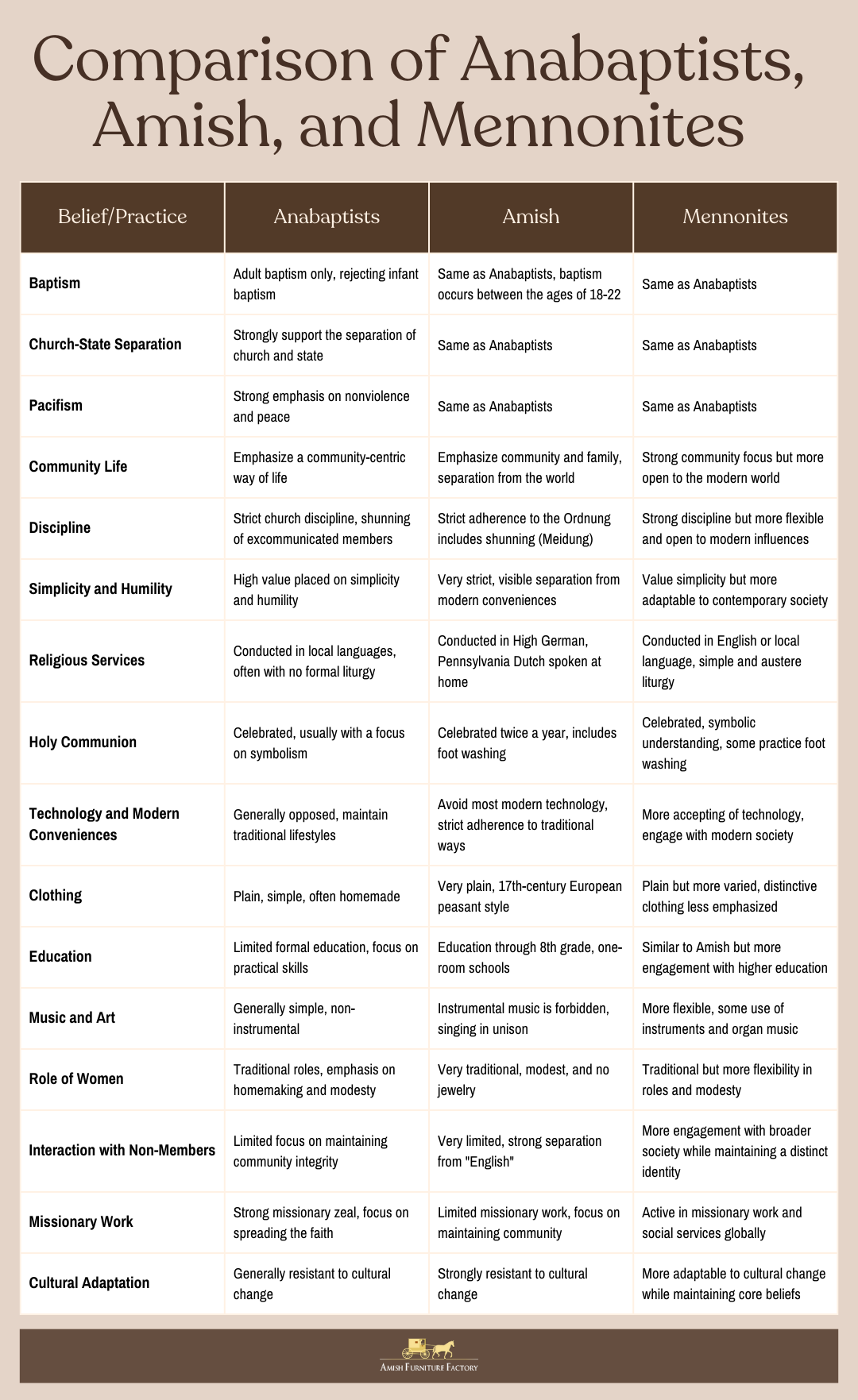
The Amish “brand” of community is deeply rooted in a decentralized, yet highly cohesive, organizational model. Their governance is characterized by a strong emphasis on local autonomy and collective decision-making within individual church districts.
- The Church District as the Primary Unit: The fundamental unit of Amish society is the church district, typically comprising 30 to 50 families. Each district operates with a significant degree of independence, electing its own ministers, deacons, and bishops. This decentralized model means that rules and practices can vary considerably from one district to another, contributing to the nuanced “brand” variations within the Amish population.
- Consensus-Driven Decision-Making: Decisions within an Amish district are typically made through a consensus-building process, often referred to as “Gelassenheit” (surrender or submission). This emphasis on communal agreement and the avoidance of individualistic ambition reinforces their “brand” of humility and collective responsibility. Public disagreements are discouraged, fostering a harmonious but potentially less agile decision-making process.
- Emphasis on Mutual Aid and Support: The tight-knit nature of Amish communities fosters a strong culture of mutual aid and support. This is evident in practices like barn raisings, where neighbors collectively assist those in need, or in informal support networks for the elderly or infirm. This tangible demonstration of community solidarity is a powerful aspect of their “brand” of interdependence.
Mennonite Denominational Structure: From Congregations to Global Networks
The Mennonite “brand” of community is more varied, ranging from independent congregations to larger, organized denominational structures. This allows for a broader reach and a more unified approach to certain global initiatives.
- Congregational Autonomy within Denominational Frameworks: While Mennonite churches often operate with considerable autonomy, many are affiliated with larger regional or national conferences and global bodies. These larger structures provide a framework for shared ministries, theological dialogue, and cooperative endeavors, contributing to a more unified and recognizable “brand” identity on a broader scale.
- Hierarchical Elements and Shared Confessions: Some Mennonite denominations have more established hierarchical structures and shared confessions of faith that provide a common theological foundation and ethical guidelines. This can lead to greater consistency in practices and messaging across affiliated congregations, strengthening their collective “brand” as a cohesive religious movement.
- Focus on Global Outreach and Social Justice: Many Mennonite organizations and conferences are actively involved in global humanitarian aid, peacebuilding, and social justice initiatives. This outward-facing mission work shapes their “brand” as a group committed to making a positive impact on the world, often leveraging modern organizational and communication strategies.
External Engagement and Societal Interaction: Shaping Perceptions of the “Brand”
The manner in which Amish and Mennonite communities interact with the wider world significantly influences how their respective “brands” are perceived. This encompasses their approach to education, economic relationships, and their engagement with non-members.
The Amish “Brand” of Limited External Interaction: Cultivating Insularity
The Amish “brand” is strongly associated with a deliberate cultivation of insularity, aiming to minimize disruptive external influences and maintain their distinct way of life.
- Education Focused on Core Skills: Amish education typically concludes at the eighth grade, with a curriculum focused on basic literacy, numeracy, vocational skills, and religious instruction. This deliberate limitation in formal education serves to reinforce their vocational paths and keep young people within the community’s economic and social sphere, a key element of their “brand” of self-sufficiency.
- Economic Relationships Based on Trust and Directness: While Amish businesses often interact with the outside world, these relationships are typically built on trust, direct communication, and a reputation for quality craftsmanship. They often eschew extensive marketing or digital presence, relying on word-of-mouth and local reputation to build their “brand” of reliability and authenticity.
- Subtle but Clear Boundary Maintenance: While not isolationist in the extreme sense, the Amish maintain clear boundaries with the outside world. They generally do not participate in civic government or military service, and their social interactions with non-Amish are often limited and purposeful. This careful management of external contact is crucial for preserving their unique “brand” of distinctiveness.

The Mennonite “Brand” of Engaged Witness: Active Participation and Dialogue
In contrast, the Mennonite “brand” is characterized by a more open and engaged approach to the wider society, often seeking to witness to their values through active participation and dialogue.
- Higher Education and Professional Engagement: Many Mennonites pursue higher education and engage in professions that require extensive interaction with the secular world. Their educational institutions often offer degrees that equip individuals for a wide range of careers, contributing to their “brand” of intellectual engagement and professional competence.
- Interfaith Dialogue and Peacebuilding: Mennonites are often active participants in interfaith dialogue and peacebuilding initiatives. Their commitment to non-violence and reconciliation leads them to engage with diverse groups and work towards common solutions to societal challenges. This positions their “brand” as one of constructive engagement and advocacy.
- Openness to Global Issues and Social Concerns: The Mennonite “brand” is often associated with a deep concern for global issues, including poverty, environmental stewardship, and human rights. They are more likely to engage in advocacy, support international aid organizations, and utilize modern communication tools to raise awareness and mobilize action. This outward-looking “brand” emphasizes their role as global citizens committed to positive change.
In conclusion, while both the Amish and Mennonites share a common Anabaptist heritage, their distinct approaches to technology, community governance, and external engagement have forged unique and recognizable “community brands.” The Amish cultivate a “brand” of deliberate separation and insularity, prioritizing the preservation of their traditional way of life through careful technological restriction and decentralized communal structures. The Mennonites, on the other hand, present a more adaptable and outward-focused “brand,” integrating modern technologies, engaging in broader denominational structures, and actively participating in global dialogues and social concerns. Understanding these differences allows for a deeper appreciation of the rich diversity within these communities and the strategic ways in which they have shaped their identities and their place in the world.
aViewFromTheCave is a participant in the Amazon Services LLC Associates Program, an affiliate advertising program designed to provide a means for sites to earn advertising fees by advertising and linking to Amazon.com. Amazon, the Amazon logo, AmazonSupply, and the AmazonSupply logo are trademarks of Amazon.com, Inc. or its affiliates. As an Amazon Associate we earn affiliate commissions from qualifying purchases.