
The term “CCA” is often encountered when discussing batteries, particularly those used in vehicles. It stands for Cold Cranking Amps, and it’s a critical specification that directly impacts a battery’s ability to start an engine in challenging environmental conditions. While seemingly straightforward, understanding CCA goes beyond a simple numerical value. It delves into the intricate relationship between battery chemistry, design, and the demanding physical environment in which it operates. For anyone involved in automotive maintenance, performance enhancement, or simply seeking to ensure reliable vehicle operation, a thorough grasp of CCA is essential. This article will unpack the significance of CCA, its measurement, factors influencing it, and how to leverage this knowledge for optimal battery selection and performance.

The Fundamental Role of Cold Cranking Amps
At its core, CCA quantifies a battery’s power output under specific, rigorous conditions. It’s not just about how much total energy a battery can store (which is measured in Ampere-hours, Ah), but rather its capacity to deliver a high surge of current for a short duration. This surge is precisely what’s needed to overcome the resistance of an engine’s starter motor, especially when that resistance is amplified by cold temperatures.
Starting an Engine: A Power-Hungry Process
Imagine the moment you turn the key or press the start button on your vehicle. This action initiates a complex sequence of events. The starter motor, a powerful electric motor, engages with the engine’s flywheel. To turn the crankshaft and begin the combustion cycle, the starter motor requires a substantial amount of electrical energy. This energy demand is not constant; it’s a powerful, momentary burst.
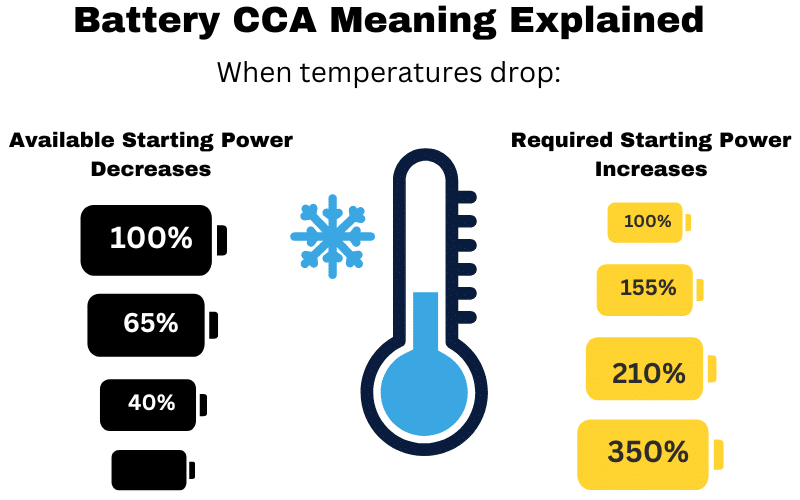
The engine’s internal components, including the oil and other fluids, become thicker and more viscous at lower temperatures. This increased viscosity creates more friction and resistance, meaning the starter motor has to work harder to spin the engine. Consequently, the electrical load on the battery is significantly higher in cold weather compared to warmer conditions.
The Significance of “Cold” in CCA
The “Cold” in Cold Cranking Amps is crucial. The standard test for CCA is performed at 0° Fahrenheit (-18° Celsius). This temperature is chosen because it represents a common, yet challenging, condition for battery performance. As temperatures drop, the chemical reactions within the battery slow down, reducing its ability to produce and deliver electrical current efficiently. Simultaneously, the internal resistance of the battery increases.
Defining the CCA Standard
The Society of Automotive Engineers (SAE) standard J537 is the widely accepted benchmark for measuring CCA. According to this standard, CCA is defined as the number of amps a lead-acid battery can deliver at 0°F (-18°C) for 30 seconds while maintaining a voltage of at least 7.2 volts for a 12-volt battery. This means the battery must be able to sustain a significant discharge rate for a prolonged period under extreme cold without its voltage collapsing to a level insufficient to power the starter.
A higher CCA rating indicates that a battery can deliver more current at low temperatures. This translates directly to a greater likelihood of starting an engine in freezing conditions and a reduced strain on the starter motor. For drivers in colder climates, a battery with a higher CCA rating is not just a recommendation; it’s a necessity for reliable transportation.
Factors Influencing a Battery’s CCA Rating
Several factors contribute to a battery’s ability to achieve a certain CCA rating. These include the battery’s internal design, the materials used in its construction, and its overall capacity. Understanding these elements helps in appreciating why some batteries outperform others, even at the same physical size.
Battery Construction and Plate Design
The physical layout and composition of a battery’s internal plates play a pivotal role in its CCA. Batteries consist of positive and negative plates immersed in an electrolyte solution. The surface area of these plates, their thickness, and the material composition directly influence the rate at which chemical reactions can occur and, consequently, the amount of current that can be discharged.
- Plate Surface Area: Larger plate surface areas allow for more chemical interaction between the active material on the plates and the electrolyte. This increased interaction translates to a higher potential for current flow, thus boosting CCA. Manufacturers achieve this through various design strategies, such as using thinner but more numerous plates or employing specialized plate geometries.
- Plate Thickness and Grid Design: While thinner plates offer more surface area, they can also be more fragile. Thicker plates provide greater structural integrity and can handle higher discharge rates without deforming. The grid structure that supports the active material on the plates also matters. Robust and well-designed grids ensure efficient current collection and distribution, minimizing internal resistance.
- Active Material Composition: The active material on the lead plates (lead dioxide on the positive plate and spongy lead on the negative plate) is crucial. The purity and specific composition of these materials can significantly affect their electrochemical performance, influencing both the battery’s energy storage capacity and its ability to deliver high currents.
Electrolyte and its Role
The electrolyte, typically a mixture of sulfuric acid and water, is the medium through which ions travel between the plates, completing the electrical circuit. The concentration and purity of the electrolyte are vital for optimal performance.
- Electrolyte Concentration: A specific concentration of sulfuric acid is engineered to facilitate efficient ion transfer. Too dilute, and the conductivity suffers; too concentrated, and it can lead to issues like plate sulfation and corrosion.
- Temperature Effects on Electrolyte: As mentioned earlier, temperature significantly impacts the electrolyte’s viscosity and conductivity. At colder temperatures, the electrolyte becomes thicker, slowing down ion movement and increasing internal resistance. Battery designs that account for this, perhaps through optimized electrolyte density or spacing between plates, can better maintain CCA in cold conditions.
Battery Size and Chemistry
The physical dimensions of a battery, as well as the specific lead-acid chemistry employed, are fundamental determinants of its CCA rating.
- Physical Size: Generally, larger batteries have more plates and a greater volume of electrolyte, allowing for a higher potential CCA. This is why larger vehicles with more demanding starting requirements typically use larger batteries. However, automotive battery trays are designed for specific sizes, so simply fitting a larger battery isn’t always an option.
- Lead-Acid Chemistry Variations: While the term “lead-acid” is broad, there are variations. For instance, Absorbent Glass Mat (AGM) batteries, a type of sealed lead-acid battery, often offer higher CCA ratings and better vibration resistance compared to traditional flooded lead-acid batteries. This is due to their construction, where the electrolyte is absorbed into fiberglass mats, creating a more robust and efficient internal structure. Enhanced flooded (EFB) batteries are another advancement designed for improved performance in start-stop vehicles, often exhibiting higher CCA than conventional flooded batteries.
Choosing the Right Battery: Beyond Just CCA
While CCA is a paramount specification, it’s not the only factor to consider when selecting a replacement battery for your vehicle. A holistic approach ensures you’re choosing a battery that not only meets your starting needs but also offers longevity and compatibility.
Understanding the Vehicle’s Requirements
Every vehicle is designed with specific electrical demands in mind. The manufacturer specifies a minimum CCA requirement for the battery to ensure reliable starting under typical operating conditions for that model.
- Consulting the Owner’s Manual: The most reliable source for your vehicle’s battery specifications, including the recommended CCA rating, is your owner’s manual. This document provides precise guidance tailored to your car’s make and model.
- Matching or Exceeding OEM Specifications: When purchasing a replacement battery, it’s generally recommended to choose a battery with a CCA rating that meets or exceeds the Original Equipment Manufacturer (OEM) specification. Exceeding the minimum can provide an extra margin of safety, especially if you live in a region with particularly harsh winters. However, drastically over-specifying can sometimes lead to premature aging of other electrical components if not properly managed.
Other Critical Battery Specifications
Besides CCA, several other metrics are vital for a comprehensive battery assessment.
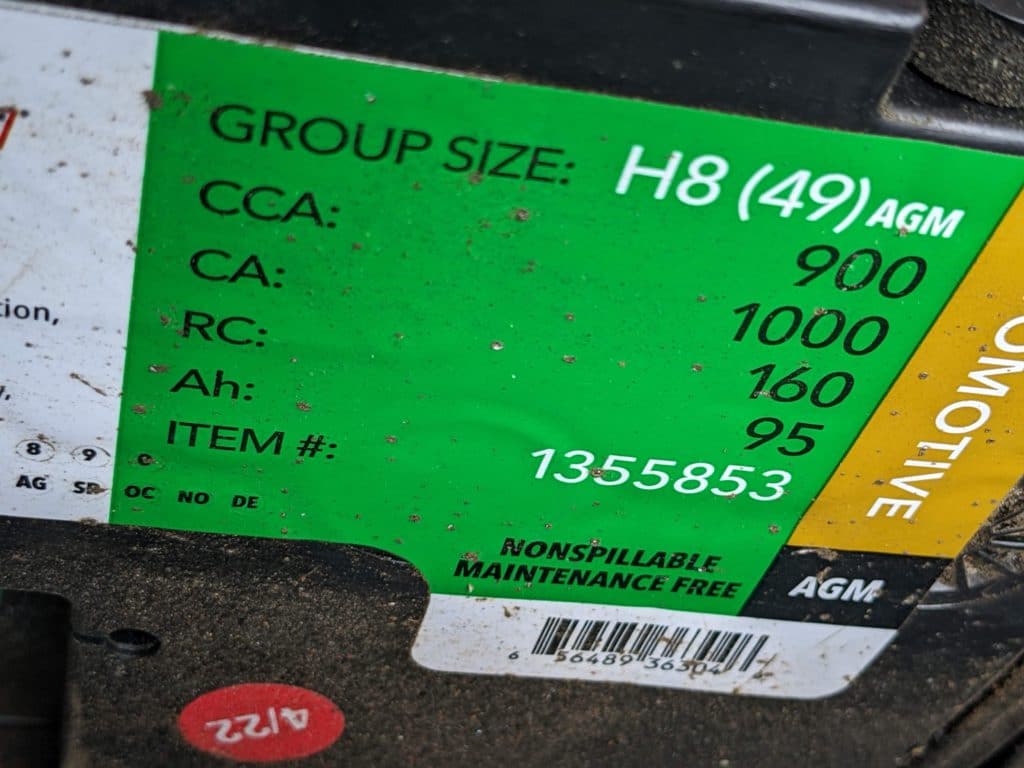
- Reserve Capacity (RC): Reserve Capacity is another important metric, measured in minutes. It indicates how long a fully charged battery can deliver 25 amps at 80°F (27°C) before its voltage drops below a usable level (10.5 volts). RC is crucial for powering essential accessories like headlights, radio, and climate control systems if the alternator fails or during extended idling periods. While CCA is about starting power, RC is about sustained electrical supply.
- Ampere-Hour (Ah) Capacity: This metric represents the total amount of electrical energy a battery can store. It’s calculated by multiplying the current (in amps) by the time (in hours) it can deliver that current. While not as directly indicative of starting power in cold weather as CCA, a sufficient Ah capacity ensures the battery can be adequately recharged by the alternator and can support the vehicle’s overall electrical demands.
- Battery Group Size: This refers to the physical dimensions, terminal placement, and type of terminals of the battery. Batteries are categorized into group sizes (e.g., Group 24, Group 35, Group 65) to ensure they physically fit into the vehicle’s battery tray and that the terminals connect correctly to the vehicle’s cables. Always ensure the new battery’s group size matches your vehicle’s requirements.
Battery Technologies and Longevity
The underlying battery technology can also influence performance and lifespan.
- Flooded Lead-Acid Batteries: These are the most traditional and often the most affordable type. They are reliable but can be more susceptible to vibration and require occasional maintenance (checking electrolyte levels).
- AGM (Absorbent Glass Mat) Batteries: AGM batteries are sealed, maintenance-free, and offer excellent vibration resistance. They typically have higher CCA ratings and better deep-cycle capabilities than flooded batteries. They are also more resistant to overcharging.
- EFB (Enhanced Flooded Battery) Batteries: EFB technology bridges the gap between conventional flooded and AGM batteries. They are designed to handle the increased demands of vehicles with start-stop systems and offer improved performance in challenging conditions.
Choosing the right battery involves balancing these specifications with your vehicle’s needs, your driving environment, and your budget. A battery with an appropriate CCA rating, coupled with adequate reserve capacity and the correct group size, will ensure reliable starts and dependable power for your vehicle’s electrical systems.
Maintenance and Optimization for Long Battery Life
A battery’s CCA rating is only a snapshot of its potential performance at a specific moment. Proper maintenance and understanding how to optimize its operation can significantly extend its lifespan and ensure it consistently delivers its rated CCA.
Regular Inspections and Cleaning
The exterior of your battery can accumulate dirt, grime, and corrosion, which can impede electrical conductivity and lead to performance issues.
- Terminal Cleaning: Battery terminals are prone to corrosion, a white or bluish powdery substance that forms due to chemical reactions. This corrosion can create high resistance, hindering the flow of current to and from the battery. Regularly inspect the battery terminals and clean them with a wire brush and a mixture of baking soda and water. Ensure the terminals are dry and securely fastened after cleaning.
- Case Inspection: Check the battery case for any signs of damage, such as cracks or swelling. Swelling can indicate internal damage or overcharging, while cracks can lead to electrolyte leakage. Damaged batteries should be replaced immediately.
Maintaining Proper Charge Levels
A battery’s ability to deliver its rated CCA is directly dependent on its state of charge.
- Understanding Charging Systems: Modern vehicles are equipped with alternators that recharge the battery while the engine is running. The alternator’s voltage regulator ensures the battery receives the correct charging voltage. Faulty alternators or worn-out voltage regulators can lead to undercharging or overcharging, both of which can degrade battery performance and lifespan.
- Avoiding Deep Discharges: While CCA is about high-current discharge, repeated deep discharges (draining the battery significantly) can damage lead-acid batteries, reducing their capacity and ultimately their CCA. Avoid leaving lights or accessories on when the engine is off. If you frequently take short trips, the alternator may not have enough time to fully recharge the battery, which can also be detrimental.
- Using a Battery Tender/Maintainer: For vehicles that are not driven regularly or during periods of extended storage, a battery tender or maintainer is highly recommended. These devices provide a low, continuous charge to keep the battery fully topped up, preventing self-discharge and maintaining its optimal state of charge, which is crucial for preserving its CCA.
The Impact of Temperature on Battery Health
As established, temperature is a key factor affecting CCA. This also applies to the battery’s long-term health.
- Heat is the Enemy: While cold temperatures stress a battery’s ability to deliver power, prolonged exposure to high temperatures is far more damaging to its internal components. Heat accelerates the rate of chemical reactions within the battery, leading to faster degradation of the plates and electrolyte. This can significantly shorten the battery’s lifespan and reduce its eventual CCA. Vehicles parked in direct sunlight during hot weather experience significantly higher battery temperatures.
- Cold Weather Considerations: In very cold climates, the battery’s CCA is naturally reduced. Ensuring the battery is fully charged before extreme cold arrives is vital. If your vehicle is struggling to start in the cold, it’s often a sign that the battery is nearing the end of its life and its CCA has diminished.
By adopting a proactive approach to battery maintenance, understanding the factors that influence its performance, and selecting the right battery for your vehicle’s needs, you can ensure reliable starting power and maximize the lifespan of this essential automotive component. The CCA rating serves as a crucial benchmark, but its true value is unlocked through informed selection and diligent care.
aViewFromTheCave is a participant in the Amazon Services LLC Associates Program, an affiliate advertising program designed to provide a means for sites to earn advertising fees by advertising and linking to Amazon.com. Amazon, the Amazon logo, AmazonSupply, and the AmazonSupply logo are trademarks of Amazon.com, Inc. or its affiliates. As an Amazon Associate we earn affiliate commissions from qualifying purchases.