
The landscape of digital entertainment has undergone a seismic shift over the last decade, transitioning from physical hardware and coaxial cables to cloud-based streaming infrastructures. At the forefront of this revolution is YouTube TV, a premium over-the-top (OTT) streaming service that has effectively bridged the gap between traditional linear television and modern app-based consumption. For tech-savvy consumers and cord-cutters alike, understanding what channels YouTube TV offers—and more importantly, the technology that powers that delivery—is essential for optimizing the domestic digital experience.
YouTube TV is not merely a “website with videos”; it is a sophisticated software-as-a-service (SaaS) platform that manages complex licensing agreements, regional broadcast signals, and massive data throughput to deliver over 100 channels in high definition. This article explores the comprehensive channel lineup of YouTube TV, the technical features that distinguish its interface, and the specialized add-ons that cater to niche audiences.
The Core Architecture: Understanding the Base Plan Lineup
The primary appeal of YouTube TV lies in its “Base Plan,” which serves as the foundational software package for the majority of users. Unlike traditional cable packages that are often fragmented into various “tiers,” YouTube TV adopts a more unified approach, providing a robust selection of channels that cover news, sports, entertainment, and local broadcasts.
The Big Four and Local Broadcast Retransmission
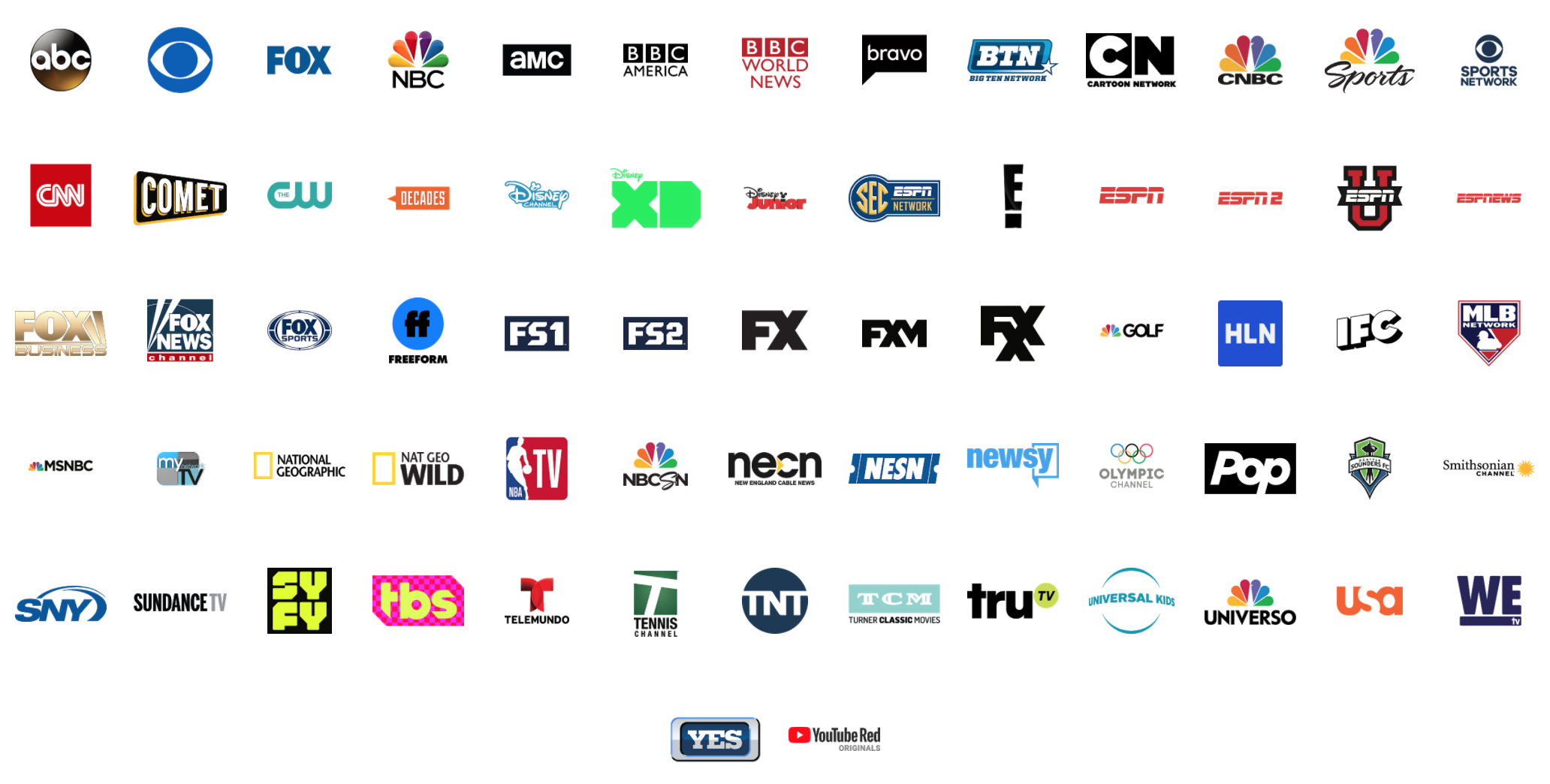
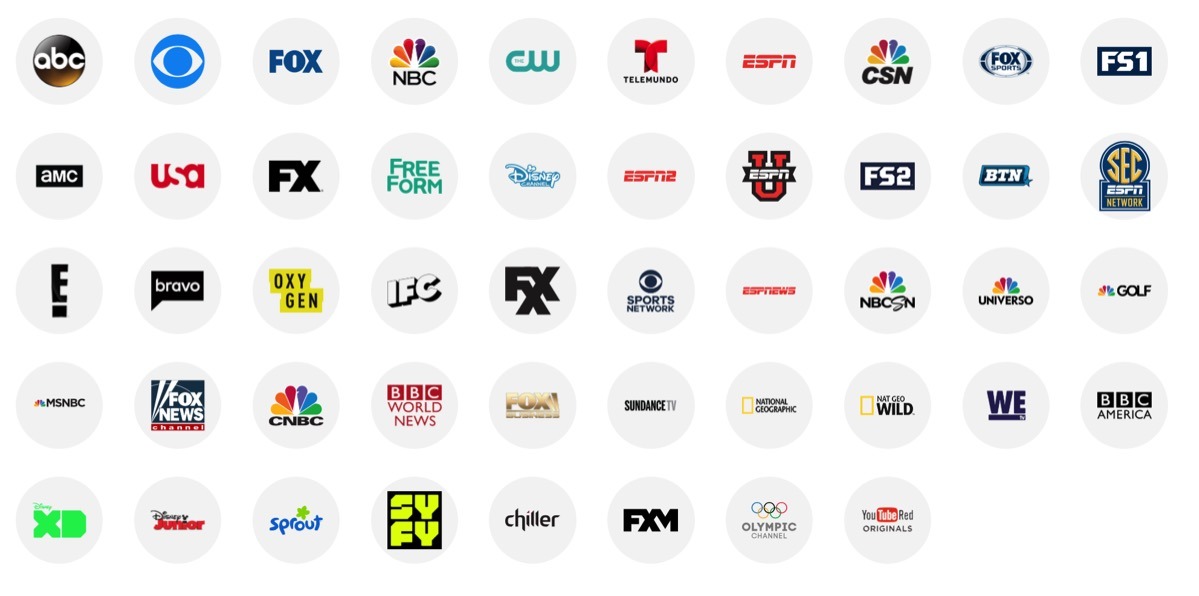
One of the most significant technical hurdles for any streaming service is the integration of local broadcast affiliates. YouTube TV excels here by providing access to the “Big Four” networks: ABC, CBS, NBC, and FOX. Through sophisticated geo-fencing and IP-based location tracking, the platform delivers the specific local affiliate relevant to the user’s zip code. This ensures that users receive localized news, weather, and regional sports programming, which was historically the missing link in early streaming attempts.
National News and Information Hubs
For users who rely on real-time data and global events, the base lineup includes a comprehensive suite of news channels. This includes major networks such as CNN, MSNBC, FOX News, and BBC World News. The technical integration allows for “Live” badges and real-time metadata updates, ensuring that the electronic programming guide (EPG) is accurate to the second. This is supported by high-bitrate streams that prevent pixelation during fast-moving ticker scrolls, a common technical issue in lower-tier streaming services.
General Entertainment and Lifestyle Networks
The “lean-back” experience of television is preserved through a wide array of entertainment channels. The lineup includes staples like AMC, Bravo, FX, HGTV, Food Network, and USA Network. From a software perspective, these channels benefit from YouTube TV’s server-side ad insertion (SSAI) technology, which attempts to provide more relevant advertisements than traditional linear broadcasts while maintaining a seamless transition between content and commercials.
Sports Integration and High-Performance Streaming
For many tech enthusiasts, the decision to subscribe to a streaming service is driven by sports. YouTube TV has positioned itself as a leader in this space, leveraging Google’s massive data center infrastructure to provide low-latency streams that are critical for live athletics.
The Sports Powerhouses: ESPN, FS1, and Beyond
The base plan includes the full suite of ESPN networks (ESPN, ESPN2, ESPNU, ESPNEWS) and Fox Sports (FS1, FS2). It also includes specialized league networks like the Big Ten Network and CBS Sports Network. The technical achievement here is the “Stats View” and “Key Plays” features. Utilizing machine learning and real-time data feeds, the YouTube TV app can identify pivotal moments in a game, allowing users to catch up on the action through AI-generated highlights before jumping into the live stream.
The NFL Sunday Ticket Technical Milestone
In a landmark move for sports streaming technology, YouTube TV became the exclusive home of the NFL Sunday Ticket. This required a massive scaling of the platform’s backend to handle the simultaneous viewership of millions of fans. The integration of “Multiview”—a feature that allows users to watch up to four different games on a single screen—is a feat of server-side compositing. Instead of the user’s device having to decode four separate video streams (which would crash many lower-end smart TVs), YouTube TV’s servers merge the streams into a single video feed before it ever reaches the device.
Regional Sports Networks (RSNs) and Licensing Challenges
It is important to note the technical and contractual complexities of Regional Sports Networks (RSNs). While YouTube TV carries some RSNs, such as NBC Sports Regionals, it has faced challenges with providers like Bally Sports. This highlights the ongoing “tech vs. content” struggle where software capabilities are sometimes limited by the legal frameworks of regional broadcasting rights.
Customization Through Premium Add-ons and Tiers
The “one-size-fits-all” model is enhanced by a modular software approach that allows users to plug in additional content based on their specific needs. These add-ons are integrated directly into the existing UI, eliminating the need to switch between different apps.
The 4K Plus Expansion
For users with high-end home theater setups, the 4K Plus add-on is a significant technical upgrade. This package doesn’t just add 4K resolution for selected live and on-demand content; it also unlocks the ability to download recordings to a mobile device for offline viewing and allows for unlimited concurrent streams at home. This is a crucial feature for households with multiple power users who demand high-fidelity visuals (3840 x 2160 resolution) and high-dynamic-range (HDR) support.
Premium Cinema and Original Programming
YouTube TV allows for the seamless integration of premium networks like Max (formerly HBO Max), Showtime, and STARZ. When these are added, the movies and series appear natively within the YouTube TV search results. The technical benefit here is the “Universal Search” functionality; if a user searches for a specific actor or movie, the platform scans the live guide, the DVR, and all subscribed add-ons to provide a single, unified entry point.
Specialized Packs: Spanish and Sports Plus
To cater to diverse demographics, YouTube TV offers the “Spanish Plus” pack, which includes over 25 Spanish-language channels like ESPN Deportes and CNN en Español. Additionally, the “Sports Plus” pack adds niche channels such as NFL RedZone, BeIN Sports, and PlayersTV. This modularity demonstrates the platform’s ability to act as a “content aggregator,” a central software hub that organizes disparate content streams into a cohesive user experience.
The Software Advantage: Features That Redefine Channel Surfing
The value of YouTube TV’s channel list is amplified by the software features that govern how those channels are consumed. Unlike a traditional cable box, which is often limited by sluggish hardware, YouTube TV utilizes cloud computing to enhance the “channel surfing” experience.
Unlimited Cloud DVR: Data Without Limits
The most disruptive technical feature of YouTube TV is its unlimited Cloud DVR. Unlike hardware-based DVRs that are limited by a hard drive’s gigabyte capacity, YouTube TV records content to Google’s cloud servers. This allows users to “record” every single channel in the lineup simultaneously without ever running out of space. Recordings are kept for nine months, and the metadata-rich interface allows for easy navigation through recorded libraries, complete with thumbnail previews and “smart” skipping features.
Personalization and AI-Driven Recommendations
YouTube TV leverages the same recommendation algorithms that power the main YouTube platform. Over time, the “Home” tab learns the user’s viewing habits. If a user consistently watches “The Voice” on NBC, the app will prioritize that channel in the live guide and surface related content. This AI-driven personalization turns a massive list of 100+ channels into a curated stream of content tailored to individual technical and personal preferences.
Cross-Platform Continuity and IoT Integration
The utility of the YouTube TV channel lineup is extended by its platform ubiquity. Whether through a dedicated Smart TV app, a Google Chromecast, an Apple TV, or a mobile device, the experience is synchronized. Furthermore, its integration with the Google Home ecosystem allows for voice-activated channel switching (e.g., “Hey Google, play ESPN on the Living Room TV”). This level of IoT (Internet of Things) integration is something traditional cable providers have struggled to replicate with proprietary hardware.

Future Outlook: The Evolution of IP-Based Television
As we look toward the future, the question of “what channels does YouTube TV have” will likely become secondary to “what can YouTube TV do with those channels?” We are entering an era of interactive television where the line between a passive viewer and an active user is blurring.
The platform is already experimenting with increased interactivity, such as real-time polls during news broadcasts or integrated shopping links during commercials. From a technical standpoint, the transition to the ATSC 3.0 standard (NextGen TV) and the continued expansion of 5G and high-speed fiber internet will allow YouTube TV to deliver even lower latency and higher bitrates, potentially surpassing the quality of traditional satellite and cable.
In conclusion, YouTube TV’s channel lineup is a robust collection of over 100 networks that satisfy the vast majority of entertainment, news, and sports needs. However, its true power lies in its technological foundation—the cloud DVR, the AI-driven interface, and the seamless integration of premium add-ons. For the modern consumer, YouTube TV represents the pinnacle of “Tech-First” television, transforming the act of watching TV into a highly personalized, data-rich digital experience.
aViewFromTheCave is a participant in the Amazon Services LLC Associates Program, an affiliate advertising program designed to provide a means for sites to earn advertising fees by advertising and linking to Amazon.com. Amazon, the Amazon logo, AmazonSupply, and the AmazonSupply logo are trademarks of Amazon.com, Inc. or its affiliates. As an Amazon Associate we earn affiliate commissions from qualifying purchases.