
The term “I-797” is often encountered in discussions surrounding immigration to the United States, but for many, its precise meaning and significance remain somewhat elusive. This notice, officially known as the Notice of Action, is a crucial document issued by U.S. Citizenship and Immigration Services (USCIS). It serves as a formal communication from the government agency to individuals and organizations regarding the disposition of various immigration petitions and applications. Understanding the I-797 is paramount for anyone navigating the U.S. immigration system, whether they are seeking to enter the country, adjust their status, or employ foreign nationals. This article will delve into the multifaceted nature of the I-797, explaining its various forms, purposes, and essential components, all within the context of U.S. immigration law and its practical implications for individuals and businesses.

The I-797: A Cornerstone of U.S. Immigration Case Management
At its core, the I-797 is the official receipt and confirmation of USCIS’s actions on an immigration filing. It’s not a visa or a green card itself, but rather an acknowledgement that a petition or application has been received, is being processed, or has been approved, denied, or is otherwise resolved. The USCIS uses a standardized numbering system for its forms, and the “I-797” designation encompasses a family of notices, each tailored to a specific outcome or stage in the immigration process. The information contained within an I-797 is vital for tracking case progress, understanding eligibility, and preparing for subsequent steps, such as visa interviews or employment authorization.
Types and Purposes of I-797 Notices
USCIS issues several variations of the I-797 notice, each denoted by a letter following the number, which indicates its specific purpose. These variations are critical for distinguishing between different stages and outcomes of an immigration application.
I-797, Notice of Receipt
This is often the first I-797 an applicant receives. It serves as confirmation that USCIS has received a filed petition or application. The Notice of Receipt includes a unique receipt number, which is essential for tracking the status of the case online through the USCIS website. This number is a key identifier and should be kept secure and readily accessible. It indicates that the filing meets basic USCIS requirements for acceptance and has entered the processing queue.
I-797, Notice of Action (Approval Notices)
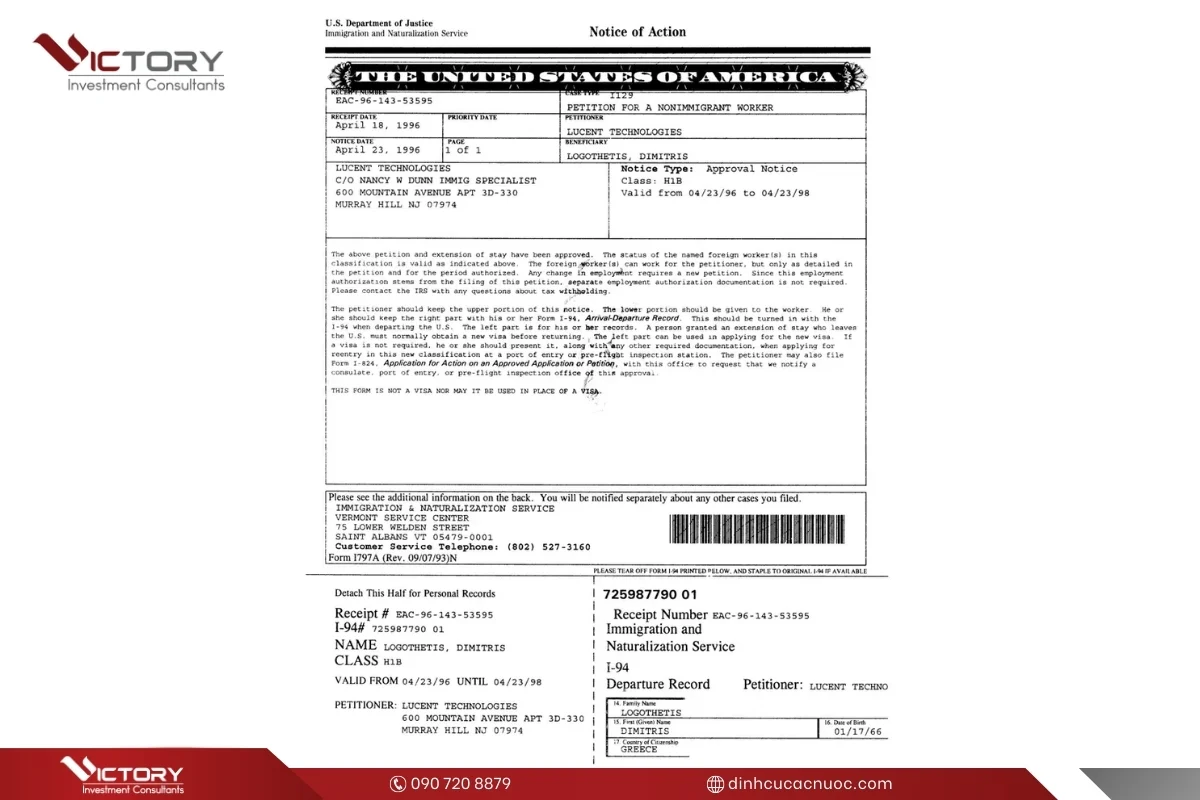
This is perhaps the most anticipated type of I-797. When a petition or application is approved, USCIS will issue an I-797 Approval Notice. This notice signifies that the applicant has met the eligibility criteria for the immigration benefit requested. For example, an I-797 Approval Notice for an employment-based petition (like an I-140 Immigrant Petition for Alien Worker) is a crucial step towards obtaining lawful permanent residency. Similarly, an I-797 Approval Notice for an H-1B petition confirms that an employer can petition for a foreign worker to come to the U.S. for a specialized occupation.
I-797, Notice of Action (Other Outcomes)
Beyond approvals and initial receipts, the I-797 can also communicate other important outcomes:
- I-797, Notice of Action (Denial Notices): Unfortunately, not all applications are approved. If an application is denied, USCIS will issue an I-797 Denial Notice. This notice will explain the reasons for the denial and, in some cases, inform the applicant of their right to appeal or file a motion to reopen or reconsider the decision.
- I-797, Notice of Action (Interview/Biometrics Appointments): For certain applications, USCIS requires an interview or biometrics (fingerprinting and photograph). The I-797 can be used to schedule these appointments, providing the date, time, and location.
- I-797, Notice of Action (Reaffirmations/Renewals): In cases of petition extensions or renewals (e.g., for non-immigrant visas), an I-797 Approval Notice will be issued to reflect the extended validity period.
Understanding the specific designation on the I-797 notice is critical to grasping the status of one’s immigration case.
Key Information Contained Within an I-797 Notice
Each I-797 notice, regardless of its specific purpose, contains a standardized set of information that is vital for the applicant and their legal representatives. Familiarizing oneself with these elements is crucial for accurate case management and ensuring all necessary information is present and correct.
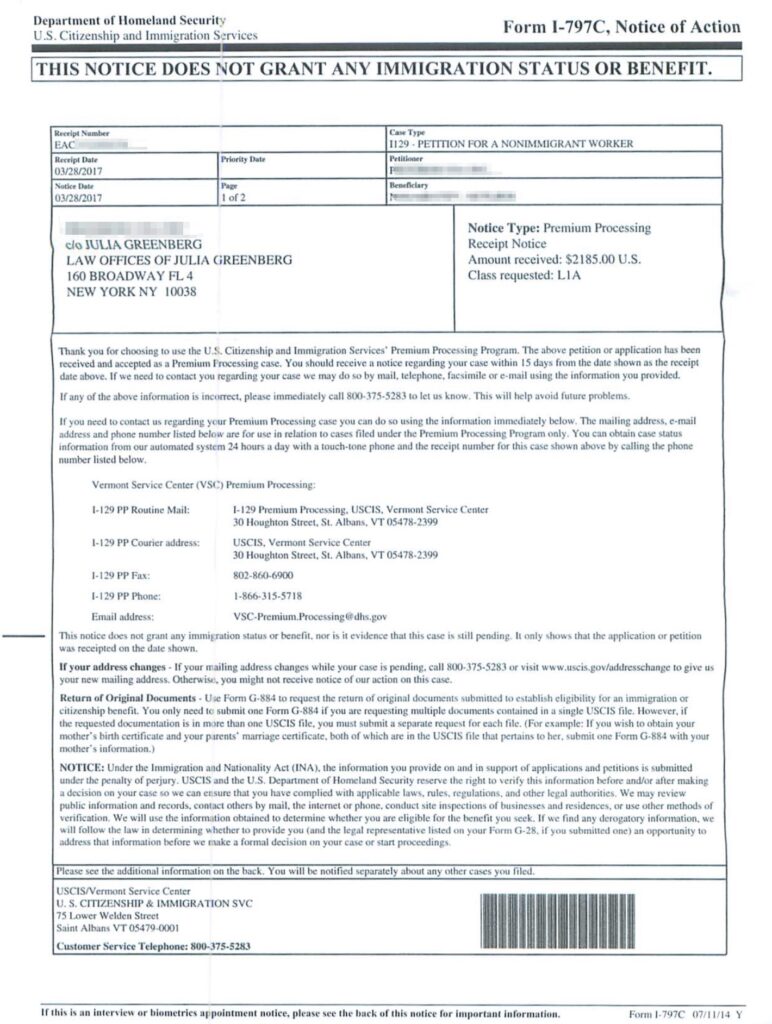
Essential Data Fields on the I-797
- Receipt Number: As mentioned, this is the most critical piece of information. It’s a unique 13-character identifier (e.g., EAC-XX-XXX-XXXXX) that allows USCIS to track the case. This number is indispensable for checking case status online, communicating with USCIS, and referencing the case in any future correspondence.
- Notice Date: The date the notice was issued by USCIS. This is important for calculating deadlines and understanding the timeline of the immigration process.
- Petitioner/Applicant Information: This section will clearly state the name of the individual or entity that filed the petition or application, as well as the name of the beneficiary (the person for whom the benefit is sought). It’s vital to ensure this information is accurate and matches the original filing.
- Beneficiary Information: Details pertaining to the foreign national, including their name, date of birth, and A-Number (Alien Registration Number), if applicable.
- Type of Petition/Application: The notice will specify the exact form number and title of the petition or application that the I-797 pertains to (e.g., Form I-129, Petition for a Nonimmigrant Worker; Form I-140, Immigrant Petition for Alien Worker; Form I-485, Application to Register Permanent Residence or Adjust Status).
- Action Taken: This is the core of the notice, explicitly stating whether the petition was received, approved, denied, or if an appointment is scheduled.
- Dates of Validity: For approval notices, this section will indicate the period for which the immigration benefit is granted. For example, an I-797 approval for an H-1B visa will specify the authorized period of employment.
- USCIS Service Center or Field Office: The notice will indicate where the case was processed, which can be helpful for referencing or if further interaction with that specific office is required.
- Attorney Information (if applicable): If an immigration attorney or accredited representative filed the petition on behalf of the applicant, their contact information will be listed.
The Importance of Verifying Information
It is absolutely imperative that applicants meticulously review their I-797 notices for accuracy. Even minor errors in names, dates, or A-Numbers can lead to significant complications down the line, potentially causing delays or even rejections of future applications. If any discrepancies are found, it is crucial to contact USCIS immediately to request a correction. Often, this involves filing a specific form or providing additional documentation to support the requested amendment.
Practical Implications and Uses of the I-797
The I-797 notice is more than just a piece of paper; it’s a functional document with significant practical implications for individuals and organizations involved in U.S. immigration. Its various forms and contents dictate the next steps in the immigration journey and serve as proof of specific immigration statuses or approvals.
Navigating Immigration Pathways with I-797 Notices
- For Non-Immigrant Visa Applicants: An I-797 Approval Notice for a petition like Form I-129 (for H-1B, L-1, O-1 visas, etc.) is essential. It serves as the basis for the individual to apply for their visa stamp at a U.S. embassy or consulate abroad. Without this notice, the visa application cannot proceed. It also allows the individual to present themselves at a U.S. port of entry for admission in the approved non-immigrant status.
- For Immigrant Visa Applicants and Green Card Holders: An I-797 Approval Notice for an I-140 or an I-130 (Petition for Alien Relative) is a crucial step towards obtaining permanent residency. It allows the applicant to proceed with the National Visa Center processing (for consular processing abroad) or file Form I-485 (Application to Adjust Status) if they are already in the U.S. The I-797 also serves as proof of approval while the green card is being processed or for individuals who have received their green card.
- For Employment Authorization: For individuals seeking to work in the U.S. based on their immigration status or a specific petition, an I-797 Notice of Action indicating approval of employment authorization (often associated with Form I-765, Application for Employment Authorization) serves as their legal documentation to work. Employers will require this document for I-9 verification.
- For Travel: Certain I-797 notices, particularly those related to approved extensions of stay or changes of status, are important for individuals to prove their lawful status in the U.S. if they choose to travel internationally and seek reentry. An I-797 that indicates an approved extension of status is crucial evidence.
The I-797 as Proof of Status
In essence, the I-797 acts as tangible evidence of an individual’s immigration status or the progress of their immigration case. It is often required by employers for verification of work authorization, by schools for enrollment, and by various government agencies for identification and benefit eligibility. Maintaining secure and accessible copies of all issued I-797 notices is therefore a fundamental aspect of managing one’s immigration journey.
The I-797 in the Broader Context of U.S. Immigration Policy
The I-797, while a procedural document, is deeply intertwined with the broader landscape of U.S. immigration policy. The types of petitions and applications that generate these notices reflect the various pathways to immigration established by Congress and administered by USCIS. Each I-797, in its own way, represents a decision made by the U.S. government regarding an individual’s or organization’s interaction with its immigration system.
Reflecting Immigration Priorities and Regulations
The USCIS’s issuance of I-797 notices is a direct manifestation of current immigration laws and regulations. For instance, the types of petitions that are frequently approved, leading to I-797 Approval Notices, can offer insights into areas where the U.S. is seeking to attract specific talent (e.g., STEM professionals through certain employment-based categories) or reunite families. Conversely, an increase in denial notices for specific categories might indicate shifts in policy interpretation or enforcement priorities.
The Role of Attorneys and Employers
The I-797 notice also highlights the collaborative nature of the U.S. immigration system. In many instances, particularly for employment-based immigration, employers play a pivotal role as petitioners. They invest resources in filing petitions, which then result in I-797 notices for their prospective foreign national employees. Similarly, immigration attorneys are instrumental in navigating the complexities of the application process, ensuring that petitions are filed correctly to maximize the chances of receiving an I-797 Approval Notice. The I-797, therefore, is not just a document for the immigrant but also a confirmation of successful engagement between petitioners, beneficiaries, and the U.S. government.
In conclusion, the I-797, or Notice of Action, is an indispensable document within the U.S. immigration framework. It serves as the official record of USCIS’s decisions and actions on a myriad of petitions and applications. From confirming receipt to signifying approval, denial, or scheduling appointments, each I-797 carries critical information that guides individuals and organizations through their immigration journeys. Understanding the different types of I-797 notices, the essential data they contain, and their practical implications is not merely a matter of administrative detail but a fundamental necessity for anyone seeking to navigate the complexities of U.S. immigration law effectively and successfully.
aViewFromTheCave is a participant in the Amazon Services LLC Associates Program, an affiliate advertising program designed to provide a means for sites to earn advertising fees by advertising and linking to Amazon.com. Amazon, the Amazon logo, AmazonSupply, and the AmazonSupply logo are trademarks of Amazon.com, Inc. or its affiliates. As an Amazon Associate we earn affiliate commissions from qualifying purchases.