
In the intricate ecosystem of modern vehicles, the transmission plays a pivotal role, acting as the crucial intermediary between the engine’s power and the wheels’ motion. Its smooth and efficient operation is paramount to a satisfying and reliable driving experience. Yet, like any complex mechanical system, the transmission requires diligent maintenance to ensure longevity and optimal performance. Among the various maintenance procedures discussed, the “transmission flush” often emerges as a topic of debate and inquiry. This article delves into the intricacies of transmission flushes, exploring what they entail, their purported benefits, the potential risks, and when they might be a necessary consideration for vehicle owners.
Understanding the Transmission and Its Fluid
Before dissecting the concept of a transmission flush, it’s essential to grasp the fundamental role of automatic transmission fluid (ATF) and the transmission itself. The transmission, whether manual or automatic, is a marvel of engineering that allows your vehicle to change gears. In automatic transmissions, this process is managed hydraulically, and ATF is the lifeblood of this system.
The Vital Role of Automatic Transmission Fluid (ATF)
Automatic transmission fluid is a specialized hydraulic fluid designed to perform a multitude of critical functions within the transmission. It is far more than just a lubricant.
- Lubrication: ATF lubricates the numerous gears, bearings, and clutch packs within the transmission. This reduces friction, preventing wear and tear on these vital components. Without adequate lubrication, metal-on-metal contact would quickly lead to catastrophic damage.
- Cooling: The transmission generates a significant amount of heat due to friction and hydraulic pressure. ATF circulates throughout the transmission, absorbing this heat and dissipating it, primarily through the transmission cooler, which is often integrated into the vehicle’s radiator. Overheating can degrade the fluid and damage transmission components.
- Hydraulic Power Transmission: In automatic transmissions, ATF is pressurized to engage and disengage clutches and bands, which are responsible for selecting and holding different gear ratios. The precise control of this hydraulic pressure is what enables smooth gear changes.
- Cleaning and Debris Suspension: As components within the transmission wear down, they produce microscopic metal particles and other debris. ATF is formulated to suspend these particles, preventing them from accumulating and causing blockages or further damage. It also helps to clean internal surfaces.
- Corrosion Prevention: ATF contains additives that protect the various metal and seal components within the transmission from corrosion and rust.
The quality and condition of ATF are directly correlated with the health and longevity of the transmission. Over time, ATF degrades due to heat, pressure, and the accumulation of contaminants. This degradation can manifest as a change in color (often darkening from a bright red to a brownish or black hue), a burnt smell, and a decrease in its lubricating and hydraulic properties.
How Transmissions Degrade Over Time
The operational demands placed on a transmission are considerable. Frequent acceleration, deceleration, and gear changes, coupled with the inherent heat generated, all contribute to the gradual breakdown of ATF and the transmission’s internal components.
- Fluid Oxidation and Thermal Breakdown: Heat is the primary enemy of ATF. Prolonged exposure to high temperatures causes the fluid to oxidize, breaking down its molecular structure. This reduces its viscosity, lubricating capabilities, and ability to protect against wear. A burnt smell is a telltale sign of severe thermal degradation.
- Contamination: Over time, wear and tear on internal transmission parts inevitably produce small metal shavings and other debris. Clutch material can also break down. These contaminants circulate within the transmission and can clog narrow passages, damage seals, and abrade components.
- Sludge and Varnish Formation: As ATF degrades, it can form sludge and varnish. Sludge is a thick, tar-like substance that can impede fluid flow and clog filters. Varnish is a hard, lacquer-like deposit that can cause components to stick and prevent proper operation.
- Moisture Ingress: In some cases, moisture can enter the transmission fluid, for example, through faulty seals or condensation. Water in the ATF can accelerate corrosion and degrade the fluid’s properties.
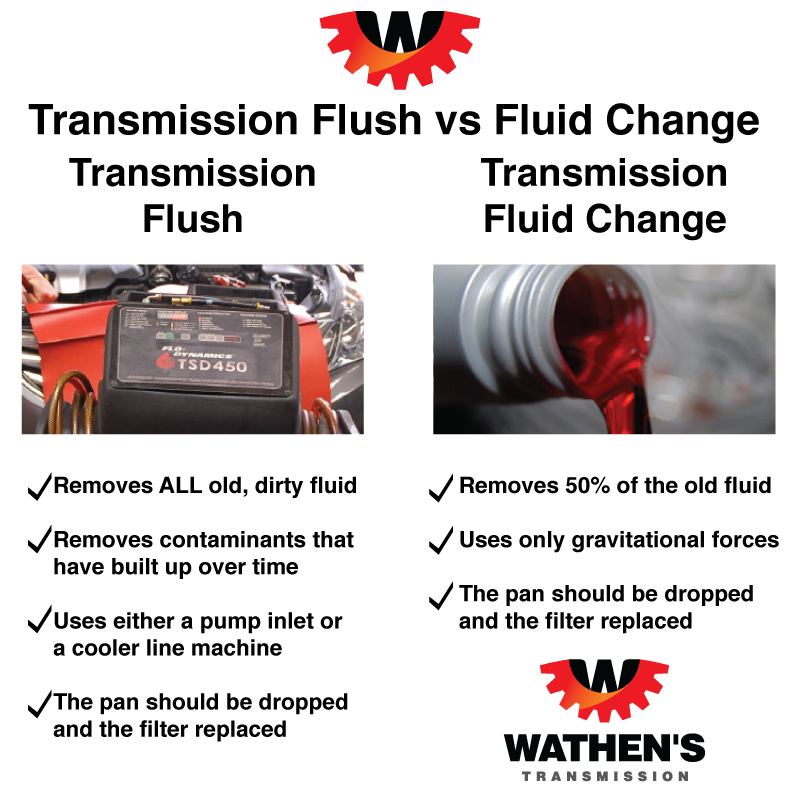
Regular transmission fluid changes, which involve draining and refilling the transmission with fresh ATF, are a standard maintenance practice to mitigate these issues. However, the transmission flush is a more intensive procedure that aims to remove more than just the old fluid.
The Process of a Transmission Flush
A transmission flush, also known as a transmission fluid exchange, is a maintenance procedure that goes beyond a simple drain and fill. It involves circulating new fluid through the transmission to push out virtually all of the old, contaminated fluid, along with dissolved contaminants and any suspended debris.
How a Transmission Flush Works
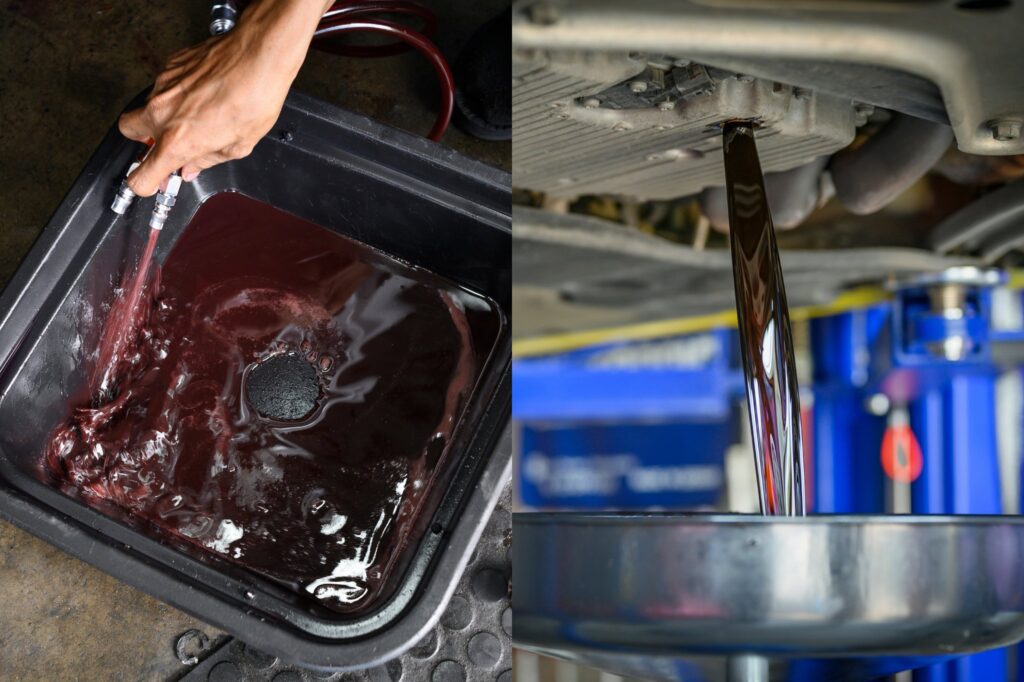
The process typically involves a specialized machine that connects to the transmission’s cooling lines. Here’s a step-by-step breakdown of a common transmission flush procedure:
- Connection: The technician connects the transmission flush machine to the vehicle’s transmission cooling lines. These lines carry ATF to and from the transmission cooler.
- New Fluid Introduction: The machine simultaneously introduces new, clean ATF into the transmission while drawing out the old fluid. This is often done while the engine is running and the transmission is cycling through its gears, ensuring that all passages and torque converter are filled with fresh fluid.
- Circulation and Flushing: The machine circulates the new fluid under pressure, effectively flushing out the old fluid, dissolved contaminants, and any loose debris from the transmission’s internal components, including the torque converter, valve body, and transmission cooler.
- Fluid Exchange Completion: The process continues until all the old fluid has been replaced with new fluid. The color of the fluid exiting the system is monitored to determine when the exchange is complete.
- Disconnection and Refill: Once the exchange is finished, the machine is disconnected, and the transmission fluid level is checked and adjusted to the correct specification. In some cases, a new transmission filter may also be installed during this procedure, which is a recommended practice.
Variations and Techniques
While the core principle of flushing remains the same, there can be slight variations in how the procedure is performed by different shops or with different equipment. Some machines may be more efficient at circulating fluid or removing stubborn deposits. The key is that the process aims for a near-complete replacement of the old fluid, rather than the partial replacement achieved by a simple drain and fill. A drain and fill typically only replaces about 40-50% of the total transmission fluid, as a significant amount remains trapped in the torque converter and valve body.
Benefits and Potential Drawbacks of a Transmission Flush
The decision to perform a transmission flush is often influenced by the perceived benefits versus the potential risks. Proponents argue it can extend transmission life and improve performance, while skeptics warn of potential damage.
Potential Advantages
- Enhanced Lubrication and Cooling: By removing degraded fluid and replacing it with fresh, clean ATF, a flush ensures optimal lubrication and cooling properties. This can reduce friction and heat, potentially preventing premature wear and overheating.
- Removal of Contaminants: The flushing action helps to dislodge and remove accumulated debris, sludge, and varnish from internal components. This can prevent blockages in fluid passages and filters, improving fluid flow and the transmission’s overall operation.
- Improved Shifting and Performance: Fresh ATF can restore the transmission’s hydraulic performance, potentially leading to smoother gear changes and a more responsive feel. In some cases, a flush might resolve minor shifting issues caused by degraded fluid.
- Extended Transmission Life: By maintaining the transmission in a cleaner, cooler, and better-lubricated state, proponents argue that a flush can contribute to a longer service life for the transmission, a costly component to replace.
- Proactive Maintenance: For vehicles with high mileage or those that have not had regular fluid changes, a flush can be seen as a proactive measure to address potential issues before they become serious.
Potential Risks and Considerations
Despite the potential benefits, transmission flushes are not without their controversies, and potential risks should be carefully considered.
- Dislodging Existing Debris: In transmissions with very high mileage and a history of infrequent maintenance, old, hardened deposits may have actually been acting as “sealants” for minor leaks or protecting worn surfaces. A forceful flush could dislodge these deposits, potentially exposing worn components and leading to new leaks or increased wear.
- Damage to Seals and Gaskets: The process, especially if done with excessive pressure or with incompatible fluids, could potentially damage delicate seals and gaskets within the transmission, leading to leaks.
- Introduction of Incompatible Fluid: It is critically important that the correct type of ATF is used for the specific vehicle make and model. Using the wrong type of fluid can cause severe damage to the transmission’s internal components.
- Cost: Transmission flushes are typically more expensive than a standard drain and fill due to the specialized equipment and larger volume of fluid required.
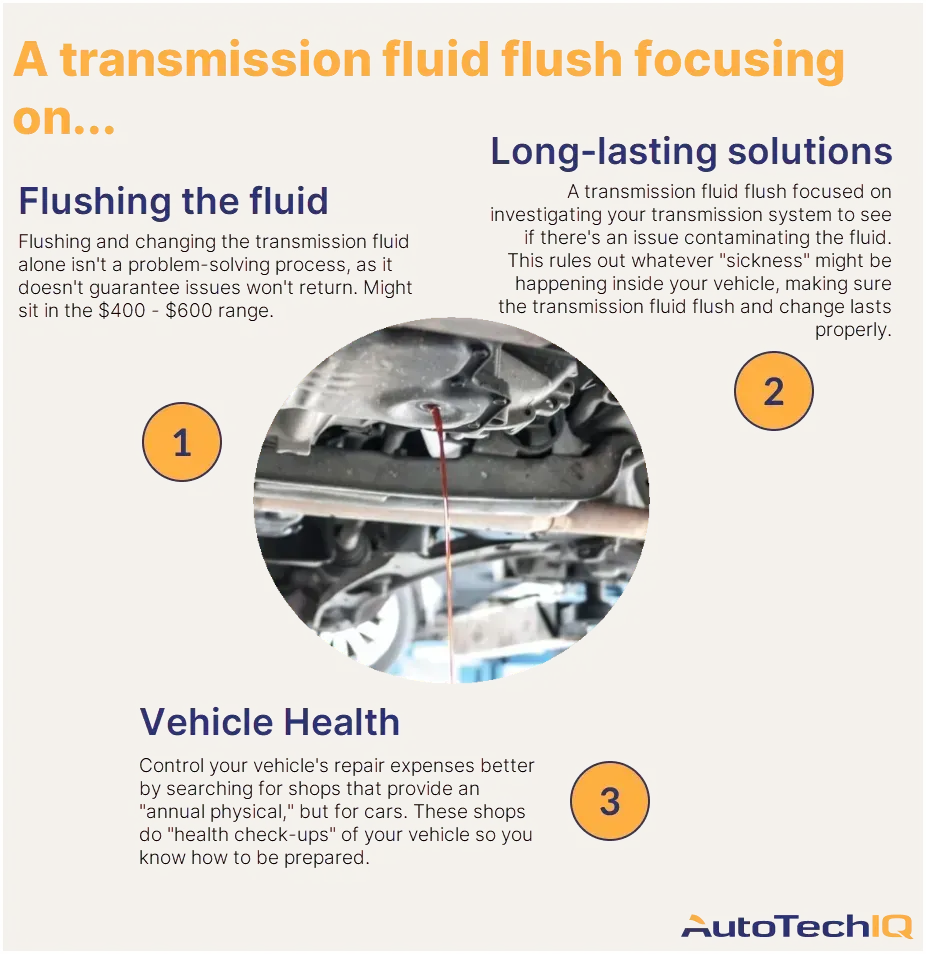
- No Guarantee of Fixing Existing Problems: A flush will not repair internal mechanical failures. If the transmission has already suffered significant damage, a flush is unlikely to resolve the underlying issues and may even exacerbate them.
When to Consider a Transmission Flush
The decision of whether to perform a transmission flush should be made on a case-by-case basis, taking into account the vehicle’s age, mileage, maintenance history, and any existing symptoms.
Factors to Consider
- Maintenance History: If your vehicle has a well-documented history of regular transmission fluid changes (typically every 30,000 to 60,000 miles, depending on the manufacturer’s recommendation), a flush may be less necessary. However, if maintenance records are sparse or nonexistent, a flush might be considered, especially for higher-mileage vehicles.
- Vehicle Mileage: For vehicles with low mileage (under 60,000 miles) and a good maintenance history, a simple drain and fill is usually sufficient. For higher-mileage vehicles (over 100,000 miles) that have not had their transmission fluid serviced regularly, a flush can be more beneficial, but carries a slightly higher risk if deposits have accumulated significantly.
- Symptoms of Transmission Problems: If you are experiencing symptoms such as rough shifting, slipping gears, delayed engagement, or unusual noises, a transmission flush might be considered as part of a diagnostic process, but it’s crucial to have a qualified mechanic assess the situation first. It’s not a cure-all for major transmission failures.
- Manufacturer Recommendations: Always consult your vehicle’s owner’s manual for the manufacturer’s recommended maintenance schedule for the transmission fluid. Some manufacturers explicitly recommend or advise against transmission flushes.
- Fluid Condition: If the transmission fluid is dark, has a burnt smell, or appears contaminated, it’s an indication that it needs to be changed. Whether a flush is the best method depends on the other factors mentioned.
Seeking Professional Advice
Ultimately, the most prudent course of action is to consult with a trusted and experienced mechanic or transmission specialist. They can inspect your transmission fluid, assess the vehicle’s condition, and provide a professional recommendation based on their expertise and the specific needs of your vehicle. They can also explain the risks and benefits in detail and ensure that if a flush is performed, it is done correctly with the appropriate fluid and equipment.
In conclusion, a transmission flush is a comprehensive maintenance procedure designed to thoroughly clean and replace a vehicle’s transmission fluid. While it can offer significant benefits in terms of extending transmission life and improving performance when performed on a well-maintained vehicle, it also carries potential risks, particularly for neglected or high-mileage transmissions. Informed decision-making, coupled with professional guidance, is key to determining if a transmission flush is the right maintenance choice for your vehicle.
aViewFromTheCave is a participant in the Amazon Services LLC Associates Program, an affiliate advertising program designed to provide a means for sites to earn advertising fees by advertising and linking to Amazon.com. Amazon, the Amazon logo, AmazonSupply, and the AmazonSupply logo are trademarks of Amazon.com, Inc. or its affiliates. As an Amazon Associate we earn affiliate commissions from qualifying purchases.