
The criminal justice system, while focused on accountability and rehabilitation, often involves financial mechanisms that can significantly impact an individual’s liberty and legal proceedings. One such mechanism, frequently encountered in the context of jail, is the surety bond. While the term might sound complex, its function is relatively straightforward: it’s a financial guarantee designed to ensure a defendant’s appearance in court while allowing them to be released from jail pending their trial. This article will delve into the intricacies of surety bonds for jail, exploring their purpose, how they function, the parties involved, and their significance within the broader financial and legal landscape.

The Core Function of a Surety Bond in Pre-Trial Release
At its heart, a surety bond is a three-party agreement that serves as a promise to the court. The primary objective is to mitigate the risk that a defendant will abscond or fail to appear for scheduled court dates. Without such a guarantee, individuals accused of crimes might be held in jail until their trial, regardless of their guilt or innocence. This can lead to significant personal hardship, including loss of employment, inability to prepare a defense, and separation from family. The surety bond provides a financial incentive for the defendant to adhere to court requirements.
Ensuring Appearance: The Primary Purpose
The fundamental reason for requiring a surety bond is to ensure the defendant’s presence at all mandatory court appearances. These appearances can range from initial arraignments and bail hearings to pre-trial conferences, motions, and ultimately, the trial itself. The court needs assurance that the individual will be available to face the charges and participate in the legal process. The bond acts as a financial leverage, as its forfeiture can have significant monetary consequences for the defendant and the surety.
The Bail Amount: A Judicial Determination
The amount of the surety bond is not arbitrary. It is determined by a judge based on a variety of factors, reflecting the perceived flight risk and the seriousness of the alleged offense. Key considerations include:
- Nature and Seriousness of the Offense: More severe crimes generally warrant higher bail amounts.
- Defendant’s Criminal History: A history of failing to appear in court or prior convictions can increase the bail.
- Ties to the Community: Factors such as stable employment, family responsibilities, and property ownership in the area can indicate a lower flight risk, potentially leading to a lower bail.
- Defendant’s Financial Resources: While not directly factoring into the risk assessment, the judge may consider the defendant’s ability to pay the bail amount, though the primary goal remains ensuring appearance.
- Potential Danger to the Community: In some cases, if the defendant is deemed a significant threat to public safety, bail may be denied altogether, or set at an exceptionally high amount.
The bail amount, therefore, is a calculated risk assessment by the court, with the surety bond serving as the financial instrument to manage that risk.
The Mechanics of a Surety Bond: Parties and Processes
A surety bond for jail involves three distinct parties, each with specific roles and responsibilities. Understanding these roles is crucial to grasping how the bond operates in practice.
The Principal: The Defendant
The principal in a surety bond agreement is the defendant. They are the individual who has been arrested and is seeking release from jail. The principal’s obligation is to appear in court as required. Failure to do so triggers the bond’s forfeiture. While the defendant is the principal, they often do not directly pay the full bail amount themselves.
The Indemnitor: The Guarantor
The indemnitor is typically a person who financially guarantees the bond on behalf of the principal. This could be the defendant themselves, a family member, or a friend. The indemnitor pledges assets or agrees to be responsible for the full bail amount if the principal fails to appear in court. In essence, they are stepping in to provide the financial security the court requires.
The Surety: The Bonding Company
The most common type of surety bond used for jail release is provided by a bail bond company, which acts as the surety. These are licensed businesses that specialize in providing surety bonds. For a fee, typically a non-refundable percentage of the total bail amount (often around 10-15%), the bail bond company agrees to post the full bail on behalf of the defendant. This fee is the core of the bail bond business. The bail bond company essentially takes on the financial risk, knowing that if the defendant flees, they will be liable to pay the court the full bail amount. To mitigate their own risk, bail bond companies often require collateral from the indemnitor, such as property or other assets, to secure the bond.
The Process of Obtaining a Surety Bond
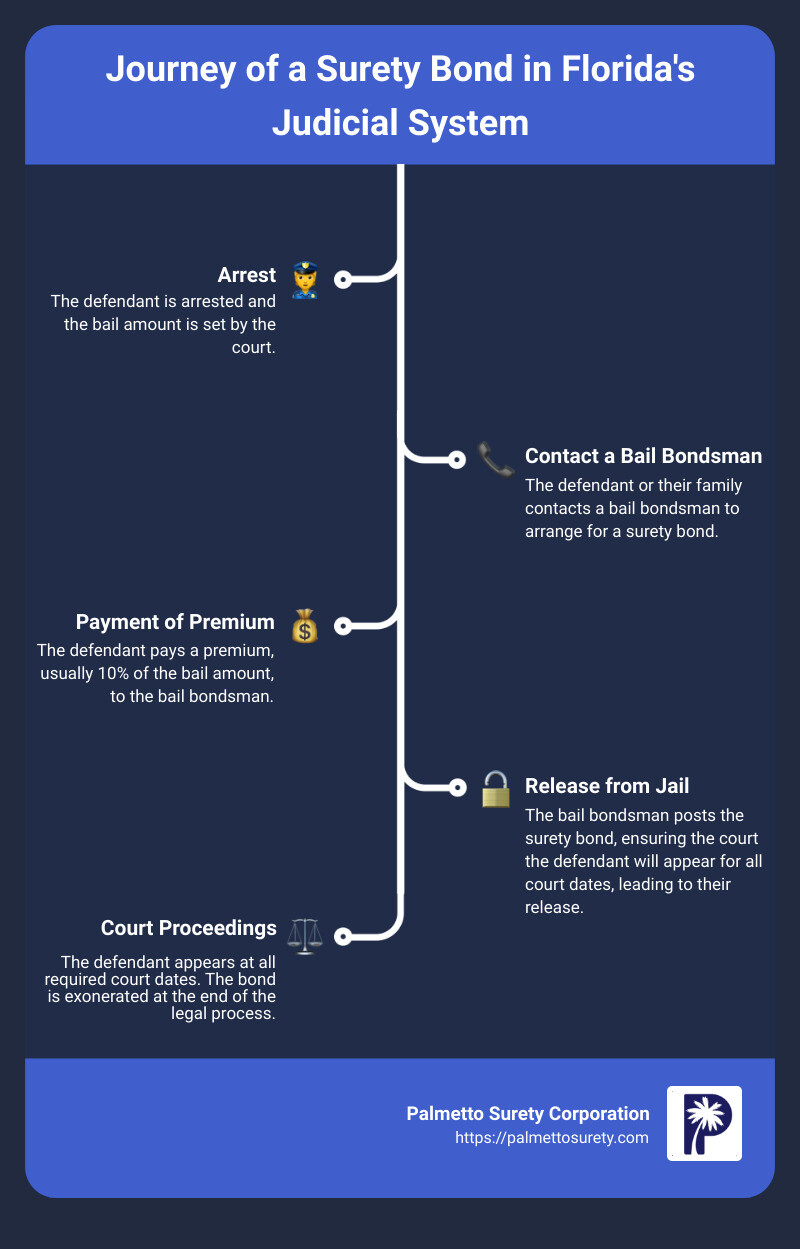
- Arrest and Arraignment: Following an arrest, the defendant is brought before a judge for an arraignment, where bail is set.
- Contacting a Bail Bond Company: If the defendant or their representatives cannot afford to post the full bail amount, they will contact a bail bond company.
- Application and Agreement: The defendant or indemnitor will fill out an application, providing information about the defendant and the collateral they can offer. They will then pay the non-refundable fee to the bail bond company.
- Posting the Bond: Once the agreement is finalized and collateral secured, the bail bond company will post the bond with the court, guaranteeing the defendant’s release.
- Defendant’s Release: Upon successful posting of the bond, the defendant is released from jail, with instructions to appear for all future court dates.
- Court Appearances: The defendant must attend all scheduled court proceedings.
- Bond Discharge: If the defendant successfully completes all their court obligations, the bond is discharged, and the collateral is returned (minus any fees or expenses).
- Forfeiture: If the defendant fails to appear in court (skips bail), the bond is forfeited. The bail bond company is then liable to pay the full bail amount to the court. They will likely pursue the indemnitor for this amount and may also use bounty hunters to locate and apprehend the defendant.
Financial Implications and Considerations
The use of surety bonds in the criminal justice system has significant financial implications for individuals, families, and the justice system itself. While offering a pathway to pre-trial release, the financial burden and the potential for forfeiture are important considerations.
The Cost of Freedom: Fees and Collateral
The most immediate financial aspect of a surety bond is the fee paid to the bail bond company. This fee is a service charge and is non-refundable, regardless of whether the defendant is ultimately found guilty or innocent, or if the charges are dropped. This means that even if the defendant is exonerated, the money paid to the bail bondsman is gone.
Beyond the fee, bail bond companies often require collateral. This can include real estate, vehicles, jewelry, or cash. The value of the collateral is usually set at or above the bail amount to protect the bonding company. If the defendant fails to appear, the bonding company can seize and sell the collateral to recoup their losses. This can have devastating financial consequences for the indemnitor, even if they are not the defendant.
The Economics of the Bail Bond Industry
The bail bond industry is a multi-billion dollar business. Bail bond companies operate by taking calculated risks. They assess the likelihood of a defendant appearing in court and set their fees and collateral requirements accordingly. Their business model relies on the fact that a significant majority of defendants will appear for their court dates, allowing the company to profit from the fees and the return of collateral. However, when defendants do flee, the forfeiture of bonds can also be a substantial financial event for the bonding company, which is why they meticulously vet their clients and require substantial collateral.
Alternatives and Criticisms: The Financial Barrier
While surety bonds provide a means for release, they are not without criticism. A significant concern is that they create a two-tiered system of justice: one for those who can afford bail and another for those who cannot. Individuals with limited financial resources may be forced to remain in jail simply because they cannot afford the bail amount or the fee for a bail bond, even if they are not a flight risk or a danger to society. This can lead to disproportionate pre-trial detention based on economic status rather than the merits of the case.
In response to these concerns, some jurisdictions have explored alternatives to cash bail, such as risk assessment tools and electronic monitoring. However, surety bonds remain a prevalent mechanism for pre-trial release across many parts of the United States, representing a significant intersection of the financial world and the criminal justice system.
Navigating the Legal and Financial Landscape
Understanding surety bonds is essential for anyone who might find themselves or a loved one facing arrest and bail. It’s a complex interplay of legal requirements and financial transactions, where informed decisions can significantly influence outcomes.
Understanding Your Rights and Obligations
If bail is set, it’s crucial to understand the amount and the conditions attached. If you or someone you know is unable to afford the full bail amount, contacting a reputable bail bond company is a common step. However, it’s also advisable to consult with an attorney. A lawyer can provide guidance on bail reduction motions, explain the terms of any bond agreement, and advocate for the defendant’s release.
Crucially, if a surety bond is posted, the defendant has a legal obligation to appear in court at all scheduled times. Failure to do so has severe repercussions, not only for the defendant (arrest warrants, potential jail time for jumping bail) but also for the indemnitor and the bail bond company. Maintaining open communication with the bail bond company and ensuring all court dates are met is paramount.
The Role of the Indemnitor
For those acting as indemnitors, the decision to co-sign or provide collateral for a surety bond carries significant financial risk. It’s imperative to fully comprehend the terms of the agreement, the potential liabilities, and the consequences of the defendant failing to appear. Before agreeing to be an indemnitor, one should consider their own financial stability and whether they can afford to lose the collateral or be responsible for the full bail amount.

The Broader Impact on the Justice System
Surety bonds are a deeply ingrained part of the U.S. criminal justice system. They facilitate the release of defendants, allowing them to maintain employment and prepare their defense, thereby supporting the efficient functioning of the courts. However, the financial implications and the debate surrounding equitable access to pre-trial release continue to drive discussions about reform. The financial burden placed on individuals and the potential for wealth disparity to influence liberty remain central to this ongoing conversation.
In conclusion, a surety bond for jail is a financial guarantee that facilitates a defendant’s release from custody pending trial. It involves a principal (the defendant), an indemnitor (the guarantor), and a surety (typically a bail bond company). While it serves a vital function in ensuring court appearances, it carries significant financial implications and has been the subject of considerable debate regarding its fairness and impact on the justice system. Understanding its mechanics is crucial for navigating the complexities of the legal and financial landscape surrounding pre-trial release.
aViewFromTheCave is a participant in the Amazon Services LLC Associates Program, an affiliate advertising program designed to provide a means for sites to earn advertising fees by advertising and linking to Amazon.com. Amazon, the Amazon logo, AmazonSupply, and the AmazonSupply logo are trademarks of Amazon.com, Inc. or its affiliates. As an Amazon Associate we earn affiliate commissions from qualifying purchases.