
Manometers, often overlooked in the grand scheme of technological advancements, are fundamental instruments that play a crucial role in a surprising array of modern applications. While they may not boast the flashy user interfaces of a new smartphone or the intricate algorithms of cutting-edge AI, their precise and reliable measurement of pressure is indispensable for the functioning and safety of countless systems. In the realm of technology, understanding the manometer is akin to understanding the bedrock upon which many complex engineering feats are built. From monitoring the delicate atmospheric pressure changes that guide weather forecasts to ensuring the optimal operation of industrial machinery, manometers are the silent sentinels of pressure integrity.

The Fundamental Principles of Manometric Pressure Measurement
At its core, a manometer operates on a deceptively simple principle: the direct measurement of pressure by balancing it against a known force. This force is typically derived from the weight of a liquid column or, in more advanced designs, the deformation of a mechanical element. The inherent elegance of this approach lies in its reliance on basic physics, making it robust and less susceptible to the calibration drift often seen in more complex electronic sensors.
Hydrostatic Pressure: The Liquid Column Advantage
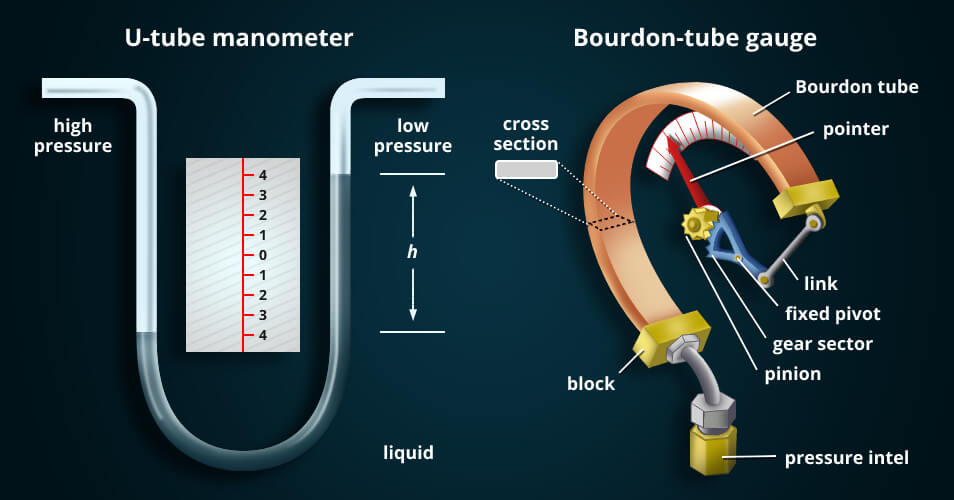
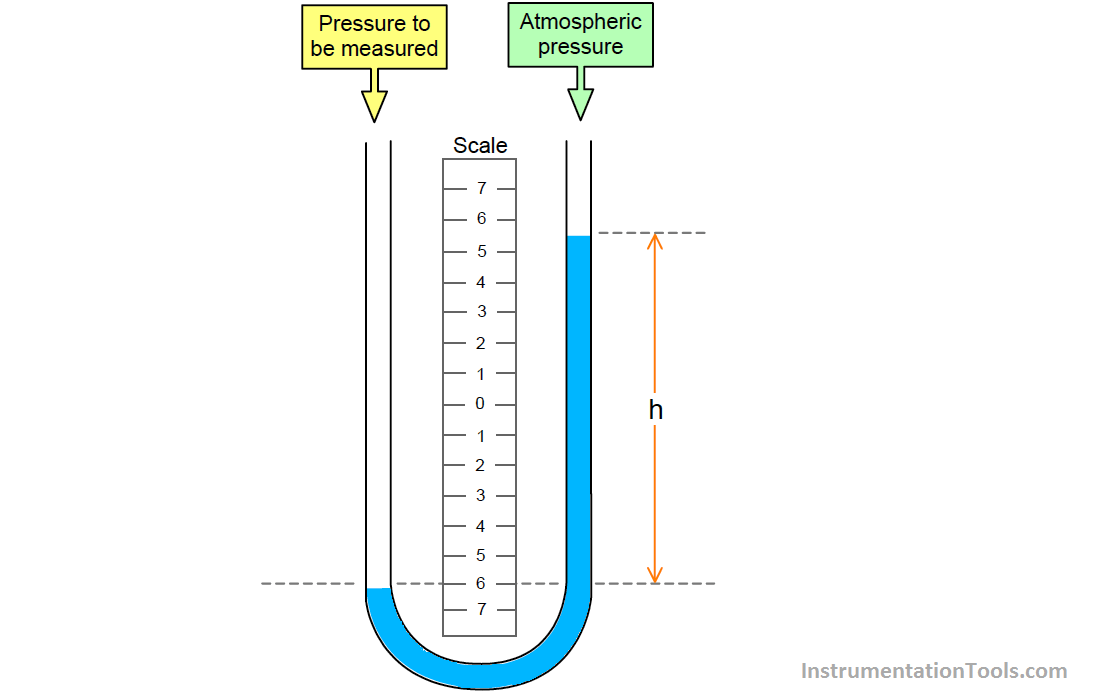
The most classic and widely recognized form of manometer utilizes the principle of hydrostatic pressure. In its simplest iteration, a U-shaped tube, partially filled with a liquid of known density, serves as the measuring element. One end of the tube is exposed to the pressure being measured, while the other end is either open to the atmosphere or connected to a reference pressure (often vacuum). The difference in the liquid levels within the two arms of the U-tube is directly proportional to the pressure difference.
The hydrostatic pressure exerted by a column of liquid is given by the formula $P = rho gh$, where:
- $P$ is the pressure
- $rho$ (rho) is the density of the liquid
- $g$ is the acceleration due to gravity
- $h$ is the height of the liquid column
By measuring the difference in height ($h$) between the liquid levels in the two arms, and knowing the density of the liquid (e.g., mercury, water, or oil), the applied pressure can be accurately calculated. The choice of liquid is critical and depends on the expected pressure range and accuracy requirements. Mercury, due to its high density and low vapor pressure, was historically favored for its ability to measure higher pressures with a shorter column. However, due to its toxicity, water and specialized oils are now more commonly used for lower-pressure applications.
Beyond the U-Tube: Variations in Liquid Manometers
While the U-tube manometer is iconic, several variations have been developed to enhance its functionality and applicability.
Inclined Manometers for Enhanced Sensitivity
For measuring very small pressure differences, a standard U-tube manometer might require an impractically long tube. The inclined manometer addresses this by tilting one arm of the U-tube at a shallow angle to the horizontal. This arrangement magnifies the displacement of the liquid along the inclined scale for a given pressure change. Even a small vertical rise in the liquid level translates to a significant horizontal or inclined movement, allowing for more precise readings of low pressures. This makes them invaluable in applications like HVAC systems for measuring duct static pressure or in research where subtle pressure variations are critical.
Well-Type (or Cistern) Manometers for Simplicity
In a well-type manometer, one reservoir (the “well”) is significantly larger in diameter than the other measuring tube. When pressure is applied, the liquid level in the larger well changes minimally, while the liquid level in the narrower tube rises or falls noticeably. This design simplifies the reading process, as the pressure is primarily indicated by the change in level in a single tube relative to a fixed reference mark, rather than the difference between two moving levels.
The Evolution of Manometry: From Liquids to Electronics
While liquid-based manometers remain relevant for certain applications, the relentless drive for greater accuracy, portability, and integration with digital systems has led to the development of sophisticated electronic pressure sensors that often draw upon manometric principles or have supplanted them in many areas. However, understanding the foundation provided by manometers is crucial for appreciating the nuances of these advanced technologies.
Aneroid Barometers: Mechanical Pressure Sensing
The aneroid barometer represents a significant departure from liquid-based manometers, employing a sealed, flexible metal capsule that expands or contracts in response to changes in external pressure. This mechanical deformation is then amplified through a system of levers and linkages to move a pointer across a calibrated dial. The term “aneroid” signifies the absence of liquid.
The Bourdon Tube: A Classic Mechanical Sensor
Another prominent mechanical pressure-sensing element is the Bourdon tube. This is a curved, flattened tube, sealed at one end and open to the pressure source at the other. As pressure is applied internally, the tube tends to straighten, and this movement is mechanically translated to a pointer. Bourdon tube gauges are widely used in industrial settings for measuring pressures ranging from vacuum to thousands of pounds per square inch. While not a direct manometer in the liquid sense, its principle of pressure-induced mechanical deformation is a cornerstone of many pressure measurement technologies.
Electronic Transducers: Digital Precision and Integration
Modern technology heavily relies on electronic pressure transducers, which convert pressure into an electrical signal. These transducers often employ a diaphragm that deflects under pressure, and this deflection is measured using various electronic principles.
Piezoresistive and Capacitive Sensing
Two common types of electronic pressure sensors are piezoresistive and capacitive. Piezoresistive sensors utilize semiconductor materials whose electrical resistance changes when subjected to mechanical stress (pressure). Capacitive sensors, on the other hand, work by measuring the change in capacitance between two conductive plates separated by a dielectric material, where one plate is a diaphragm that deforms under pressure. These sensors offer high accuracy, fast response times, and the ability to interface directly with digital control systems and data acquisition devices. They are the backbone of modern instrumentation in industries ranging from aerospace to automotive and medical devices.
Applications of Manometers in the Technological Landscape
The fundamental ability of manometers to accurately gauge pressure has cemented their importance across a vast spectrum of technological fields. Their applications are not confined to niche scientific experiments; they are integral to the safety, efficiency, and functionality of everyday technologies and critical industrial processes.
Environmental Monitoring and Meteorology
Perhaps one of the most well-known applications of manometers is in meteorology. Barometers, specifically mercury barometers, have historically been used to measure atmospheric pressure. Changes in atmospheric pressure are key indicators of weather patterns, with falling pressure often signaling approaching storms and rising pressure suggesting fair weather. Modern meteorological stations utilize highly accurate electronic barometers, but the foundational principle of pressure measurement remains the same. Beyond weather, manometers are used to monitor air quality in enclosed environments and to track pressure changes in sealed natural systems.
Industrial Process Control and Safety
In industrial settings, precise pressure control is paramount for safety and operational efficiency. Manometers, both liquid and electronic, are employed in a multitude of ways:
- HVAC Systems: As mentioned, inclined manometers are used to measure static pressure within air ducts, ensuring optimal airflow and preventing system damage.
- Chemical and Petrochemical Plants: Maintaining specific pressures in reactors, distillation columns, and pipelines is critical for chemical reactions and safe operation. Manometers and pressure gauges are used to continuously monitor these parameters, preventing over-pressurization or under-pressurization which could lead to hazardous situations or reduced product yield.
- Boiler and Steam Systems: High-pressure steam systems rely heavily on accurate pressure monitoring to prevent catastrophic failures. Manometers are essential for ensuring boilers operate within their safe pressure limits.
- Pneumatic and Hydraulic Systems: These systems rely on pressurized fluids (air or oil) to generate force and motion. Manometers are used to monitor the pressure of these fluids, ensuring actuators and machinery operate as intended.
Medical Devices and Healthcare
The precision required in medical technology often necessitates the use of manometric principles.
- Blood Pressure Monitors: While often digital and non-invasive, the fundamental concept of measuring internal fluid pressure is akin to manometry. Older sphygmomanometers, for instance, utilize a mercury column to measure systolic and diastolic blood pressure.
- Respiratory Equipment: Ventilators and anesthesia machines rely on precise control of air and gas pressures. Manometers are used to monitor these pressures, ensuring patients receive the correct breathing support and that the equipment functions safely.
- Laboratory Instruments: Many analytical instruments in medical research and diagnostics, such as mass spectrometers and gas chromatographs, require precise vacuum or pressure control, often monitored by manometers.
Aerospace and Automotive Engineering
The demanding environments of aerospace and automotive engineering also benefit from manometric technology.
- Aircraft: Manometers are used to measure cabin pressure, pitot-static pressure (for airspeed indication), and fuel system pressures. Accurate atmospheric pressure readings are vital for altimetry.
- Automobiles: Modern vehicles employ numerous pressure sensors to monitor tire pressure, oil pressure, fuel pressure, and exhaust backpressure. These readings are critical for engine performance, fuel efficiency, and safety systems like ABS.
The Enduring Relevance of Manometry in the Digital Age
Despite the rise of sophisticated digital sensors, the foundational principles of manometry continue to inform and inspire technological innovation. The inherent simplicity, reliability, and often lower cost of some manometric designs ensure their continued use in specific applications. Moreover, the development of electronic pressure sensors has largely been an evolution of the core concepts pioneered by liquid-based and mechanical manometers.
The understanding of how pressure can be translated into measurable quantities – whether by the displacement of a liquid column, the flex of a metal diaphragm, or the change in electrical resistance – is a testament to human ingenuity in quantifying the physical world. As technology advances, the tools for measuring and understanding physical parameters like pressure will undoubtedly continue to evolve, but the legacy of the manometer as a foundational instrument in this journey remains undeniable. It stands as a powerful example of how fundamental scientific principles can be harnessed to create technologies that underpin our modern world.
aViewFromTheCave is a participant in the Amazon Services LLC Associates Program, an affiliate advertising program designed to provide a means for sites to earn advertising fees by advertising and linking to Amazon.com. Amazon, the Amazon logo, AmazonSupply, and the AmazonSupply logo are trademarks of Amazon.com, Inc. or its affiliates. As an Amazon Associate we earn affiliate commissions from qualifying purchases.