
In the era of the “smart home,” our focus has shifted from mere convenience to total environmental optimization. While we have long mastered the art of digital temperature control, the second pillar of indoor comfort—humidity—has traditionally been left to guesswork. However, as the Internet of Things (IoT) matures, understanding and maintaining the perfect indoor humidity level has become a sophisticated technological endeavor. No longer just about comfort, managing indoor moisture is now a critical component of home automation, hardware preservation, and data-driven wellness.
The Science of Sensors: Defining the Optimal Humidity Range in the Digital Age
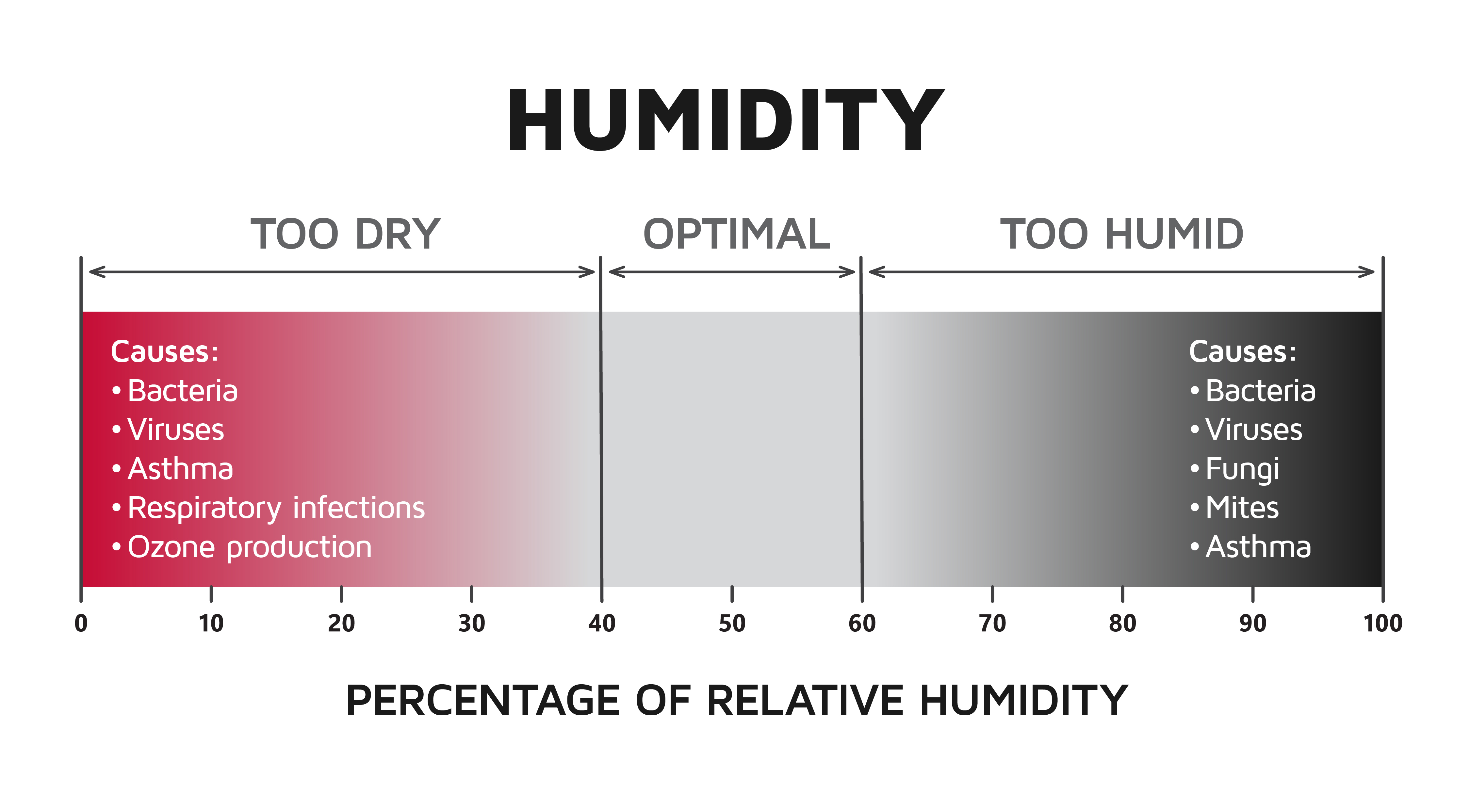
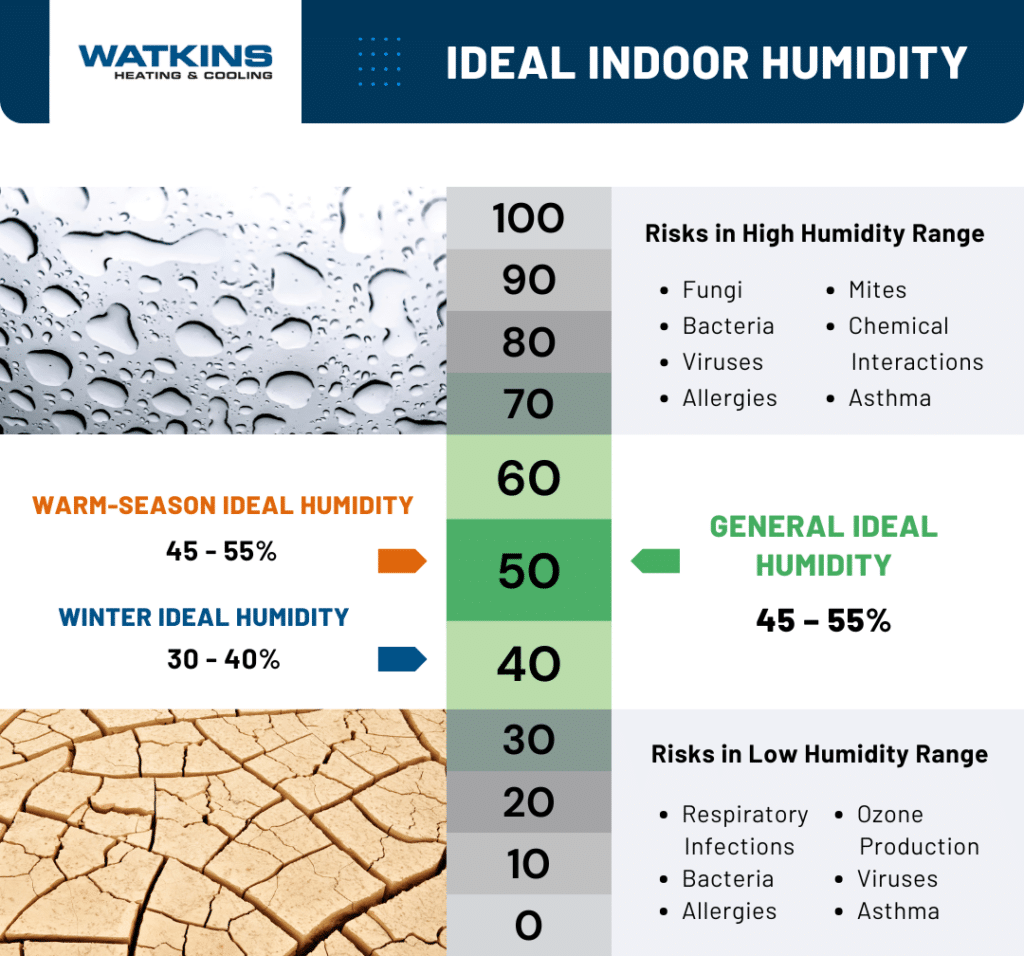
To manage something, you must first measure it. In the tech world, the baseline for “good” indoor humidity is generally accepted as being between 30% and 50%. This range isn’t arbitrary; it is the “Goldilocks zone” where human health, structural integrity, and electronic longevity intersect.

The 30% to 50% Standard
From a technical perspective, maintaining relative humidity (RH) within this bracket prevents the extremes that compromise both biological and mechanical systems. When humidity drops below 30%, air becomes excessively dry, leading to increased static electricity—the silent killer of sensitive PC components and circuit boards. Conversely, exceeding 50% creates a breeding ground for biological contaminants and introduces the risk of condensation within hardware enclosures.
How Digital Hygrometers Redefined Accuracy
Historically, measuring humidity relied on mechanical hair-spring hygrometers, which were notoriously inaccurate. Today, the tech industry utilizes capacitive and resistive sensors. Capacitive sensors, found in most high-end smart home monitors, work by measuring the change in electrical capacitance of a thin polymer film as it absorbs moisture. This data is then processed by onboard microcontrollers to provide real-time, high-precision readings. For the modern tech enthusiast, a “good” humidity level is only meaningful if it is backed by a sensor with a low margin of error (typically ±2–3% RH).
Environmental Data Logging
A key advantage of modern tech is the ability to track fluctuations over time. A single reading of 45% might suggest a healthy environment, but data logging via apps can reveal “spikes” during specific activities, such as server load increases or HVAC cycles. Understanding these patterns is the first step toward building an automated response system.
IoT and Automation: Integrating Humidity Control into the Smart Home Ecosystem
Once the data is collected, the next step in the tech-centric home is automation. We are moving away from manually turning on a humidifier and toward a fully integrated climate “ecosystem” where devices communicate via protocols like Matter, Zigbee, or Z-Wave.
Smart Humidifiers and Dehumidifiers
The modern approach to humidity involves smart appliances that do not operate in isolation. A smart dehumidifier, for instance, doesn’t just rely on its own internal sensor (which can be biased by its proximity to the machine’s own exhaust). Instead, it can be programmed to trigger based on a secondary sensor across the room. This “sensor decoupling” ensures that the entire living space—not just the corner where the appliance sits—reaches the target humidity level.
The Role of AI in Predictive Climate Adjustment
Machine learning is now being applied to HVAC (Heating, Ventilation, and Air Conditioning) software. Advanced systems analyze local weather forecasts and historical indoor data to predict humidity shifts before they happen. If a storm is approaching (bringing high outdoor humidity), a smart system can pre-emptively adjust the cooling cycles or activate a whole-home dehumidifier to maintain the 40% sweet spot, preventing the “lag time” associated with traditional thermostats.
IFTTT and Custom Routines
For the power user, platforms like IFTTT (If This Then That) or Home Assistant allow for complex cross-device routines. For example, a “Good Humidity” routine might involve: If indoor humidity > 55%, then turn on the smart plug connected to the dehumidifier, increase the fan speed on the smart air purifier, and send a notification to the user’s smartphone. This level of granular control is what separates a basic living space from a high-tech microclimate.
Hardware vs. Software: Choosing the Right Tech Stack for Air Quality
Achieving the perfect humidity level requires a balance between hardware capabilities and software intelligence. In a professional or high-end residential setup, the “tech stack” for air quality is multi-layered.
Smart Thermostats and Multi-Zone Monitoring
The thermostat is the brain of the home. Modern units from companies like Ecobee or Nest do more than toggle heat; they manage “AC Overcool to Dehumidify.” This software feature allows the air conditioner to run slightly past the set temperature to pull moisture out of the air when humidity levels rise. However, the hardware must support this—older HVAC systems without variable-speed blowers may struggle to execute these software commands effectively.
Mobile Apps and Data Visualization
A professional-grade humidity strategy relies heavily on the User Interface (UI). Leading air quality apps provide heat maps of a home, showing which rooms are prone to moisture. This data visualization allows users to identify “dead zones” where air circulation is poor, perhaps necessitating the installation of a smart vent or an additional IoT-connected fan.
Firmware Updates and Future-Proofing
The hardware you buy today is only as good as the software running it tomorrow. When selecting humidity control tech, it is vital to choose brands that offer frequent firmware updates. These updates often improve sensor calibration logic or add compatibility with new smart home standards like Matter, ensuring that your humidity management system remains part of a cohesive digital environment.
Protecting Your Tech: Why Humidity Matters for Longevity
For IT professionals and gadget enthusiasts, humidity control is not just about comfort—it is about asset protection. Electronics are incredibly sensitive to the moisture content of the air.
The Threat of Electrostatic Discharge (Low Humidity)
In environments where humidity drops below 30%, the air becomes an insulator rather than a conductor. This leads to the buildup of static electricity. For a home office or a server closet, a single static spark (Electrostatic Discharge or ESD) can fry a motherboard or corrupt a solid-state drive (SSD). Tech-savvy homeowners use humidifiers to maintain a “safe” level of moisture that allows static to dissipate harmlessly.
Corrosion and Component Failure (High Humidity)
On the other end of the spectrum, humidity levels above 60% lead to “hygroscopic” effects, where dust particles on circuit boards absorb moisture from the air. This creates a conductive “sludge” that can cause short circuits or slow-moving oxidation (rust) on copper traces and connectors. By using smart sensors to keep humidity strictly below 50%, you are essentially extending the Mean Time Between Failures (MTBF) of every piece of silicon in your home.
The Impact on High-End Audio and Displays
OLED screens and high-fidelity wooden speakers are also susceptible to humidity. Excessive moisture can delaminate screen layers over years, while low humidity can cause the wood in premium acoustic chambers to crack. For the audiophile or home theater enthusiast, maintaining a steady 45% RH is a prerequisite for preserving the “analog” components of their digital setup.
The Future of Indoor Environmental Quality (IEQ) Technology
As we look toward the future, the concept of “good” indoor humidity is becoming more personalized and localized through the use of wearable tech and edge computing.
Edge Computing and Localized Control
Instead of a whole-home average, the future lies in “Micro-Zone Control.” Using edge computing, small sensors placed in every room can process data locally and adjust localized smart vents or portable units. This ensures that a moisture-heavy bathroom doesn’t trigger the dehumidifier in a bone-dry bedroom, optimizing energy efficiency through precise digital targeting.
Integration with Health and Wellness Wearables
We are beginning to see the convergence of smart home tech and biometric data. Imagine a scenario where your Apple Watch or Oura Ring detects that your skin temperature is high or your sleep quality is declining due to dry air. Through a secure API, this health data could theoretically inform your home’s humidity controller to increase the RH levels by 5% during the night to improve respiratory comfort.
The Sustainability Factor: Green Tech
Finally, the tech industry is focusing on the energy cost of humidity control. New “desiccant-based” smart dehumidifiers are being developed that use significantly less power than traditional compressor-based models. These devices are being integrated with solar-inverter apps to ensure they only run during peak sun hours, making the quest for the “perfect humidity” not only a technological triumph but a sustainable one as well.
In conclusion, a “good” indoor humidity level is more than a number on a dial; it is a dynamic target achieved through a sophisticated web of sensors, software, and hardware. By maintaining a range of 30% to 50% through the use of IoT automation and data-driven insights, you protect your health, your home, and—most importantly—your technology.
aViewFromTheCave is a participant in the Amazon Services LLC Associates Program, an affiliate advertising program designed to provide a means for sites to earn advertising fees by advertising and linking to Amazon.com. Amazon, the Amazon logo, AmazonSupply, and the AmazonSupply logo are trademarks of Amazon.com, Inc. or its affiliates. As an Amazon Associate we earn affiliate commissions from qualifying purchases.