
While the romantic notion of every European speaking a smattering of English might be a comforting thought for travelers, the reality is more nuanced. The prevalence of English across the continent is a fascinating tapestry woven from historical influences, economic ties, educational policies, and cultural exchanges. Far from being a monolithic linguistic landscape, Europe presents a spectrum of English proficiency, from near-native fluency in some nations to a more basic understanding in others. This article delves into the countries where English is most widely spoken, exploring the factors that contribute to their linguistic prowess and the implications for business, education, and cultural interaction within Europe and beyond.
The Pillars of English Proficiency: Foundations of Widespread Adoption
The dominance of English as a global lingua franca is undeniable, and its adoption in Europe is a testament to its multifaceted utility. Several key pillars underpin the high levels of English proficiency observed in many European nations. These are not isolated phenomena but rather interconnected forces that reinforce each other, creating environments where English thrives. Understanding these foundational elements is crucial to appreciating the variations in English speaking across the continent.
Historical and Colonial Legacies: Echoes of Empire and Influence
The historical trajectory of the United Kingdom, a predominantly English-speaking nation, has had a profound and lasting impact on the linguistic landscape of Europe. While direct colonial rule within Europe was less extensive than in other parts of the world, the UK’s significant global presence, particularly during the 18th and 19th centuries, fostered a widespread appreciation for the English language. This influence extended beyond direct political control, manifesting in trade, cultural exchange, and educational norms. Nations that had close economic and political ties with Britain often saw English integrated into their educational systems and business practices. Furthermore, the rise of the United States as a global superpower in the 20th century, with its own deeply rooted English-speaking heritage, further cemented the language’s international importance. This dual Anglo-American influence has created a persistent and self-perpetuating cycle where English remains the language of international commerce, science, and diplomacy, encouraging continued adoption and proficiency across Europe.
Economic Powerhouses and Global Connectivity: The Language of Opportunity
In today’s interconnected world, economic prosperity and linguistic proficiency are often inextricably linked. European countries that are economic powerhouses, with strong international trade links and thriving multinational corporations, tend to exhibit higher levels of English proficiency. For businesses operating on a global scale, English serves as the indispensable common tongue for communication, negotiation, and collaboration. Companies in sectors like finance, technology, and manufacturing often require their employees to be fluent in English to interact with international partners, clients, and markets. This demand creates a strong incentive for individuals to acquire English language skills, as proficiency often translates into greater career opportunities and higher earning potential. Consequently, educational institutions in these economically robust nations often prioritize English language instruction, recognizing its vital role in preparing their citizens for the global job market. The emphasis on English within these economies creates a virtuous cycle: as more people become proficient, the country becomes more attractive for international investment and business, further reinforcing the importance of English.
Educational Systems and Policy: Intentional Investment in English Language Learning
The intentional integration of English language learning into national educational curricula is perhaps the most significant driver of widespread English proficiency. Countries that actively invest in robust English language education from an early age tend to see the most impressive results. This includes not only dedicated English lessons but also the increasing use of English as a medium of instruction in subjects like science, mathematics, and technology. Furthermore, policies that encourage teacher training in English, the provision of modern teaching materials, and the promotion of international student exchanges all contribute to a more linguistically capable population. The success of countries like the Netherlands and the Nordic nations in achieving high levels of English proficiency can be largely attributed to their long-standing commitment to prioritizing English language education. These nations understand that equipping their citizens with English is not merely an academic pursuit but a strategic imperative for their economic competitiveness and their ability to engage effectively on the global stage.
The Top Tier: Nations Leading the English Fluency Charge
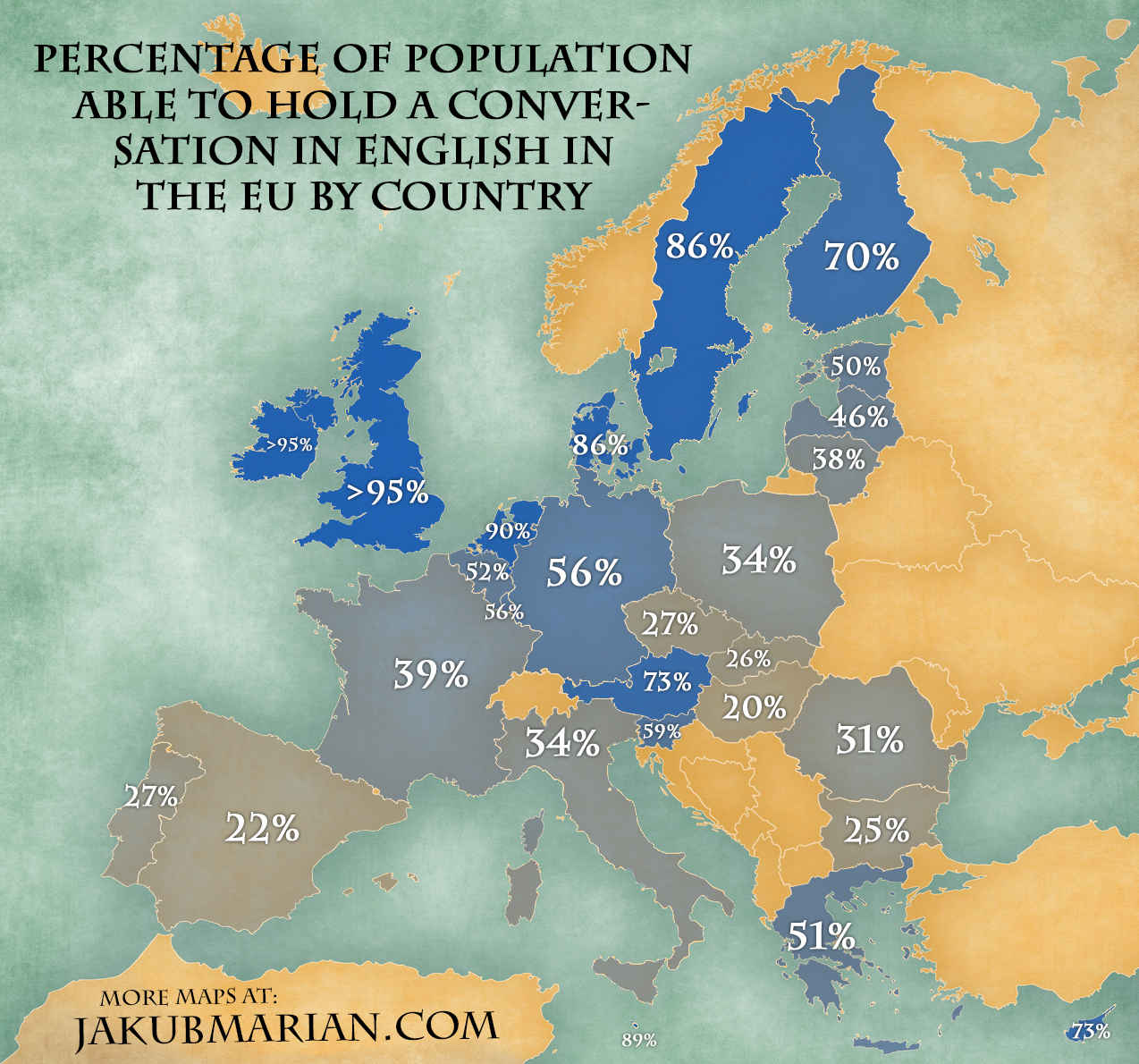
When discussing which European countries speak English, certain nations consistently emerge at the forefront, boasting remarkably high levels of proficiency across their populations. These countries have cultivated an environment where English is not just a foreign language but an integral part of daily life and professional activity. Their success is a result of a confluence of historical factors, deliberate policy choices, and a strong cultural embrace of global communication.
The Nordic Champions: Denmark, Sweden, Norway, and Finland
The Nordic countries, including Denmark, Sweden, Norway, and Finland, are consistently ranked among the top European nations for English proficiency. This is not an accident. These nations have long recognized the strategic importance of English in a small, open economy that relies heavily on international trade and collaboration. From a young age, children in these countries are immersed in English through media, popular culture, and, crucially, through well-structured and intensive educational programs. English is often introduced in preschool and continues as a core subject throughout their schooling. Many universities offer courses taught entirely in English, attracting international students and preparing local students for global careers. Furthermore, the relatively small native populations of these countries mean that English serves as a vital bridge for communication and cultural exchange within Europe and with the wider world. This proactive approach to language acquisition has created a generation of highly proficient English speakers who are comfortable navigating international business, academia, and travel.
The Netherlands: A Beacon of Multilingualism
The Netherlands stands out as a true exemplar of widespread English proficiency. Dutch society has a deeply ingrained tradition of multilingualism, with English playing a central role. This proficiency is driven by a highly outward-looking economy that depends on international trade and a significant tourism sector. English is widely spoken in business, government, and everyday interactions. Educational institutions in the Netherlands have embraced English, with a substantial number of university programs offered in English, attracting a large international student body. This immersion in an English-speaking academic environment further strengthens the English skills of Dutch students. The cultural openness and historical trading relationships of the Netherlands have fostered an environment where learning and using English is not only encouraged but is a practical necessity for many. This has resulted in a population that is not only fluent but also confident and adept at using English in diverse contexts.
Other Notable Contenders: Germany, Austria, and Switzerland
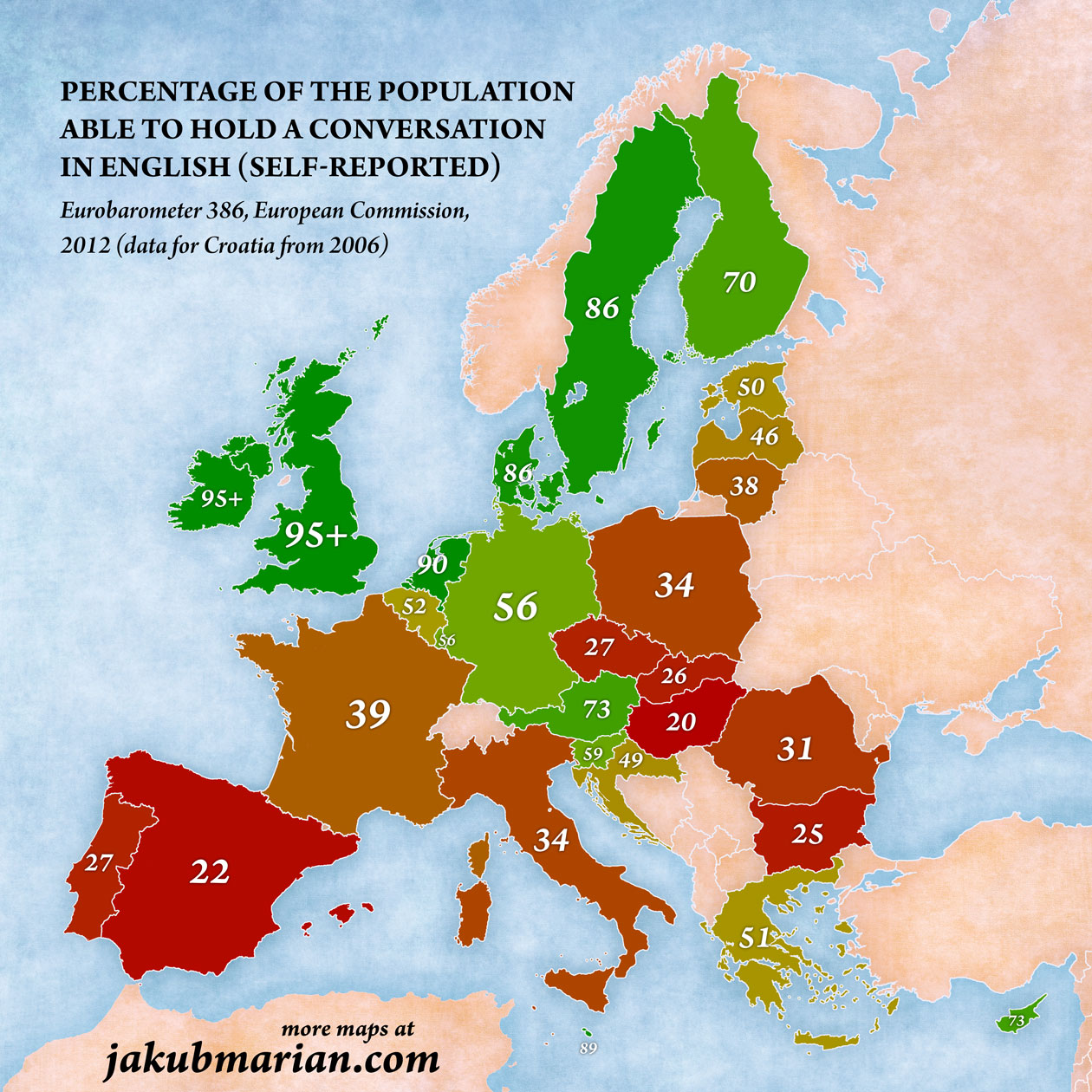
While perhaps not reaching the absolute peak of the Nordic countries or the Netherlands, Germany, Austria, and Switzerland also demonstrate impressive levels of English proficiency. These Central European nations, with their robust economies and significant roles in international commerce, have a strong incentive to cultivate English speakers. Germany, as the largest economy in Europe, sees English as crucial for its export-oriented industries and its position within the European Union. Similarly, Austria and Switzerland, with their strong tourism sectors and international business hubs, require a high level of English fluency. Educational systems in these countries have increasingly incorporated English language learning, with a growing number of university courses and business programs offered in English. The prevalence of English in business and academic circles means that proficiency is a valuable asset, driving individuals to invest in their language skills.
The Nuances of Proficiency: Beyond Simple “Speaking”
It is important to acknowledge that “speaking English” encompasses a spectrum of abilities. While some European countries boast near-native fluency, others offer a more functional, yet still valuable, level of proficiency. Understanding these distinctions provides a more accurate picture of the linguistic landscape.
Functional English: Essential for Business and Travel
In many European countries, particularly those with developing economies or less historical ties to English-speaking nations, English proficiency might be more functional than fluent. This means that individuals can effectively communicate in English for specific purposes, such as conducting business transactions, navigating travel, or accessing information online. These individuals might possess a strong vocabulary and grammatical understanding, enabling them to engage in conversations, understand instructions, and express their needs clearly. This functional English is a vital tool for economic integration and personal empowerment, allowing individuals to participate in the global marketplace and access a wealth of international knowledge and opportunities. Even a basic level of functional English can open doors and facilitate meaningful interactions, underscoring the pervasive influence of the language.
Regional Variations within Countries: Urban Centers vs. Rural Areas
Even within countries that have high overall English proficiency, there can be significant regional variations. Major urban centers, as hubs of international business, tourism, and education, often exhibit higher concentrations of English speakers. These cities tend to have more opportunities for English immersion, with a greater presence of multinational companies, international schools, and diverse populations. Conversely, in more rural or isolated areas, English proficiency might be lower, with fewer opportunities for exposure and practice. This is a common phenomenon in many parts of the world, and Europe is no exception. Understanding these internal variations is crucial for anyone seeking to engage with specific regions within a country, ensuring realistic expectations regarding communication.
The Future of English in Europe: Trends and Implications
The trajectory of English language proficiency in Europe points towards continued growth and integration. Several key trends suggest that English will remain a dominant force, shaping communication, education, and economies across the continent for the foreseeable future.
The Role of Digitalization and Online Resources: Democratizing Language Learning
The digital revolution has profoundly impacted language learning, making English more accessible than ever before. The internet offers a vast array of resources, from online courses and language exchange platforms to streaming services and digital libraries, all readily available in English. This democratization of learning means that individuals in virtually any European country can improve their English skills without necessarily relying on traditional classroom settings or living abroad. Mobile apps, interactive tutorials, and AI-powered language tutors are further enhancing the learning experience, making it more personalized and effective. As digitalization continues to penetrate all aspects of European life, the influence and accessibility of English will only continue to grow, fostering a more interconnected and linguistically capable continent.
The Impact of the European Union: A Lingua Franca for Integration
The European Union, with its commitment to free movement of people, goods, services, and capital, has inadvertently fostered a greater need for a common language. While official EU business is conducted in multiple languages, English has emerged as the de facto lingua franca for many cross-border interactions, discussions, and informal communication among professionals, policymakers, and citizens. The widespread presence of English in EU institutions, international conferences, and pan-European projects ensures its continued prominence. This trend is likely to persist as the EU continues to deepen its integration, making English an indispensable tool for navigating the complexities of European cooperation and governance.
Challenges and Opportunities: Balancing National Identity with Global Communication
While the benefits of widespread English proficiency are undeniable, there are also ongoing discussions and challenges related to maintaining national linguistic identities. Some argue that an overreliance on English could potentially dilute or diminish the use and vitality of indigenous languages. However, for many European countries, the pragmatic benefits of English in terms of economic competitiveness, access to information, and global engagement outweigh these concerns. The key lies in finding a balance: fostering strong English language skills while simultaneously celebrating and preserving the rich linguistic heritage of each nation. This dual approach ensures that European citizens can confidently engage with the global community while remaining deeply connected to their own cultural roots. The future of English in Europe is not one of linguistic homogeneity, but rather a dynamic interplay of global communication and local identity.
aViewFromTheCave is a participant in the Amazon Services LLC Associates Program, an affiliate advertising program designed to provide a means for sites to earn advertising fees by advertising and linking to Amazon.com. Amazon, the Amazon logo, AmazonSupply, and the AmazonSupply logo are trademarks of Amazon.com, Inc. or its affiliates. As an Amazon Associate we earn affiliate commissions from qualifying purchases.