
In the expansive landscape of mobile gaming and hero-collection software, Raid: Shadow Legends stands as a benchmark for tactical complexity and character progression. While Legendary champions often capture the headlines due to their rarity and high-octane visual effects, the true backbone of any efficient account is its roster of Epic champions. Within the “Tech” niche of gaming—where software mechanics, data-driven strategy, and resource optimization intersect—understanding which Epics provide the highest return on investment (ROI) is crucial for both progression and competitive play.
This guide analyzes the technical utility of Epic champions, focusing on skill multipliers, kit synergy, and their roles within the game’s evolving meta. By treating each champion as a specialized tool within a larger software ecosystem, players can optimize their “hardware” (gear) and “software” (masteries and skill books) to achieve peak performance.

Understanding the Architecture of Epic Champions in Raid Shadow Legends
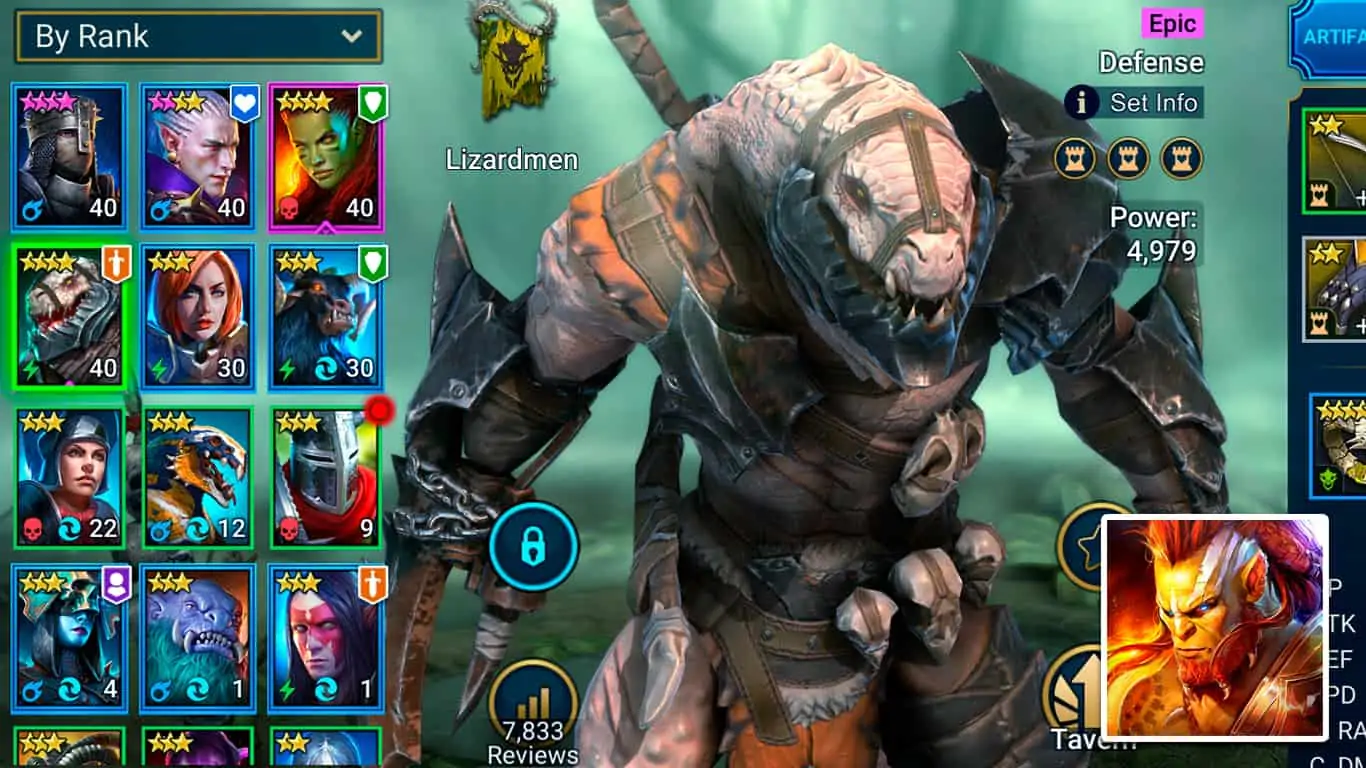
Before diving into specific champions, it is essential to understand the technical positioning of the Epic tier. In the hierarchy of Raid, Epics represent the middle ground between the accessible Rare tier and the resource-heavy Legendary tier. From a technical standpoint, Epics are often more desirable than Legendaries for mid-game players because their “Skill Tomes” (the currency used to upgrade abilities) are significantly more accessible.
Skill Multipliers and Data-Driven Performance
A champion’s utility is largely dictated by their internal data—specifically, their base stats and skill multipliers. While a Legendary champion might have higher base health or attack, many Epics possess superior skill multipliers or unique utility debuffs that Legendaries lack. For instance, a champion with an “AOE Decrease DEF” (Area of Effect Decrease Defense) debuff on a short cooldown is technically more valuable for dungeon clearing than a high-damage Legendary that lacks utility. When evaluating an Epic, a technical analyst looks for “kit compression”—the ability for one champion to fulfill multiple roles (e.g., healing, buffing, and crowd control) within a single slot.
The Role of Epic Tier Champions in the Software Ecosystem
Plarium, the developer behind Raid, treats champion balance as an iterative software lifecycle. New Epics are introduced to counter specific mechanics or to provide “budget” versions of Legendary kits. This creates a meta where certain Epics become “functional staples.” For example, the introduction of the Iron Twins or the Sand Devil’s Necropolis required specific technical responses (like Decrease Speed or Sleep), making previously ignored Epics suddenly high-priority assets.
Top-Tier Epic Champions for Early and Mid-Game Progression
For players transitioning from the early game to the mid-game, efficiency is the primary metric. The goal is to clear high-level dungeons (Stage 20+) and progress through the Doom Tower. The following Epics are considered “God Tier” because their technical utility rivals or exceeds many Legendaries.
Support and Utility: The Foundation of Efficiency
- Stag Knight: From a technical perspective, Stag Knight is perhaps the most efficient debuffer in the game. His kit provides a 95% chance (when booked) to land both Decrease DEF and Decrease ATK on all enemies. In the game’s logic, reducing enemy defense by 60% and attack by 50% simultaneously effectively triples your team’s survivability and damage output.
- Miscreated Monster: This champion functions as a “carry.” His ability to generate massive shields based on damage dealt during his AOE stun attack provides a safety net that allows players to run glass-cannon damage dealers in difficult content. His technical value lies in his high base HP and the synergy between his crowd control and defensive buffs.
Damage Dealers: Leveraging Software Scaling
While many Epics fall off in damage compared to Legendaries, some utilize unique scaling mechanics that keep them relevant.
- Royal Guard: His “Takedown” skill scales based on “Enemy MAX HP.” In high-level dungeons where bosses have millions of health points, Royal Guard’s damage output is limited only by the game’s hard caps. This makes him a technical necessity for speed-farming Spider’s Den and Dragon’s Lair.
- Magnarr: Unlike many nukers who scale off Attack, Magnarr scales off HP. This allows him to be built with high survivability while still outputting massive damage. In the Arena (PvP), his technical advantage is clear: he is much harder to kill than traditional Attack-based nukers.
Specialized Epics for End-Game Content and Clan Boss Optimization

The Clan Boss (Demon Lord) is the most critical resource generator in Raid. Successfully tackling Ultra-Nightmare (UNM) difficulty requires precise technical tuning, often involving “Unkillable” or “Infinite Shield” compositions.
Unkillable Composites and Speed Tuning
- Maneater: Maneater is arguably the most important Epic in the history of the game. His “Ancient Blood” skill provides an “Unkillable” buff to the entire team for two turns. By using third-party speed calculators, players can “tune” their team’s speed so that Maneater always refreshes this buff before the Clan Boss attacks. This is a purely technical endeavor, requiring specific gear sets and mastery choices to ensure the turn-order never fluctuates.
- Demytha: Similar to Maneater, Demytha offers “Block Damage.” Her technical utility extends into the “Myth-Heir” composition, which is currently one of the fastest and most reliable ways to clear UNM Clan Boss.
Crowd Control and Debuff Management
- Geomancer: Geomancer is a masterclass in passive skill design. His “Stoneguard” passive reflects damage and has a chance to proc extra damage when the enemy is under his HP Burn debuff. This makes him a technical powerhouse for the Iron Twins and Clan Boss, as he turns the boss’s own strength against them.
- Seer: Seer is the technical solution to “Wave Clearing.” Her “Karma Burn” skill strips all buffs from both allies and enemies to deal massive damage. In end-game content like Hard Mode Doom Tower, Seer is often the only way to clear enemy waves in a reasonable timeframe. Using her requires a high degree of technical synergy, as the team must be built to provide her with enough buffs to consume.
Technical Strategies for Gearing and Mastery Allocation
Owning the right Epics is only half the battle; the other half is the technical application of gear (Artifacts) and Masteries. This is where the “software” of the champion meets the “hardware” of the account.
Maximizing ROI on Skill Tomes
Because Epic Tomes are finite, players must prioritize champions who gain the most from cooldown reductions. A champion like Tyrel becomes significantly more useful once his “Preemptive Strike” is booked down to a 3-turn cooldown, ensuring 100% uptime on Decrease DEF. A technical approach involves analyzing the “break-points” of a champion—at what level of investment do they become viable for their intended role?
Synergizing Artifact Sets with Epic Kits
The choice of Artifact sets should complement the champion’s technical role.
- Perception and Accuracy Sets: Essential for debuffers like Uugo or Madame Serris to bypass the enemy’s Resistance stat.
- Relentless and Reflex Sets: Technical choices for champions like Doompriest or Whisper, who benefit from taking multiple turns or resetting their cooldowns to maintain constant pressure or healing.
- Stun Sets: Often placed on AOE-heavy Epics like Bellower or Psylar to add an extra layer of crowd control to their kit, effectively “re-coding” them from pure damage dealers into utility supports.
The Future of Raid’s Meta: Iterative Updates and Balance Patches
As Raid: Shadow Legends continues to evolve, the utility of Epic champions is constantly reassessed through balance patches and the introduction of new factions (such as the Sylvan Watchers). From a technological standpoint, this keeps the game dynamic.
The Impact of “Power Creep”
“Power creep” is a common term in gaming tech, referring to the tendency of new releases to be stronger than old ones. However, Plarium often counters this by giving older Epics “Awakenings” or “Blessings.” These additional layers of technical customization allow older champions like Skyl of the Drakes (though she is a login Legendary, the principle applies to Epics like Archmage Hellmut) to remain competitive against newer, flashier releases.
Data-Mining and Community Knowledge
The Raid community utilizes sophisticated data-mining and simulation tools to determine the effectiveness of Epics. Websites and calculators allow players to input their champion stats and simulate thousands of battles to find the optimal “build.” This technical ecosystem ensures that even “hidden gem” Epics are eventually discovered and utilized in niche content like Faction Wars or Secret Rooms.
In conclusion, the utility of Epic champions in Raid: Shadow Legends is not merely a matter of “luck” or “power.” It is a technical science involving the careful balancing of resource management, skill synergy, and gear optimization. By focusing on high-utility Epics like Maneater, Stag Knight, and Geomancer, players can build a robust “software suite” of champions capable of tackling any challenge the game presents. In the world of Raid, the smartest player—not necessarily the one with the most Legendaries—usually wins.
aViewFromTheCave is a participant in the Amazon Services LLC Associates Program, an affiliate advertising program designed to provide a means for sites to earn advertising fees by advertising and linking to Amazon.com. Amazon, the Amazon logo, AmazonSupply, and the AmazonSupply logo are trademarks of Amazon.com, Inc. or its affiliates. As an Amazon Associate we earn affiliate commissions from qualifying purchases.