
In the intricate tapestry of biblical symbolism, numbers often transcend their literal arithmetic value to become potent signifiers, imbuing narratives and theological concepts with layers of meaning. Among these, the number eight holds a particularly significant and multifaceted role, frequently associated with new beginnings, spiritual perfection, and the overcoming of limitations. While at first glance, a question about biblical numerology might seem distant from the realm of branding, a deeper examination reveals striking parallels. Just as a brand meticulously crafts its identity and narrative to resonate with its audience and communicate core values, biblical numbers offer a framework for understanding the divine narrative and the spiritual identity conveyed within scripture. This exploration will delve into the symbolic weight of the number eight within the biblical canon, examining its appearances and theological implications, and drawing parallels to how such profound meaning-making functions in the construction of enduring brand identities.
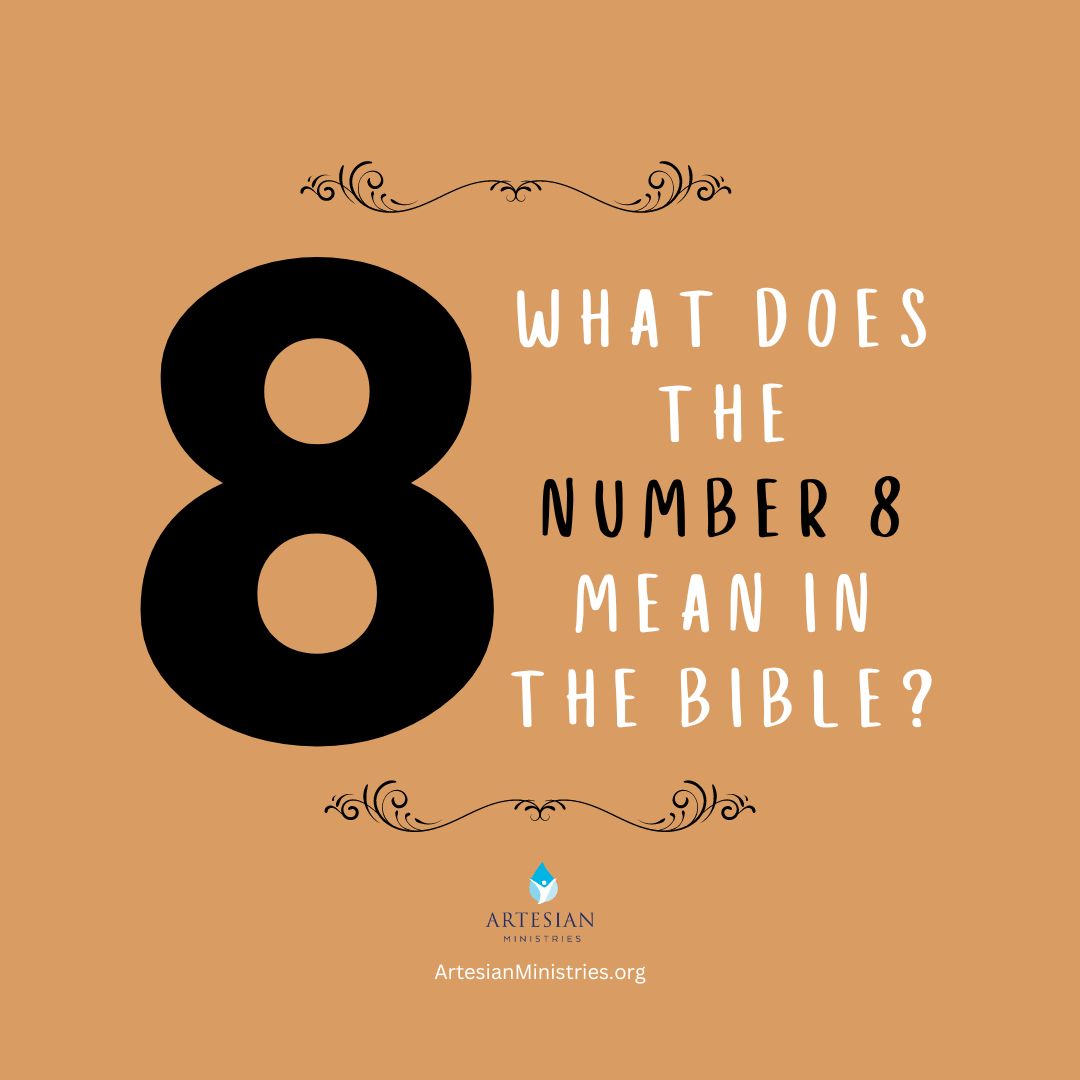
The Genesis of New Beginnings: Eight as a Symbol of Resurrection and Renewal
The number eight in the Bible is intrinsically linked to the concept of new life, a profound departure from the cycles of completion and rest represented by the number seven. This association is deeply rooted in the biblical narrative, offering a potent archetype for transformation and spiritual rebirth. Examining its early appearances illuminates its foundational significance.
Beyond the Sabbath: The Eighth Day as the Dawn of Eternity
The most prominent manifestation of the number eight as a symbol of new beginnings lies in its association with the day after the Sabbath. The Sabbath, the seventh day, signifies completion, rest, and the established order of creation. The eighth day, therefore, represents a departure from this established order, ushering in something entirely new. This concept is powerfully prefigured in the resurrection of Jesus Christ. Christ rose on the first day of the week, which, in the Jewish calendar, is the day after the Sabbath. This act of resurrection is not merely a return to life but a definitive victory over death, marking the dawn of a new covenant and the inauguration of a new spiritual era. This event fundamentally redefines existence, moving beyond the limitations of the old creation into a realm of eternal life and redemption.
This “eighth day” symbolism extends to the New Testament, where the concept of spiritual regeneration and new birth is central. Believers are called to live a “new life” in Christ, a life that transcends their former existence. This is a spiritual eighth day, a transformation that sets them apart from the old order and aligns them with the resurrected life of Christ. This idea of a perpetual new beginning, a constant state of renewal, becomes a cornerstone of Christian theology and, by extension, a powerful element in the spiritual narrative of the faith.
Circumcision on the Eighth Day: A Covenantal Mark of Belonging
Further reinforcing the significance of the eighth day, the Old Testament law mandates that male infants be circumcised on the eighth day after their birth (Leviticus 12:3). This ritual was not merely a physical act but a profound declaration of covenant. It marked a child’s entrance into the community of God’s chosen people, signifying their inclusion in the divine promise and their separation from the uncircumcised world.
The choice of the eighth day for this covenantal marker is not arbitrary. It suggests that the initiation into God’s covenant community is an act of newness, a transition from a state of being outside the covenant to one of belonging and promise. This practice foreshadows the New Testament concept of baptism, a spiritual circumcision of the heart that signifies inclusion in the body of Christ and the reception of new life. Both rituals, separated by centuries, underscore the idea that entering into a relationship with God is an act of divine initiation and spiritual renewal, marked on the eighth day, the day that transcends ordinary completion.
The Perfection of Spiritual Order: Eight as a Measure of Divine Completion and Abundance
While seven often symbolizes completeness in a temporal or cyclical sense, the number eight often represents a higher, spiritual perfection, a state of abundance that transcends the ordinary. This is not a static perfection but a dynamic one, characterized by overflowing blessings and an unbroken spiritual order.
Noah and the Flood: A New Beginning and Divine Preservation
The narrative of Noah’s Ark provides another pivotal instance of the number eight’s significance. Noah, his family, and the animals entered the ark to escape the devastating flood. Crucially, there were eight people on the ark: Noah, his wife, and their three sons (Shem, Ham, and Japheth) along with their wives (Genesis 7:7; 7:13). The flood itself represents a cleansing and a judgment, a dramatic reset of the world. The eight souls who emerged from the ark represented humanity’s second chance, the beginning of a new human lineage under God’s continued covenant. Their survival and subsequent repopulation of the earth signify a divine preservation and the commencement of a renewed world order, marked by the number of those who ushered it in.
This event underscores the transformative power of eight. It’s not merely about escaping a negative situation but about emerging into a new and divinely protected reality. This sense of divine provision and the inauguration of a new era of human existence under God’s grace is a powerful testament to the symbolic weight of the number eight.
The Transfiguration: A Glimpse of Christ’s Perfected Glory
In the New Testament, the Transfiguration of Jesus Christ, where he appeared in radiant glory with Moses and Elijah, also offers subtle connections to the number eight. While not explicitly stated as an eighth event, its theological implications align with the concept of spiritual perfection and divine revelation. Jesus’s appearance revealed his glorified state, a preview of the perfected spiritual reality that awaits believers. The Transfiguration is a moment of profound divine affirmation, a glimpse into the ultimate reality of God’s kingdom. This event, characterized by its divine perfection and transformative nature, resonates with the qualities often associated with the number eight – a state of being fully realized and divinely appointed. It represents an elevation beyond the earthly realm into a state of spiritual luminescence, a perfected order.
Eight in Prophecy and Future Fulfillment: A Promise of Ultimate Restoration
The symbolic resonance of the number eight extends into biblical prophecy, pointing towards the ultimate restoration and the consummation of God’s plan for humanity. Its presence in prophetic texts offers a hopeful anticipation of a perfected future, characterized by divine order and eternal blessings.
The Millennial Reign and the New Heavens and New Earth
The concept of a future millennial reign of Christ, a period of unprecedented peace and righteousness on earth, is often associated with the number eight through its thematic connection to new beginnings and perfected order. This era is seen as a fulfillment of God’s promises, a time when sin and suffering are significantly curtailed, and a new spiritual era is established. This period represents a profound restoration, a spiritual eighth day for the earth.
Furthermore, the biblical vision of “new heavens and a new earth” described in Revelation 21-22, speaks of a complete renewal and perfection of creation. This is a state of ultimate divine order, free from the decay and corruption of the present world. While not explicitly numbered as eight, the nature of this perfected reality – a complete spiritual renewal and the establishment of God’s eternal kingdom – aligns perfectly with the symbolic meaning of eight as representing a spiritual new beginning and ultimate divine perfection. It’s a state of being that transcends the cyclical nature of the old, inaugurating an unending era of righteousness and peace.

The Eighth Book: A New Covenant and Spiritual Revelation
Examining the canonical order of biblical books can also reveal symbolic patterns. While it’s a more interpretative approach, some scholars note the potential significance of the “eighth” book. For instance, in the Old Testament, the eighth book is Joshua. This book chronicles the Israelites’ conquest of the Promised Land and their establishment under God’s rule, signifying a new era of fulfillment after the wilderness wanderings. It represents a transition from a period of testing and promise to one of inheritance and established order, a form of spiritual inheritance and a new beginning of national identity under divine leadership.
In the New Testament, the eighth book is Hebrews. This profound epistle systematically argues for the superiority of Jesus Christ and the new covenant over the old. It emphasizes the perfection and ultimate efficacy of Christ’s sacrifice and his role as the great high priest. The Book of Hebrews, therefore, explicitly deals with the transition to a new, perfected spiritual order – the new covenant, a definitive spiritual eighth day. It serves as a profound theological articulation of the very concepts that the number eight symbolizes: transcendence, new beginnings, and spiritual perfection.
In conclusion, the number eight in the Bible is far more than a mere digit; it is a potent symbol woven into the fabric of divine revelation. From its association with the resurrection of Christ and the inauguration of new life, to its role in covenantal markings and prophetic visions of ultimate restoration, eight consistently points towards a reality that transcends ordinary completion. It speaks of divine action, of the breaking of limitations, and the ushering in of a perfected spiritual order. Understanding these symbolic meanings enriches our comprehension of the biblical narrative, revealing a God who is continuously bringing about new beginnings and leading humanity towards an ultimate state of perfection and abundant life. Just as a compelling brand uses its core symbols and narratives to communicate its deepest values and aspirations, the biblical narrative uses the number eight to communicate the profound nature of God’s redemptive plan and the promise of an eternal, perfected future.
aViewFromTheCave is a participant in the Amazon Services LLC Associates Program, an affiliate advertising program designed to provide a means for sites to earn advertising fees by advertising and linking to Amazon.com. Amazon, the Amazon logo, AmazonSupply, and the AmazonSupply logo are trademarks of Amazon.com, Inc. or its affiliates. As an Amazon Associate we earn affiliate commissions from qualifying purchases.