
The seemingly simple question of what phytoplankton eat belies a complex and technologically driven field of inquiry. These microscopic powerhouses of the ocean, responsible for a significant portion of Earth’s oxygen production and playing a crucial role in global carbon cycles, are not passive participants in the marine ecosystem. Their sustenance, and indeed their very existence, is intricately linked to a suite of technological tools and analytical methods that allow scientists to decipher their nutritional strategies, understand their environmental interactions, and predict their future in a changing world. This exploration delves into the technological underpinnings of how we understand phytoplankton diets, moving beyond basic biological assumptions to embrace the cutting-edge of oceanic research.
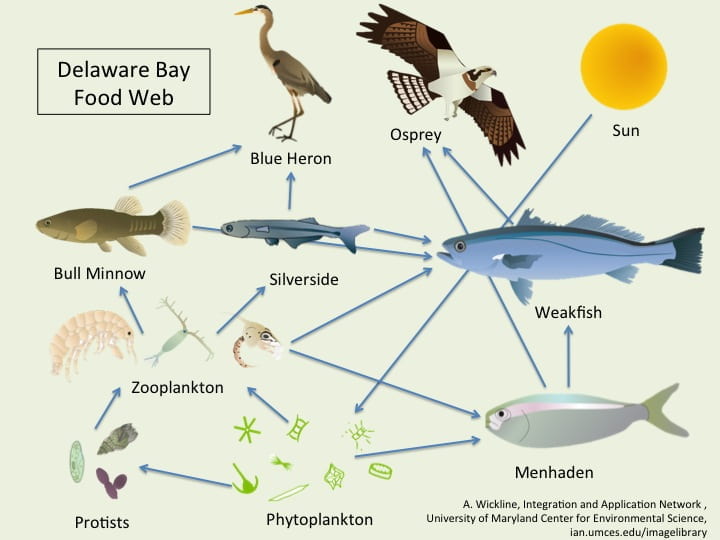
Harnessing Advanced Sensors for Elemental Uptake Analysis
Understanding what phytoplankton consume requires us to track the availability and uptake of essential nutrients in their environment. This is where advanced sensor technology becomes indispensable. Traditionally, water samples were collected and analyzed in laboratories, a process that is time-consuming and often fails to capture the dynamic nature of nutrient distribution in the ocean. Modern technology, however, has revolutionized this by enabling in-situ measurements and continuous monitoring.
Remote Sensing and Satellite Oceanography
Satellites equipped with sophisticated optical sensors have become the eyes of oceanic research. These instruments can detect the concentration of chlorophyll-a, a pigment found in phytoplankton that acts as a proxy for their biomass. By analyzing the spectral signatures of sunlight reflected from the ocean surface, scientists can map large-scale phytoplankton blooms and infer areas of high productivity. While this doesn’t directly reveal what phytoplankton “eat” in terms of specific chemical compounds, it highlights regions where nutrient availability is likely high, driving phytoplankton growth. Furthermore, advancements in multi-spectral and hyper-spectral imaging allow for the differentiation of various phytoplankton groups, each with potentially different nutrient requirements. This capability is crucial for understanding the complex food web dynamics, as different phytoplankton species may thrive on different elemental compositions.
In-Situ Automated Nutrient Analyzers
Complementing satellite observations, autonomous underwater vehicles (AUVs) and moored sensor arrays are increasingly deployed to provide high-resolution data on nutrient concentrations. These technologies utilize miniaturized analytical instruments that can measure key elements like nitrate, phosphate, silicate, and iron directly in the water column. Some of these analyzers can operate for extended periods, transmitting data in real-time via satellite or acoustic modems. This allows researchers to observe diurnal and seasonal fluctuations in nutrient availability, providing a much finer-grained understanding of the conditions that support phytoplankton growth. The integration of these sensors with flow cytometry and other phytoplankton identification tools onboard AUVs further enhances our ability to link nutrient availability to specific phytoplankton populations and their consumption patterns.
Isotopic Tracing Technologies
To precisely track the assimilation of nutrients by phytoplankton, scientists employ isotopic tracing techniques. This involves using stable or radioactive isotopes of key elements, such as carbon, nitrogen, and phosphorus. By introducing labeled nutrients into controlled experiments or, in some cases, carefully designed field studies, researchers can follow the path of these elements as they are absorbed and incorporated into phytoplankton biomass. Advanced mass spectrometry and scintillation counting technologies are essential for detecting and quantifying these isotopes with exquisite sensitivity. This allows for a detailed understanding of nutrient uptake rates, nutrient utilization efficiency, and the relative importance of different nutrient sources for various phytoplankton species. The ability to differentiate between various chemical forms of nutrients (e.g., dissolved inorganic vs. organic forms) further refines our understanding of phytoplankton’s “dietary” preferences.
Decoding Phytoplankton “Food” Through Molecular and Genetic Analysis
Beyond simply measuring nutrient concentrations, modern technology allows us to delve into the very biological mechanisms that govern phytoplankton’s nutrient acquisition and utilization. This involves sophisticated molecular and genetic analyses that reveal the genes and enzymes responsible for nutrient uptake, assimilation, and metabolism.
Metagenomics and Metatranscriptomics
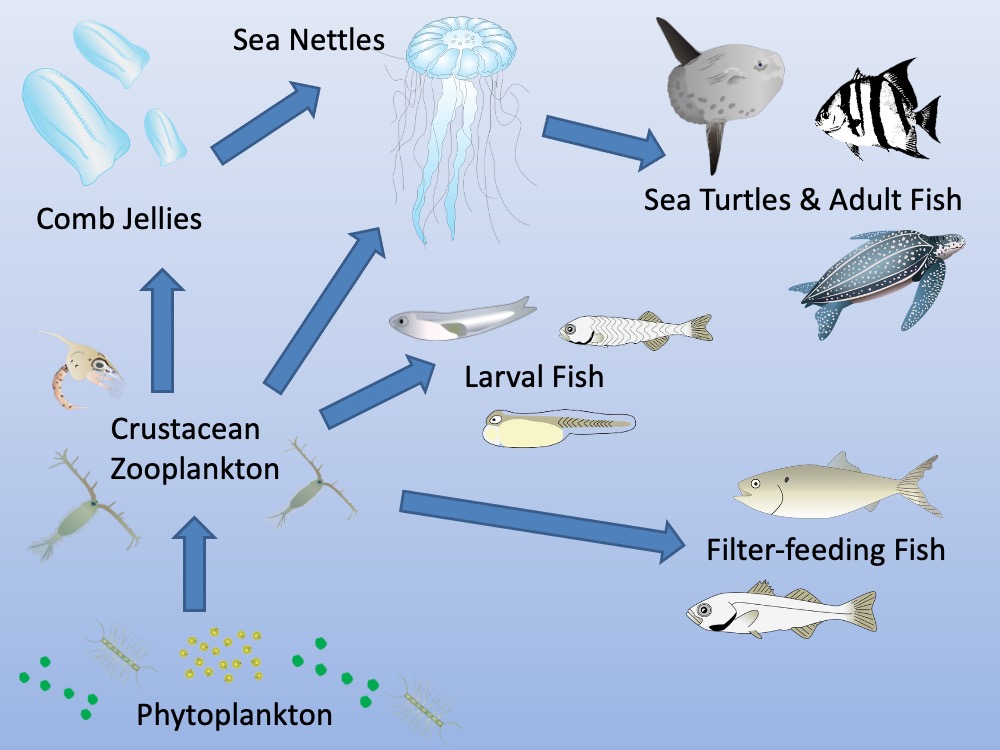
Metagenomics, the study of genetic material recovered directly from environmental samples, and metatranscriptomics, the study of RNA transcripts, have revolutionized our understanding of phytoplankton communities. By sequencing the DNA and RNA of all organisms present in a water sample, scientists can identify the dominant phytoplankton species and, crucially, infer their metabolic capabilities. This includes identifying genes related to nutrient transporters, enzymes involved in nutrient processing, and pathways for acquiring essential elements. For instance, metagenomic analysis can reveal the presence of genes that enable certain phytoplankton to utilize specific forms of nitrogen or iron, shedding light on their competitive advantages in different oceanic environments. This “gene-centric” approach provides a powerful lens through which to understand the underlying biochemical machinery driving phytoplankton diets.
Proteomics and Metabolomics
While genomics tells us about the potential capabilities of phytoplankton, proteomics and metabolomics reveal what is actually happening at the protein and metabolite levels. Proteomics analyzes the complete set of proteins produced by phytoplankton, offering insights into which nutrient uptake and metabolic pathways are actively being used. Metabolomics, on the other hand, studies the small molecules (metabolites) within phytoplankton cells, providing a snapshot of their biochemical state and how they are responding to nutrient availability and other environmental factors. Advanced analytical techniques such as liquid chromatography-mass spectrometry (LC-MS) and gas chromatography-mass spectrometry (GC-MS) are at the forefront of these fields, enabling the identification and quantification of hundreds to thousands of metabolites. These data can reveal, for example, shifts in internal nutrient storage compounds or the production of specific organic molecules in response to nutrient limitation or abundance.
Stable Isotope Probing (SIP) Coupled with Omics
The power of isotopic tracing technologies is amplified when combined with omics approaches. Stable Isotope Probing (SIP) involves feeding phytoplankton with isotopically labeled substrates and then using techniques like DNA-SIP or RNA-SIP to identify which organisms are actively assimilating those substrates. When coupled with metagenomics or metatranscriptomics, SIP can directly link specific nutrient uptake to the genetic makeup and activity of particular phytoplankton species. This allows for an unprecedented resolution in understanding which members of a microbial community are “eating” what, and how they are metabolizing it. This integrated approach is essential for unraveling the intricate nutrient dynamics within complex marine ecosystems.
Simulating Phytoplankton Nutrition: Computational Models and Big Data Analytics
The sheer volume of data generated by modern oceanic research necessitates sophisticated computational tools and analytical frameworks. Phytoplankton nutrition is not just about observing; it’s about integrating vast datasets to build predictive models and understand the broader implications of their feeding habits.
Numerical Ocean Models and Biogeochemical Simulations
Advanced numerical ocean models, powered by supercomputing infrastructure, are used to simulate the physical, chemical, and biological processes occurring in the ocean. These models incorporate complex equations that describe ocean currents, temperature, salinity, and the cycling of nutrients and carbon. By integrating data from sensors, satellites, and laboratory experiments, these models can simulate phytoplankton growth and distribution based on varying nutrient inputs and environmental conditions. The ability to run ensemble simulations allows scientists to assess uncertainties and explore different scenarios, such as the impact of climate change on phytoplankton communities and their nutritional strategies. These models are crucial for understanding how phytoplankton “eat” on a global scale and how these processes influence Earth’s climate.
Machine Learning and Artificial Intelligence (AI) for Data Interpretation
The explosion of data from satellite imagery, sensor networks, and omics studies presents a significant challenge for traditional data analysis methods. Machine learning (ML) and artificial intelligence (AI) are now playing a pivotal role in extracting meaningful insights from these massive datasets. ML algorithms can be trained to identify patterns in satellite imagery that correlate with specific nutrient conditions or phytoplankton bloom types. AI-powered tools can assist in the complex interpretation of metagenomic and proteomic data, identifying novel genes or metabolic pathways related to nutrient acquisition. Furthermore, AI can be used to optimize sampling strategies for AUVs and sensor networks, ensuring that critical data points are collected efficiently. The integration of AI into oceanic research is accelerating our ability to answer complex questions about phytoplankton nutrition and their role in marine ecosystems.
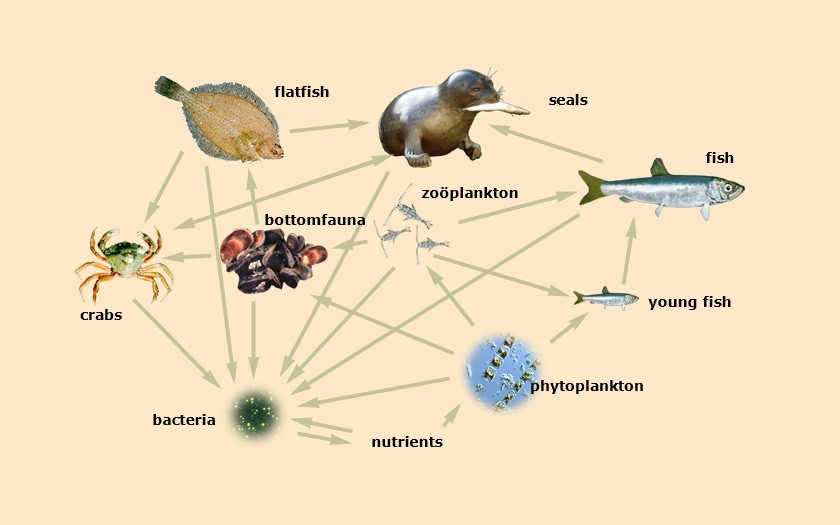
Big Data Integration and Cloud Computing Platforms
Effectively managing and analyzing the vast and heterogeneous datasets generated by modern oceanic research requires robust big data infrastructure. Cloud computing platforms provide scalable storage and computational resources, enabling scientists to access and process data from various sources simultaneously. Initiatives that aim to integrate data from different research projects and institutions are crucial for fostering collaboration and enabling comprehensive analyses. By bringing together diverse datasets – from remote sensing to in-situ measurements to genomic information – researchers can develop a more holistic understanding of phytoplankton nutrition, their impact on biogeochemical cycles, and their response to environmental change. This interdisciplinary approach, facilitated by advanced technological infrastructure, is key to unlocking the secrets of what phytoplankton eat and their profound influence on our planet.
aViewFromTheCave is a participant in the Amazon Services LLC Associates Program, an affiliate advertising program designed to provide a means for sites to earn advertising fees by advertising and linking to Amazon.com. Amazon, the Amazon logo, AmazonSupply, and the AmazonSupply logo are trademarks of Amazon.com, Inc. or its affiliates. As an Amazon Associate we earn affiliate commissions from qualifying purchases.