
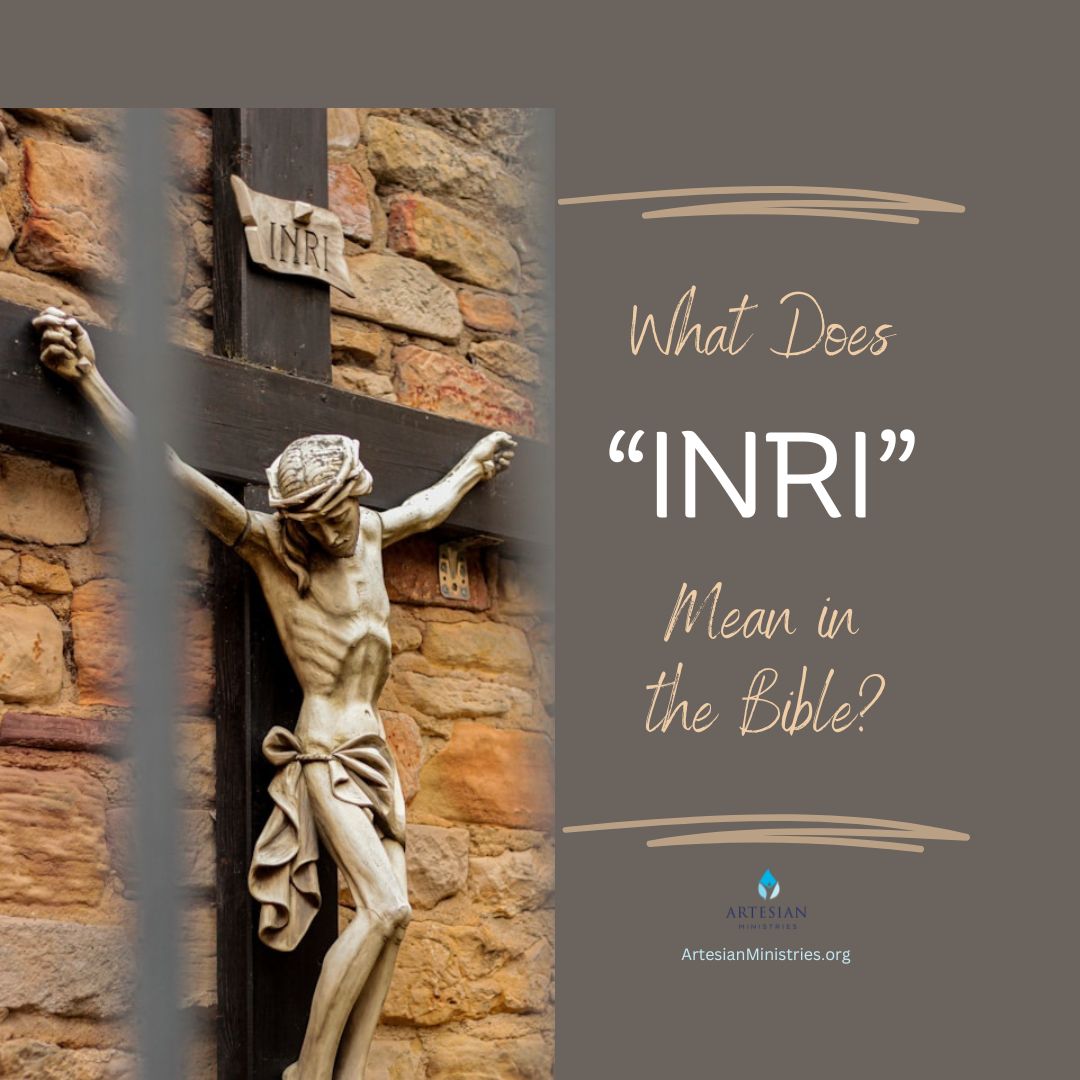
The acronym “INRI” is a ubiquitous inscription found on crucifixes, particularly in Christian art and iconography. While its religious significance is paramount, from a broader perspective, “INRI” serves as a potent example of a concise, enduring brand identity. It’s a shorthand that encapsulates a complex narrative and communicates a foundational message with remarkable efficiency. Understanding “INRI” is not just about theological interpretation; it’s about appreciating how a few letters can carry immense weight, representing a powerful brand that has shaped cultures and ideologies for centuries. This exploration delves into the meaning, historical context, and the enduring power of “INRI” as a symbolic brand.
The Genesis of the Acronym: A Concise Declaration
At its core, “INRI” is an abbreviation of a Latin phrase that served as a public declaration. The power of this brand lies in its ability to distill a pivotal moment and its theological implications into a single, memorable identifier.
Decoding the Latin Phrase: “Iesus Nazarenus Rex Iudaeorum”
The phrase “INRI” is derived from the Latin inscription that Pontius Pilate is said to have ordered to be placed on the cross of Jesus. This inscription translates to “Jesus the Nazarene, King of the Jews.” In Latin, the words are:
- Iesus (Jesus)
- Nazarenus (the Nazarene)
- Rex (King)
- Iudaeorum (of the Jews)
This was a deliberate, and some interpretations suggest, a mocking or politically charged statement. Pilate, as the Roman governor, was tasked with maintaining order in Judea. The title “King of the Jews” could have been seen as a direct challenge to Roman authority, as Rome itself had an emperor. By inscribing this title, Pilate was ostensibly labeling Jesus as a political agitator, a pretender to a throne that conflicted with Caesar’s dominion. However, for Christians, this inscription became a profound and ironic testament to Jesus’ true identity and divine kingship, even in his suffering.
The Canonical Accounts: Biblical Foundations
The inscription’s presence on the cross is documented in the New Testament Gospels. The Gospel of John provides the most detailed account:
“Pilate also had a notice written and put on the cross. It read: JESUS OF NAZARETH, THE KING OF THE JEWS. Many of the Jews read this notice, because the place where Jesus was crucified was near the city, and the notice was written in Hebrew, Latin and Greek. So the chief priests of the Jews said to Pilate, ‘Do not write, ‘The King of the Jews,’ but that he said, ‘I am the King of the Jews.’ Pilate answered, ‘What I have written, I have written.'” (John 19:19-22)
The other Gospels (Matthew 27:37, Mark 15:26, and Luke 23:38) also mention the inscription, though with slight variations in wording or the languages used. These biblical accounts form the bedrock of the inscription’s historical and religious legitimacy, solidifying its place in Christian tradition. The phrase, therefore, is not merely a historical artifact but a divinely ordained (from a theological perspective) declaration of Jesus’ identity and purpose, even in his moment of ultimate humiliation. This foundational narrative is crucial to the enduring brand power of “INRI.”
The Evolution of a Symbol: From Inscription to Iconic Brand
The “INRI” acronym transcended its literal meaning to become a powerful symbol deeply embedded in Christian visual culture. Its journey reflects how a core message can be adapted, reinterpreted, and maintained as a recognizable brand across diverse mediums and historical periods.
Artistic Interpretations: Visualizing the Divine Message
Throughout the centuries, artists have depicted the crucifixion, invariably including the “INRI” inscription. This has served multiple purposes. For the faithful, it reinforces the theological narrative and the identity of the crucified Christ. For the viewer, it provides immediate context and understanding.
- Early Christian Art: Even in early, often simpler depictions, the inscription or its equivalent was present, establishing its importance.
- Medieval and Renaissance Art: The “INRI” placard became more elaborate, sometimes appearing as a scroll, a wooden tablet, or directly painted onto the cross. Artists like Leonardo da Vinci, Michelangelo, and countless others incorporated it, imbuing their works with theological depth. The visual representation of “INRI” became almost as important as the visual representation of Christ himself.
- Modern and Contemporary Art: While styles have evolved, “INRI” remains a common element in contemporary artistic representations of the crucifixion, signifying a continuity of tradition and belief. It acts as a visual anchor, connecting modern interpretations to the original event and its profound theological implications.
Theological Significance and Symbolism: Beyond the Literal
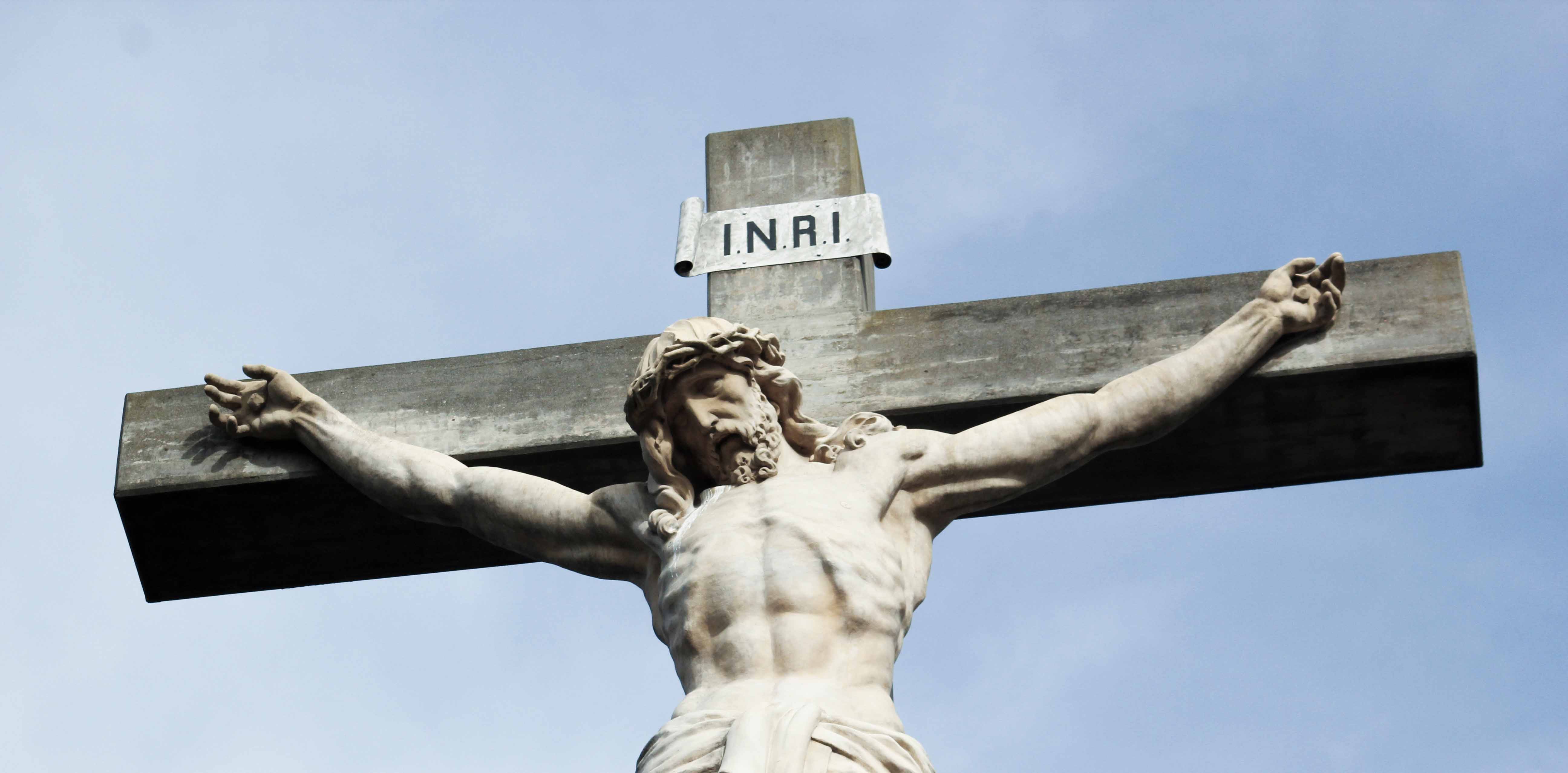
The theological weight of “INRI” extends far beyond its literal translation. It’s a multifaceted symbol that speaks to Jesus’ mission, his authority, and his ultimate triumph.
- Kingship: The most direct interpretation is Jesus as King. However, this is not a worldly, political kingship, but a spiritual one, ruling over hearts and minds and the Kingdom of God. This reframing of “king” is central to Christian theology.
- Suffering and Sacrifice: The inscription’s placement on the cross highlights the ultimate sacrifice made by Christ for humanity. It’s a stark reminder of the pain endured, which is inextricably linked to the redemption offered.
- Universal Appeal: The fact that the inscription was reportedly written in Hebrew, Latin, and Greek signifies its intended universal message. It was meant to be understood by all – the local Jewish population, the Roman authorities, and the broader Hellenistic world. This linguistic diversity foreshadows the global reach of Christianity, a testament to the brand’s inherent expansiveness.
Variations and Adaptations: Maintaining Brand Recognition
While “INRI” is the most common Latin abbreviation, various traditions and artistic expressions have introduced alternative inscriptions. These variations, while distinct, often serve a similar purpose of identifying Christ on the cross and are part of the broader “brand” family associated with the crucifixion.
- Greek Equivalent: In Greek Orthodoxy, the corresponding inscription is “ΙΝΘΥ” (INTHY), from “Ἰησοῦς ὁ Ναζωραῖος ὁ βασιλεὺς τῶν Ἰουδαίων” (Iēsous ho Nazōraios ho basileus tōn Ioudaiōn).
- Other Latin Abbreviations: Occasionally, other Latin phrases might be used, though they are less common.
- Symbolic Representations: In some instances, particularly in highly stylized or abstract art, the letters might be replaced by symbols that evoke the same meaning, such as a crown of thorns or a lamb.
These variations demonstrate the adaptability of the brand. Even when the specific letters change, the core message of Christ’s identity and kingship on the cross persists, ensuring the brand remains recognizable across different cultural and historical contexts.
The Enduring Power of “INRI”: A Case Study in Brand Longevity
The sustained relevance of “INRI” for over two millennia offers valuable insights into what makes a brand truly enduring. It’s a lesson in clarity, emotional resonance, and the power of a well-defined core message.
Simplicity and Memorability: The Pillars of Strong Branding
In a world saturated with information, the ability to communicate a message concisely and memorably is paramount. “INRI” achieves this through its inherent simplicity.
- The Acronym Advantage: The use of an acronym is a classic branding technique. It reduces a longer, more complex message into a digestible, easily recalled unit. This is why so many successful brands utilize abbreviations or short, punchy names.
- Visual Reinforcement: Combined with the powerful imagery of the cross, the letters “INRI” create a direct and indelible association. The visual and textual elements work in synergy, strengthening recall and impact.
- Emotional Resonance: The phrase, and by extension the acronym, evokes a profound emotional response. It speaks of sacrifice, redemption, kingship, and divine love – themes that resonate deeply with its target audience (believers). Strong brands often tap into such emotional connections.
Global Reach and Cultural Impact: A Brand That Transcends Borders
The brand “INRI” has achieved a level of global penetration and enduring influence that few commercial brands can even aspire to. Its impact is deeply woven into the fabric of Western civilization and beyond.
- Missionary Impact: As Christianity spread, the “INRI” inscription traveled with it, serving as a consistent identifier across diverse cultures and languages. It became a universal marker of Christian faith, understood even by those who might not have fully grasped the nuances of the Latin phrase.
- Cultural Symbolism: Beyond religious contexts, “INRI” has entered the broader cultural lexicon. It appears in literature, music, and art, often used to evoke themes of suffering, faith, or ultimate truth. This broader cultural penetration solidifies its brand recognition and longevity.
- Historical Influence: The brand’s influence extends to historical events and movements. It has been a rallying point for faith, a symbol of persecution, and a source of inspiration throughout history. This deep historical embedding is a hallmark of exceptionally powerful brands.

The “INRI” Brand Today: Relevance in a Secular World
While the world is increasingly secular, the “INRI” brand continues to hold significance, albeit in evolving ways.
- Faith and Tradition: For billions of adherents, “INRI” remains a core element of their faith, a direct connection to the historical and theological foundations of Christianity.
- Artistic and Cultural Reference: Even for those not religious, “INRI” serves as a recognizable cultural symbol, frequently referenced in artistic, literary, and even popular culture contexts. It’s a shorthand that carries historical and symbolic weight.
- Lessons in Communication: The enduring power of “INRI” offers a compelling case study for modern branding and communication professionals. It demonstrates that clarity, emotional depth, and a consistent core message are timeless principles for creating a brand that lasts. The ability to distill complex truths into a simple, powerful symbol is a lesson that transcends time and context.
In conclusion, “INRI” is far more than just an inscription; it’s a testament to the power of effective, enduring branding. It demonstrates how a few letters, born from a specific historical moment and imbued with profound theological meaning, can transcend their origins to become a universally recognized and deeply influential symbol. Its journey from a Roman governor’s decree to an iconic representation of faith and sacrifice is a compelling narrative of how meaning, symbolism, and consistent communication forge a brand that truly stands the test of time.
aViewFromTheCave is a participant in the Amazon Services LLC Associates Program, an affiliate advertising program designed to provide a means for sites to earn advertising fees by advertising and linking to Amazon.com. Amazon, the Amazon logo, AmazonSupply, and the AmazonSupply logo are trademarks of Amazon.com, Inc. or its affiliates. As an Amazon Associate we earn affiliate commissions from qualifying purchases.