
The realization that you have unfiled tax returns can be a source of significant financial anxiety. Whether the delay was caused by a personal emergency, missing documentation, or simply a misunderstanding of your filing requirements, “back taxes” represent more than just a legal obligation—they are a hurdle to your overall financial health. From a personal finance perspective, failing to file tax returns can prevent you from receiving deserved refunds, complicate mortgage applications, and lead to an ever-growing mountain of interest and penalties.
Addressing back taxes is not merely about compliance; it is a strategic move to reclaim control over your financial narrative. This guide provides an in-depth exploration of how to navigate the process, manage potential debt, and ensure that your financial future remains unburdened by the ghosts of tax years past.
Understanding the Financial Implications of Unfiled Returns
Before diving into the “how,” it is essential to understand the “why.” The Internal Revenue Service (IRS) and state tax authorities have significant power to collect what is owed, and the longer a return remains unfiled, the more complex the financial recovery becomes.
The True Cost of Penalties and Interest
The IRS imposes two primary penalties for those who do not comply with tax laws: the failure-to-file penalty and the failure-to-pay penalty. Interestingly, the penalty for not filing is significantly higher than the penalty for not paying. The failure-to-file penalty is generally 5% of the unpaid taxes for each month or part of a month that a tax return is late, capping at 25%. If you owe $10,000, that penalty can grow rapidly. When you combine this with interest—which compounds daily—the amount you owe can double in a surprisingly short period.
The Three-Year Refund Window
One of the most overlooked aspects of back taxes is the potential for lost money. If you are due a refund, there is no penalty for filing late. However, there is a statute of limitations. You generally have a three-year window from the original due date of the return to claim a refund. If you fail to file within that window, the money becomes the property of the U.S. Treasury. For many taxpayers, filing back taxes is not an exercise in paying debt, but rather an exercise in recovering thousands of dollars in unclaimed credits and withholdings.
Impact on Creditworthiness and Asset Seizure
While the IRS no longer reports tax liens directly to credit bureaus, a public record of a tax lien can still be discovered by lenders. This can make it nearly impossible to secure a mortgage, a car loan, or a business line of credit. Furthermore, if you ignore back taxes long enough, the IRS may exercise its right to a “Substitute for Return” (SFR). This is a return the IRS files on your behalf, but it rarely includes the deductions or exemptions you are entitled to, often resulting in a much higher tax liability than necessary.
A Step-by-Step Blueprint for Filing Back Taxes
Filing back taxes requires a methodical approach. You cannot simply use current-year forms for past-year income; the process demands a chronological reconstruction of your financial history.
Gathering Historical Documentation
The first hurdle is documentation. To file accurately, you need your W-2s, 1099s, and records of any deductible expenses for the specific year in question. If you have lost these documents, you can request a “Wage and Income Transcript” from the IRS. This document summarizes the information reported to the IRS by your employers and financial institutions. While it won’t show your personal deductions, it provides the foundation for your income reporting.
Utilizing the Correct Tax Year Forms
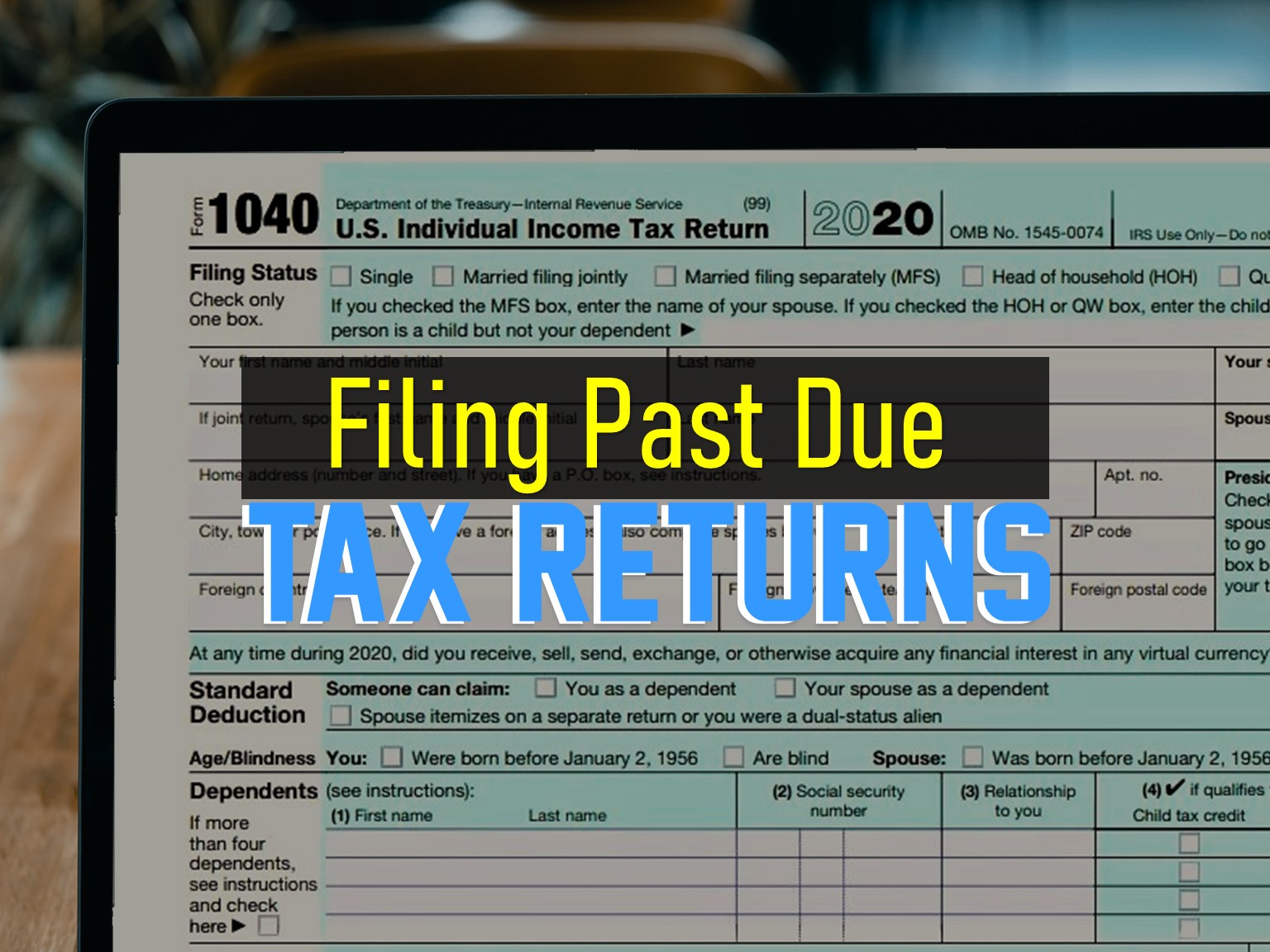
Tax laws change almost every year. Standard deductions, tax brackets, and available credits (like the Earned Income Tax Credit or the Child Tax Credit) shift over time. When filing back taxes, you must use the forms and instructions specifically designed for the tax year you are filing. For example, if you are filing for 2020, you must use the 2020 version of Form 1040. Using the wrong year’s form is a common mistake that can lead to your return being rejected or processed incorrectly.

The Sequence of Filing
If you owe for multiple years, it is generally recommended to file in chronological order or start with the most recent year first if it helps you get back into the system quickly. However, the IRS usually requires you to file the last six years of returns to be considered “in good standing.” Filing these returns simultaneously allows you to see the full scope of your liability and may help when negotiating a global payment settlement for all years combined.
Strategic Debt Management and IRS Relief Programs
For many, the fear of filing back taxes isn’t about the paperwork—it’s about the inability to pay the resulting bill. The IRS is, perhaps surprisingly, one of the most flexible creditors if you are proactive and honest about your financial situation.
Installment Agreements
If you cannot pay your back taxes in full, the IRS offers Installment Agreements. These are monthly payment plans that allow you to pay off your debt over several years. For many individual taxpayers, “Simplified Installment Agreements” can be set up online with minimal friction. This halts aggressive collection actions like wage garnishments or bank levies, provided you stay current with your future filings.
The Offer in Compromise (OIC)
An Offer in Compromise is a program that allows qualified taxpayers to settle their tax debt for less than the full amount they owe. This is not a “get out of jail free” card; the IRS conducts a rigorous analysis of your income, expenses, and asset equity to determine your “Reasonable Collection Potential.” If your debt is so high that you could never realistically pay it back before the statute of limitations on collections expires, an OIC can provide a fresh start.
Penalty Abatement
In some cases, you can request that the IRS remove the penalties associated with your back taxes. Through “First-Time Penalty Abatement,” if you have a clean history of compliance for the three years prior to your late filing, the IRS may waive the failure-to-file and failure-to-pay penalties. Alternatively, you can argue “Reasonable Cause,” such as a death in the family, a natural disaster, or serious illness, to have penalties removed.
Long-Term Financial Planning to Prevent Recurrence
Once you have successfully filed your back taxes and established a payment plan or received your refund, the focus must shift to long-term financial stability. Re-entering the tax system is an opportunity to audit your financial habits.
Adjusting Your Withholdings and Estimated Payments
Most back tax issues stem from under-withholding or failing to make quarterly estimated payments (common for freelancers and small business owners). Use the IRS Tax Withholding Estimator to ensure your employer is taking out the correct amount. If you are self-employed, treat your tax obligation as a non-negotiable business expense, setting aside 25-30% of every check into a dedicated tax savings account.
Implementing Digital Record Keeping
The stress of filing back taxes is often exacerbated by a lack of organization. Moving forward, leverage financial tools and apps to track expenses in real-time. Whether it’s a simple spreadsheet or a dedicated accounting software, maintaining a “digital paper trail” ensures that when tax season arrives, you have everything you need at your fingertips. This reduces the friction of filing and ensures you maximize your deductions.
Engaging with Financial Professionals
If your tax situation involves business income, foreign assets, or complex investments, the DIY approach may no longer be sufficient. Consulting with a Certified Public Accountant (CPA) or an Enrolled Agent (EA) can be a wise investment. These professionals not only ensure accuracy but can also provide strategic advice on tax-loss harvesting, retirement contributions, and other maneuvers that reduce your overall tax liability.
Conclusion
Filing back taxes is an essential step in securing your financial legacy. While the process can feel overwhelming, it is fundamentally a sequence of gathering data, applying the correct rules, and communicating with the authorities. By addressing these unfiled returns, you remove the threat of aggressive collections, potentially recover lost refunds, and clear the path for future financial milestones like homeownership or retirement. The best time to file was the year the return was due; the second best time is today.
aViewFromTheCave is a participant in the Amazon Services LLC Associates Program, an affiliate advertising program designed to provide a means for sites to earn advertising fees by advertising and linking to Amazon.com. Amazon, the Amazon logo, AmazonSupply, and the AmazonSupply logo are trademarks of Amazon.com, Inc. or its affiliates. As an Amazon Associate we earn affiliate commissions from qualifying purchases.