
In the complex ecosystem of automotive technology, we often focus on the “glamour” components: the high-torque electric motors, the sophisticated LiDAR sensors, or the high-resolution infotainment displays. However, the fundamental ability of a vehicle to navigate safely depends on mechanical components that have evolved through over a century of engineering refinement. At the heart of this system lies the tie rod.
While it may appear to be a simple metal shaft, the tie rod is a masterpiece of mechanical engineering. It serves as the critical bridge between a vehicle’s steering gear and the steering knuckles, translating a driver’s digital or manual input into precise physical movement. As we move toward a future of autonomous driving and steer-by-wire systems, understanding the technology, materials science, and diagnostic integration of the tie rod is essential for any tech enthusiast or automotive professional.
The Mechanics of Direction: How Tie Rods Translate Input to Motion
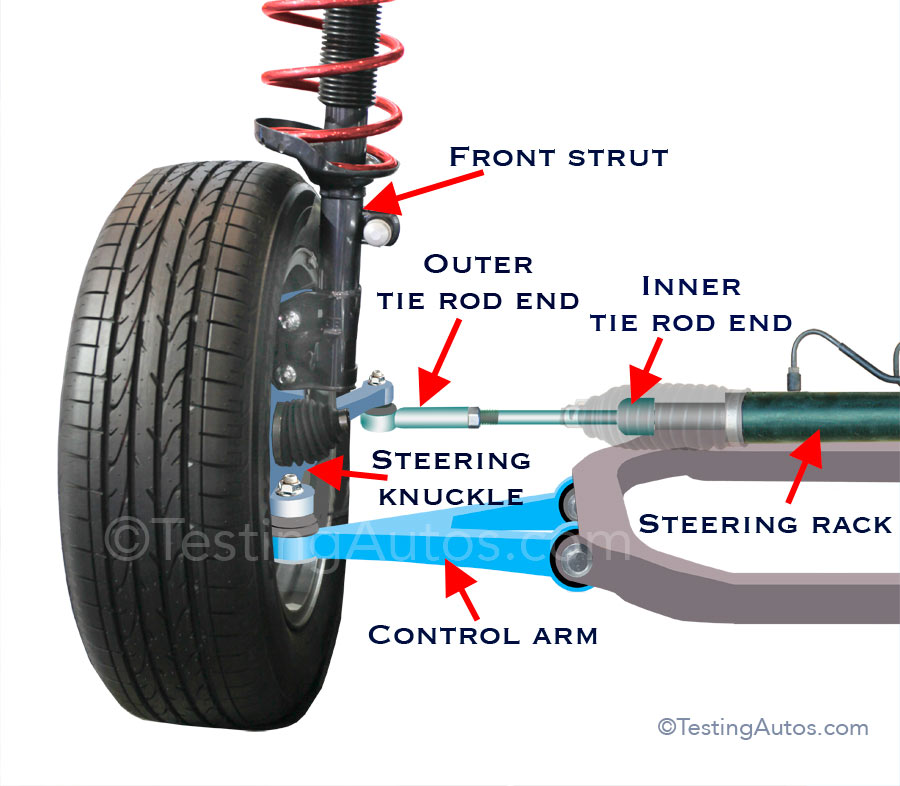
The primary function of a tie rod is to act as the structural linkage that pulls or pushes the front wheels to facilitate a turn. To understand what a tie rod does, one must first visualize the architecture of the modern steering rack. In a standard rack-and-pinion system—the dominant technology in modern passenger vehicles—the steering column connects to a pinion gear. This gear moves a horizontal rack back and forth. The tie rods are the arms that extend from the ends of this rack to the wheel assemblies.
The Anatomy of a Tie Rod Assembly
A tie rod is rarely a single piece of metal. It is typically a two-part assembly consisting of an inner tie rod and an outer tie rod. The inner tie rod connects directly to the steering rack and is often protected by a rubber bellows boot to prevent contaminants from interfering with the rack’s lubrication. The outer tie rod connects to the steering knuckle, which holds the wheel.
Between these two components is a threaded adjustment point. This is a critical piece of hardware for “alignment tech.” By rotating the inner tie rod relative to the outer tie rod, technicians can adjust the “toe” of the vehicle—the angle at which the wheels point relative to the centerline of the car. This precision is measured in fractions of a degree, illustrating the high-tolerance engineering required for modern high-speed stability.
Translating Rotational Energy to Linear Force
The technological marvel of the tie rod lies in its ability to manage forces from multiple directions simultaneously. As the steering rack moves linearly (side to side), the tie rod must accommodate the vertical movement of the suspension as the car hits bumps. This is achieved through a sophisticated ball-and-socket joint at the end of the rod. This joint allows for 360-degree rotational freedom while maintaining a rigid connection for lateral force. Without this specific mechanical “pivot,” a car’s steering would bind or break the moment the suspension compressed.
Materials Science and Durability in Automotive Engineering
The tech behind a tie rod isn’t just in its shape, but in its molecular composition. Because tie rods are “safety-critical” components, they must be engineered to withstand immense stress without failing catastrophically. If a tie rod snaps, the driver loses all control over that wheel’s direction, leading to a total loss of steering.
Forged Steel and High-Stress Metallurgy
Most high-performance tie rods are manufactured using forged steel rather than cast iron. Forging involves pressing the metal into shape under extreme pressure, which aligns the grain structure of the steel with the shape of the part. This makes the tie rod significantly more resistant to the fatigue caused by thousands of microscopic vibrations and road impacts per minute.
In the high-end EV and performance sectors, engineers are increasingly experimenting with aluminum alloys and carbon-fiber-reinforced polymers to reduce “unsprung weight.” Reducing the weight of the tie rod improves the responsiveness of the suspension, allowing the wheel to react more quickly to changes in the road surface. This is a key area of research for tech-driven manufacturers like Tesla and Lucid, where every gram of weight saved contributes to battery efficiency and handling precision.

The Role of Sealed vs. Greaseable Joints
From a maintenance technology perspective, tie rod ends have seen a shift in philosophy. Traditional engineering utilized “greaseable” joints that required manual lubrication through a Zerk fitting. However, modern “Tech-First” automotive design favors permanently sealed joints. These use high-grade synthetic lubricants and advanced polymer seats (often made of Teflon or specialized nylons) to reduce friction. These sealed units are designed to last for the life of the vehicle in ideal conditions, utilizing specialized dust boots made of chloroprene or silicone to keep out the elements.
Diagnostics and Digital Monitoring: Tech-Enabled Maintenance
As vehicles become “computers on wheels,” the way we monitor mechanical components like tie rods has shifted from visual inspection to digital diagnostics. While the tie rod itself is a mechanical bar, it exists within a sensor-rich environment that monitors its performance in real-time.
Sensor Integration and Alignment Calibration
Modern Electronic Power Steering (EPS) systems use torque sensors and steering angle sensors to monitor how the vehicle responds to steering inputs. If a tie rod is slightly bent or the joint has developed “play” (looseness), the EPS system can often detect the inconsistency. Sophisticated Electronic Stability Control (ESC) systems will notice if the steering wheel’s digital center does not match the vehicle’s actual path of travel, triggering a dashboard notification or a “limp mode” to protect the driver.
Furthermore, the process of wheel alignment has moved into the realm of high-tech optics. Modern alignment machines use high-definition cameras and laser targets attached to the wheels to create a 3D model of the steering geometry. The software guides the technician to adjust the tie rods to within 0.01 inches of the manufacturer’s specifications. This digital-to-mechanical handshake ensures that the vehicle’s Advanced Driver Assistance Systems (ADAS), such as Lane Keep Assist, function correctly.
Symptoms of Wear: The Feedback Loop
From a technical standpoint, a failing tie rod creates a “feedback loop” that can be diagnosed through haptic and acoustic data.
- Haptic Feedback: Vibrations in the steering wheel often indicate that the ball-and-socket joint in the tie rod has lost its tolerance, allowing the wheel to oscillate.
- Acoustic Data: “Clunking” or “popping” sounds during low-speed maneuvers (like parking) are the result of the metal ball hitting the metal housing inside the tie rod end—a sign that the protective lubricant has failed or the polymer seat has disintegrated.
- Visual Wear Patterns: Uneven tire wear is the “data print” of a bad tie rod. If the rod allows the wheel to “toe out,” the inner edge of the tire will scrub against the pavement, a phenomenon easily identified during a technical inspection.
The Future of Steering: From Mechanical Linkages to Steer-by-Wire
The automotive industry is currently in the midst of its largest technological shift in a century. This raises an important question: what does a tie rod do in a world where there is no physical connection between the steering wheel and the tires?
How Digital Transformation is Altering Physical Hardware
In traditional systems, the tie rod is the final link in a physical chain. In “Steer-by-Wire” systems—currently being deployed in vehicles like the Tesla Cybertruck and certain Lexus models—the steering column is replaced by sensors and actuators. However, even in these futuristic systems, the tie rod remains necessary.
The digital input from the driver’s yoke is sent to an electric motor located on the front axle. That motor moves a rack, which still uses tie rods to push and pull the wheels. The tie rod remains the most efficient way to convert linear mechanical force into wheel articulation. Even as the “brain” of the steering system becomes entirely digital, the “muscle”—the tie rod—remains a mechanical necessity.
Redundancy Systems in Autonomous Vehicles
For Level 4 and Level 5 autonomous vehicles, the integrity of the tie rod is more important than ever. In a human-driven car, a driver might feel a loose tie rod and compensate. An autonomous system requires absolute mechanical certainty. Future tie rod technology likely involves “smart tie rods” equipped with strain gauges or acoustic emission sensors that can “self-diagnose” structural fatigue before a failure occurs. This would allow the vehicle’s AI to schedule its own maintenance, moving from reactive repair to predictive analytics.

Conclusion
The tie rod is a testament to the endurance of mechanical logic in an increasingly digital world. While it may not have the flashiness of a new software update, its role in translating human (or AI) intent into physical direction is irreplaceable. From the high-carbon forged steel used in its construction to the laser-guided precision used in its calibration, the tie rod is a critical component of automotive technology. As we look toward the future of mobility, the tie rod will continue to evolve, bridging the gap between digital commands and the physical reality of the road. Understanding what a tie rod does is not just about understanding a piece of metal; it is about understanding the physics of control and the engineering of safety.
aViewFromTheCave is a participant in the Amazon Services LLC Associates Program, an affiliate advertising program designed to provide a means for sites to earn advertising fees by advertising and linking to Amazon.com. Amazon, the Amazon logo, AmazonSupply, and the AmazonSupply logo are trademarks of Amazon.com, Inc. or its affiliates. As an Amazon Associate we earn affiliate commissions from qualifying purchases.