
The world of travel has been irrevocably transformed by the digital revolution. Gone are the days of flipping through thick brochures and making lengthy calls to travel agents. Today, a few clicks can open up a universe of destinations, flights, accommodations, and experiences. At the heart of this transformation lie Online Travel Agencies (OTAs). But what exactly do OTAs stand for, and what is their profound impact on how we plan, book, and experience our journeys? This article delves deep into the multifaceted world of OTAs, exploring their origins, evolution, and crucial role in the modern travel ecosystem, all through the lens of technology.
The Genesis and Evolution of Online Travel Agencies
The concept of a “travel agency” has existed for centuries, but its digital manifestation, the OTA, is a relatively recent phenomenon. The rise of the internet provided the fertile ground for OTAs to bloom, fundamentally altering consumer behavior and the travel industry itself.
From Early Internet Pioneers to Dominant Platforms
The early days of the internet saw tentative steps towards digitizing travel bookings. Pioneers like Sabre, originally an airline reservation system, began offering some services online. However, it was the late 1990s and early 2000s that witnessed the explosive growth of dedicated OTAs. Companies like Expedia, Travelocity, and Priceline emerged, leveraging the power of the World Wide Web to aggregate travel inventory from airlines, hotels, and car rental companies, presenting them to consumers in a user-friendly interface.
These early OTAs were groundbreaking in their ability to:
- Aggregate vast inventories: Instead of contacting individual providers, travelers could compare prices and options from numerous suppliers in one place.
- Democratize access: The power shifted from travel agents to the consumer, empowering them with information and booking capabilities.
- Introduce dynamic pricing: Algorithms began to play a crucial role in offering competitive and fluctuating prices, a concept that has become standard practice.
The initial success of these platforms paved the way for further innovation. The rise of mobile technology and the proliferation of smartphones meant that travel booking was no longer confined to desktop computers. This led to the development of sophisticated mobile apps, further enhancing convenience and accessibility. Today, OTAs are not just booking platforms; they are integrated travel ecosystems offering reviews, destination guides, and personalized recommendations, all powered by advanced technological infrastructure.
The Technological Underpinnings of OTA Functionality
The seamless experience we enjoy when booking travel through an OTA is a testament to the complex technological architecture that underpins their operations. These platforms are sophisticated digital marketplaces, driven by data, algorithms, and constant innovation.
Data Aggregation and Integration: The Backbone of Choice
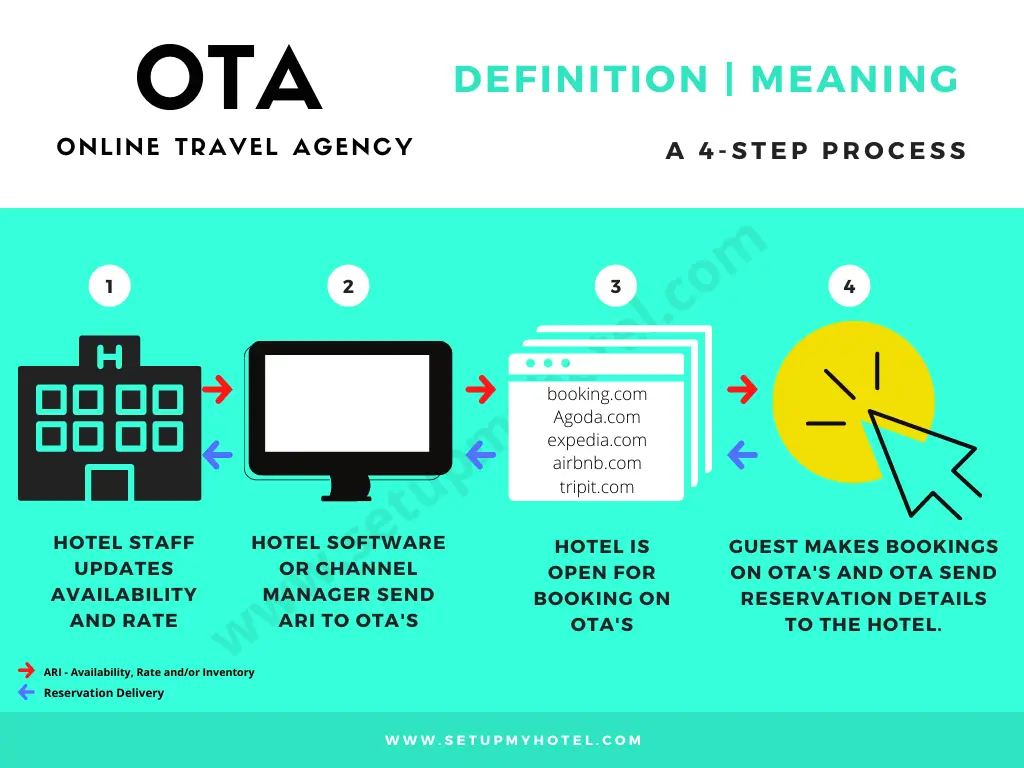
At their core, OTAs are masters of data aggregation. They connect to Global Distribution Systems (GDSs) – the fundamental technological infrastructure that airlines and hotels use to manage their inventory and bookings – and other direct booking APIs from suppliers. This integration allows OTAs to pull real-time information on:
- Flight availability and pricing: Information from hundreds of airlines, including schedules, seat availability, and fare classes, is fed into the OTA’s system.
- Hotel room inventory and rates: Details about thousands of hotels worldwide, from room types and amenities to dynamic pricing based on demand, are accessible.
- Car rental options: A wide array of vehicles and rental companies are cataloged with their respective pricing and availability.
- Other travel services: Increasingly, OTAs are integrating tours, activities, and travel insurance, further broadening their appeal.
The challenge for OTAs lies not just in acquiring this data but in integrating it efficiently and presenting it in a coherent and user-friendly manner. This requires robust data pipelines, sophisticated APIs, and constant efforts to ensure data accuracy and real-time updates. The ability to handle massive volumes of data from diverse sources is a key technological differentiator for successful OTAs.
Search and Recommendation Engines: Personalization at Scale
The sheer volume of options available through OTAs can be overwhelming. This is where advanced search and recommendation engines come into play. These technologies are designed to sift through vast datasets and present the most relevant options to individual users.
- Algorithmic Search: When you enter your travel dates, destination, and preferences, powerful algorithms analyze the aggregated data to find matching results. These algorithms consider numerous factors, including price, duration, layovers, hotel ratings, amenities, and more, to provide a ranked list of options.
- Personalization and Machine Learning: Modern OTAs leverage machine learning to understand user behavior and preferences. By analyzing past searches, bookings, and browsing history, they can offer personalized recommendations, suggesting destinations, accommodations, or activities that align with individual tastes. This can range from recommending hotels similar to ones previously booked to suggesting activities based on interests identified from browsing patterns.
- User Interface (UI) and User Experience (UX) Design: The effectiveness of these engines is amplified by intuitive UI and UX design. Clean interfaces, easy navigation, and clear presentation of information are crucial for ensuring that users can quickly and confidently find and book their desired travel. This involves meticulous attention to detail in how information is displayed, how search filters work, and how the booking process is streamlined.

The continuous refinement of these technological components is what allows OTAs to provide a compelling and increasingly personalized travel booking experience, driving repeat business and customer loyalty.
The Business and Technological Models of OTAs
Understanding what OTAs stand for also necessitates an exploration of their business models and the underlying technological strategies that enable their profitability and competitive edge. They operate as intermediaries, leveraging technology to connect travelers with suppliers and extracting value from these connections.
Commission-Based and Advertising Models
The primary revenue streams for most OTAs are built around their intermediary role.
- Commissions: OTAs typically earn a commission from the travel suppliers (airlines, hotels, car rental companies) for each booking made through their platform. This commission rate can vary significantly depending on the supplier, the type of service, and the volume of business the OTA generates. For hotels, this might be a percentage of the room rate; for airlines, it could be a fixed fee or a percentage of the ticket price.
- Advertising and Featured Listings: OTAs also generate revenue by offering advertising opportunities to travel suppliers. Hotels or airlines can pay to have their listings appear higher in search results, be featured in promotional emails, or be highlighted on the OTA’s homepage. This creates a competitive landscape where suppliers vie for visibility on the platform.
Proprietary Technology and Strategic Partnerships
To maintain their competitive advantage, OTAs invest heavily in proprietary technology and forge strategic partnerships.
- Platform Development: OTAs continuously develop and refine their own booking platforms, ensuring they are scalable, secure, and offer the latest features. This includes investing in backend infrastructure, databases, and frontend development to create seamless user experiences.
- Data Analytics and Business Intelligence: The data collected by OTAs is invaluable. They employ sophisticated analytics tools to understand booking trends, customer behavior, and market dynamics. This intelligence informs their marketing strategies, product development, and pricing decisions.
- API Integrations and Ecosystem Building: Beyond just aggregating inventory, many OTAs are building comprehensive travel ecosystems. This involves integrating with third-party service providers for activities, tours, transfers, and even loyalty programs. They also develop APIs to allow other businesses to integrate OTA booking capabilities into their own platforms, expanding their reach.
- Mergers and Acquisitions: The OTA landscape is characterized by consolidation. Larger OTAs often acquire smaller competitors or niche players to expand their market share, technological capabilities, or geographical reach. These acquisitions are often driven by the desire to gain access to new technologies, customer bases, or supplier agreements.
The interplay between these business models and technological investments is what allows OTAs to operate efficiently, attract a vast user base, and maintain their dominant position in the digital travel industry.
The Future of OTAs: Trends and Technological Advancements
The OTA landscape is not static. Driven by evolving consumer expectations and rapid technological advancements, the future of online travel agencies promises even more innovation and integration.
Artificial Intelligence and Hyper-Personalization
Artificial Intelligence (AI) is set to play an even more pivotal role in the evolution of OTAs.
- AI-Powered Chatbots and Virtual Assistants: Expect more sophisticated AI-powered chatbots that can handle complex queries, assist with booking modifications, and even offer personalized travel advice, mimicking the role of a human travel agent but with 24/7 availability and instant responses.
- Predictive Analytics for Travel: AI algorithms will become even better at predicting travel trends, demand fluctuations, and individual travel preferences, allowing OTAs to offer highly tailored recommendations and proactive deals. This could include suggesting optimal booking times to secure the best prices or recommending destinations based on a user’s predicted interests.
- Enhanced Sentiment Analysis: OTAs will leverage AI to better understand customer reviews and feedback, identifying areas for improvement in service, amenities, and overall customer experience.

The Rise of Niche and Super Apps
While major OTAs continue to dominate, there’s a growing trend towards specialization and consolidation into broader super apps.
- Niche OTAs: For specific types of travel, such as adventure tourism, luxury getaways, or eco-tourism, specialized OTAs are emerging. These platforms cater to a dedicated audience with curated offerings and expertise, leveraging technology to provide a more focused and relevant experience.
- Integration into Super Apps: We are seeing a convergence of services within large super apps, particularly in Asia. Travel booking is increasingly becoming a feature within broader lifestyle applications that also offer ride-sharing, food delivery, and social networking. This integration aims to provide users with a single platform for all their daily needs, including travel.
- Blockchain and Travel: While still nascent, blockchain technology holds potential for OTAs to enhance transparency, security, and loyalty programs. It could streamline payment processes, verify reviews, and create more secure and decentralized loyalty systems.
The journey of OTAs from simple online directories to sophisticated, AI-driven travel platforms is a compelling narrative of technological innovation. As these agencies continue to adapt and evolve, they will undoubtedly remain at the forefront of shaping how we explore the world.
aViewFromTheCave is a participant in the Amazon Services LLC Associates Program, an affiliate advertising program designed to provide a means for sites to earn advertising fees by advertising and linking to Amazon.com. Amazon, the Amazon logo, AmazonSupply, and the AmazonSupply logo are trademarks of Amazon.com, Inc. or its affiliates. As an Amazon Associate we earn affiliate commissions from qualifying purchases.