
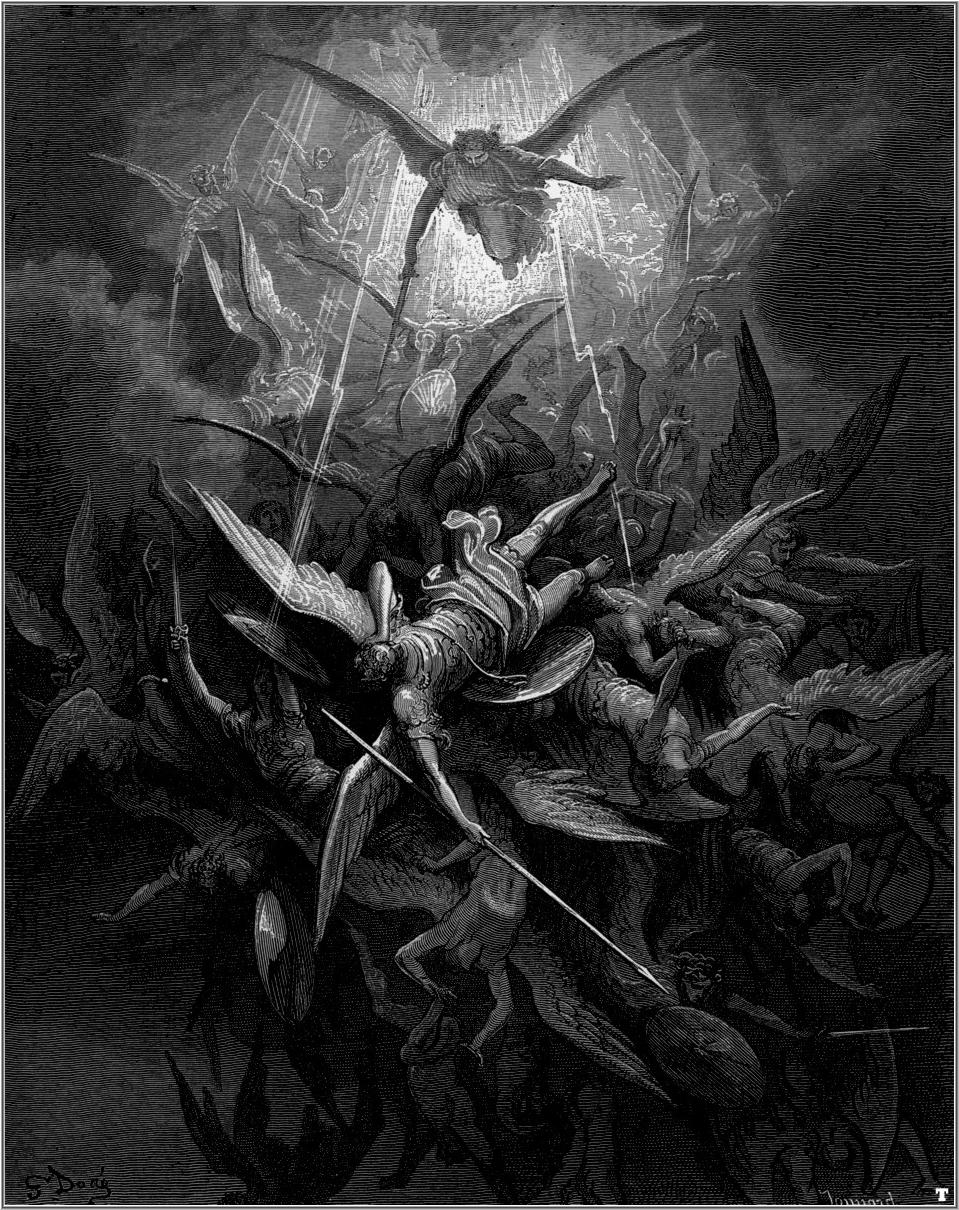
The narrative of Lucifer’s defeat at the hands of God, a pivotal moment in theological discourse, is often portrayed as a decisive victory. However, the aftermath of such a monumental conflict, especially within the context of establishing and maintaining celestial dominion, demands a strategic and forward-thinking approach. Beyond the immediate vanquishing of opposition, what are the enduring actions and policies enacted by the Almighty to solidify His reign and foster continued cosmic order? This article delves into the post-conflict strategies and foundational principles that likely guided God’s actions, examining them through the lens of celestial governance and the establishment of enduring systems.
Establishing the Foundation: The Creation and Ordering of Existence
Following the primal conflict, the immediate priority would have been to establish a stable and functional universe. This wasn’t merely an act of creation but a deliberate act of structuring and ordering, a strategic move to imbue existence with purpose and predictability.
The Blueprint of Creation: Imposing Cosmic Law and Order
The Genesis account, read not just as a religious text but as a strategic document, outlines the systematic creation of the cosmos. This process can be interpreted as the establishment of fundamental laws that govern all of reality. These are not arbitrary decrees but the very operating system of the universe, designed to ensure its ongoing functionality and to prevent the kind of chaos that Lucifer’s rebellion represented.
- The Separation of Elements: The initial separation of light from darkness, waters from dry land, and the establishment of celestial bodies with their predictable orbits, represent the imposition of order upon what could have been undifferentiated chaos. This is akin to establishing clear protocols and infrastructure in a newly organized system.
- The Principle of Causality: The introduction of natural laws, such as gravity, thermodynamics, and the principles of life itself, establishes a framework of cause and effect. This ensures a predictable universe where actions have discernible consequences, a cornerstone of any stable governance.
- The Design of Ecosystems: The creation of diverse and interconnected ecosystems, from the smallest microbes to the vastest oceans, demonstrates a sophisticated understanding of systemic balance. This is a proactive measure, building resilience and self-sufficiency into the fabric of creation, minimizing points of failure and fostering sustainability.
The Inhabitation of Dominion: The Creation of Life and Its Purpose
The creation of life, particularly sentient life, serves a dual purpose: to inhabit the dominion and to engage with the divine order. This was not an accidental outcome but a deliberate expansion of the celestial influence.
- The Endowment of Free Will: The creation of beings with free will, most notably humanity, is a complex strategic decision. While it introduces the potential for deviation, it also allows for genuine relationship, worship, and the conscious participation in the divine plan. This is a calculated risk, prioritizing genuine connection and active engagement over passive obedience.
- The Mandate for Stewardship: The bestowal of dominion over creation upon humanity, coupled with the responsibility for stewardship, is a delegation of authority. This allows for the active management and development of the earthly realm, fostering growth and reflecting the divine creative impulse on a smaller scale. This is akin to establishing regional administrations and empowering local leadership.
- The Intrinsic Value of Life: The inherent value assigned to all forms of life, from the simplest organism to the most complex, suggests a commitment to biodiversity and the richness of existence. This is not just about populating the universe but about celebrating its multifaceted beauty and potential.
Maintaining Order and Fostering Growth: The Evolution of Celestial Governance
Defeating a significant threat is only the first step in long-term security and prosperity. The subsequent actions would focus on reinforcing the established order, addressing potential future threats, and guiding the evolution of creation.
The Revelation of Divine Will: Communication and Guidance Systems

Establishing and maintaining a functional system requires clear communication channels and ongoing guidance. God’s post-Lucifer actions would have included mechanisms for conveying His will and ensuring that His creation remained aligned with His purposes.
- The Intermediary Systems: The concept of angelic beings, prophets, and divine messengers suggests a sophisticated communication network. These entities act as conduits, transmitting divine directives, offering warnings, and providing spiritual guidance to the inhabitants of His creation. This is the celestial equivalent of a robust communication infrastructure and a trained cadre of public servants.
- The Establishment of Moral Frameworks: The articulation of moral and ethical principles, through scriptures, divine laws, and internalized conscience, provides a framework for behavior. These frameworks are not merely restrictive but are designed to promote harmonious coexistence, justice, and flourishing, reflecting a deep understanding of societal well-being.
- The Mechanism of Correction and Restoration: The recognition that deviations from the divine will are inevitable necessitates systems for correction and restoration. This includes concepts of repentance, forgiveness, and divine intervention, all aimed at guiding errant creations back to the intended path, rather than simply eliminating them. This is akin to a robust correctional system and rehabilitation programs.
The Cultivation of Faith and Relationship: Building a Resilient Cosmic Community
The ultimate success of any governance system lies in the willing participation and loyalty of its subjects. God’s actions would have focused on cultivating a deep and enduring relationship with His creation, fostering a community built on trust and mutual understanding.
- The Invitation to Relationship: The very nature of God’s communication and interaction with His creation implies a desire for a relational connection. This is not a master-and-slave dynamic but a call to partnership and communion.
- The Development of Spiritual Practices: The establishment of rituals, prayer, and acts of worship are not mere formalities but practices designed to deepen spiritual connection and attunement to the divine will. These are the tools for individual and collective spiritual growth.
- The Promise of Future Fulfillment: The concept of ongoing divine plans, culminating in ultimate redemption and a perfected existence, provides a long-term vision and a source of hope. This serves to motivate and unify creation, providing a sense of shared purpose and destiny.
The Ongoing Evolution: Adapting to New Challenges and Opportunities
The universe is not static. New challenges and opportunities continually arise, demanding an adaptive and evolving approach to celestial governance. God’s post-defeat strategy would have been dynamic, anticipating and responding to emergent realities.
The Management of Free Will’s Unforeseen Consequences
While free will was a deliberate choice, its implications extend beyond the initial rebellion. God’s ongoing actions would have involved managing the complex and often unforeseen consequences of free choices made by His creation.
- The Principle of Divine Providence: The concept of divine providence suggests an ongoing, subtle guidance and orchestration of events to achieve ultimate good, even amidst human error and suffering. This is a sophisticated form of risk management and long-term strategic planning.
- The Intervention and Grace: While respecting free will, there are instances of direct divine intervention and the application of grace. These are strategic deployments of divine power to avert catastrophe, offer opportunities for redemption, and uphold the integrity of the divine plan.
- The Learning and Adaptation of Celestial Systems: The very existence of ongoing divine plans and unfolding narratives suggests that celestial systems themselves are capable of learning and adaptation. God’s understanding of His creation and its potential evolves, leading to adjustments in His approach to governance.

The Expansion and Exploration of Creation’s Potential
Beyond simply maintaining order, a divine leader would also be invested in the maximal flourishing and exploration of His creation’s inherent potential.
- The Unveiling of New Realms and Possibilities: The ongoing revelation of deeper truths, scientific principles, and spiritual insights suggests a continuous unveiling of the universe’s hidden potentials. This is akin to ongoing research and development, pushing the boundaries of what is known and achievable.
- The Cultivation of Innovation and Creativity: The encouragement of human ingenuity and creativity, from the arts to scientific discovery, reflects a desire to see the full spectrum of potential realized. This is a strategic investment in the diverse expressions of divine spark within creation.
- The Ultimate Unification and Perfection: The eschatological vision of a redeemed universe, free from all suffering and imperfection, represents the ultimate goal of God’s ongoing strategy. This is the final consolidation of dominion, a perfected state of existence where all conflict has ceased and all is in perfect alignment with the divine will.
In conclusion, the question of what God did after defeating Lucifer is not simply about the cessation of a conflict, but about the strategic implementation of a comprehensive and enduring system of governance. It involves the meticulous ordering of existence, the cultivation of relationship and purpose, and an ongoing, adaptive approach to leading creation towards its ultimate perfection. This post-conflict strategy, understood through a lens of celestial dominion, reveals a God not just as a victor, but as an architect, a governor, and a relentless force for order, growth, and ultimate fulfillment.
aViewFromTheCave is a participant in the Amazon Services LLC Associates Program, an affiliate advertising program designed to provide a means for sites to earn advertising fees by advertising and linking to Amazon.com. Amazon, the Amazon logo, AmazonSupply, and the AmazonSupply logo are trademarks of Amazon.com, Inc. or its affiliates. As an Amazon Associate we earn affiliate commissions from qualifying purchases.