
When investors, journalists, and everyday citizens ask, “How did the market do today?” they are almost always referring to the Dow Jones Industrial Average (DJIA). Often simply called “the Dow,” this index is the most recognizable financial benchmark in the world. Despite its name, it has evolved far beyond its “industrial” roots to become a pulse-check for the entire American economy.
For anyone navigating the world of personal finance and investing, understanding the Dow is not just a matter of curiosity; it is a fundamental requirement. Whether you are managing a 401(k), trading individual stocks, or simply trying to understand the evening news, the Dow provides a narrative of the corporate landscape of the United States.

The Foundations of the Dow: What It Is and Why It Matters
The Dow Jones Industrial Average is a stock market index that tracks 30 large, publicly owned “blue-chip” companies trading on the New York Stock Exchange (NYSE) and the Nasdaq. Founded by Charles Dow and Edward Jones in 1896, it is the second-oldest US market index, surpassed only by the Dow Jones Transportation Average.
The History and Evolution of the DJIA
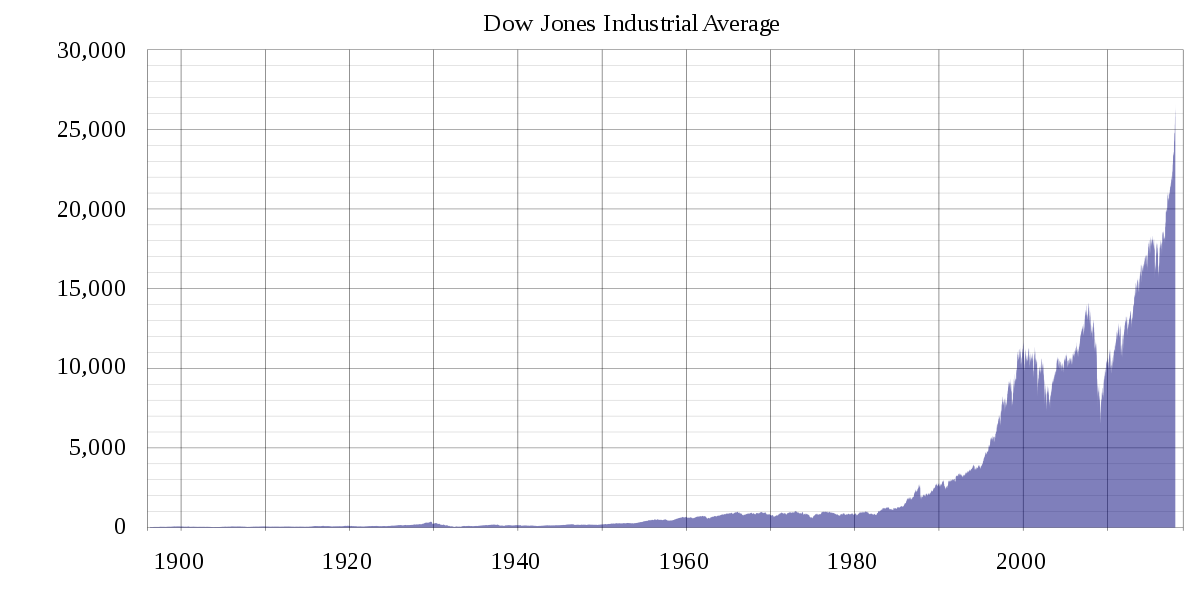
When Charles Dow first published the index on May 26, 1896, it consisted of only 12 companies, most of which were heavily tied to heavy industry—think sugar, tobacco, oil, and rubber. At that time, the index stood at a mere 40.94 points. Over the last century, the index has expanded to 30 companies and has served as a witness to the Great Depression, two World Wars, the dot-com bubble, and the digital revolution.
The term “Industrial” is largely a legacy title. While the original list featured smoke-stack industries, today’s Dow includes technology giants, healthcare providers, and retail conglomerates. The index evolves to reflect the shift in the American economy from manufacturing to services and technology.
How the Dow Differs from Other Market Indices
To understand the Dow, one must distinguish it from its counterparts, the S&P 500 and the Nasdaq Composite.
- The S&P 500: Tracks 500 companies and is weighted by market capitalization (the total value of all shares). Most professionals consider this a more accurate representation of the overall market.
- The Nasdaq: Focuses heavily on technology and growth-oriented companies.
- The Dow: Because it only tracks 30 companies, it is much narrower. However, because these 30 companies are industry leaders, the Dow is often seen as a measure of “Main Street’s” giants rather than the broad market’s volatility.
The Mechanics of the Index: How the Dow is Calculated
One of the most unique—and often criticized—aspects of the Dow is how it is calculated. Unlike most modern indices that use market capitalization, the Dow uses a price-weighted system.
Price-Weighting vs. Market-Cap Weighting
In a market-cap-weighted index like the S&P 500, a company’s influence is determined by its total size. If Apple is worth trillions, a 1% move in its stock price has a massive impact on the index.
In the Dow, however, the index is “price-weighted.” This means that the companies with the highest share prices have the greatest influence on the index’s movement, regardless of their actual company size. For example, if a stock trading at $500 moves by $5, it has a much larger impact on the Dow’s daily points than a stock trading at $50 moving by the same $5—even if the $50 company is technically larger in terms of total market value.
The Role of the “Dow Divisor”
You might wonder how the Dow can be at 38,000 points if there are only 30 stocks involved. The answer lies in the “Dow Divisor.”
Originally, the index was a simple average: you added the prices of the 12 stocks and divided by 12. However, when companies undergo stock splits or change their corporate structure, a simple average would cause the index to “drop” or “jump” artificially. To prevent this, the “divisor” is a continuously adjusted mathematical constant. Whenever a stock split or a dividend payment occurs, the divisor is adjusted so that the numerical value of the Dow remains consistent. As of recent years, the divisor is a decimal much smaller than one, which is why a one-dollar move in any component stock results in a multi-point move in the overall index.
Deciphering the Components: Who Makes the Cut?
The 30 stocks that make up the Dow are often referred to as “Blue Chips.” These are companies with a reputation for quality, reliability, and the ability to operate profitably in both good times and bad.
The Selection Process of the Blue-Chip 30
Unlike the S&P 500, which has strict quantitative rules for inclusion (such as market cap and liquidity), the Dow components are selected by a committee. The Averages Committee at S&P Dow Jones Indices meets regularly to determine which companies best represent the current American economy.
There are no rigid rules, but generally, a company must have an excellent reputation, demonstrate sustained growth, and be of interest to a large number of investors. When a company loses its dominance—as happened with General Electric, an original member that was removed in 2018—it is replaced by a rising leader, such as Walgreens or Amazon.
Industry Diversification within the Index
The modern Dow is a mosaic of the US economy. It includes:
- Technology: Apple, Microsoft, and Salesforce.
- Finance: Goldman Sachs, JPMorgan Chase, and Visa.
- Healthcare: UnitedHealth Group and Amgen.
- Consumer Goods: Coca-Cola, Walmart, and Procter & Gamble.
By spreading the 30 slots across these sectors, the committee attempts to ensure that the Dow remains a “snapshot” of the nation’s commercial health. If the Dow is rising, it generally suggests that the leaders of these diverse sectors are performing well.
The Dow as an Economic Barometer: Interpretation and Limitations
For the average person, the Dow is the primary way they “hear” about the economy. When news anchors say, “The Dow climbed 400 points today,” it conveys a sense of optimism. However, it is important to interpret these numbers with context.
What the “Points” Really Mean
Investors often get caught up in the “points” (e.g., “The Dow hit 40,000!”). However, as the index grows larger, the points become less significant in percentage terms. A 1,000-point drop when the Dow is at 10,000 is a catastrophic 10% crash. A 1,000-point drop when the Dow is at 40,000 is a 2.5% correction—still significant, but not a crisis. To be a savvy investor, one must always look at the percentage change rather than the raw point movement.
Criticism and Modern Relevance
The Dow is frequently criticized by financial academics. The primary complaint is that a price-weighted index is “arbitrary.” Why should a company with a $300 stock price be three times more important than a company with a $100 stock price? Furthermore, critics argue that 30 stocks cannot possibly represent the complexity of a multi-trillion-dollar economy.
Despite these flaws, the Dow remains relevant because it is highly correlated with the broader S&P 500. When the S&P 500 goes up, the Dow usually follows. It also represents the stocks that most people own in their retirement accounts, making it a psychologically powerful indicator of “investor sentiment.”
Investing Strategies Involving the Dow Jones
Knowing what the Dow is is the first step; the second is knowing how to use that information to build wealth. While you cannot “buy” the Dow index itself (since it’s just a mathematical formula), there are several ways to invest in it.
Index Funds and ETFs
The most common way to invest in the Dow is through an Exchange-Traded Fund (ETF) that mimics the index. The most famous is the SPDR Dow Jones Industrial Average ETF (Ticker: DIA), often referred to as “Diamonds.” By buying shares of DIA, an investor is effectively buying a small piece of all 30 companies in the index. This provides instant diversification across the leaders of the American economy with very low management fees.
The “Dogs of the Dow” Strategy
For those looking for a more active approach to personal finance, there is a popular value-investing strategy known as the “Dogs of the Dow.”
This strategy involves identifying the 10 companies in the DJIA with the highest dividend yields at the end of the year. The theory is that these companies are temporarily undervalued (hence the high yield relative to price). An investor buys these ten “dogs,” holds them for a year, and then rebalances the following year. Historically, this strategy has often outperformed the broader index because it forces the investor to “buy low” on high-quality companies that are likely to mean-revert.

Conclusion
The Dow Jones Industrial Average is more than just a list of stocks; it is a historical record of American capitalism. From its humble beginnings as a dozen industrial firms to its current status as a collection of 30 global titans, the Dow remains the ultimate shorthand for market performance.
While it has its mathematical quirks and limitations, its focus on “Blue Chip” companies makes it an essential tool for any investor. By understanding how the Dow is calculated, who populates its ranks, and how to invest in it, you can better navigate the complexities of the financial world and build a more resilient investment portfolio. In the ever-changing world of money, the Dow remains a constant, guiding light for Wall Street and Main Street alike.
aViewFromTheCave is a participant in the Amazon Services LLC Associates Program, an affiliate advertising program designed to provide a means for sites to earn advertising fees by advertising and linking to Amazon.com. Amazon, the Amazon logo, AmazonSupply, and the AmazonSupply logo are trademarks of Amazon.com, Inc. or its affiliates. As an Amazon Associate we earn affiliate commissions from qualifying purchases.