
Engine knock, also known as pinging or pre-ignition, is a phenomenon that strikes a chord of unease in any car owner. It’s that unsettling metallic rapping sound that emanates from the engine, often most noticeable under acceleration or when climbing hills. Beyond the auditory annoyance, engine knock is a sign of inefficient combustion and, if left unaddressed, can lead to significant engine damage. This article delves into the technological underpinnings of what causes engine knock, exploring the intricate dance of fuel, air, and ignition within the combustion chamber that, when disrupted, results in this undesirable occurrence.

The Combustion Process: A Symphony of Precision
To understand engine knock, we must first appreciate the intended combustion process in an internal combustion engine. This is a finely tuned operation, where every component plays a crucial role in transforming chemical energy into mechanical energy efficiently and cleanly.
The Four-Stroke Cycle and the Ignition Spark
Most modern gasoline engines operate on a four-stroke cycle: intake, compression, power, and exhaust. During the intake stroke, a precise mixture of air and fuel is drawn into the cylinder. As the piston moves upward during the compression stroke, this mixture is squeezed into a smaller volume, increasing its temperature and pressure. The goal is to reach a state where the spark plug ignites the compressed mixture at precisely the right moment, initiating a controlled, rapid burn that pushes the piston down, generating power. The timing of this spark, dictated by the engine’s control unit (ECU) based on various sensor inputs, is critical.
The Role of Octane Rating and Fuel Properties
The fuel itself is a vital player in this process. Gasoline is a complex blend of hydrocarbons, and its ability to resist premature ignition under compression is quantified by its octane rating. Higher octane fuels are more resistant to auto-ignition (igniting on their own due to heat and pressure rather than by the spark). When the air-fuel mixture ignites prematurely, before the spark plug fires, or when multiple flame fronts collide within the cylinder, engine knock occurs. This premature ignition generates shockwaves that reverberate through the combustion chamber, creating the characteristic knocking sound.
Detonation vs. Pre-Ignition: Two Sides of the Same Destructive Coin
While often used interchangeably, engine knock can stem from two distinct but related phenomena: detonation and pre-ignition. Understanding their differences is key to diagnosing the root cause.
Detonation: The Uncontrolled Explosion
Detonation is the more common cause of engine knock. It occurs when the air-fuel mixture within the cylinder ignites spontaneously due to excessive heat and pressure after the spark plug has fired. Normally, the flame front initiated by the spark plug propagates evenly across the combustion chamber, pushing the piston down smoothly. However, in a detonating cylinder, pockets of the unburned fuel-air mixture can reach their auto-ignition temperature and pressure before the main flame front reaches them. These pockets explode independently, creating multiple, chaotic flame fronts. The collision of these rapidly expanding pressure waves results in the sharp, metallic pinging sound we associate with engine knock.
Pre-Ignition: The Spark Before the Spark
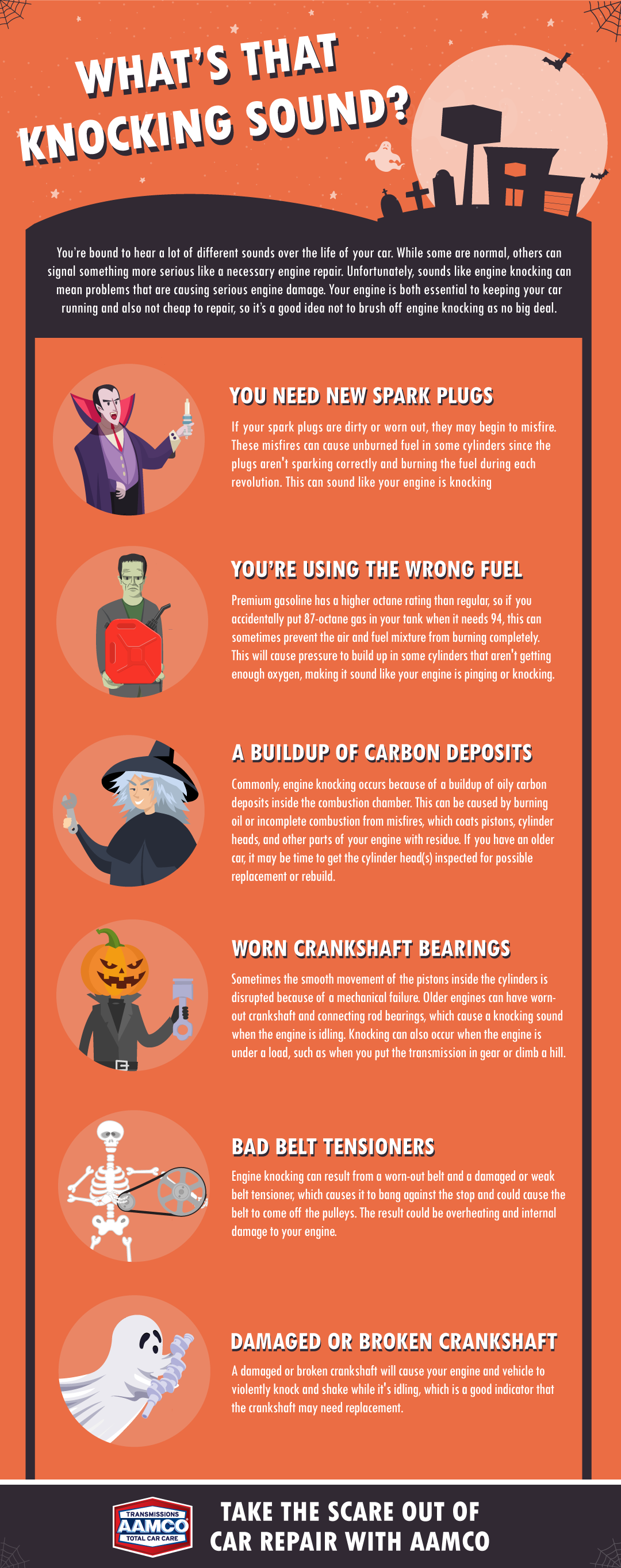
Pre-ignition, on the other hand, happens before the spark plug fires. This is caused by a hot spot within the combustion chamber that ignites the fuel-air mixture prematurely. These hot spots can be caused by several factors, including carbon deposits on the piston crown or cylinder head that retain heat, a spark plug that is too “hot” (meaning its heat range is inappropriate for the engine, causing its tip to overheat), or even damage to internal engine components that protrude into the combustion chamber. When pre-ignition occurs, the ignited mixture tries to push the piston down while the piston is still moving upward, creating immense opposing forces and the knocking sound.
Contributing Factors to Engine Knock: A Web of Influences
Several factors can contribute to the onset of engine knock, often interacting with each other to create the perfect storm for detonation or pre-ignition. These range from fundamental engine design and maintenance to external environmental conditions.
Ignition Timing: The Delicate Balancing Act
The timing of the spark plug’s ignition is perhaps the most critical factor influencing engine knock. Modern engines employ sophisticated Engine Control Units (ECUs) that constantly monitor various sensor inputs – such as engine load, throttle position, engine speed, and intake air temperature – to determine the optimal ignition timing. If the ignition timing is advanced too much (i.e., the spark occurs too early in the compression stroke), the pressure and temperature inside the cylinder can rise to the point where auto-ignition occurs before the spark plug has done its job. Conversely, if the timing is too retarded, it can lead to reduced power and increased emissions. The ECU’s ability to dynamically adjust ignition timing based on real-time conditions is a crucial technological advancement in preventing knock.

Fuel Quality and Octane Rating: The First Line of Defense
As mentioned earlier, the octane rating of the fuel plays a pivotal role. Using a fuel with an octane rating lower than what your vehicle’s manufacturer recommends can significantly increase the risk of engine knock. Lower octane fuels are more prone to auto-ignition under the high pressures and temperatures experienced during the compression stroke. Additionally, the quality of the fuel matters. Contaminants or variations in the fuel blend can affect its combustion characteristics. Most vehicle manuals specify the minimum octane rating required for optimal performance and to prevent knock.
Carbon Deposits: Silent Saboteurs of Combustion
Over time, carbon deposits can accumulate on various surfaces within the combustion chamber, including the piston crowns, cylinder heads, and valve faces. These deposits are often porous and can become incandescent, acting as hot spots that lead to pre-ignition. They can also increase the compression ratio within the cylinder by taking up space, further contributing to higher temperatures and pressures, making detonation more likely. Regular engine cleaning and proper combustion can help mitigate the buildup of carbon deposits.
Engine Temperature and Cooling System Efficiency: Managing the Heat
Engine knock is fundamentally a thermal issue. Excessive engine temperatures create an environment ripe for auto-ignition. The engine’s cooling system, comprising the radiator, coolant, water pump, and thermostat, is responsible for dissipating the heat generated during combustion. If the cooling system is not functioning optimally – due to a low coolant level, a clogged radiator, a faulty thermostat, or a failing water pump – the engine can overheat, leading to increased cylinder temperatures and a higher risk of knock.
Air-Fuel Mixture Ratio: The Golden Mean
The precise ratio of air to fuel in the combustion chamber is critical for efficient and controlled combustion. This ratio is typically controlled by the ECU, which relies on inputs from sensors like the mass airflow sensor and the oxygen sensor. If the mixture becomes too lean (too much air, not enough fuel), it can burn hotter and slower, increasing the likelihood of detonation. Conversely, a very rich mixture (too much fuel, not enough air) can lead to incomplete combustion and can also contribute to carbon buildup.
Mechanical Issues: Beyond Combustion
While most causes of engine knock are related to combustion dynamics and fuel properties, mechanical issues can also contribute. Problems with the engine’s timing belt or chain can lead to incorrect valve timing, affecting the compression and power strokes. Worn piston rings or cylinder walls can lead to blow-by, where combustion gases leak past the pistons, increasing cylinder temperatures. Even minor issues like vacuum leaks can disrupt the air-fuel mixture and lead to problems.
The Technological Arms Race Against Knock: Sophistication in Modern Engines
Modern automotive technology has made significant strides in combating engine knock. The ECU, in conjunction with a suite of sophisticated sensors, acts as the primary defense against this destructive phenomenon.
Knock Sensors: The Engine’s Early Warning System
At the forefront of this battle are knock sensors. These are piezoelectric devices mounted on the engine block that are specifically designed to detect the high-frequency vibrations characteristic of engine knock. When a knock sensor detects these vibrations, it sends an electrical signal to the ECU.
The ECU’s Adaptive Response: Timing Retardation and Beyond
Upon receiving a signal from a knock sensor, the ECU immediately takes action. Its primary response is to retard the ignition timing – essentially, delaying the spark. This reduces the cylinder pressure and temperature, preventing further knock. The ECU can make these adjustments very rapidly, often multiple times per second, to keep the engine running smoothly and safely. Depending on the severity and persistence of the knock, the ECU may also adjust other engine parameters, such as fuel injection timing and duration, to further mitigate the problem.
Advanced Fuel Injection Systems and Engine Management
Modern fuel injection systems, such as direct injection, provide greater control over the fuel delivery process, allowing for more precise management of the air-fuel mixture and combustion timing. Coupled with sophisticated engine management algorithms, these technologies work in concert to optimize combustion and minimize the conditions that lead to knock. The continuous refinement of these control systems represents an ongoing technological effort to maximize engine efficiency, performance, and longevity while minimizing undesirable combustion events like knock.
In conclusion, engine knock is a complex phenomenon arising from the delicate interplay of fuel properties, ignition timing, engine temperature, and mechanical integrity. While the sound itself is a warning sign of potential damage, modern automotive technology, particularly the intelligent Engine Control Unit and its associated sensors, has become remarkably adept at detecting and mitigating knock, ensuring a smoother, more efficient, and longer-lasting life for your vehicle’s engine. Understanding these causes empowers drivers to make informed decisions about fuel choices and vehicle maintenance, further contributing to the well-being of their automotive investments.
aViewFromTheCave is a participant in the Amazon Services LLC Associates Program, an affiliate advertising program designed to provide a means for sites to earn advertising fees by advertising and linking to Amazon.com. Amazon, the Amazon logo, AmazonSupply, and the AmazonSupply logo are trademarks of Amazon.com, Inc. or its affiliates. As an Amazon Associate we earn affiliate commissions from qualifying purchases.