
In the vast landscape of technology, from the intricate circuits of your smartphone to the revolutionary advancements in renewable energy, a common thread weaves through them all: the atom. While often discussed in the context of abstract scientific theory, understanding the atom is paramount to comprehending the very fabric of the technologies we rely on daily. Atoms are not merely theoretical constructs; they are the fundamental, indivisible (in the classical sense) building blocks of all matter, and their behavior dictates the properties of everything from the silicon in our processors to the rare-earth elements in our displays. This article delves into the nature of the atom, exploring its structure, properties, and crucially, its profound implications for the world of technology.

The Atomic Structure: A Microscopic Marvel
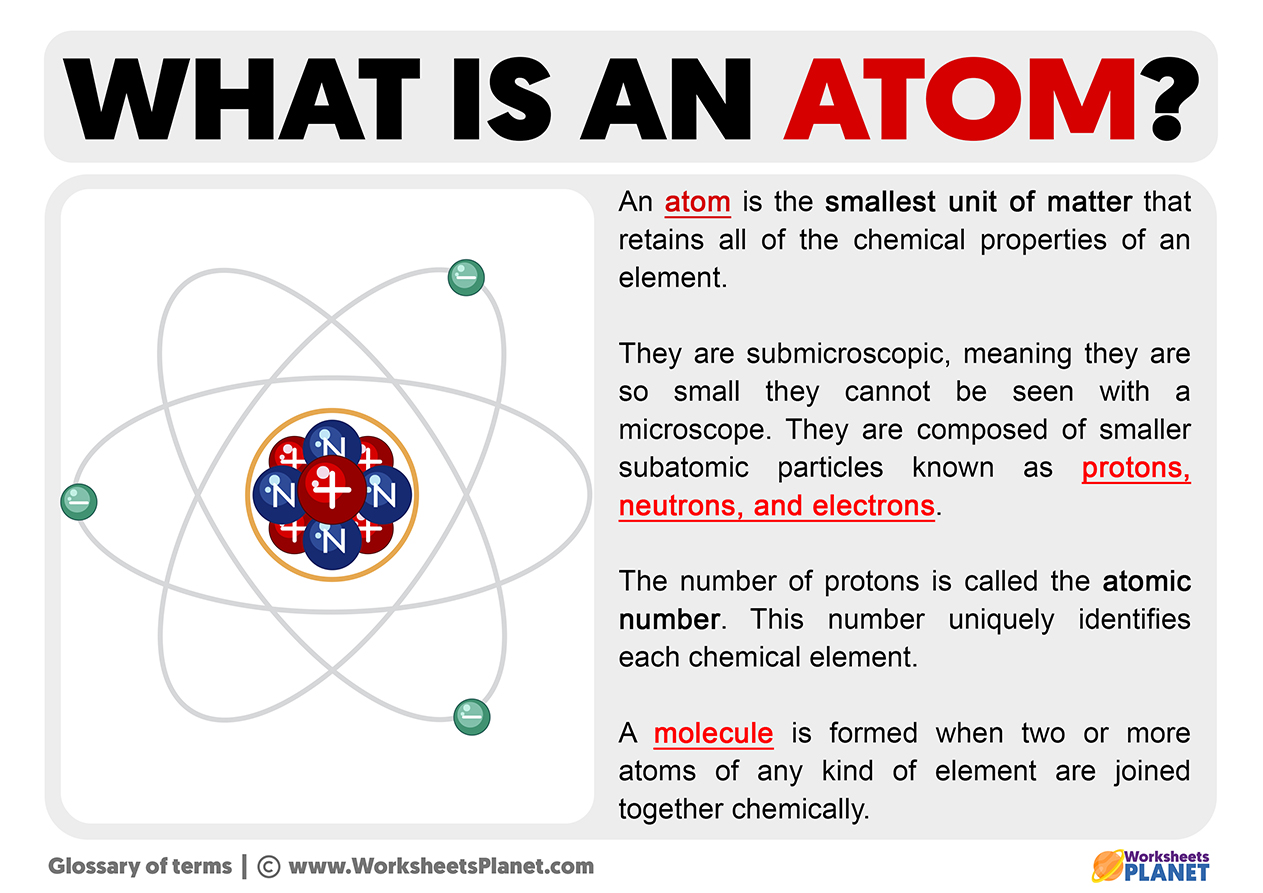
The concept of the atom has evolved significantly over centuries, moving from ancient philosophical musings to highly sophisticated quantum mechanical models. At its core, an atom is the smallest unit of an element that retains the chemical properties of that element. Despite their minuscule size, atoms are not featureless spheres; they possess a complex internal structure that is key to their reactivity and the diversity of materials they can form.
The Nucleus: The Dense Heart of the Atom
At the center of every atom lies the nucleus, a remarkably dense and positively charged region. This core is comprised of two types of subatomic particles: protons and neutrons.
Protons: The Positive Charge Carriers
Protons are fundamental particles that carry a positive electrical charge. The number of protons within an atom’s nucleus, known as the atomic number, is the defining characteristic of an element. For instance, every atom with one proton is a hydrogen atom, every atom with six protons is a carbon atom, and every atom with 79 protons is a gold atom. This atomic number is what dictates an element’s position on the periodic table and its fundamental chemical identity. In technological applications, the precise control over the number of protons in a material is often critical. For example, in semiconductor manufacturing, impurities with specific numbers of protons are intentionally introduced (doping) to alter the electrical conductivity of silicon, forming the basis of transistors and integrated circuits.
Neutrons: The Stabilizing Force
Neutrons, as their name suggests, are electrically neutral particles. They reside in the nucleus alongside protons and contribute to the atom’s mass. While the number of protons defines an element, the number of neutrons can vary within atoms of the same element, leading to different isotopes. For example, carbon typically has six protons and six neutrons, forming carbon-12. However, carbon can also exist with six protons and eight neutrons, forming carbon-14, an isotope important for radiocarbon dating. In nuclear technology, understanding isotopes and their decay rates is crucial for applications like nuclear power generation and medical imaging. The stability of a nucleus is heavily influenced by the ratio of neutrons to protons, a factor that engineers must consider when designing materials for high-radiation environments or for energy production.
Electron Cloud: The Orbiting Dynamics of Charge
Surrounding the nucleus is a vast, predominantly empty space populated by negatively charged particles called electrons. These electrons do not orbit the nucleus in fixed paths like planets around a sun; instead, they exist in probability distributions called electron orbitals, often conceptualized as an “electron cloud.” The number of electrons in a neutral atom is equal to the number of protons, balancing the positive charge of the nucleus with a net neutral charge.
Electrons and Chemical Bonding: The Key to Material Properties
The behavior of electrons, particularly those in the outermost energy shells (valence electrons), is what governs an atom’s chemical reactivity and its ability to form bonds with other atoms. When atoms interact, it is these valence electrons that are shared, gained, or lost, creating the myriad of chemical compounds that form the basis of all materials. The ability of atoms to form stable chemical bonds is fundamental to material science and engineering. For instance, the strong covalent bonds in diamond, formed by carbon atoms, give it its exceptional hardness, making it useful in cutting tools and industrial abrasions. The metallic bonds in copper, where electrons are delocalized and can flow freely, are responsible for its excellent electrical conductivity, making it indispensable for wiring in electronic devices and power transmission. Understanding electron behavior allows engineers to design materials with specific electrical, thermal, and mechanical properties tailored for diverse technological applications.
The Periodic Table: A Technological Blueprint
The periodic table of elements is arguably one of the most elegant and powerful organizational tools in science, and it serves as a fundamental blueprint for technological innovation. Arranged by atomic number, the periodic table groups elements with similar chemical properties, providing invaluable insights into how elements will interact and behave.
Trends and Properties: Predicting Material Behavior

The recurring patterns in the periodic table, such as electronegativity, ionization energy, and atomic radius, are not just academic curiosities; they are critical predictive tools for chemists and material scientists. These trends allow researchers to anticipate how an element will react with others, what kind of bonds it will form, and what properties the resulting compounds will possess. For example, knowing that alkali metals (Group 1) are highly reactive and readily lose an electron helps engineers avoid using them in certain sensitive electronic components. Conversely, noble gases (Group 18), with their stable, filled outer electron shells, are often used as inert atmospheres in manufacturing processes to prevent unwanted reactions. This predictive power is essential for the development of new alloys, polymers, catalysts, and advanced materials used across all sectors of technology.
Essential Elements for Modern Technology
Many elements featured prominently on the periodic table are absolutely indispensable for modern technology. Silicon, the second most abundant element in the Earth’s crust, is the bedrock of the semiconductor industry, enabling the digital revolution. Lithium and cobalt are crucial for the rechargeable batteries that power our portable electronics and electric vehicles. Rare-earth elements, though less abundant, are vital for magnets in wind turbines and electric motors, as well as for displays in smartphones and televisions. The discovery and refinement of efficient extraction and processing techniques for these elements are direct drivers of technological progress.
Atomic Interactions and Bonding: The Foundation of Materials
The way atoms interact and form bonds is the ultimate determinant of the macroscopic properties of matter. From the strength of a bridge to the conductivity of a wire, everything is a consequence of atomic-level interactions.
Covalent Bonding: Strength and Rigidity
Covalent bonding occurs when atoms share electrons to achieve a stable electron configuration. This type of bond is particularly strong and directional, leading to the formation of molecules with defined shapes and rigidity. In technology, covalently bonded materials like silicon dioxide (silica) are used as insulators in microelectronics due to their high dielectric strength and chemical inertness. Diamond, as mentioned, exemplifies the extreme strength possible with covalent bonding. The development of new covalent organic frameworks (COFs) and metal-organic frameworks (MOFs) represents an exciting frontier in materials science, offering potential applications in gas storage, catalysis, and sensing.
Ionic Bonding: Charge and Conductivity
Ionic bonding involves the transfer of electrons between atoms, creating charged ions that are held together by electrostatic attraction. This results in crystalline structures with often brittle but electrically conductive properties when molten or dissolved. While less common as the primary bonding mechanism in many modern electronic components, ionic compounds play vital roles. For instance, solid-state electrolytes based on ionic compounds are being researched for next-generation batteries, promising higher energy density and improved safety. The use of electrolytes in various electrochemical devices, from sensors to energy storage systems, relies heavily on the principles of ionic bonding.
Metallic Bonding: The Flow of Electrons
Metallic bonding, characteristic of metals, involves a “sea” of delocalized electrons shared among a lattice of positively charged metal ions. This free movement of electrons is responsible for the excellent electrical and thermal conductivity of metals, their malleability, and their luster. Copper’s ubiquitous presence in electrical wiring is a direct result of its metallic bonding. The development of new metallic alloys with enhanced strength, corrosion resistance, or unique magnetic properties is a continuous area of research in materials engineering, driven by the need for lighter, stronger, and more durable components in aerospace, automotive, and construction industries.
Quantum Mechanics and Atomic Behavior: The Cutting Edge of Tech
While classical models provide a foundational understanding, the true complexity and utility of atoms at the microscopic level are governed by the principles of quantum mechanics. This realm of physics, which deals with the behavior of matter and energy at the atomic and subatomic levels, has opened doors to unprecedented technological advancements.
Quantum Tunneling and Nanotechnology
Quantum tunneling is a phenomenon where particles can pass through energy barriers that they classically shouldn’t be able to overcome. This counterintuitive behavior is not just a theoretical curiosity; it is a fundamental principle exploited in nanotechnology. Scanning tunneling microscopes (STMs), for example, use quantum tunneling to image surfaces at the atomic scale, enabling the manipulation of individual atoms and molecules. This precise control at the nanoscale is revolutionizing fields like drug delivery, advanced materials manufacturing, and the development of next-generation computing architectures, including quantum computing.
Electron Spin and Spintronics
Beyond charge, electrons also possess an intrinsic property called spin, which has a magnetic moment. Spintronics is a burgeoning field that aims to utilize electron spin, in addition to its charge, for electronic devices. This could lead to faster, more energy-efficient, and denser data storage and processing technologies. Magnetic random-access memory (MRAM) is one example of a technology that leverages electron spin. Understanding the quantum mechanical behavior of electron spin is paving the way for entirely new paradigms in computing and information processing, moving beyond the limitations of traditional electronics.
In conclusion, the atom, far from being a mere concept in chemistry textbooks, is the fundamental entity that underpins virtually every technological marvel we experience today. From the design of microprocessors to the development of life-saving pharmaceuticals, the intricate dance of protons, neutrons, and electrons dictates the possibilities and limitations of innovation. As our understanding of atomic and subatomic behavior deepens, driven by advancements in quantum mechanics and experimental techniques, the future of technology promises to be even more profoundly shaped by the humble atom.
aViewFromTheCave is a participant in the Amazon Services LLC Associates Program, an affiliate advertising program designed to provide a means for sites to earn advertising fees by advertising and linking to Amazon.com. Amazon, the Amazon logo, AmazonSupply, and the AmazonSupply logo are trademarks of Amazon.com, Inc. or its affiliates. As an Amazon Associate we earn affiliate commissions from qualifying purchases.