
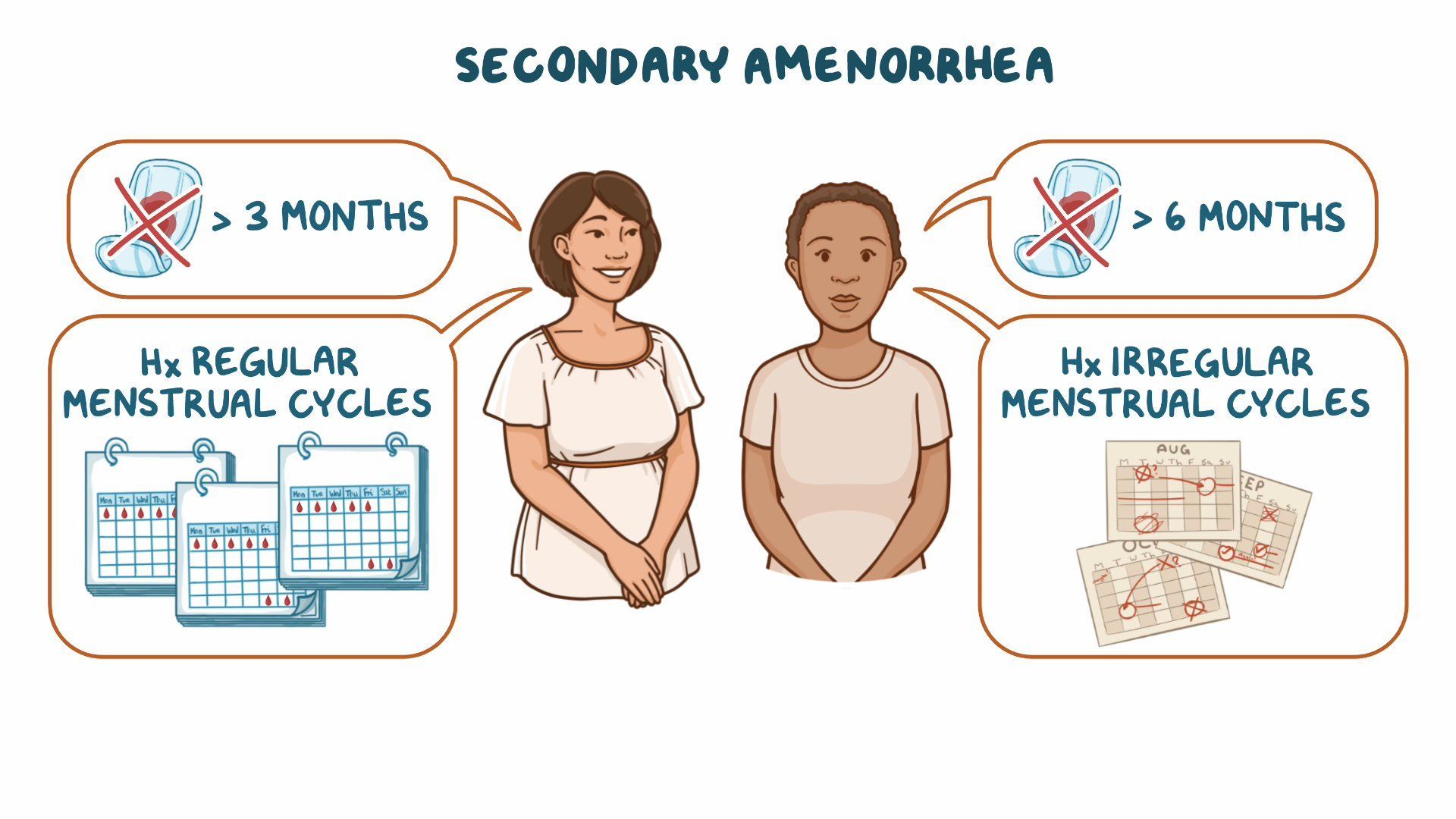
Secondary amenorrhea, the cessation of menstruation in individuals who previously had regular cycles, presents a complex medical puzzle. While its roots lie in biological and hormonal imbalances, the landscape of understanding, diagnosing, and managing this condition has been significantly transformed by technological advancements. From sophisticated imaging techniques to the ubiquity of wearable health trackers and AI-powered diagnostic tools, technology now plays a pivotal role in shedding light on the underlying causes of secondary amenorrhea, empowering patients with information, and driving innovative treatment approaches. This article delves into the technological dimensions of secondary amenorrhea, exploring how modern innovations are reshaping our approach to this significant health concern.

The Evolving Diagnostic Toolkit: From Traditional Methods to Advanced Imaging
The accurate diagnosis of secondary amenorrhea is the cornerstone of effective management. Historically, this involved a detailed medical history, physical examination, and a series of blood tests to assess hormone levels. While these foundational elements remain crucial, technology has dramatically enhanced the precision, speed, and comprehensiveness of the diagnostic process.
Revolutionizing Hormone Assessment: Precision and Accessibility
Assessing hormonal profiles is paramount in identifying the cause of secondary amenorrhea, as imbalances in hormones like follicle-stimulating hormone (FSH), luteinizing hormone (LH), estrogen, progesterone, prolactin, and androgens are common culprits.
- Automated Immunoassays and Mass Spectrometry: Traditional laboratory tests have been revolutionized by automated immunoassay analyzers. These sophisticated machines employ highly sensitive antibody-based detection methods, allowing for the rapid and accurate quantification of hormone levels from small blood samples. Furthermore, advances in mass spectrometry offer even greater specificity and sensitivity, capable of detecting subtle hormonal fluctuations that might be missed by older methods. This precision is critical for differentiating between various endocrine disorders that can lead to amenorrhea.
- Point-of-Care Testing (POCT): While still evolving for comprehensive endocrine profiles, the trend towards POCT devices in healthcare is extending to hormone testing. These portable devices can offer quicker preliminary results, potentially allowing for earlier intervention and reducing the need for multiple lab visits, especially in remote areas or for individuals with mobility challenges. The miniaturization of analytical instruments and the development of microfluidic chips are key technological drivers here.
- Genomic and Genetic Technologies: In cases where a genetic predisposition or a specific genetic mutation might be suspected as a cause of secondary amenorrhea (e.g., certain genetic disorders affecting reproductive development), advancements in genetic sequencing technologies have become invaluable. High-throughput sequencing allows for the rapid and cost-effective analysis of an individual’s genome, identifying potential genetic markers that can explain or predispose to the condition. This personalized approach to diagnosis moves beyond symptom management to understanding the fundamental biological underpinnings.
Unveiling Structural Abnormalities: Imaging Technologies
Beyond hormonal assessments, structural issues within the reproductive organs can also lead to secondary amenorrhea. Advanced imaging technologies provide non-invasive or minimally invasive ways to visualize these structures and identify abnormalities.
- High-Resolution Ultrasound: Ultrasound technology has become indispensable in visualizing the ovaries, uterus, and endometrium. Modern ultrasound machines offer significantly higher resolution, allowing for the detection of polycystic ovaries (a common cause of amenorrhea), uterine fibroids, endometrial polyps, and other structural anomalies. Doppler ultrasound capabilities further enable the assessment of blood flow to reproductive organs, providing additional diagnostic clues. The development of 3D and 4D ultrasound has also allowed for more detailed anatomical assessment.
- Magnetic Resonance Imaging (MRI): For more complex cases or when ultrasound provides inconclusive results, MRI offers superior soft-tissue contrast and detail. MRI is particularly useful in diagnosing pituitary tumors (which can affect hormone production), hypothalamic abnormalities, and subtle structural issues within the reproductive tract. The increasing power and resolution of MRI scanners, coupled with advanced imaging sequences, provide unprecedented views of delicate anatomical structures.
- Computed Tomography (CT) Scans: While less commonly used for primary amenorrhea diagnosis than ultrasound or MRI, CT scans can be employed in specific scenarios, such as investigating adrenal or adrenal gland issues that might indirectly impact reproductive hormones, or in cases of suspected trauma affecting the reproductive organs. Advances in CT technology, such as dual-energy CT, offer improved tissue characterization and reduced radiation exposure.
The Rise of Health Tracking and Wearable Technology
The proliferation of consumer-facing technology has opened new avenues for individuals to monitor their health proactively, and this extends to understanding menstrual cycles and their deviations. Wearable devices and health apps are becoming powerful tools for gathering data, identifying patterns, and informing discussions with healthcare providers regarding secondary amenorrhea.
Empowering Personal Health Monitoring: Cycle Tracking Apps
The most accessible and widespread technological intervention for menstrual health is the proliferation of sophisticated period tracking applications. These apps go far beyond simple logging of menstrual dates.
- Predictive Algorithms and Pattern Recognition: Modern cycle tracking apps utilize complex algorithms that learn from user-inputted data, including period start and end dates, flow intensity, and associated symptoms (e.g., mood, pain, spotting). Over time, these algorithms can predict future cycles with increasing accuracy. When a user experiences a significant deviation from their established pattern, such as missed periods, these apps can flag this as a potential concern, prompting further investigation.
- Symptom Logging and Correlation: Beyond basic cycle tracking, these apps often allow users to log a wide array of symptoms. This detailed logging can reveal correlations between hormonal fluctuations, lifestyle factors (stress, diet, exercise), and menstrual irregularities. Identifying consistent patterns of symptoms preceding or accompanying missed periods can provide invaluable insights for both the user and their physician, helping to pinpoint potential causes like stress-induced amenorrhea or ovulatory dysfunction.
- Integration with Wearable Devices: Many cycle tracking apps seamlessly integrate with wearable devices like smartwatches and fitness trackers. This integration allows for the automatic collection of physiological data that can significantly enrich the understanding of menstrual health.

Wearable Devices: Beyond Step Counting
Wearable technology, initially focused on fitness, has rapidly evolved to encompass a broader range of health monitoring capabilities, offering a continuous stream of physiological data that can be relevant to secondary amenorrhea.
- Basal Body Temperature (BBT) Tracking: Some advanced wearables and dedicated BBT thermometers can automatically track a user’s basal body temperature. Fluctuations in BBT are directly linked to hormonal changes, particularly the rise in progesterone after ovulation. Consistent absence of the typical post-ovulatory temperature rise, as monitored by a wearable, can be a strong indicator of anovulation, a common cause of secondary amenorrhea.
- Heart Rate Variability (HRV) and Stress Monitoring: Wearables are increasingly sophisticated in measuring heart rate variability (HRV) and other physiological markers associated with stress. Chronic stress is a well-established cause of secondary amenorrhea (hypothalamic amenorrhea). By tracking elevated stress levels and their correlation with missed periods, individuals and their doctors can better understand the impact of stress on the reproductive system.
- Sleep Tracking and its Impact: Sleep quality and duration play a crucial role in hormonal regulation. Wearable devices that track sleep patterns can reveal disruptions that might be contributing to or exacerbating menstrual irregularities. Understanding the intricate interplay between sleep, stress, and hormonal health is becoming more accessible through these technologies.
- Blood Oxygen and Other Physiological Metrics: Emerging wearable technologies are exploring the monitoring of additional physiological metrics like blood oxygen levels. While not directly diagnostic of secondary amenorrhea, these metrics can provide a broader picture of overall physiological health and well-being, which can be indirectly linked to hormonal balance and reproductive function.
The Future of Secondary Amenorrhea Management: AI, Telehealth, and Personalized Medicine
The integration of artificial intelligence (AI), the expansion of telehealth services, and the drive towards personalized medicine are poised to further revolutionize how secondary amenorrhea is understood, diagnosed, and managed. These technological frontiers promise more efficient, accessible, and tailored healthcare solutions.
Artificial Intelligence: Enhancing Diagnosis and Prediction
AI is rapidly moving from the realm of theoretical application to practical implementation in healthcare, offering powerful tools for analyzing complex medical data.
- AI-Powered Diagnostic Algorithms: AI algorithms can be trained on vast datasets of patient information, including medical histories, hormonal profiles, imaging results, and genetic data. These algorithms can then identify subtle patterns and correlations that might be missed by human clinicians, leading to more accurate and earlier diagnoses of the underlying causes of secondary amenorrhea. This is particularly relevant for identifying rare endocrine disorders or complex multifactorial conditions.
- Predictive Analytics for Risk Stratification: AI can be used to predict an individual’s risk of developing certain conditions that can lead to secondary amenorrhea, such as polycystic ovary syndrome (PCOS) or hypothalamic amenorrhea due to lifestyle factors. By identifying individuals at higher risk, proactive interventions can be implemented to prevent or mitigate the onset of the condition.
- Personalized Treatment Recommendations: As AI systems become more sophisticated, they can assist in tailoring treatment plans. By analyzing an individual’s unique biological profile and response to different therapies, AI can suggest the most effective treatment strategies, optimizing outcomes and minimizing side effects.
Telehealth and Remote Monitoring: Bridging the Access Gap
The COVID-19 pandemic accelerated the adoption of telehealth services, and this trend is set to continue, offering significant benefits for managing conditions like secondary amenorrhea.
- Remote Consultations and Monitoring: Telehealth platforms enable individuals to consult with endocrinologists, gynecologists, and other specialists remotely. This is particularly beneficial for those living in rural areas or with limited mobility, ensuring they can receive expert medical advice and ongoing care without the need for extensive travel.
- Secure Data Sharing and Collaboration: Telehealth systems facilitate secure sharing of patient data, including results from wearable devices and tracking apps, between patients and their healthcare providers. This seamless data flow allows for more informed consultations and proactive monitoring between in-person appointments.
- Digital Therapeutics and Support: The development of digital therapeutics (DTx) specifically designed to support individuals with chronic conditions, including reproductive health issues, is on the rise. These can offer evidence-based interventions, educational resources, and support networks delivered directly through digital platforms, complementing traditional medical care.
The Dawn of Personalized Medicine: Tailoring Interventions
The ultimate goal of technological advancement in healthcare is often to achieve truly personalized medicine, where treatments are precisely tailored to an individual’s unique genetic makeup, lifestyle, and environmental factors.
- Genomic Profiling for Targeted Therapies: As discussed earlier, genetic technologies are crucial. Integrating genomic data with other health information allows for a deeper understanding of an individual’s predisposition to certain hormonal imbalances or reproductive system vulnerabilities. This enables the development of highly targeted therapies aimed at correcting specific genetic or molecular pathways.
- Biomarker Discovery and Monitoring: Ongoing research utilizing advanced technologies is focused on identifying new biomarkers for early detection and monitoring of conditions that can cause secondary amenorrhea. These biomarkers, detectable through blood, saliva, or even breath, could offer less invasive and more sensitive diagnostic tools in the future.
- Lifestyle Interventions informed by Data: Technology empowers individuals to understand the impact of their lifestyle choices on their hormonal health. Data from wearables and tracking apps, analyzed with AI, can provide personalized recommendations for diet, exercise, stress management, and sleep hygiene, all of which can be critical in addressing the root causes of secondary amenorrhea.
In conclusion, while secondary amenorrhea is a condition rooted in biological processes, technology has become an indispensable ally in its diagnosis, management, and understanding. From the precision of advanced laboratory diagnostics and imaging to the empowering insights provided by wearable devices and the predictive capabilities of AI, the technological landscape is continuously evolving. As we move forward, the integration of these innovations promises a future where secondary amenorrhea can be identified earlier, understood more comprehensively, and managed with greater personalization and efficacy, ultimately improving the reproductive health and overall well-being of individuals affected by this condition.
aViewFromTheCave is a participant in the Amazon Services LLC Associates Program, an affiliate advertising program designed to provide a means for sites to earn advertising fees by advertising and linking to Amazon.com. Amazon, the Amazon logo, AmazonSupply, and the AmazonSupply logo are trademarks of Amazon.com, Inc. or its affiliates. As an Amazon Associate we earn affiliate commissions from qualifying purchases.