
The Earth’s atmosphere is a complex, multi-layered system, a vital shield and medium for countless phenomena. While we are intimately familiar with the troposphere – the layer closest to the ground where weather occurs and we live our lives – there exists a vastly different and increasingly significant realm above it: the stratosphere. In an era defined by rapid technological advancement, understanding the stratosphere is no longer solely the domain of meteorologists and atmospheric scientists. It is becoming a critical component in the development and deployment of cutting-edge technologies, from high-altitude communication platforms to advanced satellite systems and the very models that predict our planet’s future. This article delves into the nature of the stratosphere, its unique characteristics, and its growing importance within the technological landscape.
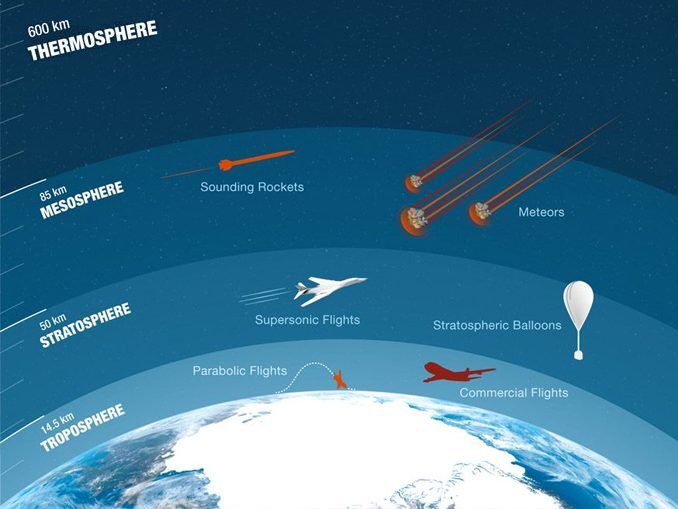
The Stratosphere: A Unique Atmospheric Layer
The stratosphere, situated between the troposphere below and the mesosphere above, is a region of profound atmospheric stability and distinct thermal properties. Extending from approximately 7 to 20 kilometers (4 to 12 miles) above the Earth’s surface, its boundaries vary with latitude and season. Unlike the troposphere, where temperature decreases with altitude due to convection, the stratosphere exhibits a remarkable inversion: temperature increases with height. This fundamental difference dictates its behavior and makes it a compelling subject for technological exploration.
Defining the Stratospheric Boundary
The boundary between the troposphere and the stratosphere is known as the tropopause. This is a transitional zone where the temperature gradient reverses. In the tropics, the tropopause is located at a higher altitude, around 17 kilometers, while at the poles, it can be as low as 7 kilometers. This variation is crucial for understanding phenomena like jet streams and the movement of atmospheric gases. The tropopause acts as a significant barrier to vertical air movement, meaning that most weather, such as clouds and storms, is confined to the troposphere. This characteristic is a key reason why the stratosphere is so appealing for certain technological applications.
The Ozone Layer: The Stratosphere’s Signature
The most defining feature of the stratosphere, and arguably its most important for life on Earth, is the presence of the ozone layer. While ozone (O3) is a trace gas in the atmosphere, its concentration is significantly higher in the stratosphere than anywhere else. This ozone layer acts as a natural filter, absorbing the majority of the sun’s harmful ultraviolet (UV) radiation. Without this protective shield, life as we know it would be impossible. The discovery and subsequent understanding of the ozone layer’s depletion due to anthropogenic chemicals like chlorofluorocarbons (CFCs) marked a pivotal moment in environmental science and led to international technological and regulatory efforts to mitigate the damage. This historical example highlights how understanding and interacting with the stratosphere has direct technological implications.
Thermal Inversion and Atmospheric Stability
The temperature increase with altitude in the stratosphere is primarily due to the absorption of UV radiation by ozone molecules. This absorption process releases heat, warming the surrounding air. This thermal inversion creates a highly stable atmosphere with very little vertical mixing. This lack of turbulence is a significant advantage for many technological applications that require a predictable and stable environment. Unlike the chaotic conditions of the troposphere, the stratosphere offers a relatively calm and consistent platform, making it attractive for long-duration missions and sensitive equipment.
Technological Applications Flourishing in the Stratosphere
The unique properties of the stratosphere, particularly its stability, low humidity, and reduced atmospheric interference, have made it a prime target for a burgeoning array of technological applications. From enhancing global communication networks to providing novel platforms for scientific research and even facilitating new forms of transportation, the stratosphere represents a frontier for innovation.
High-Altitude Platforms (HAPs) for Global Connectivity
One of the most exciting areas of stratospheric technology is the development of High-Altitude Platforms (HAPs). These are typically unmanned aerial vehicles (UAVs) or balloons designed to loiter in the stratosphere for extended periods, acting as pseudo-satellites. Companies like Google (with its Project Loon, now largely retired but a pioneer) and other aerospace firms are exploring and deploying HAPs to provide internet connectivity to remote and underserved areas. These platforms can cover vast geographical regions, offering a more cost-effective and flexible alternative to traditional satellite or terrestrial infrastructure, especially in disaster relief scenarios or in regions with challenging terrain.
Advantages of HAPs
The stratospheric environment offers several key advantages for HAPs. The reduced air density at these altitudes allows for efficient aerodynamic design, requiring less power for sustained flight. The lack of significant weather phenomena means HAPs can operate reliably without constant disruption. Furthermore, their altitude allows for a wide line-of-sight coverage, enabling a single platform to serve a large area. The ability to reposition these platforms relatively easily also provides a flexibility that is difficult to achieve with geostationary satellites.
Challenges and Future of HAP Technology
Despite the promise, significant engineering challenges remain. Powering these platforms for extended durations, managing their navigation and communication systems autonomously, and ensuring their safe return or disposal are complex tasks. Material science, battery technology, and advanced AI for autonomous operation are all critical areas of development. The future of HAPs likely involves sophisticated swarm technologies and integration with existing communication networks to create a truly ubiquitous global connectivity fabric.
Stratospheric Research and Observation Platforms
The stratosphere’s stable, high-altitude environment is also an ideal location for a variety of scientific research and observation platforms. These include balloons carrying scientific instruments, unmanned aircraft designed for atmospheric sampling, and even specialized payloads deployed from rockets. These platforms are crucial for monitoring climate change, studying atmospheric chemistry (including the ozone layer), and observing astronomical phenomena without the distortion and absorption caused by the lower atmosphere.
Weather and Climate Monitoring
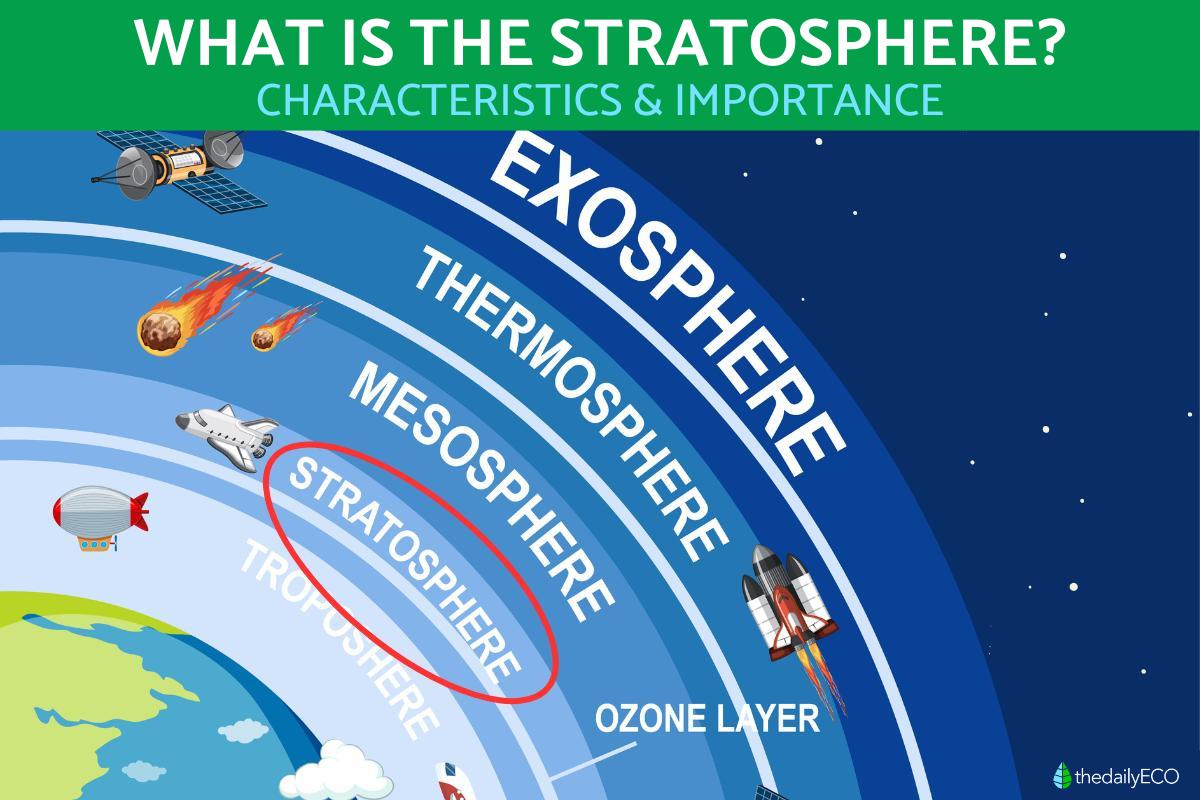
Accurate weather forecasting and climate modeling are fundamentally reliant on data collected from various atmospheric layers. Stratospheric platforms provide vital data points that improve the accuracy of these models, allowing for better predictions of extreme weather events and long-term climate trends. Instruments deployed in the stratosphere can measure concentrations of greenhouse gases, aerosols, and other atmospheric constituents, providing a global perspective on environmental changes.
Astronomical and Earth Observation
The stratosphere offers a clearer view of the cosmos than ground-based observatories. Telescopes and sensors launched on balloons, such as NASA’s Stratospheric Observatory for Infrared Astronomy (SOFIA), can conduct observations in infrared wavelengths that are absorbed by water vapor in the troposphere. Similarly, Earth observation satellites and stratospheric platforms equipped with high-resolution cameras and sensors are vital for environmental monitoring, mapping, and disaster assessment, providing invaluable data for a range of technological applications.
Stratospheric Flight and Future Transportation Concepts
Beyond communication and research, the stratosphere is emerging as a potential domain for future transportation systems. The concept of “near-space” flight, utilizing the low drag and stable conditions of the stratosphere, is being explored for high-speed passenger travel and the deployment of payloads.
Hypersonic Flight and Reusable Spacecraft
The development of hypersonic aircraft and reusable space launch vehicles is intrinsically linked to stratospheric flight. These vehicles often operate within the stratosphere during ascent and descent, requiring specialized thermal protection systems and aerodynamic designs to withstand the unique conditions. Understanding the atmospheric dynamics and thermal loads within this layer is paramount for the successful design and operation of these advanced aerospace technologies.
Suborbital Tourism and High-Speed Travel
Companies are actively developing suborbital flight experiences that will take passengers to the edge of space, traversing the stratosphere. This nascent industry, often referred to as space tourism, relies on robust engineering to ensure passenger safety and comfort during ascent and descent. Looking further ahead, stratospheric corridors are being considered for ultra-high-speed intercontinental travel, potentially reducing journey times significantly by bypassing the turbulent lower atmosphere.
Payload Deployment and Launch Systems
The stratosphere can also serve as an optimal altitude for deploying payloads into orbit or for specific atmospheric missions. Launching rockets from high-altitude balloons or specialized stratospheric aircraft can potentially reduce the amount of fuel required to reach orbit, as the initial boost is provided by the altitude. This approach offers a more efficient and potentially less environmentally impactful method for space access.
Navigating the Stratosphere: Technological Challenges and Innovations
Operating within the stratosphere presents a unique set of technological challenges that demand innovative solutions. From materials science to power management and navigation, engineers are constantly pushing the boundaries to unlock the full potential of this atmospheric layer.
Materials Science and Aerodynamics
The extreme temperature variations and low-pressure environment of the stratosphere necessitate the use of advanced materials. Lightweight yet durable composites, specialized coatings for thermal protection, and materials resistant to UV degradation are essential for stratospheric platforms. Furthermore, the efficiency of aerodynamic design is crucial for sustained flight in the rarefied air, driving innovation in wing design, propulsion systems, and overall vehicle configuration.
Power Systems and Energy Management
Providing reliable and long-lasting power to stratospheric platforms is a significant hurdle. Solar power, coupled with advanced battery storage systems, is a primary focus for many applications, especially for HAPs. However, the limited sunlight during polar nights or prolonged periods of cloud cover poses a challenge. Research into high-density energy storage, potentially including advanced fuel cells or even novel forms of energy harvesting, is critical for ensuring continuous operation.
Navigation, Communication, and Control Systems
Maintaining precise navigation and reliable communication in the vast, often sparsely populated stratosphere is a complex undertaking. Advanced GPS and inertial navigation systems are complemented by sophisticated communication protocols that can transmit data over long distances with minimal latency. The development of autonomous control systems, driven by artificial intelligence and machine learning, is also crucial for managing fleets of stratospheric vehicles, ensuring collision avoidance, and optimizing operational efficiency. These systems need to be robust enough to handle the unique atmospheric conditions and the vast distances involved.

The Stratosphere: A Key Frontier for Future Technology
The stratosphere, once a largely overlooked layer of our atmosphere, is rapidly transforming into a crucial frontier for technological innovation. Its unique combination of atmospheric stability, reduced interference, and proximity to space makes it an ideal environment for a wide range of applications, from global connectivity and scientific discovery to the future of transportation. As our technological capabilities continue to advance, our understanding and utilization of the stratosphere will undoubtedly play an increasingly significant role in shaping our digital future, our scientific understanding of the planet, and the very way we travel and interact with the world. The ongoing research and development in stratospheric technologies promise exciting breakthroughs, underscoring the vital importance of this high-altitude realm for the advancement of science and technology.
aViewFromTheCave is a participant in the Amazon Services LLC Associates Program, an affiliate advertising program designed to provide a means for sites to earn advertising fees by advertising and linking to Amazon.com. Amazon, the Amazon logo, AmazonSupply, and the AmazonSupply logo are trademarks of Amazon.com, Inc. or its affiliates. As an Amazon Associate we earn affiliate commissions from qualifying purchases.