
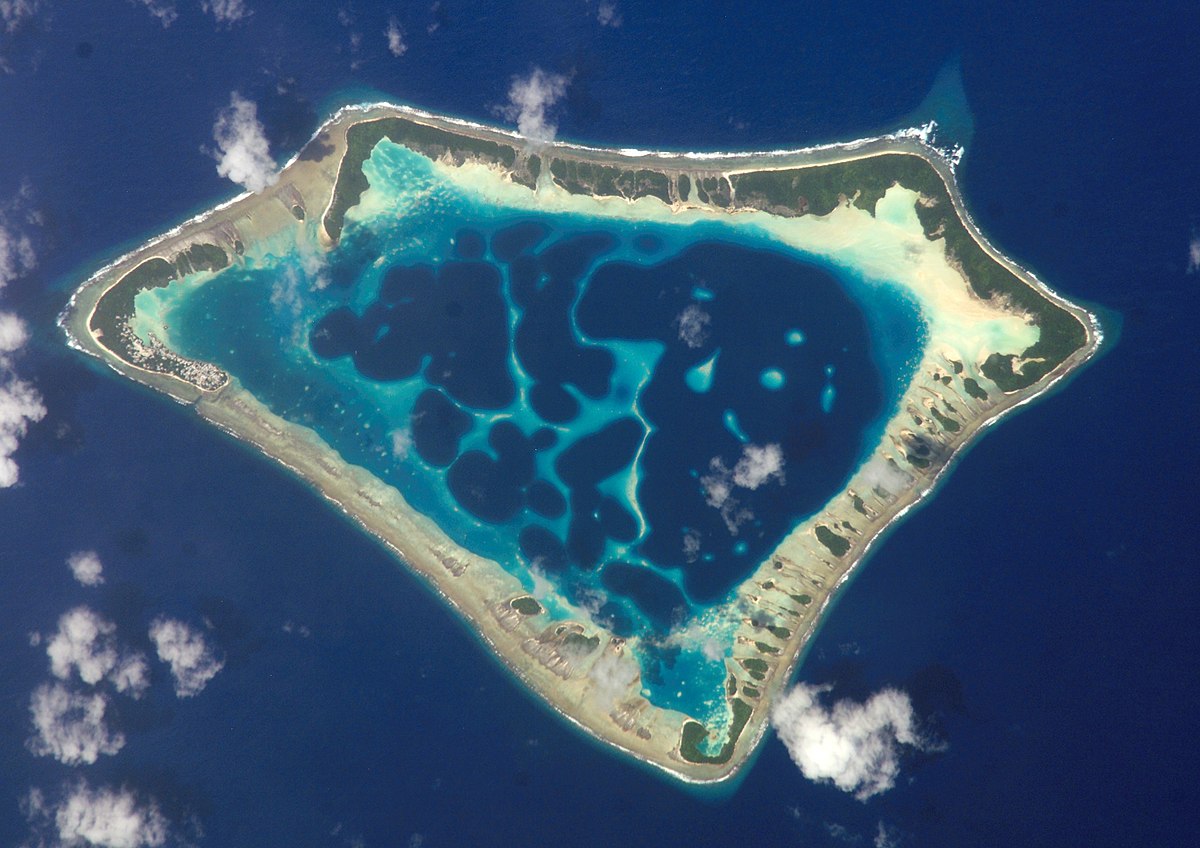
The term “atoll” typically conjures images of pristine, ring-shaped coral islands encircling turquoise lagoons – the archetypal tropical paradise. While their natural beauty is undeniable, from a technological perspective, atolls represent fascinating and challenging frontiers. These remote, often isolated landmasses serve as critical nodes for a variety of technological applications, from global communication networks to advanced environmental monitoring and sustainable energy solutions. Understanding what an atoll is, therefore, extends beyond its geological formation to encompass its role and potential within the technological ecosystem.
The Genesis of an Atoll: A Geological Foundation for Technological Innovation
Atolls are not merely random geological formations; their creation is a complex, multi-millennial process intrinsically linked to volcanic activity and sea-level changes. This geological narrative provides the foundational context for why and how technology is deployed in these specific locations.

Volcanic Foundations and Subsidence
The lifecycle of an atoll begins with a volcanic island, typically formed over a hotspot or along a mid-ocean ridge. These volcanic structures rise from the ocean floor, often to considerable heights. Over millions of years, oceanic volcanoes become extinct and begin to erode. Crucially, the underlying tectonic plate is also in motion, and the former volcanic island gradually subsides into the ocean.
Coral Reef Colonization and Growth
As the volcanic island sinks, corals, which thrive in warm, shallow, clear tropical waters, begin to colonize its slopes. These reef-building organisms, primarily polyps, secrete calcium carbonate, forming intricate structures. The reef grows upwards, keeping pace with the subsiding volcanic landmass. This continuous growth is essential; if the subsidence outpaces reef growth, the island would be submerged.
The Emergence of the Atoll Structure
The classic atoll shape – a ring of coral islands (motu) surrounding a central lagoon – emerges as the volcanic peak eventually sinks completely beneath the surface. The fringing reef solidifies, forming a barrier against the open ocean. Wave action and erosion break down parts of the reef structure, creating gaps and allowing sediment to accumulate on the reef itself. Over time, these accumulated sediments can support vegetation, forming the habitable motu that characterize atolls. The lagoon, formed within the ring, is typically shallower than the surrounding ocean and is protected from the full force of ocean waves.
Geographical Significance and Isolation
Most atolls are found in the Pacific and Indian Oceans, in areas characterized by warm ocean currents and low salinity, ideal conditions for coral growth. Their geological origins often place them in remote locations, far from continental landmasses. This geographical isolation, while contributing to their unique ecosystems, also presents significant logistical and technological challenges for connectivity, resource provision, and infrastructure development.
Atolls as Technological Hubs: Bridging the Digital Divide
The very remoteness that makes atolls ecologically precious also makes them strategic locations for certain technological deployments, particularly in bridging the digital divide and supporting global connectivity.
Submarine Cable Landing Points
Atolls, due to their stable landmasses and proximity to the deep ocean floor, often serve as crucial landing points for submarine telecommunications cables. These fiber-optic arteries are the backbone of the global internet, transmitting vast amounts of data. The construction and maintenance of these cables are highly complex technological feats, involving specialized vessels, remotely operated vehicles (ROVs), and sophisticated navigation systems. Landing a cable on an atoll requires precise engineering to ensure its security and functionality, often involving the development of robust protective infrastructure to withstand oceanic conditions.
Satellite Communication Ground Stations
In regions where terrestrial communication infrastructure is virtually non-existent, atolls can host vital satellite communication ground stations. These facilities receive and transmit signals to and from satellites, enabling communication for remote communities, maritime operations, and scientific research. The deployment of such stations demands advanced antenna technology, precise alignment systems, and reliable power sources, often requiring innovative solutions for off-grid operation. The environmental conditions on atolls – such as humidity, salt spray, and potential for extreme weather – necessitate the use of ruggedized and highly resilient equipment.

Data Centers and Edge Computing
The trend towards distributed computing and edge computing, where data processing occurs closer to the source of data generation, presents a new role for atolls. As internet of things (IoT) devices become more prevalent in maritime and environmental monitoring, processing this data locally becomes more efficient. Atolls can potentially host small-scale, highly secure data centers or edge computing facilities, powered by renewable energy, reducing latency and bandwidth requirements for data transmission back to mainlands. The design of such facilities must contend with the unique environmental challenges of atoll locations.
Environmental Monitoring and Scientific Research: Leveraging Advanced Technologies
The unique ecosystems of atolls, particularly their coral reefs, are highly sensitive to climate change and human impact. This makes them invaluable living laboratories for scientific research, demanding the application of sophisticated technological tools for data collection and analysis.
Oceanographic and Meteorological Sensors
Atolls are often equipped with a network of oceanographic and meteorological sensors. These devices collect vital data on sea surface temperature, salinity, wave height, wind speed, atmospheric pressure, and rainfall. Advanced sensor arrays, integrated with IoT platforms, can transmit real-time data to researchers globally. This data is crucial for understanding climate patterns, predicting weather events, and monitoring the health of marine ecosystems, including coral bleaching events.
Underwater Robotics and Autonomous Vehicles
To study the complex marine life and coral structures of atoll lagoons and surrounding reefs, researchers utilize a range of underwater technologies. Remotely Operated Vehicles (ROVs) and Autonomous Underwater Vehicles (AUVs) equipped with high-definition cameras, sonar, and sampling tools allow for detailed exploration and data acquisition in areas inaccessible to human divers. AI-powered image recognition software is increasingly used to analyze vast amounts of collected footage, identifying species, assessing coral health, and mapping reef structures with unprecedented accuracy.
Geospatial Technologies and Remote Sensing
Geospatial technologies, including Geographic Information Systems (GIS) and remote sensing via satellites and drones, play a crucial role in mapping and understanding atolls. High-resolution satellite imagery can monitor changes in land cover, shoreline erosion, and the extent of coral reefs. Drones equipped with specialized sensors can provide detailed topographic maps, assess vegetation health, and monitor nearshore water quality. These technologies are indispensable for conservation efforts, disaster response planning, and the sustainable management of atoll resources.
Sustainable Technology on the Edge: Powering Atolls for the Future
The inherent vulnerability of atoll environments, coupled with their isolation, drives a critical need for sustainable and resilient technological solutions, particularly in energy generation and resource management.
Renewable Energy Infrastructure
Reliance on imported fossil fuels for electricity generation is costly and environmentally damaging for atolls. Consequently, there is a significant technological push towards renewable energy sources. Solar photovoltaic (PV) systems are widely deployed, often integrated with advanced battery storage solutions to ensure a stable power supply, even during periods of low sunlight or high demand. Wind turbines, where feasible, also contribute to the energy mix. The design and implementation of these systems require specialized knowledge of off-grid power management, energy efficiency, and the impact of harsh environmental conditions on equipment longevity.
Desalination and Water Management Technologies
Freshwater scarcity is a common challenge on atolls. Advanced desalination technologies, particularly reverse osmosis (RO) powered by renewable energy, are vital for providing potable water. The efficiency and reliability of these systems are paramount. Furthermore, intelligent water management systems, employing sensors and data analytics, help to optimize water usage, detect leaks, and ensure equitable distribution within island communities.
Climate Resilience and Disaster Preparedness Technologies
Atolls are on the front lines of climate change, facing threats from sea-level rise, increased storm intensity, and ocean acidification. Technological innovations are being developed to enhance their resilience. This includes early warning systems for extreme weather events, utilizing advanced meteorological modeling and communication networks. Furthermore, innovative construction techniques and materials, informed by research into wave dynamics and coastal erosion, are being explored to build infrastructure that can better withstand the impacts of climate change. The development of digital twin models of atolls can also aid in simulating the impact of various environmental scenarios and planning effective adaptation strategies.
In conclusion, while the natural beauty of an atoll is its most immediate characteristic, its role as a technological nexus is becoming increasingly significant. From supporting global communication infrastructure to serving as critical sites for scientific research and pioneering sustainable energy solutions, atolls are at the forefront of technological innovation. The challenges presented by their isolation and environmental sensitivity spur the development of robust, resilient, and efficient technologies, making them far more than just picturesque landforms, but vital nodes in our increasingly interconnected and technologically advanced world.
aViewFromTheCave is a participant in the Amazon Services LLC Associates Program, an affiliate advertising program designed to provide a means for sites to earn advertising fees by advertising and linking to Amazon.com. Amazon, the Amazon logo, AmazonSupply, and the AmazonSupply logo are trademarks of Amazon.com, Inc. or its affiliates. As an Amazon Associate we earn affiliate commissions from qualifying purchases.