
The word “mean” is a curious linguistic chameleon, possessing a richness and complexity that often goes unexamined. In the context of our increasingly digital lives, understanding the nuances of “mean” becomes not just an academic exercise, but a crucial component of effective communication, data interpretation, and strategic decision-making. This article will delve into the multifaceted meanings of “mean,” focusing exclusively on its implications within the Tech landscape. We will explore how this seemingly simple word underpins concepts in data analysis, artificial intelligence, user experience, and even the fundamental architecture of digital information.
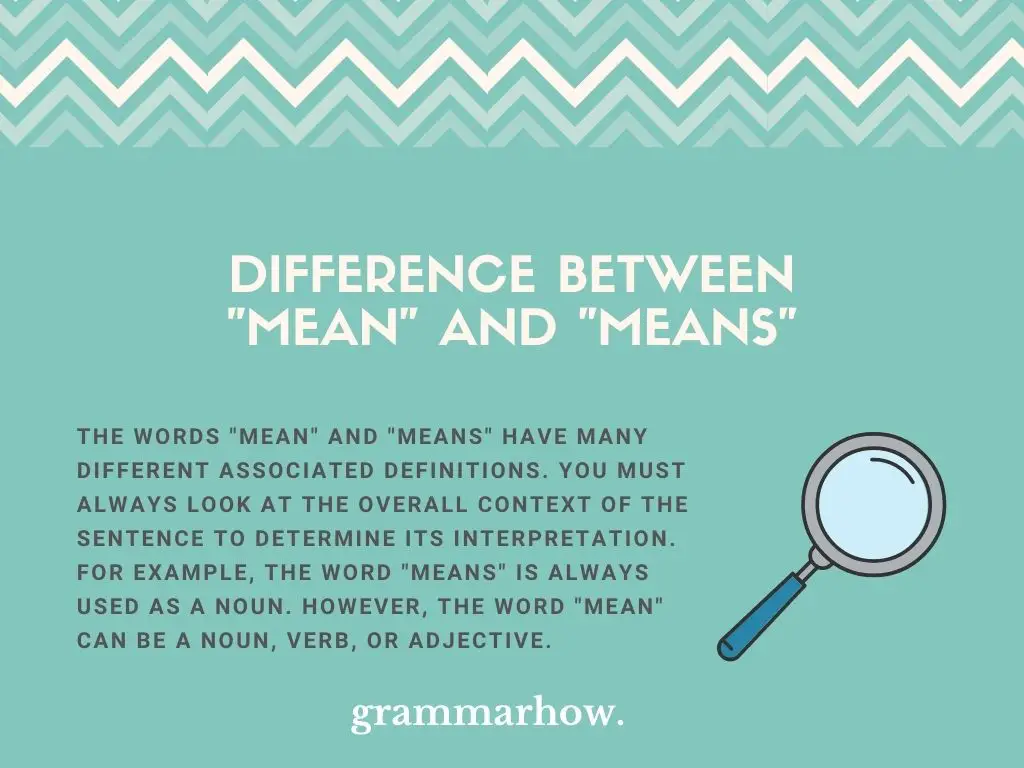
The Statistical Heartbeat: Mean as a Measure of Central Tendency
At its core, in the realm of technology and data, “mean” most prominently refers to the statistical concept of the arithmetic average. This is a foundational tool for understanding datasets, identifying trends, and making informed predictions. In tech, data is the lifeblood, and the mean serves as a vital organ for extracting meaningful insights.
Understanding the Arithmetic Mean: The Basics
The arithmetic mean is calculated by summing all the values in a set and then dividing by the number of values. For example, if we have a list of website loading times in seconds: [2.5, 3.1, 2.8, 3.5, 2.9], the sum is 14.8, and dividing by 5 gives us a mean loading time of 2.96 seconds. This simple calculation can provide a quick snapshot of performance.
Beyond the Simple Average: Weighted and Geometric Means
While the arithmetic mean is ubiquitous, tech professionals often employ more sophisticated variations.
Weighted Mean: Prioritizing Significance
A weighted mean assigns different levels of importance, or “weights,” to individual data points. In tech, this is invaluable when not all data is created equal. Consider user engagement metrics. A click on a “buy now” button might carry a much higher weight than a simple page view. If a company wants to calculate the “average” user value, they wouldn’t just sum up all interactions; they would assign higher weights to actions that directly contribute to revenue. Similarly, in machine learning, error functions are often weighted to prioritize certain types of misclassifications. For instance, in a medical diagnostic AI, misclassifying a severe illness as benign would carry a far greater weight than the reverse.
Geometric Mean: Understanding Growth and Rates
The geometric mean is particularly useful for analyzing rates of change, growth, or ratios. In tech, this is critical for tracking performance over time. Imagine a startup’s user growth over several quarters. If the growth rates are 10%, 15%, and 12%, simply averaging these might be misleading. The geometric mean accounts for compounding effects, providing a more accurate representation of the average growth rate. This is also applied in financial technology (FinTech) to understand investment performance or in network analysis to understand the average propagation speed of information.
The Algorithmic Underpinnings: Mean in AI and Machine Learning
Artificial intelligence and machine learning are heavily reliant on statistical concepts, and “mean” plays a crucial role in their development and operation. From training models to interpreting their outputs, understanding the mean is paramount.
Training Data and Model Optimization
Machine learning models learn from data. The mean is used extensively in preprocessing this data. For instance, feature scaling often involves normalizing data by subtracting the mean and dividing by the standard deviation. This ensures that features with larger scales do not disproportionately influence the model.
Feature Engineering and Selection
When building a model, developers create new features from existing ones. Calculating the mean of various data points can create new, informative features. For example, averaging sensor readings over a time window can create a feature that represents the trend or stability of a device. Furthermore, statistical tests that involve comparing means (like t-tests) are used to determine the significance of features, helping in feature selection to build more efficient models.
Loss Functions and Optimization Algorithms
In supervised learning, models aim to minimize a “loss function,” which quantifies the error between predicted and actual values. Many loss functions, such as Mean Squared Error (MSE) or Mean Absolute Error (MAE), are directly based on the concept of mean. MSE, for example, calculates the average of the squared differences between predictions and actuals. Optimization algorithms then use these mean-based loss functions to iteratively adjust model parameters, striving to find the parameters that result in the lowest possible mean error.
Interpreting AI Outputs and Performance Metrics
Once a model is trained, its performance is evaluated using various metrics, many of which are rooted in the concept of “mean.”
Accuracy, Precision, and Recall
In classification tasks, metrics like accuracy (overall correct predictions), precision (proportion of positive identifications that were actually correct), and recall (proportion of actual positives that were identified correctly) are often calculated as averages across different classes or instances. For example, macro-averaged precision calculates the precision for each class and then takes the mean of these values, giving equal weight to each class.
Confidence Intervals and Statistical Significance

When reporting model performance, it’s crucial to understand the reliability of the results. Statistical methods, often involving the mean and standard deviation, are used to calculate confidence intervals. A confidence interval provides a range within which the true performance metric is likely to lie. This allows developers to make statistically sound claims about their models’ effectiveness.
The User Experience Dialectic: Mean in Usability and Analytics
Beyond the purely technical, “mean” is also a critical concept in understanding how users interact with technology and how to improve their experience.
Measuring User Engagement and Satisfaction
Tech companies invest heavily in understanding user behavior. Metrics like average session duration, average number of actions per session, or average time spent on a specific feature all rely on calculating the mean. These figures provide a quantitative baseline for user engagement.
Averages as Benchmarks and KPIs
These mean-based metrics serve as Key Performance Indicators (KPIs). A rising average session duration might indicate increasing user engagement, while a declining average could signal potential issues. Designers and product managers use these benchmarks to evaluate the success of new features or design changes.
Identifying User Pain Points Through Deviation
While the mean provides a central tendency, analyzing deviations from the mean can be equally informative. A few users with exceptionally long session durations might be power users, but a significant number of users with very short session durations could point to a confusing interface or a lack of perceived value. Analyzing these outliers, in relation to the mean, helps pinpoint areas for improvement.
Optimizing User Interface and Interaction Design
The principles of “mean” extend to the design of interfaces themselves.
Standardizing User Expectations
UI design often strives for consistency. Elements that behave in predictable ways, based on common patterns, create a lower cognitive load for users. While not a direct calculation of “mean,” the underlying principle is to cater to the average user’s expectations and prior experiences. For example, the placement of navigation menus or the function of common icons are based on what the majority of users have come to expect, creating a statistically “mean” interaction.
A/B Testing and Iterative Design
When A/B testing different interface elements, the goal is to see which version performs better on average. Metrics like conversion rates, click-through rates, or task completion times are calculated for both versions, and the version with the statistically superior mean is chosen. This iterative process, driven by data and the analysis of means, continuously refines the user experience.
Beyond the Average: The Semantic Layers of “Mean” in Tech Discourse
While statistical and AI-related meanings dominate, the word “mean” also carries broader semantic weight within the tech industry, influencing how we talk about and understand technological concepts.
The “Meaning” of Data and Information
In a more abstract sense, data in technology is not just raw numbers; it represents information that has “meaning.” The process of analyzing data, calculating means, and drawing conclusions is an act of extracting meaning. Without the ability to assign meaning, data would be inert. The development of sophisticated analytical tools and AI algorithms is essentially about enabling machines to interpret and derive meaning from vast oceans of data.
Contextualizing Information
The “meaning” of a piece of data is often dependent on its context. The mean user engagement score for a gaming app has a different meaning than the mean engagement score for a productivity tool. Tech professionals constantly grapple with this contextualization, ensuring that data analysis and interpretation are grounded in the specific domain and user base.
The “Meaning” of Intent in User Interaction
In areas like Natural Language Processing (NLP) and sentiment analysis, understanding the “meaning” of user input is paramount. Is a user expressing frustration, seeking help, or making a purchase request? Algorithms are trained to decipher the intent behind words, and the concept of “average” or “typical” meaning is often implicitly used. For instance, a sentiment analysis model might be trained on millions of text examples, effectively learning the “mean” sentiment associated with certain phrases.
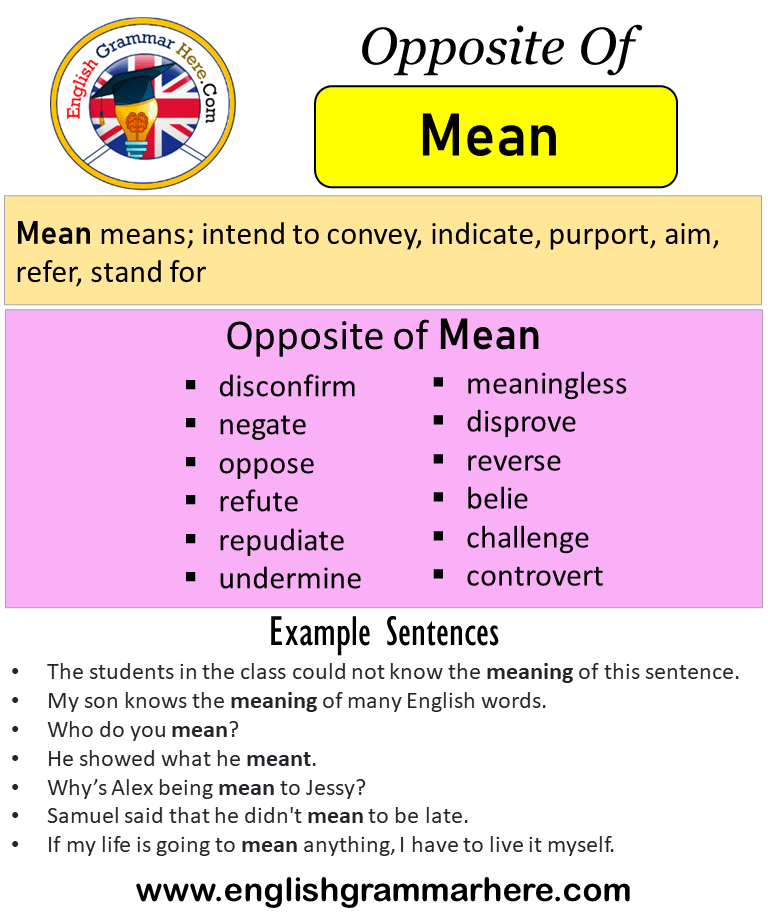
Bridging Human and Machine Understanding
The ultimate goal of much of AI research is to enable machines to understand and respond to human language and intentions with a meaning that is aligned with human comprehension. This involves not just statistical averages but a deeper, more contextual understanding of how words and phrases are used to convey meaning.
In conclusion, the word “mean” is far from a simple arithmetic calculation in the tech world. It is a foundational concept in statistical analysis, a critical component in the algorithms that power AI, and a vital metric for understanding and improving user experiences. From optimizing algorithms to interpreting user behavior, the multifaceted meanings of “mean” are woven into the very fabric of how we design, build, and interact with technology today. Recognizing and understanding these varied applications ensures more effective communication, more robust analysis, and ultimately, more impactful technological innovation.
aViewFromTheCave is a participant in the Amazon Services LLC Associates Program, an affiliate advertising program designed to provide a means for sites to earn advertising fees by advertising and linking to Amazon.com. Amazon, the Amazon logo, AmazonSupply, and the AmazonSupply logo are trademarks of Amazon.com, Inc. or its affiliates. As an Amazon Associate we earn affiliate commissions from qualifying purchases.