
In the realm of personal finance, travel is often categorized as a discretionary expense—a luxury that drains capital rather than building it. However, for the financially savvy individual, the cost of airfare is not a fixed liability but a variable that can be optimized through strategic planning, market analysis, and the clever use of financial instruments. Finding the “cheapest flights” is less about luck and more about understanding the complex economic ecosystems of the aviation industry.
To master the art of the affordable fare, one must view airfare through the lens of a financial analyst. By applying principles of arbitrage, currency management, and reward-point valuation, travelers can reduce their largest travel expenditure by 40% to 60%. This guide explores the sophisticated methodologies required to navigate the volatile pricing models of airlines and secure high-value travel for the lowest possible capital outlay.
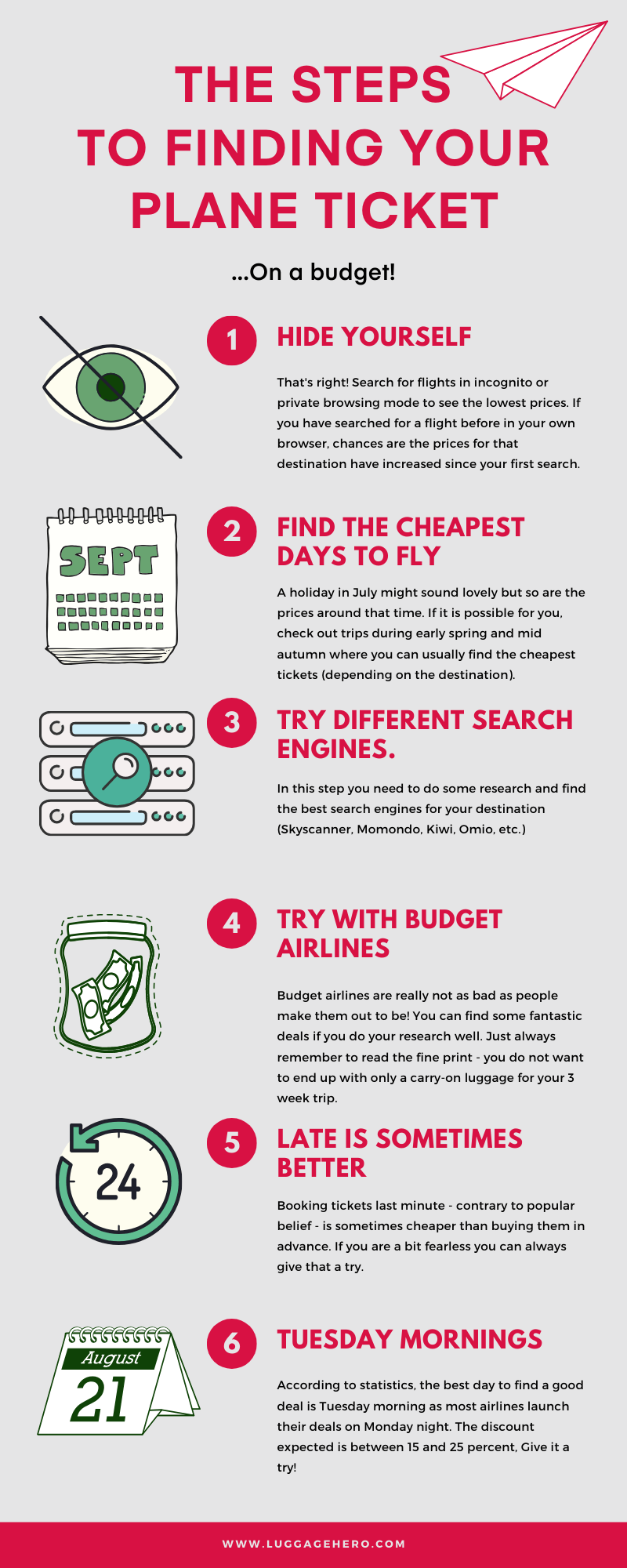
Understanding the Economics of the Aviation Industry
The first step in reducing travel costs is understanding why prices fluctuate. Airlines do not use static pricing; they employ sophisticated algorithms known as Revenue Management Systems (RMS). These systems are designed to maximize the “Yield” per seat, meaning the airline wants to charge the highest price each specific customer is willing to pay.
Dynamic Pricing and the Supply-Demand Curve
Dynamic pricing is the backbone of the airline industry. Unlike a retail store where a shirt has a fixed price, a seat on a flight from New York to London can have dozens of different price points simultaneously. This is based on real-time supply and demand data. Financial optimization in this context requires the consumer to act when the “Fare Class” is at its lowest. Airlines allocate a certain number of seats to “Economy Discount” buckets; once those are sold, the system automatically moves to a higher price tier. Understanding this curve allows a traveler to predict when the market is reaching its floor.
How Market Competition Dictates Fare Floors
The presence of Low-Cost Carriers (LCCs) in a specific market creates a “fare floor” that even legacy carriers must respect to remain competitive. From a financial perspective, identifying “hub-and-spoke” competition is vital. For example, if a budget airline launches a new route between two financial hubs, the incumbent airlines will often engage in price wars to protect their market share. By monitoring these competitive shifts, travelers can capitalize on temporary market corrections where prices drop below the actual cost of operation.
Leveraging Financial Tools and Travel Arbitrage
Modern travel hacking is an exercise in sophisticated financial management. It involves the use of credit instruments and the exploitation of price discrepancies between different markets, a practice known as arbitrage.
Maximizing the Value of Credit Card Rewards and Points
One of the most effective ways to “buy” cheap flights is to stop using cash altogether. In the world of personal finance, the “Internal Rate of Return” (IRR) on credit card spending can be significantly boosted by focusing on transferable point currencies. Instead of earning 1% or 2% cash back, savvy spenders earn points in ecosystems like Chase Ultimate Rewards, American Express Membership Rewards, or Capital One Miles.
When these points are transferred to airline partners during “Transfer Bonus” periods, the value of a single point can jump from 1 cent to 4 or 5 cents. For instance, a business-class seat that costs $4,000 might be available for 60,000 points. If those points were earned through standard organic spending, the effective cost of that “cheap” flight is essentially the opportunity cost of the cash back you didn’t take—often a fraction of the ticket’s retail value.
The Role of Multi-Currency Management in Booking
A less-discussed but highly effective strategy is “Regional Pricing Arbitrage.” Because airlines price their tickets based on the point of sale (POS), a flight booked in US Dollars (USD) on a .com site may be more expensive than the exact same flight booked in a local currency (like the Turkish Lira or Colombian Peso) on the airline’s regional site.
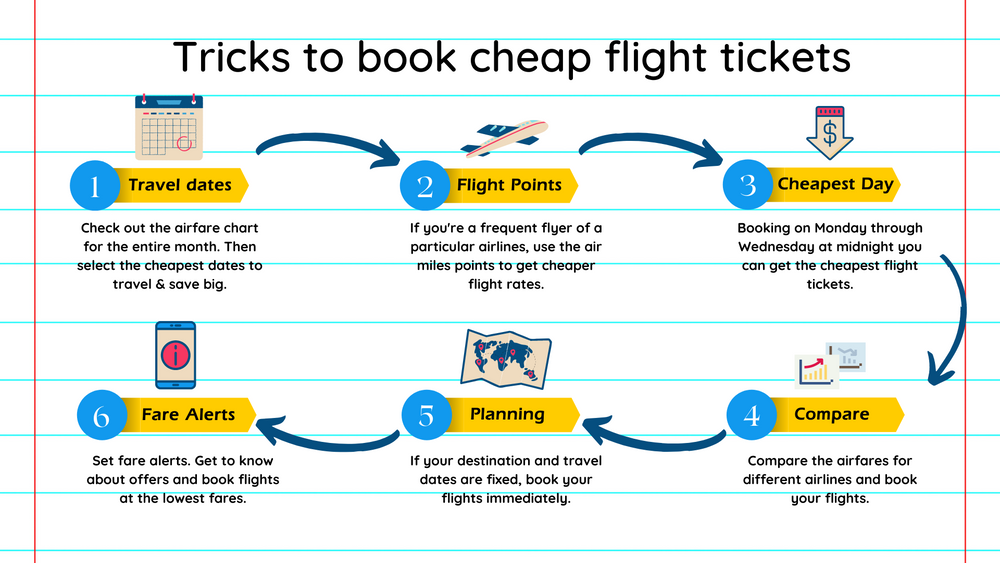
By using a credit card with no foreign transaction fees and a VPN to simulate a local IP address, travelers can sometimes find “currency devaluations” that the airline’s pricing algorithm hasn’t yet corrected. This is a form of currency arbitrage that can shave 10% to 15% off the total cost of a long-haul flight.
Strategic Budgeting and Timing for High-ROI Travel
In finance, timing is everything. The same applies to airfare. However, the old myths of “booking on a Tuesday at midnight” have been debunked by data science. Instead, travelers should focus on broader cyclical trends and the “Time-Value of Money.”
The Cost-Benefit Analysis of Seasonal Travel
The most significant variable in flight pricing is seasonality. Traveling during “shoulder season”—the period between peak and off-peak—offers the highest Return on Investment (ROI). From a financial standpoint, the utility of the trip remains high (good weather, open attractions), while the cost is significantly depressed. By analyzing historical price data through tools like Google Flights or ITA Matrix, one can identify the specific week where prices plummet before the weather turns, allowing for a premium experience at a budget price.
Implementing the “Error Fare” Strategy as a Financial Side-Hustle
Every so often, a technical glitch or human error results in an “Error Fare”—a ticket sold for a fraction of its intended price (e.g., a $1,200 flight sold for $120). While these are rare, they represent the ultimate “buy low” opportunity. Financial discipline in this area requires “liquidity readiness.” Because error fares are usually corrected within hours, a traveler must have the funds available to book immediately. Treating these opportunities like a “limit order” in the stock market—having a pre-set price at which you are willing to execute a “buy”—is the key to securing these extreme anomalies.
Advanced Cost-Saving Frameworks: Beyond the Search Engine
To truly minimize costs, one must look beyond the first page of search results and understand the structural nuances of how tickets are constructed.
Evaluating the Impact of Low-Cost Carriers on Long-Term Savings
While Low-Cost Carriers (LCCs) like Ryanair, Spirit, or AirAsia offer low base fares, they often come with a “Total Cost of Ownership” (TCO) that includes baggage fees, seat selection, and boarding passes. A disciplined financial approach involves calculating the “all-in” cost. Sometimes, a $200 legacy carrier ticket is cheaper than a $50 LCC ticket once you account for the $160 in ancillary fees. Developing a spreadsheet to compare these TCOs ensures that your “cheap” flight doesn’t end up being a budget-buster.
Hidden City Ticketing and Risk Assessment
“Hidden City Ticketing” is a controversial but effective strategy used by those who understand the “Point-to-Point” vs. “Hub-and-Spoke” pricing models. This involves booking a flight with a layover in your actual destination and simply walking out of the airport at the layover point. For example, a flight from New York to Los Angeles might be $300, but a flight from New York to San Francisco with a layover in Los Angeles might be $150.
From a risk management perspective, this strategy requires caution. It violates the “Contract of Carriage” of most airlines and can result in the forfeiture of frequent flyer miles or the cancellation of the return leg of the trip. A sophisticated traveler must weigh the immediate financial gain against the potential long-term loss of brand loyalty benefits.

Conclusion: The Compounding Effect of Travel Savings
Finding the cheapest flights is not merely a way to save a few hundred dollars; it is a fundamental component of a comprehensive wealth-management strategy. By reducing the capital required for travel, individuals can reallocate those funds into income-generating assets or higher-quality experiences.
The aviation market is a complex, data-driven environment that rewards those who approach it with analytical rigor. By treating flight booking as a financial puzzle—leveraging points, understanding dynamic pricing, and utilizing regional arbitrage—you transform a standard expense into a masterclass in capital efficiency. In the long run, the thousands of dollars saved on airfare, when invested wisely, can significantly accelerate one’s path to financial independence. Travel, when optimized, is no longer a drain on wealth—it is a byproduct of its efficient management.
aViewFromTheCave is a participant in the Amazon Services LLC Associates Program, an affiliate advertising program designed to provide a means for sites to earn advertising fees by advertising and linking to Amazon.com. Amazon, the Amazon logo, AmazonSupply, and the AmazonSupply logo are trademarks of Amazon.com, Inc. or its affiliates. As an Amazon Associate we earn affiliate commissions from qualifying purchases.