
In the realm of personal finance, travel is often categorized as a discretionary expense that threatens long-term savings goals. However, the modern financial strategist views airfare not as a fixed cost, but as a volatile commodity subject to market fluctuations, algorithmic shifts, and arbitrage opportunities. Finding cheap airfare is no longer a matter of “luck” or “clever hacks”; it is a discipline of financial optimization. By applying the principles of market analysis and strategic spending, travelers can significantly reduce their capital outlay, ensuring that their wanderlust does not compromise their broader wealth-building objectives.
The Macroeconomics of the Modern Flight Market
To navigate the airfare market effectively, one must first understand the economic principles that govern it. Airlines do not price their seats based on the cost of the service provided, but rather on “yield management”—a complex system designed to extract the maximum amount of revenue from every individual passenger.
Understanding Dynamic Pricing and Yield Management
Airlines utilize sophisticated algorithms to adjust prices in real-time based on supply, demand, and competitor behavior. This is known as dynamic pricing. From a financial perspective, an airplane seat is a “perishable commodity.” Once the cabin door closes and the plane departs, the value of any empty seat drops to zero. Consequently, airlines are in a constant state of price calibration: they charge a premium to corporate travelers who require flexibility and last-minute bookings, while offering lower rates to price-sensitive leisure travelers who book in advance. To find cheap airfare, the consumer must position themselves in the “leisure” segment of the algorithm, signaling to the airline’s software that they are price-elastic and willing to walk away if the cost is too high.
The Time vs. Money Trade-off
In personal finance, time is often equated with money. When searching for airfare, this trade-off becomes tangible. Direct flights are a premium product because they save time, whereas layovers and “self-transfer” itineraries represent a form of “sweat equity” in travel. By opting for a 15-hour journey with a stopover instead of a 7-hour direct flight, a traveler is essentially “selling” their time back to the airline in exchange for a lower price. For the savvy investor, calculating the hourly rate of this savings is crucial. If a layover saves $400 but adds 4 hours to the journey, the traveler is earning $100 per hour (tax-free) for their time—a rate that often exceeds many professional salaries.
Leveraging Financial Tools and Digital Ecosystems
Success in the airfare market requires the use of high-leverage tools that aggregate data and provide market transparency. Just as a day trader uses a terminal to monitor stock prices, a strategic traveler must use digital ecosystems to identify price anomalies and historical lows.
Strategic Use of Aggregators for Market Comparison
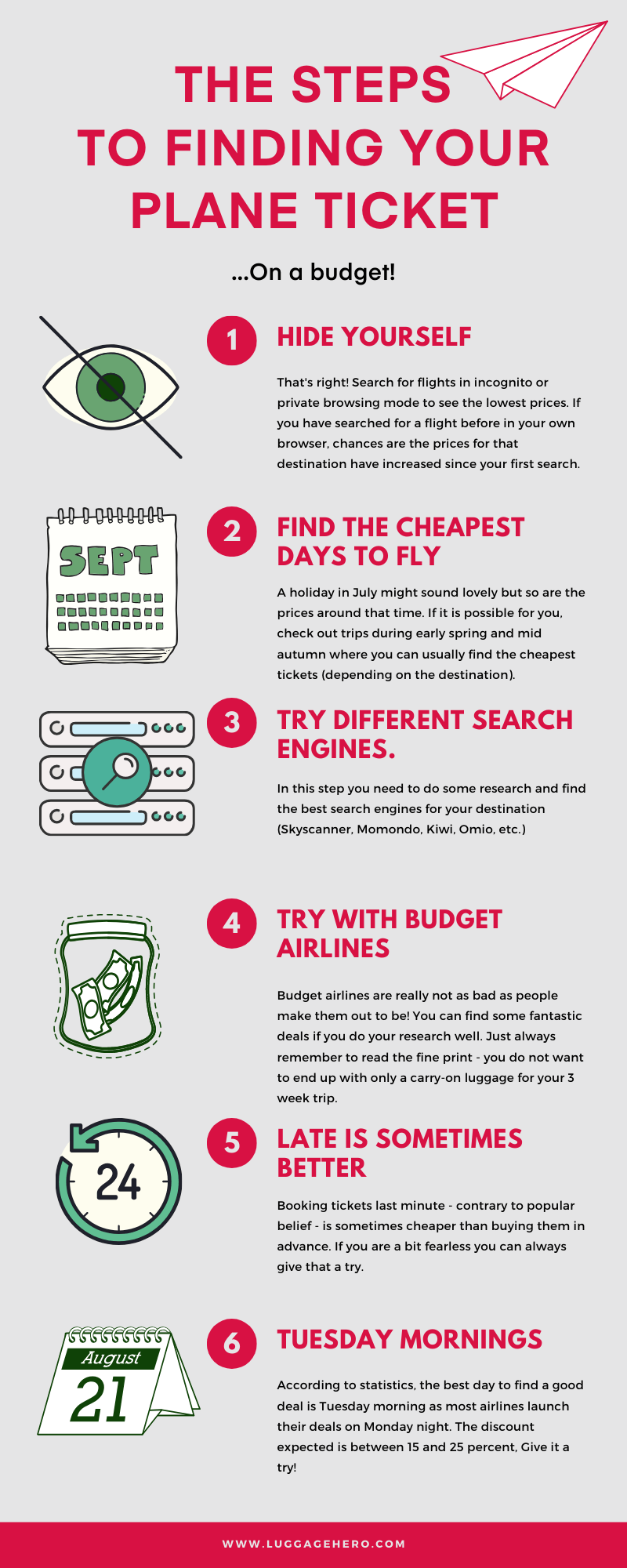
Financial transparency is the enemy of high margins. Airlines prefer that consumers book directly on their websites, where cross-comparison is impossible. To counter this, financial-minded travelers must use meta-search engines and aggregators. These tools function as a centralized exchange, allowing for a comprehensive view of the global inventory. However, the professional approach involves using these tools not just for a one-time search, but for setting “price alerts.” By establishing a baseline price for a specific route, a traveler can wait for a “dip” in the market—much like a limit order in stock trading—executing the purchase only when the price hits a predetermined threshold.
The Role of Currency Arbitrage in Booking
A less-discussed but highly effective strategy in finding cheap airfare is currency arbitrage. Prices for the exact same flight can vary significantly depending on the point of sale (POS) and the currency used for the transaction. By using a Virtual Private Network (VPN) or switching the regional settings on an airline’s website, travelers can sometimes find lower rates in the airline’s home currency or in a currency currently experiencing a dip against the traveler’s home denomination. When combined with a credit card that offers zero foreign transaction fees, this strategy allows the consumer to exploit global currency fluctuations to shave 5% to 15% off the total cost of a ticket.
Credit Card Rewards and Point Valuation

In the ecosystem of personal finance, travel rewards and “points” are a secondary currency. For many high-net-worth individuals and corporate professionals, airfare is not paid for in cash, but in loyalty assets.
Maximizing the Return on Spend
Every dollar spent on daily necessities—groceries, utilities, business expenses—can be leveraged to subsidize future travel. By utilizing credit cards with high-multiplier categories (e.g., 3x or 4x points on dining), a traveler is essentially receiving a “rebate” on their living expenses. This rebate, when funneled into travel, represents a significant improvement in the ROI of their monthly budget. The goal is to move from a “cash-pay” model to a “points-funded” model, where the actual cost of the airfare is reduced to the mandatory taxes and fees.
Transfer Partners: Converting Points into Liquid Value
The true financial power of travel rewards lies in “transferable points.” Programs that allow users to move points from a banking partner (like Chase or Amex) to an airline partner (like Emirates or British Airways) offer the highest valuation. In the world of travel finance, this is known as “redemption value.” While a point might be worth 1 cent when used to pay for a flight directly on a bank portal, it could be worth 3 to 7 cents when transferred to an airline for a premium cabin booking. Mastering these conversion rates is equivalent to finding an undervalued asset and realizing its full potential through a strategic sale.
Strategic Timing and Behavioral Finance
Behavioral finance teaches us that human psychology often leads to poor financial decisions. In travel, this manifests as “panic booking” or falling prey to false scarcity. Finding cheap airfare requires a disciplined, emotionless approach to the calendar.
The “Goldilocks” Window and Seasonal Hedging
Market data suggests that there is a “Goldilocks” window for booking—neither too early nor too late. For domestic flights, this is typically 1 to 3 months out; for international travel, 2 to 8 months. Booking a year in advance is often a mistake, as airlines have not yet released their discount buckets. Conversely, booking last-minute puts the traveler at the mercy of the airline’s “urgent need” pricing. Furthermore, a savvy financial planner looks for “shoulder seasons”—the periods between peak and off-peak travel. By traveling when the majority of the market is stagnant (e.g., visiting Europe in October rather than July), one can capitalize on lower demand and significantly reduced overhead.
Hidden City Ticketing and Risk Assessment
For the advanced travel strategist, “hidden city ticketing” represents a form of market loophole. This involves booking a flight where the traveler’s desired destination is actually a layover, and the final destination is a different city. Often, this “throwaway” itinerary is cheaper than a direct flight to the layover city. However, from a business finance perspective, this carries risks: it can violate airline terms of service and precludes the checking of luggage. A professional must conduct a cost-benefit analysis to determine if the financial savings outweigh the potential risk to their loyalty accounts or travel logistics.
Long-Term Financial Planning for Travel
Ultimately, the ability to find and book cheap airfare is a component of a larger financial plan. Travel should not be an impulsive drain on wealth, but a planned expenditure that is optimized at every turn.
Sinking Funds and Automated Savings
Instead of relying on credit card debt or fluctuating monthly income to pay for flights, high-performing individuals use “sinking funds.” This involves setting aside a fixed amount of capital each month into a high-yield savings account specifically earmarked for travel. When a “market dip” occurs (a flash sale or a mistake fare), the capital is already liquid and ready to be deployed. This eliminates the “financing cost” of travel—the interest one might pay if they were to carry a balance on a credit card.

The Cost of Opportunity: When to Buy vs. When to Wait
The final pillar of airfare finance is the concept of opportunity cost. There is a point where the effort spent searching for a $50 saving is no longer worth the “labor cost” of the search. A professional knows their “buy price.” If a flight from New York to London is listed at $450, and the historical average is $650, the strategist buys immediately. They do not waste time hoping for a $400 fare that may never materialize. This “satisficing” approach ensures that the traveler secures a great deal without succumbing to the paralysis of over-analysis.
In conclusion, finding cheap airfare is an exercise in sophisticated financial management. By understanding market dynamics, leveraging digital tools, maximizing credit card ecosystems, and maintaining psychological discipline, the modern traveler can explore the world without depleting their net worth. In the game of travel, those who understand the math always fly for less.
aViewFromTheCave is a participant in the Amazon Services LLC Associates Program, an affiliate advertising program designed to provide a means for sites to earn advertising fees by advertising and linking to Amazon.com. Amazon, the Amazon logo, AmazonSupply, and the AmazonSupply logo are trademarks of Amazon.com, Inc. or its affiliates. As an Amazon Associate we earn affiliate commissions from qualifying purchases.