
The question “What did Muhammad build?” is deceptively simple, yet it probes the very foundations of one of the world’s largest and most influential religions. Beyond the purely spiritual, the legacy of Muhammad, the Prophet of Islam, extends into the realms of societal structure, ethical frameworks, and a powerful, enduring “brand” that has shaped civilizations for over fourteen centuries. This article will explore the multifaceted dimensions of what Muhammad built, focusing on the indelible mark he left on the world not just as a religious figure, but as a visionary leader whose actions and teachings established a comprehensive way of life. We will delve into the core tenets of this legacy, the organizational prowess required for its propagation, and the adaptive nature of its branding that allows it to thrive across diverse cultures and eras.

The Foundational Pillars: Establishing a Unifying Ideology
At its core, the “brand” of Muhammad was built upon a radical and unifying ideology that offered a profound reorientation of individual lives and collective societies. This was not merely a set of rituals, but a comprehensive worldview that addressed every facet of human existence, from personal morality to governance. The successful establishment of this ideology required a clear articulation of core principles, a compelling narrative, and a consistent demonstration of their efficacy.
The Shahada: The Cornerstone of Belief and Identity
The bedrock of the brand Muhammad built is the Shahada, the declaration of faith: “There is no god but Allah, and Muhammad is his messenger.” This single statement is a powerful brand differentiator. It establishes the absolute monotheism that underpins Islam, a stark contrast to the polytheistic societies of 7th-century Arabia. More importantly, it positions Muhammad not as divine, but as the conduit, the ultimate messenger, a human exemplar whose life and teachings are to be followed. This positioning is crucial for the brand’s accessibility and its emphasis on human agency within a divinely guided framework. It provided a clear identity marker, a shared purpose that transcended tribal loyalties and fostered a nascent sense of community.
The Quran: The Canonical Brand Guide
The Quran, believed by Muslims to be the literal word of God revealed to Muhammad, serves as the ultimate brand guide. Its eloquence, comprehensive nature, and perceived divine origin provided an unassailable authority for the teachings and practices promoted under Muhammad’s leadership. The very act of revelation and compilation of the Quran was a monumental undertaking, akin to establishing a definitive brand manifesto. It offered not just spiritual guidance but also legal, ethical, and social frameworks, making it a holistic blueprint for life. The consistency and internal coherence of the Quran allowed for its widespread dissemination and memorization, ensuring the brand’s message remained pure and accessible, even before widespread literacy and advanced communication technologies.
The Sunnah: The Practical Application of the Brand
If the Quran is the manifesto, then the Sunnah – the practices, sayings, and silent approvals of Prophet Muhammad – is the product demonstration. The Sunnah provided the practical, actionable interpretation of the Quranic principles. Through his own life, Muhammad exemplified the teachings he conveyed. His conduct in personal matters, his leadership in battles, his dealings with adversaries, his generosity, and his compassion all served as tangible evidence of the brand’s values in action. This practical application was critical for building trust and encouraging adoption. Followers could observe the tangible benefits and ethical superiority of the principles being promoted, making the brand relatable and aspirational. The Sunnah essentially provided a living case study for the entire ideology, proving its viability and effectiveness in the real world.
Building a Community: Organizational Structures and Social Engineering
The brand Muhammad built was not confined to individual belief; it was intrinsically linked to the creation of a new socio-political order. This required significant organizational effort and a sophisticated understanding of community building, akin to establishing robust corporate structures and fostering a loyal customer base.
The Ummah: A Unified Collective Identity
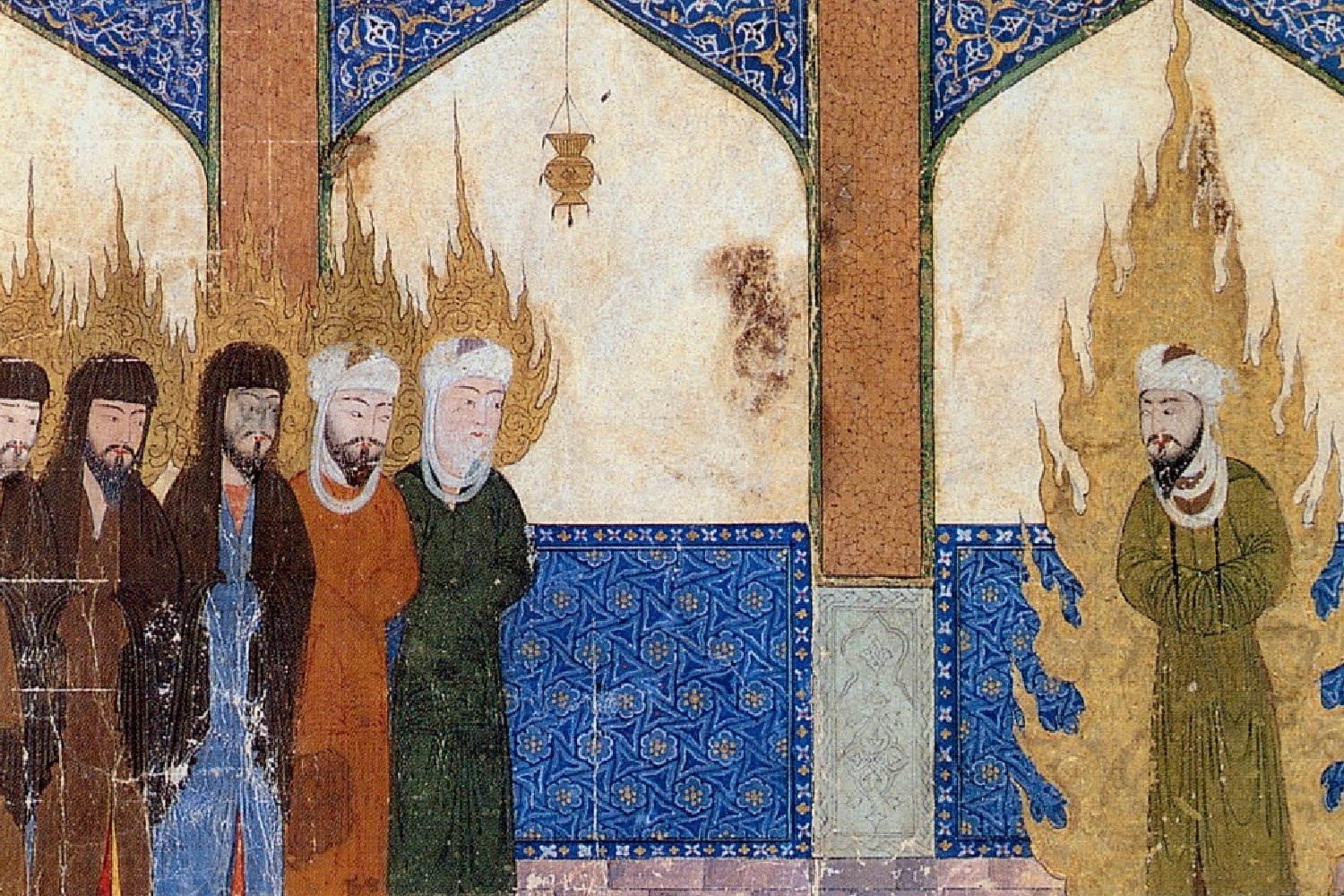
One of Muhammad’s most profound achievements was the creation of the Ummah, a unified community of believers transcending tribal, ethnic, and social divisions. This was a revolutionary concept in pre-Islamic Arabia, where tribal affiliations were paramount. By establishing the Ummah, Muhammad effectively built a new “customer segment” – a distinct group united by shared beliefs and a common purpose, loyal to the brand of Islam. This organizational innovation fostered mutual support, collective responsibility, and a shared destiny. The Ummah provided a powerful social network and a mechanism for the propagation and defense of the brand. It ensured that the ideology was not just adopted individually but lived collectively, strengthening its impact and resilience.
Medina: The Corporate Headquarters and Launchpad
The Hijra (migration) to Medina marked a pivotal moment in the brand’s development. Medina became the de facto headquarters, the launchpad for the nascent Islamic state. Here, Muhammad transitioned from a persecuted prophet to a statesman and leader of a burgeoning society. He established institutions, drafted constitutions (such as the Constitution of Medina), and laid the groundwork for a governance system based on Islamic principles. This period saw the practical implementation of the brand’s social and legal tenets, demonstrating its capacity to govern and organize a complex society. The success in Medina served as a powerful testament to the brand’s efficacy and attractiveness, drawing in new adherents and solidifying the loyalty of existing ones.
Early Governance and Justice: Operationalizing the Brand Values
Muhammad’s approach to governance and justice was integral to the brand’s appeal. He emphasized fairness, compassion, and the equitable distribution of resources. His rulings and administrative decisions, documented in the Sunnah, provided a model for ethical leadership and justice. He established systems for dispute resolution, charity, and the protection of rights. This operationalization of the brand’s values demonstrated a commitment to creating a just and prosperous society, making Islam not just a spiritual pursuit but a practical solution for social betterment. This focus on justice and equitable treatment was a key element in solidifying the brand’s positive reputation and attracting diverse populations.
The Enduring Brand Appeal: Adaptability and Global Reach
The success of the brand Muhammad built cannot be measured solely by its initial impact; its enduring appeal and global reach across centuries and diverse cultures are testaments to its inherent strength and adaptability. This aspect of the brand’s success lies in its ability to resonate with fundamental human needs and aspirations while allowing for contextual interpretation.
Universal Principles: Tapping into Core Human Values
The core tenets of Islam, as articulated and exemplified by Muhammad, address universal human concerns: the search for meaning, the desire for justice, the need for community, and the aspiration for ethical conduct. The emphasis on submission to a higher power, accountability, compassion, and the pursuit of knowledge transcends cultural boundaries. These principles form the timeless appeal of the brand, allowing it to connect with individuals from vastly different backgrounds. By offering answers to existential questions and a moral compass, the brand provided a framework for individuals to navigate life with purpose and integrity.
Adaptability and Interpretation: A Living Brand
A key factor in the brand’s longevity is its inherent adaptability. While the core principles are immutable, their application and interpretation have evolved to suit different cultural contexts and historical periods. The Sunnah provides a framework, but not a rigid, unchangeable blueprint for every situation. This flexibility has allowed Islam to thrive in diverse societies, from the arid deserts of Arabia to the bustling metropolises of the modern world. Scholars and communities have continuously engaged with the foundational texts, interpreting them in ways that remain relevant to their contemporary challenges. This dynamic aspect ensures the brand remains a living entity, capable of addressing new questions and evolving societal needs.

The Power of Legacy and Continuous Reinforcement
The brand of Muhammad has been continuously reinforced through generations of scholarship, devotional practice, and the lived experiences of billions of adherents. The vast corpus of Islamic literature, art, and architecture, all stemming from the initial vision, serves as constant reminders and elaborations of the brand’s core values. The stories of the Prophet, passed down through oral tradition and written works, continue to inspire and guide. This ongoing process of cultural production and transmission ensures that the brand remains vibrant and relevant, a legacy that continues to be actively shaped and celebrated by its followers worldwide. The very act of engaging with the history and teachings of Muhammad is an act of reinforcing this enduring brand.
In conclusion, what Muhammad built was far more than a religious movement; he established a comprehensive and profoundly influential “brand” of living. From the foundational articulation of a singular belief system and its authoritative guide in the Quran, to the practical demonstration through the Sunnah, he laid the groundwork for a transformative ideology. His organizational genius in fostering the Ummah and establishing a functional society in Medina, coupled with the universal appeal and inherent adaptability of Islamic principles, has ensured the enduring legacy of his brand. The “brand” of Muhammad continues to shape lives, inspire communities, and offer a profound framework for human existence, a testament to the enduring power of his vision and leadership.
aViewFromTheCave is a participant in the Amazon Services LLC Associates Program, an affiliate advertising program designed to provide a means for sites to earn advertising fees by advertising and linking to Amazon.com. Amazon, the Amazon logo, AmazonSupply, and the AmazonSupply logo are trademarks of Amazon.com, Inc. or its affiliates. As an Amazon Associate we earn affiliate commissions from qualifying purchases.