
In the world of personal finance, few instruments carry as much weight and reliability as a cashier’s check. Whether you are closing on a new home, purchasing a vehicle from a private seller, or making a significant deposit on a commercial lease, the cashier’s check remains the gold standard for secure, high-value transactions. However, this security comes with a price tag. Unlike personal checks, which are often provided for free or at a nominal cost for a book of fifty, cashier’s checks involve administrative processing and a financial guarantee from the bank itself.
Understanding the costs associated with cashier’s checks is essential for effective financial planning. While the fee might seem like a small detail in the context of a five-figure purchase, knowing where to find the best rates—and how to potentially waive those fees entirely—can save you time and money.
Understanding the Standard Fees for Cashier’s Checks
When you request a cashier’s check, you are asking the bank to assume the risk of the payment. Because the bank draws the funds from its own account (after first withdrawing them from yours), the check is guaranteed not to bounce. This administrative labor and the transfer of liability are what drive the service fees.
Typical Fees at Major National Banks
Most large, brick-and-mortar financial institutions in the United States charge a flat fee for issuing a cashier’s check. On average, you can expect to pay between $10 and $15 per check. For example, major players like Chase, Bank of America, and Wells Fargo generally hover around the $15 mark for standard account holders. These fees are typically deducted directly from your checking or savings account at the moment the check is printed.
Credit Union Pricing Structures
Credit unions are member-owned cooperatives, which often allows them to offer lower fees than commercial banks. In many cases, credit unions charge between $2 and $10 for a cashier’s check (often referred to as an “official check” in the credit union world). Some smaller, community-focused credit unions may even provide one or two checks per month for free as a benefit of membership, making them a highly cost-effective option for large transactions.
The Variance of Online Banking Fees
Online-only banks present a mixed bag when it comes to cashier’s checks. Because they lack physical branches, the process involves ordering the check through a digital portal and having it mailed to you. Some online banks, such as Ally or Capital One, may offer cashier’s checks for free or for a low fee (around $10), but you must account for the time it takes for the check to arrive via mail. If you require a check immediately for a closing, an online bank may not be the most practical choice regardless of the cost.
Factors That Influence the Total Cost
The sticker price of a cashier’s check is rarely the only factor to consider. Several variables can increase the total expense or, conversely, bring the cost down to zero.
Account Type and Membership Status
One of the most significant factors in determining your fee is the “tier” of your banking relationship. Most major banks offer “Premium” or “Gold” checking accounts that require a high minimum balance or a certain level of monthly direct deposits. One of the common perks of these accounts is the waiver of fees for cashier’s checks, money orders, and wire transfers. If you maintain a high balance, you may be paying for this service through the opportunity cost of lower interest rates rather than a direct fee.
Delivery and Handling Charges
If you are unable to visit a branch in person, you might request that the bank mail the cashier’s check to you or directly to the recipient. While the issuance fee might be $10, expedited shipping—such as overnight via FedEx or UPS—can add an additional $15 to $30 to the total cost. When timing is critical, these logistical fees can quickly surpass the cost of the check itself.
Non-Customer Surcharges
It is increasingly rare for a bank to issue a cashier’s check to someone who does not hold an account at that institution. If you do find a bank willing to provide this service to a non-customer, expect to pay a premium. These “convenience fees” can range from $20 to $25, and you will likely be required to provide the full amount of the check in cash plus the fee.
Comparing Cashier’s Checks with Other Payment Methods
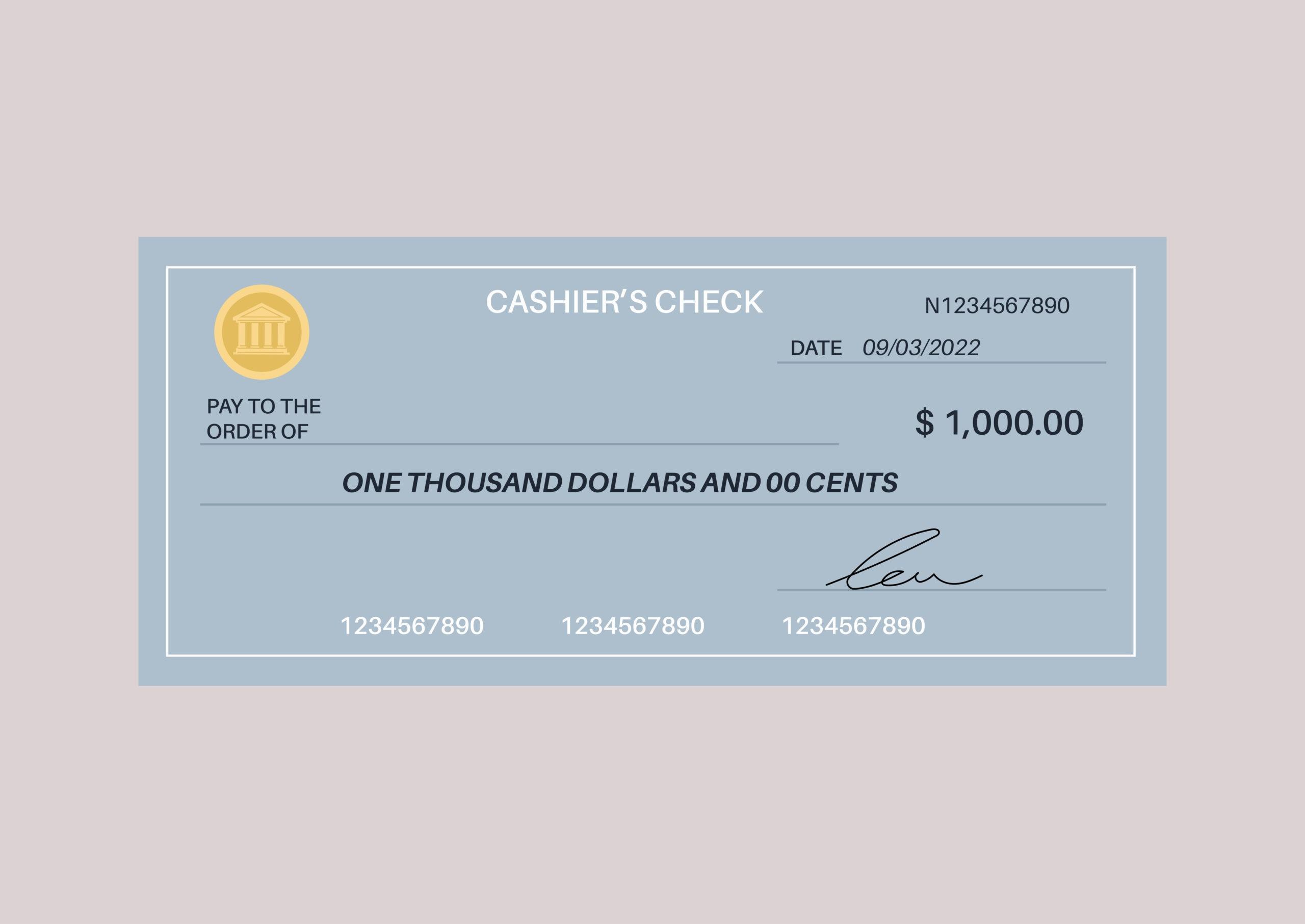
To understand if a cashier’s check is worth the cost, it is helpful to compare it against other common financial tools used for secure payments. Depending on the amount and the recipient’s requirements, you might find a more economical alternative.
Cashier’s Checks vs. Money Orders
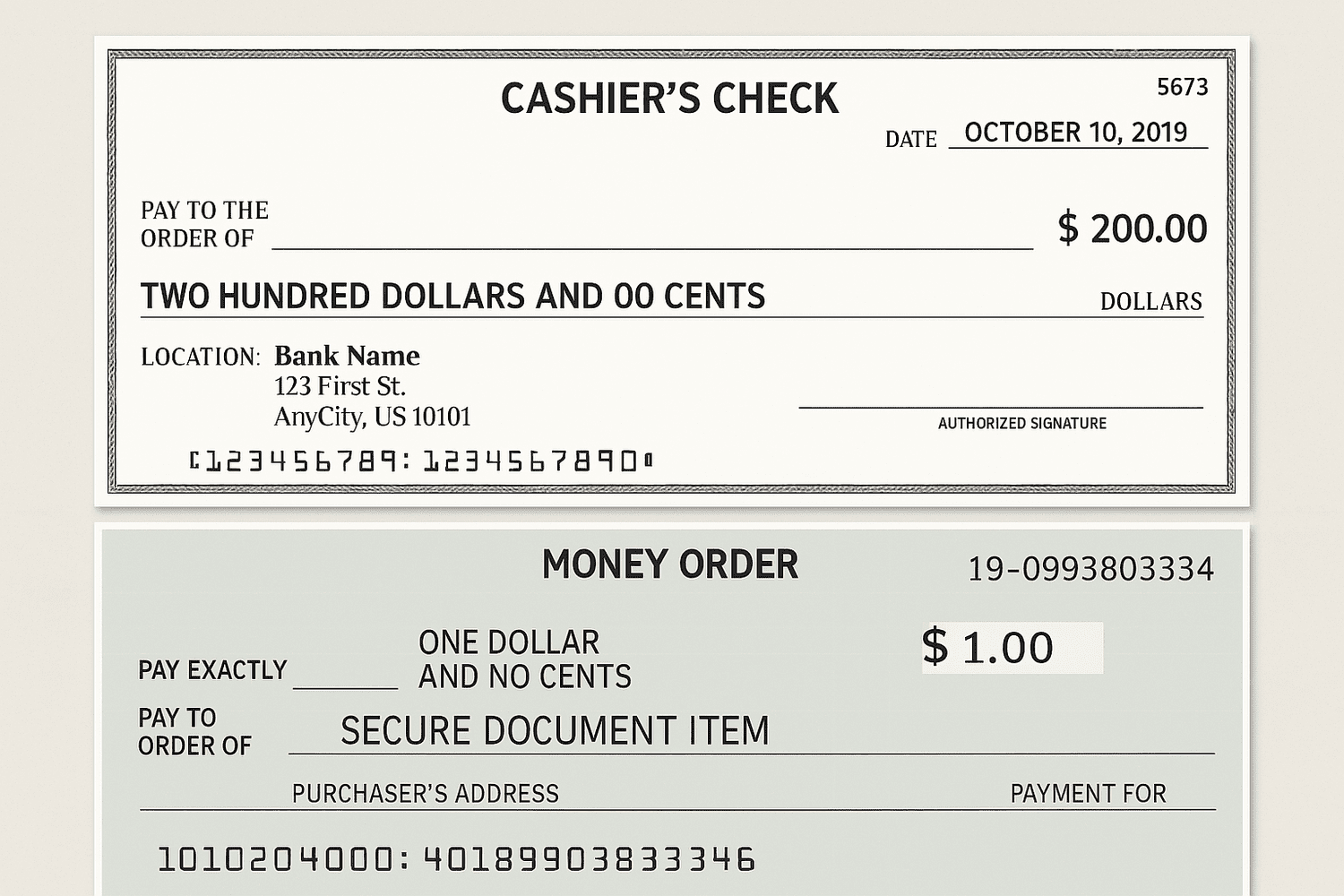
Money orders are often the go-to alternative for smaller amounts. They are widely available at post offices, grocery stores, and pharmacies for a fraction of the cost—usually between $1.00 and $2.00. However, money orders have a major limitation: they are typically capped at $1,000 per check. If you need to pay $5,000, purchasing five money orders might be cheaper than one cashier’s check, but many sellers (like title companies) will not accept multiple money orders due to the increased risk of fraud and the administrative burden of processing them.
Cashier’s Checks vs. Certified Checks
While often used interchangeably, a certified check is slightly different. With a certified check, the bank “certifies” that your signature is genuine and that the funds are currently in your account. The bank then places a “hold” on those funds. The fee for a certified check is generally similar to a cashier’s check ($10–$15), but cashier’s checks are more commonly accepted in high-stakes transactions because the funds are moved into the bank’s own account, offering a higher level of security for the payee.
The Wire Transfer Alternative
For very large sums, such as the down payment on a home, many professionals prefer wire transfers over cashier’s checks. Wire transfers are near-instantaneous and move electronically between banks. However, they are significantly more expensive, typically costing between $25 and $50 for domestic transfers. If your primary goal is to save money and the recipient allows for a physical check, the $15 cashier’s check is the more budget-friendly option.
How to Get a Cashier’s Check for Free or Cheap
If you find yourself needing cashier’s checks frequently, or if you simply want to avoid the $15 fee on principle, there are several strategies to minimize the hit to your wallet.
Leveraging Premium Banking Tiers
If you have a significant amount of savings spread across different accounts, it may be worth consolidating them into a single institution to reach “Preferred” or “Premier” status. Most banks provide a list of fee-free services for these clients. Before you request a check, ask the teller if your account qualifies for a fee waiver; sometimes, a simple account upgrade (if you already meet the balance requirements) can save you the fee instantly.
The Credit Union Advantage
As mentioned earlier, credit unions are almost always cheaper. If you are not a member of a credit union, it might be worth opening a basic savings account with a small deposit just to have access to their lower-cost financial products. Over several years, the savings on cashier’s checks, notary services, and lower interest rates on loans can be substantial.
Negotiating at the Branch
While bank fees are often hard-coded into the system, branch managers often have the discretion to waive small fees for loyal customers. If you have been with a bank for many years and this is your first time needing a cashier’s check, it never hurts to politely ask: “Is there any way to waive this fee for a long-time customer?” While not guaranteed, this approach works surprisingly often.
Security, Practicality, and Avoiding Common Pitfalls
Beyond the cost, there are practical considerations you must keep in mind when dealing with cashier’s checks. Because they are treated almost like cash, losing one can be a financial nightmare.
Protecting Your Investment
Once a cashier’s check is issued, the money is gone from your account. If the check is lost or stolen, getting your money back is not as simple as “stopping payment” on a personal check. Most banks will require you to purchase an indemnity bond from an insurance company, which ensures the bank doesn’t lose money if both the original and the replacement check are cashed. This bond can be expensive and the process can take 30 to 90 days to resolve. Always keep your receipt and a digital scan of the check until you are certain the payee has deposited it.
Identifying Cashier’s Check Scams
The very “guarantee” that makes cashier’s checks valuable also makes them a favorite tool for scammers. A common scam involves a buyer sending you a cashier’s check for more than the purchase price and asking you to wire back the difference. Because banks are required by law to make funds from cashier’s checks available quickly (often within one business day), you might see the money in your account and assume the check is “clear.” However, it can take weeks for a bank to discover a check is a high-quality forgery. If the check is fake, the bank will reverse the deposit, leaving you responsible for the full amount.

Summary of Costs and Final Thoughts
In conclusion, the cost of a cashier’s check is usually a flat fee between $5 and $15, depending on your financial institution and account type. While it is more expensive than a money order, the high limits and bank-backed guarantee make it an indispensable tool for major life purchases. To minimize costs, look toward credit unions or premium banking tiers, and always handle these documents with the same care you would accord to physical cash. By understanding the fee structures and the mechanics of these instruments, you can navigate your high-value transactions with confidence and financial savvy.
aViewFromTheCave is a participant in the Amazon Services LLC Associates Program, an affiliate advertising program designed to provide a means for sites to earn advertising fees by advertising and linking to Amazon.com. Amazon, the Amazon logo, AmazonSupply, and the AmazonSupply logo are trademarks of Amazon.com, Inc. or its affiliates. As an Amazon Associate we earn affiliate commissions from qualifying purchases.