
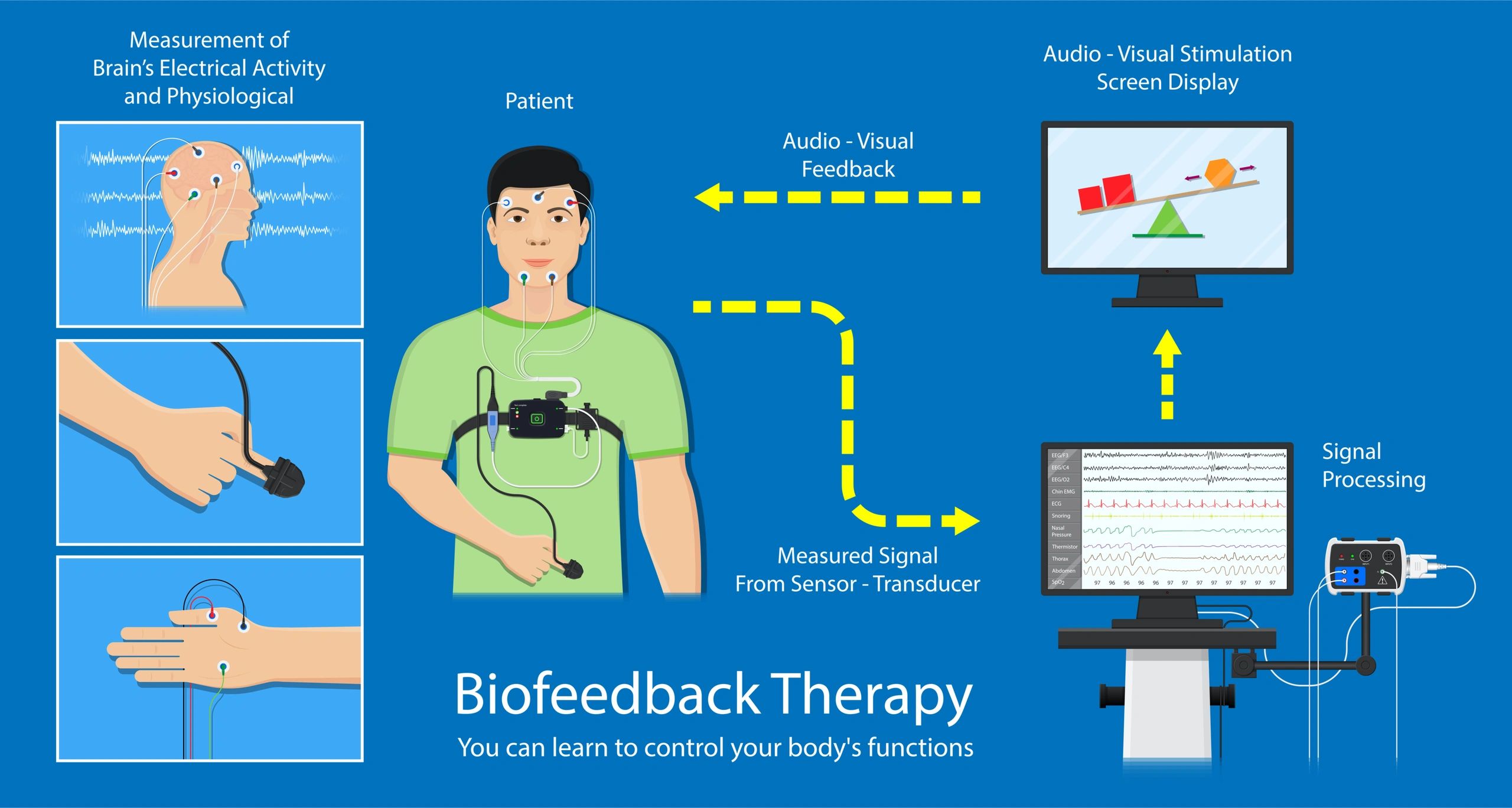
Biofeedback therapy, at its core, is a sophisticated mind-body intervention that leverages technology to provide individuals with real-time information about their physiological processes. This information, often invisible to conscious awareness, empowers users to gain voluntary control over these functions, leading to a wide array of health and performance benefits. While often associated with clinical settings for managing chronic pain, anxiety, and stress, the underlying technology and principles of biofeedback are increasingly finding their way into mainstream applications, blurring the lines between therapeutic intervention and human performance enhancement tools. This article will delve into the technological underpinnings of biofeedback therapy, exploring its evolution, the diverse sensor technologies involved, the data interpretation and feedback mechanisms, and its burgeoning applications within the tech landscape.

The Technological Evolution of Biofeedback
The concept of biofeedback isn’t new; humans have always had some intuitive understanding of their body’s signals. However, the advent of sophisticated electronic sensing and processing capabilities has transformed this intuitive understanding into a scientifically validated and technologically driven practice. From rudimentary galvanometer readings to complex multi-modal sensor arrays, biofeedback technology has undergone a remarkable evolution.
Early Innovations and Foundational Principles
The roots of biofeedback can be traced back to the mid-20th century, with pioneers like Neal Miller and his work on operant conditioning of autonomic functions in animals. Early biofeedback devices primarily focused on single physiological parameters. For instance, electroencephalography (EEG)-based biofeedback, developed by Dr. Joe Kamiya in the 1960s, allowed individuals to learn to control their brainwave patterns. Similarly, electromyography (EMG) biofeedback, used to detect and control muscle tension, began to gain traction. These early systems, while rudimentary by today’s standards, laid the crucial groundwork by demonstrating that autonomic and somatic functions, previously considered involuntary, could be modulated through conscious effort when coupled with external feedback. The core principle remained the same: monitor a physiological signal, present it to the user in an understandable format, and reward desired changes.
The Digital Revolution and Miniaturization
The digital revolution of the late 20th and early 21st centuries proved to be a watershed moment for biofeedback technology. The development of microprocessors, advanced digital signal processing (DSP) algorithms, and miniaturized sensors drastically improved the accuracy, portability, and affordability of biofeedback devices. This allowed for the transition from bulky laboratory equipment to sleek, wearable devices and user-friendly software applications. The ability to process complex data streams in real-time, filter out noise, and present information in engaging visual and auditory formats became commonplace. This shift democratized biofeedback, making it accessible not only to clinicians and researchers but also to individuals seeking to improve their personal well-being and performance. The integration of wireless communication protocols like Bluetooth further enhanced the seamless integration of biofeedback devices with smartphones, tablets, and computers, paving the way for sophisticated digital health ecosystems.
Integration with Artificial Intelligence and Machine Learning
The most recent and impactful technological advancement in biofeedback is its integration with artificial intelligence (AI) and machine learning (ML). AI algorithms can analyze the vast amounts of physiological data collected by biofeedback sensors with unprecedented speed and accuracy. ML models can learn individual physiological patterns, identify subtle deviations, and predict potential issues before they manifest. This allows for highly personalized feedback and more targeted interventions. For example, AI can analyze heart rate variability (HRV) data to assess stress levels and suggest specific breathing exercises or relaxation techniques tailored to the user’s current state. Similarly, ML can be used to optimize neurofeedback protocols by adapting training parameters based on real-time brainwave responses, leading to more efficient and effective learning. This synergy between biofeedback and AI is transforming the field from a reactive therapeutic tool to a proactive system for continuous performance optimization and well-being management.
Sensor Technologies: The Eyes and Ears of Biofeedback
The efficacy of any biofeedback system hinges on its ability to accurately and reliably capture physiological signals. A diverse range of sophisticated sensors forms the backbone of these systems, each designed to measure specific bodily functions. The continuous innovation in sensor technology is driving advancements in the depth and breadth of biofeedback applications.
Electrophysiological Sensors: Measuring Electrical Activity
Electrophysiological sensors are perhaps the most fundamental to biofeedback. They detect and record the electrical impulses generated by the body.
Electroencephalography (EEG) for Brainwave Monitoring
EEG sensors, typically placed on the scalp, measure the electrical activity of the brain in the form of brainwaves (e.g., alpha, beta, theta, delta). In biofeedback, EEG is used to help individuals learn to alter their brainwave patterns. For example, neurofeedback training can aim to increase alpha wave activity, associated with relaxation and focused attention, or decrease beta wave activity, often linked to stress and rumination. Advanced EEG systems can utilize high-density electrode caps to provide more precise spatial resolution, allowing for more localized brain training. Research is also exploring the use of dry EEG electrodes, which eliminate the need for conductive gel, making them more practical for everyday use and continuous monitoring.
Electromyography (EMG) for Muscle Activity
EMG sensors are placed on the skin over specific muscles to detect and measure the electrical signals produced by muscle contractions. EMG biofeedback is widely used to help individuals learn to relax tense muscles or strengthen weakened ones. This is particularly beneficial for conditions like chronic back pain, tension headaches, and jaw clenching. Wearable EMG devices are becoming increasingly sophisticated, allowing for the detection of subtle muscle activations and providing real-time feedback on muscle fatigue and recruitment patterns. This has applications beyond therapy, including sports performance enhancement and rehabilitation.
Electrocardiography (ECG) and Heart Rate Variability (HRV)
ECG measures the electrical activity of the heart, providing information about heart rate and rhythm. Biofeedback systems often utilize ECG data to focus on Heart Rate Variability (HRV), which is the variation in the time interval between heartbeats. HRV is a powerful indicator of the autonomic nervous system’s balance and is highly sensitive to stress and emotional states. By monitoring HRV, individuals can learn to influence their heart rhythm through techniques like paced breathing, promoting a shift towards a more relaxed and resilient state. Modern wearable devices often incorporate optical sensors (photoplethysmography – PPG) that can indirectly measure heart rate and, with advanced algorithms, estimate HRV, making it accessible through consumer-grade technology.
Physiological Sensors: Monitoring Bodily Functions
Beyond electrical activity, biofeedback employs sensors to monitor other crucial physiological parameters.
Respiration Sensors for Breathing Patterns
Respiration sensors, often belts placed around the chest or abdomen, measure the depth and rate of breathing. Improper breathing patterns, such as shallow chest breathing, are often associated with stress and anxiety. Respiration biofeedback helps individuals develop diaphragmatic breathing techniques, promoting slower, deeper breaths that can calm the nervous system and improve oxygenation. Advanced sensors can differentiate between thoracic and abdominal breathing, providing more nuanced feedback.
Electrodermal Activity (EDA) for Skin Conductance
EDA sensors measure changes in the electrical conductivity of the skin, which are influenced by sweat gland activity. Increased sweating, a sign of autonomic arousal often associated with stress or excitement, leads to higher skin conductance. EDA biofeedback can help individuals learn to manage their physiological responses to emotional stimuli, teaching them to reduce their overall arousal levels. Wearable EDA sensors are becoming more common in stress-management apps and devices.
Temperature Sensors for Peripheral Blood Flow
Simple temperature sensors, often placed on fingertips, measure peripheral skin temperature. When individuals are stressed or anxious, blood flow tends to be redirected away from the extremities. By monitoring fingertip temperature, individuals can learn techniques, such as thermal biofeedback, to increase blood flow to their hands, a physiological indicator of relaxation.
Data Interpretation and Feedback Mechanisms: Translating Signals into Action
The raw data generated by biofeedback sensors is only valuable if it can be effectively interpreted and presented to the user in a meaningful way. The sophistication of biofeedback software and hardware lies in its ability to translate complex physiological signals into actionable feedback that facilitates learning and behavioral change.
Real-Time Visualization and Auditory Cues
The most common forms of biofeedback involve real-time visual and auditory cues.
Visual Displays and Gamification
Visual displays can range from simple graphs and meters showing current physiological states to more complex graphical representations. For instance, a client might see a gauge that indicates their muscle tension, with the goal being to keep the needle in a “relaxed” zone. Increasingly, these visualizations are being gamified, turning the process into an engaging experience. Users might control a character’s flight based on their brainwave activity, or guide a plant to grow by maintaining a relaxed state. This gamified approach enhances motivation and adherence to training protocols. Interactive interfaces allow users to see the direct impact of their efforts on the displayed feedback, fostering a sense of agency and control.
Auditory Feedback and Tonal Adjustments
Auditory feedback can also be highly effective. This might involve a continuous tone that changes in pitch or volume based on the physiological signal. For example, a calming tone might emerge as a person relaxes their muscles, or a discordant sound might signal increasing stress. Some systems use auditory cues to guide breathing patterns, prompting inhalations and exhalations at specific intervals. The type and complexity of auditory feedback can be tailored to individual preferences and learning styles.
Algorithmic Processing and Personalized Insights
Beyond simple real-time feedback, advanced biofeedback systems employ sophisticated algorithms to process and interpret the data.
Pattern Recognition and Trend Analysis
AI and ML algorithms are adept at recognizing patterns within physiological data that might not be immediately apparent to the user or even a human observer. These algorithms can identify trends over time, such as consistent patterns of stress responses during specific activities or at particular times of day. This enables the system to provide personalized insights into what triggers certain physiological states and what interventions are most effective for the individual. For example, an app might notice a correlation between high smartphone usage and elevated heart rate, suggesting a need for digital detox periods.
Predictive Analytics for Proactive Intervention
The ultimate goal of advanced biofeedback is to move from reactive management to proactive intervention. Predictive analytics, powered by AI, can analyze physiological data to anticipate potential problems before they arise. For instance, a system might detect early physiological signs of impending anxiety or a migraine and alert the user to take preventative measures, such as engaging in relaxation exercises or adjusting their environment. This predictive capability transforms biofeedback from a tool for managing symptoms to a powerful system for maintaining optimal well-being and performance.
Biofeedback in the Tech Landscape: Beyond Clinical Applications
While biofeedback therapy has a strong foundation in clinical practice, its underlying principles and evolving technologies are increasingly permeating the broader tech landscape, transforming how we approach health, wellness, and human performance.
Wearable Technology and Consumer Devices
The proliferation of wearable devices like smartwatches, fitness trackers, and dedicated biofeedback bands has brought physiological monitoring into the everyday lives of millions. These devices, equipped with sensors for heart rate, HRV, EDA, and even basic EEG, are no longer solely for fitness tracking. They are increasingly incorporating biofeedback functionalities, allowing users to monitor their stress levels, track sleep quality, and engage in guided relaxation exercises in real-time. This democratization of biofeedback technology empowers individuals to take a more active role in managing their well-being, fostering a culture of self-awareness and proactive health management. The integration of these devices into mobile apps further enhances their accessibility and usability, providing personalized insights and actionable recommendations.
Performance Enhancement for Professionals and Athletes
Beyond general wellness, biofeedback is gaining traction as a powerful tool for enhancing performance in high-stakes environments. Professionals in demanding fields such as aviation, emergency services, and even competitive gaming are utilizing biofeedback to improve focus, manage stress, and make better decisions under pressure. Athletes, in particular, are leveraging biofeedback to optimize training, improve recovery, and gain a competitive edge. By understanding and controlling their physiological responses to exertion and competition, athletes can enhance their endurance, speed, and mental resilience. This application of biofeedback underscores its evolution from a purely therapeutic modality to a sophisticated performance optimization technology.
The Future of Human-Computer Interaction
The intersection of biofeedback and technology also points towards a future of more intuitive and responsive human-computer interaction (HCI). Imagine interfaces that adapt to your emotional state, adjusting lighting, sound, or even content based on your physiological cues. Biofeedback could enable “emotionally aware” computing, where devices proactively respond to user needs and mental states. For example, a computer could detect signs of fatigue and suggest a break, or an application could recognize frustration and offer simpler navigation options. This nascent field holds immense potential for creating more seamless, empathetic, and effective technological experiences, fundamentally reshaping our relationship with the digital world. The continuous advancements in sensor accuracy, AI-driven analysis, and user-friendly feedback mechanisms suggest that biofeedback will play an increasingly integral role in shaping the future of technology and human potential.
aViewFromTheCave is a participant in the Amazon Services LLC Associates Program, an affiliate advertising program designed to provide a means for sites to earn advertising fees by advertising and linking to Amazon.com. Amazon, the Amazon logo, AmazonSupply, and the AmazonSupply logo are trademarks of Amazon.com, Inc. or its affiliates. As an Amazon Associate we earn affiliate commissions from qualifying purchases.