
Understanding the operating hours of stock exchanges is fundamental for any investor, trader, or individual interested in the financial markets. These hours dictate when buying and selling of securities can occur, influencing everything from short-term trading strategies to long-term investment decisions. The global nature of finance means that different exchanges have distinct schedules, often influenced by their local time zones, holidays, and market conventions. For participants in the United States, the primary exchanges are the New York Stock Exchange (NYSE) and the Nasdaq Stock Market, both operating on a consistent schedule that is widely recognized. However, for those venturing into international markets, or even for a comprehensive understanding of global financial flows, it’s crucial to be aware of the diverse trading hours across the world. This article will delve into the standard operating hours of major stock exchanges, discuss factors that influence these hours, and explore the implications for investors.
Understanding the Core Trading Sessions
The stock exchange operates on a structured schedule, typically divided into pre-market, regular trading, and after-hours sessions. Each of these periods serves a distinct purpose and caters to different types of market participants and trading activities.
The Regular Trading Day
The heart of stock market activity occurs during the regular trading session. For the major U.S. exchanges, this session is standardized to provide a consistent window for most investors.
Standard U.S. Exchange Hours
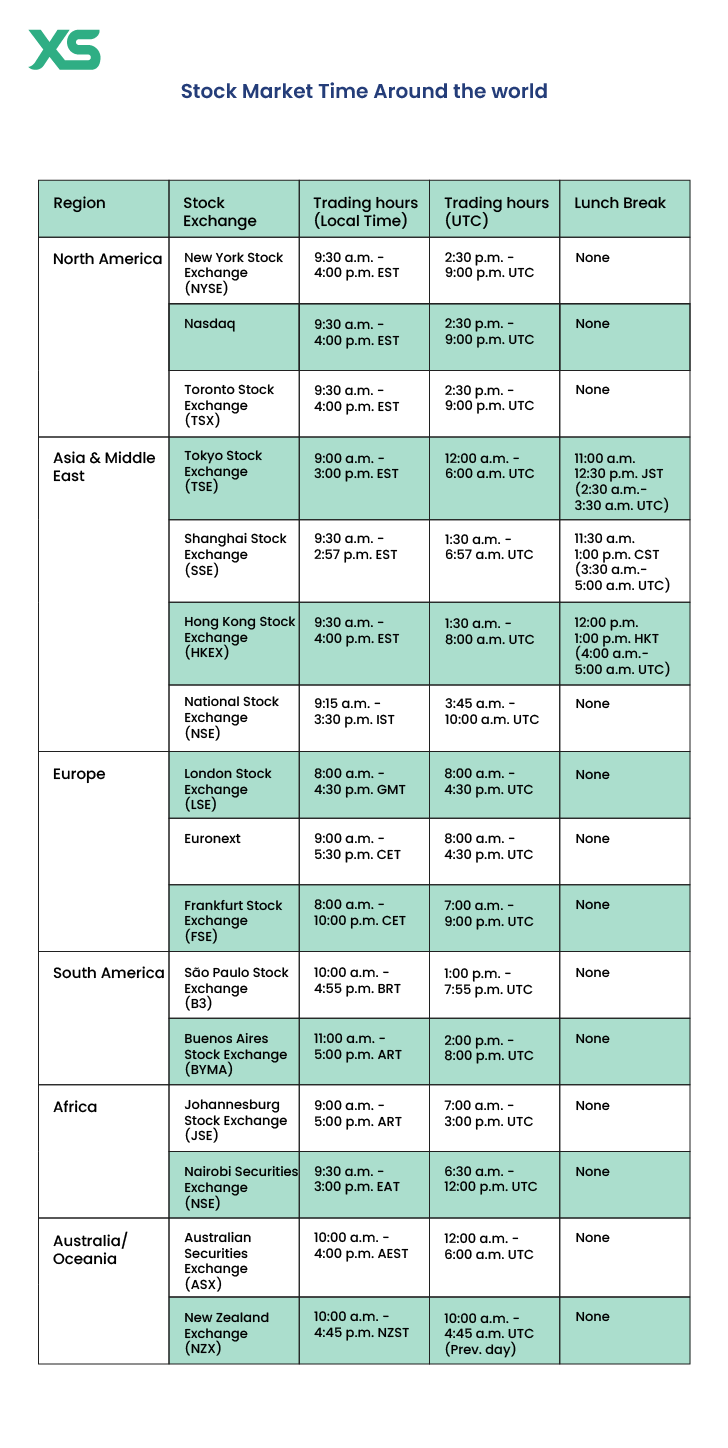
The New York Stock Exchange (NYSE) and the Nasdaq Stock Market, the two largest exchanges in the United States, both operate on the same schedule. Their regular trading hours are from 9:30 AM to 4:00 PM Eastern Time (ET). This seven-hour window is when the vast majority of stock transactions take place. The Eastern Time zone is particularly important because it is the time zone of New York City, the financial capital of the U.S. Many global financial news outlets and market participants refer to these hours in ET.
- Opening Bell: The day officially begins at 9:30 AM ET with the opening bell, signifying the start of trading.
- Closing Bell: The market closes at 4:00 PM ET, marked by the closing bell.
- Time Zone Significance: It’s vital to understand that this time is Eastern Time. If you are in a different time zone, you will need to convert these hours. For example, in Pacific Time (PT), which is three hours behind ET, the market opens at 6:30 AM and closes at 1:00 PM. In Central Time (CT), two hours behind ET, it opens at 7:30 AM and closes at 2:00 PM. In Mountain Time (MT), one hour behind ET, it opens at 8:30 AM and closes at 3:00 PM.
Pre-Market Trading
Before the official opening of the regular trading session, a period known as pre-market trading allows for early transactions. This session is typically used by institutional investors and sophisticated traders who want to react to overnight news or events before the broader market opens.
Opportunities and Risks in Pre-Market
The pre-market session generally runs from 4:00 AM ET to 9:30 AM ET. While it offers the chance to get a head start on trading, it also comes with increased risk.
- Limited Liquidity: One of the primary characteristics of pre-market trading is lower liquidity compared to the regular session. This means there are fewer buyers and sellers, which can lead to wider bid-ask spreads (the difference between the highest price a buyer is willing to pay and the lowest price a seller is willing to accept).
- Price Volatility: Due to lower liquidity, pre-market prices can be more volatile. A single large trade can significantly impact the price, and these movements may not always reflect the broader sentiment once the regular market opens.
- News-Driven Trading: Significant corporate news, economic data releases, or geopolitical events that occur overnight or early in the morning are often factored into pre-market prices. This can lead to sharp price movements for affected stocks.
- Availability: Not all brokers offer pre-market trading access. Investors need to ensure their brokerage account provides this capability.
After-Hours Trading
Similar to pre-market trading, after-hours trading extends the trading window beyond the close of the regular session. This allows investors to react to news or events that unfold during the evening or after the market has officially closed.
Extended Market Activity
The after-hours session typically runs from 4:00 PM ET to 8:00 PM ET. This period also experiences lower liquidity and potentially higher volatility than the regular trading day.
- Post-Market Impact: Companies often release earnings reports or other significant announcements after the market close. After-hours trading allows investors to trade on this information immediately.
- Liquidity and Spreads: As with pre-market trading, liquidity in the after-hours session is generally lower, leading to wider bid-ask spreads. This means that the price you get might not be as favorable as it would be during regular hours.
- Brokerage Services: Access to after-hours trading is also dependent on the services provided by your brokerage firm.
- Strategic Use: Experienced traders may use the after-hours session to adjust positions based on late-breaking news or to position themselves for the next day’s opening. However, it requires careful consideration of the increased risks.
Global Stock Exchange Hours: A Worldwide Perspective
The U.S. exchanges are not the only players in the global financial arena. Each country’s stock exchange operates on its own schedule, influenced by its local time zone, culture, and economic calendar. Understanding these global hours is crucial for international investors and those tracking global market trends.
Key International Exchanges and Their Schedules
The world’s financial markets are interconnected, and understanding the operating hours of major international exchanges provides a broader view of investment opportunities and market dynamics.

- Tokyo Stock Exchange (TSE): Japan’s primary exchange operates in two main sessions. The morning session runs from 9:00 AM to 11:30 AM JST (Japan Standard Time), followed by a lunch break. The afternoon session runs from 12:30 PM to 3:00 PM JST. JST is 14 hours ahead of ET. So, when the NYSE opens at 9:30 AM ET, it’s already 11:30 PM in Tokyo on the same day.
- Shanghai Stock Exchange (SSE): The SSE, a major hub in China, operates from 9:15 AM to 11:30 AM CST (China Standard Time) for the morning session and 1:00 PM to 3:00 PM CST for the afternoon session. CST is 12 hours ahead of ET.
- Hong Kong Stock Exchange (HKEX): The HKEX has a morning session from 9:30 AM to 12:00 PM HKT (Hong Kong Time), followed by a lunch break. The afternoon session runs from 1:00 PM to 4:00 PM HKT. HKT is 13 hours ahead of ET.
- London Stock Exchange (LSE): The LSE operates from 8:00 AM to 4:30 PM GMT/BST (Greenwich Mean Time/British Summer Time). GMT is 5 hours behind ET, and BST (observed during warmer months) is also 5 hours behind ET. This overlap means that for a significant portion of the trading day, both the U.S. and U.K. markets are open, leading to increased trading volume and volatility.
- Euronext (Paris, Amsterdam, Brussels, Lisbon, Dublin, Milan): Euronext, a pan-European exchange, generally trades from 9:00 AM to 5:30 PM CET (Central European Time). CET is 6 hours ahead of ET.
Navigating Time Zone Differences
The primary challenge in understanding global exchange hours is managing time zone differences. Investors need to be acutely aware of where they are in relation to the exchange they are interested in.
- Conversion Tools: Online time zone converters and financial websites with real-time market data are invaluable tools for accurately calculating the opening and closing times of foreign exchanges in your local time.
- Daylight Saving: Be mindful of daylight saving time changes, which occur at different times in different regions. This can shift the UTC offset and therefore the effective trading hours relative to your own time zone. For example, the U.S. observes Daylight Saving Time, as does the UK and many European countries, but the dates they change can differ.
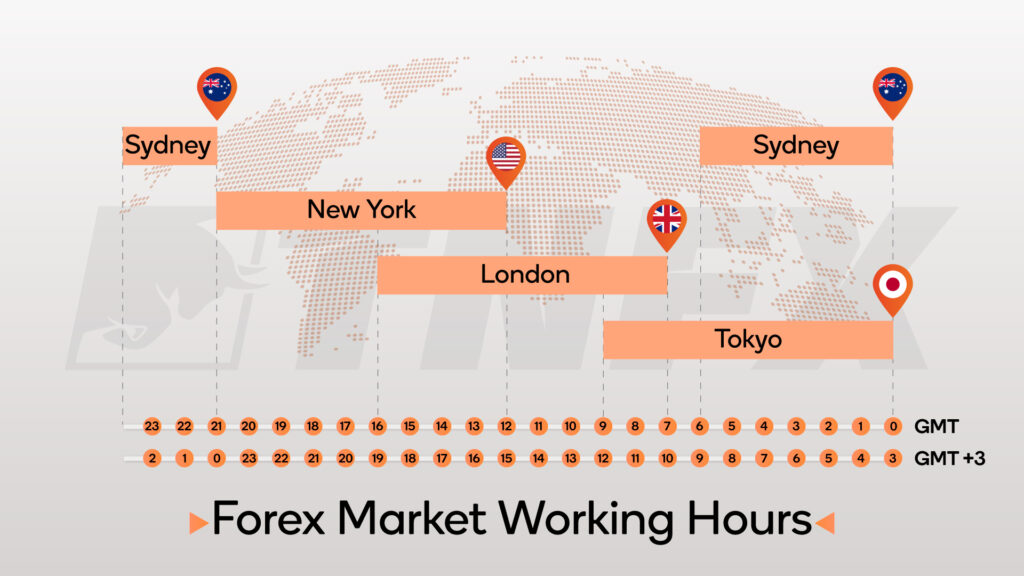
- Market Overlaps: The most active periods for international trading often occur during the overlaps between major market sessions. The overlap between the London and New York markets, for instance, typically sees a surge in trading activity as both regions are actively participating.
Factors Influencing Stock Exchange Hours
While standard operating hours provide a predictable framework, several factors can cause these hours to deviate, either temporarily or permanently. These external influences are important for investors to monitor.
Market Holidays and Special Sessions
Stock exchanges observe a variety of holidays throughout the year, which are typically based on national or religious observances. During these holidays, the market is closed.
- National Holidays: Major national holidays, such as Independence Day or Christmas in the U.S., or national holidays in other countries, will result in the closure of their respective exchanges.
- Religious Holidays: Some markets may close for holidays with religious significance.
- Special Closures: Unforeseen circumstances, such as severe weather events, major power outages, or significant market disruptions, could theoretically lead to unscheduled closures, though this is extremely rare.
- Early Closures: Sometimes, exchanges may close early on the day before a major holiday or for other specific reasons, such as the day after Thanksgiving in the U.S. (often referred to as “Black Friday”). These early closures are usually announced well in advance.
Economic and Geopolitical Events
Major economic announcements or significant geopolitical events can sometimes influence trading hours, although outright closures are rare. More commonly, these events can lead to increased volatility during existing trading sessions.
- Major Economic Data Releases: While not directly altering hours, the release of critical economic data (like inflation reports or employment figures) can cause significant market movements within the trading day.
- Geopolitical Crises: During periods of extreme geopolitical tension or uncertainty, market participants may experience heightened anxiety, leading to increased trading activity and volatility during regular hours. In very rare and extreme cases, regulators might consider temporary market closures to prevent panic selling, but this is an extraordinary measure.
- Systemic Risk: In instances of systemic risk or financial crises, regulators might take steps to stabilize markets, which could, in theory, include adjustments to trading hours, though this is highly unconventional.
Technological Advancements and Future Trends
The evolution of technology has had a profound impact on how financial markets operate, including the potential for expanded trading hours.
- Algorithmic Trading and High-Frequency Trading (HFT): The rise of sophisticated algorithms and HFT has led to a demand for longer trading windows to execute complex strategies. This has been a driving force behind the expansion of pre-market and after-hours trading.
- Global 24/7 Market Concept: There’s ongoing discussion and theoretical consideration of a 24/7 global stock market. Proponents argue that it would accommodate global investors better and potentially reduce the impact of news events occurring outside of traditional hours. However, significant challenges remain, including the operational feasibility, increased risk of continuous volatility, and the impact on market participants’ well-being.
- Technological Infrastructure: The underlying technology supporting exchanges needs to be robust enough to handle continuous trading. As technology advances, the possibility of extended or even round-the-clock trading becomes more technically feasible, but market participants’ readiness and the regulatory framework would need to adapt.
Implications for Investors and Traders
Understanding stock exchange hours is not merely an academic exercise; it has direct and practical implications for how individuals approach their investment and trading strategies.
Impact on Investment Strategies
The specific times when markets are open can influence the types of strategies investors choose.
- Long-Term Investing: For long-term investors, the exact hours of the exchange are less critical. Their focus is on fundamental analysis and holding investments over extended periods, weathering short-term market fluctuations. They typically place orders during the regular trading session, often as market orders or limit orders that execute when conditions are met.
- Short-Term Trading and Day Trading: Day traders, who aim to profit from small price movements within a single trading day, are heavily reliant on understanding and utilizing the entire trading window, including pre-market and after-hours sessions. They need to be aware of liquidity levels and potential volatility in these extended hours.
- Event-Driven Trading: Investors who trade based on specific events, such as earnings announcements or economic data releases, will closely monitor the timing of these events in relation to market open and close. They might place orders before an announcement in the pre-market or immediately after in the after-hours session.
Managing Risk and Opportunity
The distinct characteristics of pre-market, regular, and after-hours trading present both opportunities and risks that investors must navigate.
- Capitalizing on Information: The pre-market and after-hours sessions offer opportunities to act swiftly on new information. For instance, if a company releases a positive earnings report after the market closes, an investor might buy shares in the after-hours session, anticipating a price increase at the next open.
- Mitigating Risk: Conversely, these extended sessions can expose investors to greater risk. A sudden negative news event can cause a stock price to plummet in after-hours trading, and by the time the regular market opens, the price may have already fallen significantly. Similarly, wide bid-ask spreads can lead to unfavorable execution prices.
- Order Types: Understanding different order types is crucial for managing trades during all market sessions. Limit orders, which specify the maximum price you are willing to pay or the minimum price you are willing to accept, are particularly important for controlling execution prices in less liquid pre-market and after-hours trading. Stop orders can be used to limit potential losses.
- Brokerage Choice: The choice of brokerage firm can significantly impact an investor’s ability to participate in extended trading hours and the associated costs. Some brokers offer access to more extended trading sessions with competitive fees, while others may limit access or charge higher commissions for these trades.
In conclusion, the hours of the stock exchange are a foundational element of the financial markets. While the regular trading session provides the primary arena for most activity, understanding the pre-market and after-hours sessions, as well as the diverse schedules of global exchanges, is essential for any serious investor or trader. By being aware of these timings, their influences, and their implications, market participants can better navigate the complexities of finance, make more informed decisions, and effectively manage both the opportunities and risks inherent in the world of investing.
aViewFromTheCave is a participant in the Amazon Services LLC Associates Program, an affiliate advertising program designed to provide a means for sites to earn advertising fees by advertising and linking to Amazon.com. Amazon, the Amazon logo, AmazonSupply, and the AmazonSupply logo are trademarks of Amazon.com, Inc. or its affiliates. As an Amazon Associate we earn affiliate commissions from qualifying purchases.