
For millennia, humanity has gazed upwards, captivated by the celestial tapestry that unfolds each night. The allure of the stars, their seemingly eternal glow, and the questions they inspire have driven exploration, scientific inquiry, and a profound sense of wonder. While the naked eye can discern many of these distant suns, truly understanding and appreciating their brilliance requires sophisticated technology. This article delves into the technological advancements that allow us to identify, measure, and even predict the brightest stars visible in our night sky, transforming casual observation into a sophisticated scientific endeavor. We’ll explore the tools and techniques that illuminate these celestial wonders, from ground-based observatories to the cutting-edge satellites that orbit our planet.
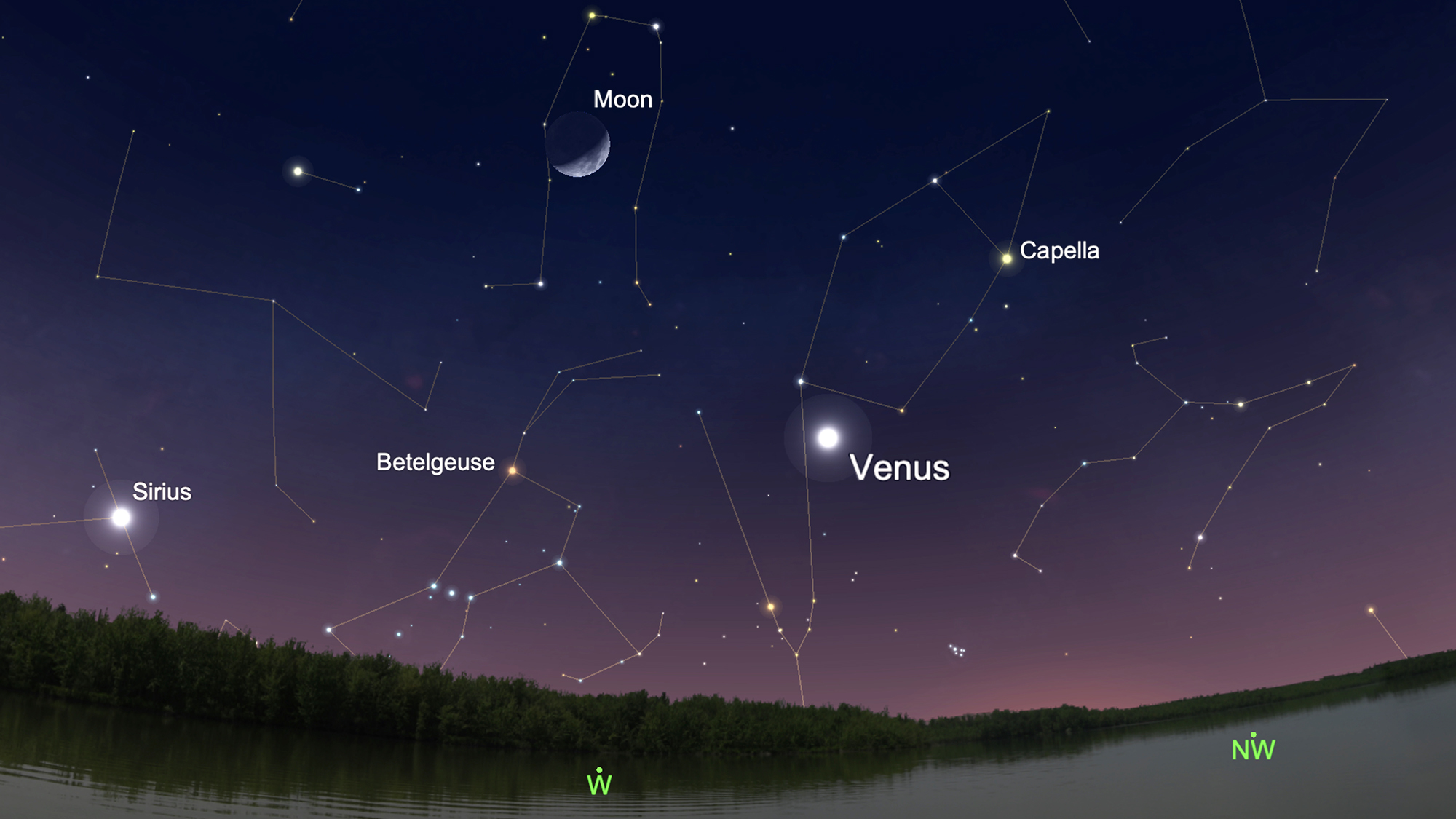
The Technological Arsenal for Stellar Brightness Measurement
Determining the “brightest” stars isn’t as simple as pointing a telescope. Brightness, or apparent magnitude, is a complex measurement influenced by a star’s intrinsic luminosity and its distance from Earth. Modern astronomy relies on a suite of advanced technologies to accurately quantify these factors and present us with a clear picture of the celestial luminaries.
Photometry: The Science of Light Measurement
At its core, understanding stellar brightness is a matter of precise light measurement. This field, known as photometry, has seen dramatic advancements thanks to technological innovation.
Advanced Telescopes and Optics
The foundation of all astronomical observation lies in the telescope. Today’s telescopes are far from the simple refracting instruments of Galileo’s era. Modern ground-based observatories house colossal mirrors, sometimes tens of meters in diameter, constructed from revolutionary materials that minimize thermal expansion and gravitational deformation. Adaptive optics systems, utilizing deformable mirrors controlled by sophisticated algorithms, actively correct for atmospheric turbulence in real-time. This technology effectively “cleans up” the image, sharpening the view of distant objects and allowing for much more precise measurements of light intensity.
Space telescopes, such as the Hubble Space Telescope and the James Webb Space Telescope (JWST), represent the pinnacle of observational technology. By operating above Earth’s obscuring atmosphere, they can capture light across a much wider spectrum with unparalleled clarity and sensitivity. These instruments are equipped with highly sensitive detectors, like Charge-Coupled Devices (CCDs) and Near-Infrared Spectrographs (NIRSpec), capable of detecting faint photons from the most distant and therefore faintest-appearing objects, while also accurately measuring the light from the brightest.
Photomultiplier Tubes and Solid-State Detectors
The devices that actually capture the light are equally crucial. Photomultiplier tubes (PMTs) were historically vital for detecting very faint light signals. They work by amplifying a single photon into a measurable electrical pulse. More recently, solid-state detectors, particularly CCDs and CMOS sensors, have become ubiquitous. These semiconductor devices convert incoming photons into an electrical charge, which is then read out and processed. Their digital nature allows for precise quantitative measurements of light intensity, making them indispensable for astronomical photometry. The sheer number of pixels in modern detectors allows astronomers to capture detailed images and measure the brightness of thousands of stars simultaneously.
Spectrometry: Unraveling Stellar Composition and True Luminosity
While photometry tells us how bright a star appears from Earth, spectrometry helps us understand its intrinsic brightness and physical characteristics.
Spectrographs and Their Role
A spectrograph, when attached to a telescope, splits the incoming starlight into its constituent wavelengths, creating a spectrum. This spectrum is like a fingerprint for the star, revealing its chemical composition, temperature, and even its radial velocity (how fast it’s moving towards or away from us). By analyzing the absorption and emission lines within a star’s spectrum, astronomers can deduce its surface temperature. This is critical because a star’s luminosity is directly related to its temperature and size. For instance, a very hot, blue star might appear less bright than a cooler, red giant simply because it’s farther away, but its spectrum reveals its immense intrinsic power.
Understanding Stellar Evolution with Spectroscopy
Spectroscopic data from bright stars also feeds into our understanding of stellar evolution. By classifying stars based on their spectra, astronomers can place them on the Hertzsprung-Russell (H-R) diagram, which plots luminosity against temperature. This allows us to chart the life cycles of stars, from their birth in nebulae to their eventual demise as white dwarfs, neutron stars, or black holes. The brightest stars we see tonight are often massive, young stars or evolved giants, and their spectral signatures tell us much about their current stage and future trajectory.
Navigating the Celestial Sphere: Software and Databases
The raw data generated by our advanced telescopes and spectrographs is immense. Without sophisticated software and comprehensive databases, this information would be overwhelming and largely useless. Modern astronomy is as much about data processing and management as it is about observation.
Astronomical Software Suites
Specialized software is crucial for analyzing the vast amounts of data collected by telescopes. Programs like IRAF (Image Reduction and Analysis Facility), PyRAF (a Python interface to IRAF), and the more modern Astropy project in Python provide astronomers with the tools to:
- Image Calibration: Removing instrumental signatures and background noise from telescope images.
- Object Detection and Cataloging: Identifying stars, galaxies, and other celestial objects within an image.
- Photometric Analysis: Measuring the brightness of identified objects with high precision.
- Spectroscopic Reduction: Processing spectral data to extract meaningful information about stellar properties.
- Data Visualization: Presenting complex astronomical data in an understandable format.
These software packages enable astronomers to automate repetitive tasks, perform complex calculations, and extract the scientific insights hidden within the raw observational data. The development of open-source astronomical software has democratized access to these powerful tools, allowing researchers worldwide to collaborate and advance the field.
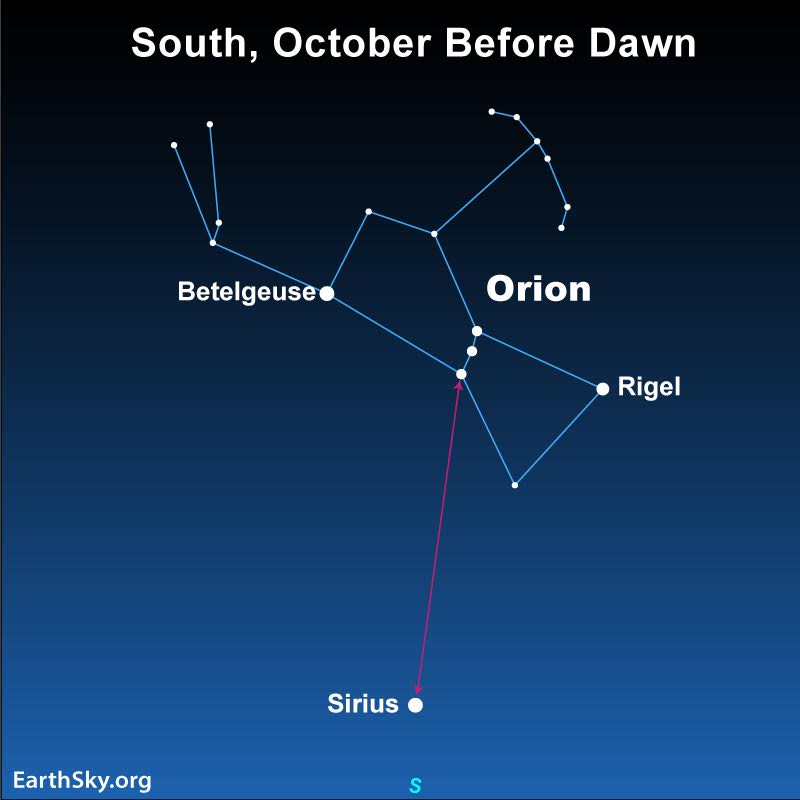
Stellar Databases and Catalogs
To answer the question “what are the brightest stars in the sky tonight?”, astronomers don’t just rely on real-time observations. They consult extensive databases and catalogs that have been compiled over decades, even centuries.
Key Astronomical Catalogs
Prominent examples include:
- The Hipparcos Catalogue and Gaia Data Releases: Missions like Hipparcos and especially the ongoing Gaia mission are revolutionizing our understanding of stellar positions, distances, and motions. Gaia is producing the most precise 3D map of our Milky Way galaxy, cataloging billions of stars and providing highly accurate astrometric and photometric data. This data is fundamental for determining a star’s true luminosity.
- The Henry Draper Catalogue (HD): An early but still valuable catalog that classifies stars based on their spectral types.
- The Bright Star Catalogue (BSC) / Yale Bright Star Catalogue: This catalog specifically lists stars brighter than apparent magnitude 6.5, making it a good starting point for identifying naked-eye visible stars. It provides their coordinates, magnitudes, spectral types, and other basic information.
- The SIMBAD Astronomical Database: A crucial online astronomical database that provides information on astronomical objects outside the Solar System. It allows users to query for objects by name, coordinates, or other criteria and retrieve a wealth of data from various sources, including their apparent magnitudes.
These databases are not static; they are continuously updated as new observations are made and new technologies are developed. The synergy between observational technology, sophisticated software, and these comprehensive data repositories is what allows us to precisely identify and understand the brightest stars visible from Earth.
The Digital Sky: Real-Time Information and Predictive Models
The concept of “tonight” implies a dynamic celestial environment. While stars themselves are relatively stable over human timescales, their visibility is affected by Earth’s rotation, our location on the planet, atmospheric conditions, and the phase of the Moon. Modern technology provides tools to navigate these variables and offer real-time insights.
Sky-Charting Software and Apps
Gone are the days of relying solely on printed star charts. A plethora of sophisticated sky-charting applications are now available for smartphones, tablets, and computers. These apps utilize GPS data, device orientation sensors (gyroscopes and accelerometers), and comprehensive astronomical databases to:
- Identify Stars in Real-Time: Point your device towards the sky, and the app will overlay the names and positions of visible stars, planets, and constellations.
- Predict Visibility: Many apps can predict which celestial objects will be visible at a specific time and location, factoring in factors like twilight, horizon obstruction, and even light pollution levels.
- Provide Detailed Information: Tapping on a star in these applications often brings up detailed information, including its apparent magnitude, distance, spectral type, and interesting facts, all powered by the underlying astronomical databases.
Examples of popular and technologically advanced sky-charting apps include Stellarium, SkySafari, Star Walk, and SkyView. These tools effectively translate complex astronomical data into an intuitive, interactive experience for both amateur and seasoned stargazers.
Light Pollution Mapping and Mitigation Technologies
One of the greatest technological challenges to viewing bright stars is light pollution. Artificial lights from cities and towns scatter in the atmosphere, obscuring fainter celestial objects and reducing the contrast for even the brightest.
Satellite Imagery and Ground Sensors
Technologies used to map light pollution include satellite imagery that measures the intensity of upward-directed artificial light and ground-based sensors. This data is crucial for:
- Identifying Optimal Viewing Locations: By understanding light pollution levels, astronomers and stargazers can identify darker sites for observation.
- Advocacy for Dark Skies: Data-driven evidence of light pollution’s impact is essential for campaigns advocating for better outdoor lighting practices.
- Predicting Visibility Quality: Some advanced sky-charting apps incorporate light pollution data to give users a more realistic expectation of what they will see.
The development of energy-efficient LED lighting, while beneficial in some ways, has also presented new challenges with specific light spectra and upward spill. Technology is now being developed to control the directionality and spectrum of outdoor lighting to minimize its impact on astronomical observation while still providing necessary illumination.

Algorithmic Prediction and Event Forecasting
Beyond simply identifying current stars, advanced algorithms are used to predict celestial events and phenomena. While the brightest stars themselves are predictable in their positions, technologies are also being developed to predict events like:
- Meteor Showers: Analyzing historical data and orbital paths of comets and asteroids to forecast the timing and intensity of meteor showers.
- Auroral Activity: Monitoring solar wind and geomagnetic activity to predict the likelihood and visibility of auroras.
- Satellite Passes: Tracking the orbits of artificial satellites to predict when they might be visible as bright, moving “stars.”
These predictive models, powered by vast datasets and complex computational algorithms, enhance our ability to engage with the night sky and understand the dynamic celestial environment.
In conclusion, the seemingly simple question of “what are the brightest stars in the sky tonight?” opens a gateway to the incredible technological advancements that underpin modern astronomy. From the precision of adaptive optics and sensitive detectors to the organizational power of software and databases, and the accessibility of real-time sky-charting applications, technology has transformed our ability to observe, understand, and appreciate the cosmos. Each time we gaze upwards, we are benefiting from decades of innovation, pushing the boundaries of human knowledge and revealing the breathtaking beauty of our universe.
aViewFromTheCave is a participant in the Amazon Services LLC Associates Program, an affiliate advertising program designed to provide a means for sites to earn advertising fees by advertising and linking to Amazon.com. Amazon, the Amazon logo, AmazonSupply, and the AmazonSupply logo are trademarks of Amazon.com, Inc. or its affiliates. As an Amazon Associate we earn affiliate commissions from qualifying purchases.