
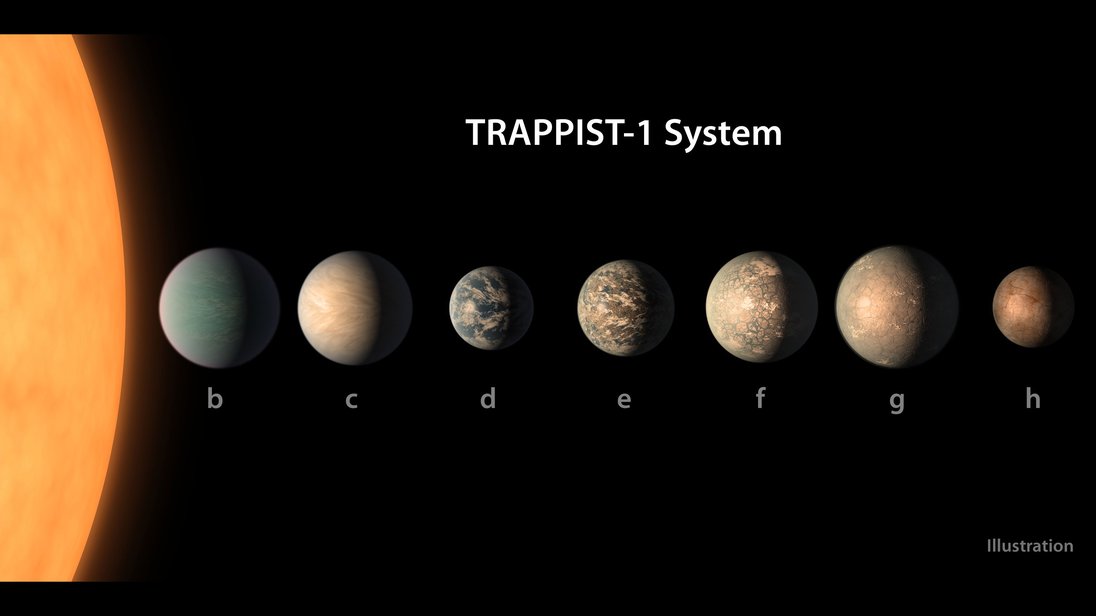
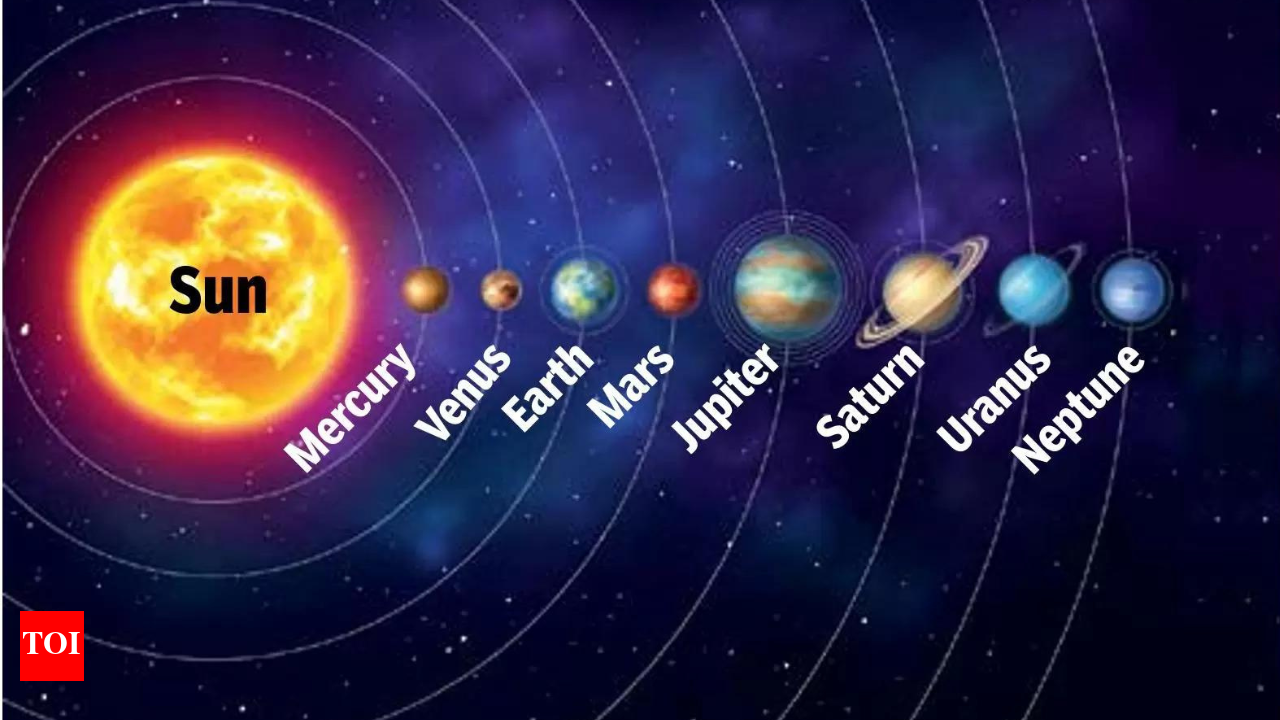
The term “planets” might conjure images of celestial bodies orbiting a star, vast and influential entities shaping their cosmic neighborhoods. In the rapidly expanding universe of Artificial Intelligence (AI), a similar metaphor can be applied to identify the core spheres of innovation, development, and influence that are shaping the present and future of this transformative technology. Just as the planets of our solar system exhibit distinct characteristics and occupy specific orbits, the “7 Planets of AI” represent fundamental domains and powerful forces that are orchestrating the AI revolution. This exploration delves into these seven critical areas, dissecting their essence, their current trajectory, and their profound impact on our digital and physical realities.
I. The Core of Intelligence: Foundational AI Models
At the very heart of the AI universe lie the foundational models, the massive, pre-trained neural networks that serve as the bedrock upon which countless AI applications are built. These are not mere tools; they are sophisticated engines capable of understanding, generating, and processing information across a vast spectrum of modalities, including text, images, audio, and even code. Their “planetary” significance stems from their sheer scale, their generative power, and their ability to democratize advanced AI capabilities.
A. Large Language Models (LLMs): The Articulation of Understanding
Large Language Models stand as the most prominent and influential of these foundational pillars. Models like GPT-4, Claude 3, and Gemini have revolutionized our interaction with machines. They possess an uncanny ability to comprehend human language, generate coherent and contextually relevant text, translate languages, answer complex questions, and even assist in creative endeavors like writing code or composing poetry. Their influence extends beyond simple chatbots, powering sophisticated search engines, content creation tools, and the development of more intuitive human-computer interfaces. The “planet” of LLMs is characterized by its ever-increasing parameter count, its multimodal capabilities, and its continuous evolution in understanding nuance and complex reasoning.
B. Generative Adversarial Networks (GANs) and Diffusion Models: The Architects of Creation
While LLMs excel in processing and generating language, other foundational models are dedicated to the creation of novel content. GANs, a pioneering technology, involve two neural networks – a generator and a discriminator – locked in a perpetual game of creation and critique. This adversarial process allows for the generation of hyper-realistic images, music, and even synthetic data. More recently, diffusion models have emerged as a powerful alternative, capable of generating incredibly detailed and coherent images from simple text prompts, as seen in platforms like DALL-E and Midjourney. These models represent a “planet” of creative AI, pushing the boundaries of digital art, design, and synthetic media, with profound implications for industries ranging from entertainment to scientific visualization.
II. The Sensing and Perception Sphere: Computer Vision and Audio Processing
Beyond language, AI’s ability to perceive and interpret the world around us is crucial. This “planet” encompasses the technologies that enable machines to “see” and “hear,” bridging the gap between the digital and the physical. This domain is critical for autonomous systems, surveillance, accessibility, and a myriad of applications that rely on understanding visual and auditory information.
A. Computer Vision: Decoding the Visual Realm
Computer vision is the field that empowers AI systems to interpret and understand information from images and videos. This includes object detection, facial recognition, scene understanding, and image segmentation. From self-driving cars navigating complex roadways to medical imaging analysis that aids in diagnosis, computer vision is a cornerstone of AI’s practical applications. The advancements in deep learning, particularly convolutional neural networks (CNNs), have propelled this field forward, making it possible for machines to identify and classify objects with remarkable accuracy. The “planet” of computer vision is a rapidly expanding frontier, constantly improving in its ability to discern context, understand motion, and even interpret subtle human expressions.
B. Audio Processing and Speech Recognition: Listening to the Digital World
Complementing visual perception, audio processing and speech recognition allow AI to understand and interact through sound. This includes converting spoken language into text (Automatic Speech Recognition or ASR), identifying different sounds and their sources, and even synthesizing human-like speech. Voice assistants like Siri, Alexa, and Google Assistant are prime examples of the pervasive influence of this technology. Beyond consumer applications, advanced audio processing is vital for call center analytics, audio forensics, and developing more naturalistic robotic interactions. This “planet” is focused on enabling seamless, intuitive communication between humans and machines, transcending the limitations of traditional keyboard and screen interfaces.
III. The Decision-Making and Action Nexus: Reinforcement Learning and Robotics
This “planet” represents the frontier where AI moves beyond passive observation and generation to actively making decisions and taking actions in complex environments. It is the domain of intelligent agents that learn through trial and error, optimizing their strategies to achieve specific goals.
A. Reinforcement Learning (RL): Learning Through Interaction
Reinforcement Learning is a paradigm where an AI agent learns to make a sequence of decisions by trying to maximize a reward it receives for its actions. This is akin to how humans and animals learn – through experience and feedback. RL has demonstrated remarkable success in domains such as game playing (e.g., AlphaGo), robotics control, and optimizing complex systems like traffic flow. The “planet” of RL is characterized by its algorithmic sophistication, its ability to tackle problems with no pre-defined optimal solution, and its potential to drive autonomous decision-making in dynamic and unpredictable environments.
B. Robotics and Embodied AI: Bringing Intelligence to the Physical World
When AI’s decision-making capabilities are coupled with physical form, we enter the realm of robotics and embodied AI. This fusion allows AI to interact with and manipulate the physical world. From industrial robots on assembly lines to advanced humanoid robots and drones, embodied AI is poised to automate tasks, assist humans in hazardous environments, and even provide companionship. The “planet” of robotics is where theoretical AI concepts are translated into tangible, physical actions, requiring sophisticated integration of sensing, processing, and actuation. The development of dexterous manipulation, navigation in complex terrains, and safe human-robot collaboration are key areas of progress.
IV. The Knowledge Synthesis and Reasoning Engine: Knowledge Graphs and Explainable AI (XAI)
As AI systems become more powerful and integrated into critical decision-making processes, the ability to represent, access, and understand knowledge becomes paramount. This “planet” focuses on how AI can move beyond pattern recognition to a deeper comprehension and justification of its outputs.
A. Knowledge Graphs: Structuring the World’s Information
Knowledge graphs are sophisticated data structures that represent entities and their relationships in a machine-readable format. They allow AI systems to understand the interconnectedness of information, enabling more nuanced queries, better reasoning, and more relevant recommendations. Search engines, virtual assistants, and recommendation systems heavily rely on knowledge graphs to provide accurate and contextually aware responses. This “planet” is dedicated to organizing and leveraging the vast ocean of human knowledge in a structured and intelligent manner, making information more accessible and actionable for AI.
B. Explainable AI (XAI): Unveiling the Black Box
The increasing complexity of AI models, particularly deep neural networks, often leads to a “black box” problem where it’s difficult to understand why a particular decision was made. Explainable AI (XAI) is a critical field dedicated to developing methods and techniques that make AI systems more transparent and interpretable. This is crucial for building trust, ensuring fairness, and enabling regulatory compliance, especially in high-stakes applications like healthcare, finance, and autonomous systems. The “planet” of XAI represents the drive towards accountability and trustworthiness in AI, ensuring that we can understand and validate the reasoning behind AI-driven outcomes.
V. The Infrastructure and Delivery Network: Cloud AI and Edge AI
Underpinning all these AI capabilities are the fundamental infrastructures that enable their deployment and operation. This “planet” encompasses the hardware, software, and networking technologies that make AI accessible and scalable.
A. Cloud AI Platforms: The Centralized Powerhouse
Cloud computing platforms have become the de facto backbone for developing and deploying sophisticated AI models. Services like Amazon Web Services (AWS), Google Cloud Platform (GCP), and Microsoft Azure offer vast computational resources, pre-trained AI services, and specialized hardware (like GPUs and TPUs) that democratize access to cutting-edge AI. The “planet” of cloud AI enables rapid experimentation, scalability, and the deployment of AI solutions to a global audience without the need for significant upfront infrastructure investment.
B. Edge AI: Intelligence at the Source
In contrast to centralized cloud processing, Edge AI brings AI computations closer to the data source, on devices themselves. This includes smartphones, smart cameras, industrial sensors, and autonomous vehicles. Edge AI is crucial for applications requiring real-time processing, low latency, enhanced privacy, and reduced reliance on constant network connectivity. The “planet” of Edge AI is rapidly expanding, driven by the proliferation of IoT devices and the need for localized intelligence in an increasingly connected world.
VI. The Human-AI Collaboration Frontier: Interfaces and Augmentation
The ultimate success and societal integration of AI depend on our ability to collaborate with these intelligent systems effectively. This “planet” explores the interfaces and methodologies that facilitate seamless and productive partnerships between humans and AI.
A. Natural User Interfaces (NUIs): Intuitive Interaction
Beyond keyboards and mice, NUIs leverage natural forms of human expression, such as touch, gestures, voice, and even brain-computer interfaces (BCIs). The development of intuitive and context-aware NUIs is essential for making AI accessible to everyone, regardless of technical proficiency. This “planet” is focused on designing interactions that feel natural and efficient, minimizing cognitive load and maximizing user engagement.
B. AI-Powered Augmentation: Enhancing Human Capabilities
AI is not just about replacing human tasks; it’s also about augmenting human capabilities. This includes AI tools that assist professionals in fields like medicine (diagnosis support), law (legal research), and design (generative design). AI-powered augmentation aims to enhance human creativity, productivity, and decision-making by providing intelligent insights and support. This “planet” represents the collaborative future where AI acts as a powerful co-pilot, amplifying human potential.
VII. The Ethical and Societal Compass: AI Governance and Safety
As AI systems become more powerful and pervasive, their ethical implications and societal impact come into sharp focus. This “planet” is dedicated to ensuring that AI is developed and deployed responsibly, safely, and for the benefit of humanity.
A. AI Governance and Regulation: Setting the Rules of Engagement
The rapid advancement of AI necessitates the development of robust governance frameworks and regulations. This involves addressing issues such as data privacy, algorithmic bias, intellectual property, and the potential for misuse. Governments, industry bodies, and research institutions are actively engaged in shaping the policies that will guide AI development and deployment. This “planet” is about establishing the ethical guardrails and legal structures to ensure AI’s responsible integration into society.
B. AI Safety and Alignment: Ensuring Beneficial Outcomes
A crucial aspect of AI development is ensuring that these systems are safe and aligned with human values and goals. This involves researching and implementing methods to prevent unintended consequences, adversarial attacks, and the potential for AI systems to operate in ways that are detrimental to humanity. The “planet” of AI safety is a critical area of research, focused on building AI systems that are not only intelligent but also beneficial and trustworthy in the long term.
In conclusion, the “7 Planets of AI” represent the fundamental pillars that constitute the current landscape of artificial intelligence. From the foundational models that power generative capabilities to the infrastructure that enables their widespread adoption and the ethical considerations that guide their development, these spheres are interconnected and continuously evolving. Understanding these core domains provides a roadmap for navigating the complexities of AI and appreciating its profound potential to reshape our world. As these “planets” continue their orbits, their collective influence will undoubtedly define the future of technology and society.
aViewFromTheCave is a participant in the Amazon Services LLC Associates Program, an affiliate advertising program designed to provide a means for sites to earn advertising fees by advertising and linking to Amazon.com. Amazon, the Amazon logo, AmazonSupply, and the AmazonSupply logo are trademarks of Amazon.com, Inc. or its affiliates. As an Amazon Associate we earn affiliate commissions from qualifying purchases.