
The Algorithmic Architecture of Narrative: Deconstructing Plot for AI and Storytelling
In the ever-evolving landscape of digital creation, the concept of “plot” transcends its traditional literary confines, becoming a fundamental component in the architecture of artificial intelligence and digital storytelling. For those immersed in the realms of technology, understanding plot is not merely an academic exercise in literary theory; it’s a crucial insight into how we can imbue machines with the capacity to generate, analyze, and even participate in compelling narratives. This exploration delves into the technical underpinnings of plot, examining its structural elements, its algorithmic representation, and its vital role in the development of AI-powered storytelling tools and experiences.
The Structural Foundations of Plot: Beyond Linear Progression
At its core, plot is the organized sequence of events in a story, the “what happens and why.” However, in a technological context, this definition expands to encompass the underlying logic and causality that drive a narrative forward. It’s the blueprint that enables an AI to understand the relationships between actions, motivations, and consequences, ultimately shaping the coherence and impact of a generated or analyzed story.
Causality and Consequence: The Engine of Narrative Flow
The most fundamental aspect of plot, from a technological perspective, is causality. Every event in a story should ideally be a consequence of a preceding event or a deliberate action by a character. AI models designed to understand or generate plot must be trained to recognize and simulate these cause-and-effect chains. This involves identifying the agents of change (characters, external forces), their motivations (goals, desires, fears), and the actions they undertake.
Consider a simple example: A character wants to retrieve a stolen artifact. This desire (motivation) leads them to embark on a journey (action). The journey might involve overcoming obstacles (further actions and consequences), interacting with other characters (potential new motivations and actions), and ultimately, either succeeding or failing in their quest (resolution). AI models can represent these relationships through various data structures, such as directed graphs where nodes represent events and edges represent causal links.
Conflict and Rising Action: The Dramatic Imperative
Conflict is the lifeblood of plot, providing the tension and stakes that keep an audience engaged. Technologically, conflict can be understood as the presence of opposing forces or obstacles that hinder a protagonist from achieving their goals. This can manifest in numerous forms:
- Internal Conflict: A character battling their own doubts, fears, or moral dilemmas. AI can model this by assigning internal states and values to characters and simulating how these states are challenged by external events or internal decisions.
- External Conflict: A protagonist facing opposition from another character (human vs. human), nature (human vs. nature), society (human vs. society), or even technology (human vs. machine). For AI, external conflict often translates to challenges that require specific computational solutions or strategic decision-making within the narrative framework.
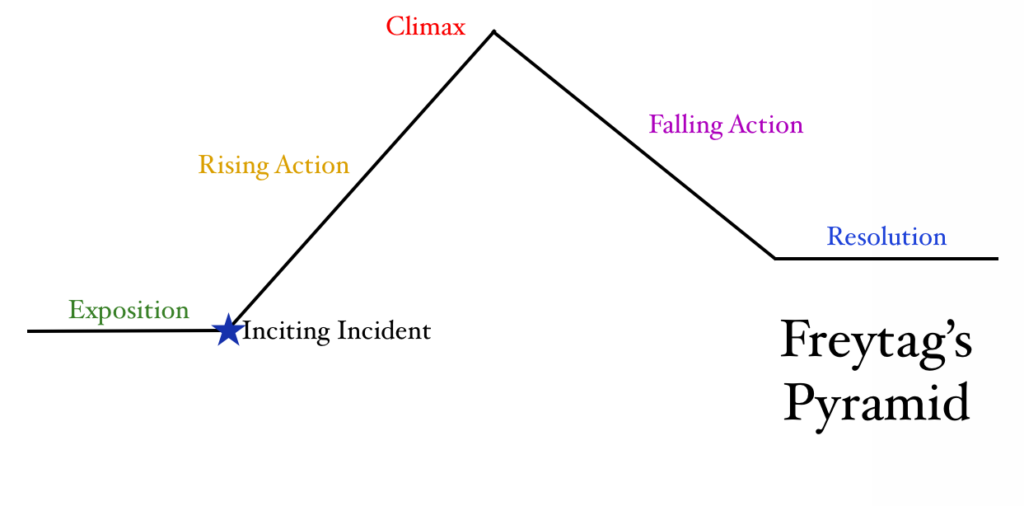
The rising action is the sequence of events that build tension and lead to the climax. In an AI context, this translates to progressively more challenging or impactful events that escalate the conflict. This might involve introducing new antagonists, increasing the stakes of the current conflict, or revealing critical information that raises the urgency. Algorithmic approaches can track the intensity of conflict, the proximity of goals, and the potential for failure to ensure a compelling build-up.
Climax and Resolution: The Narrative Denouement
The climax is the peak of the conflict, the point of highest tension where the protagonist confronts the primary obstacle. For AI, this represents a critical juncture where the narrative’s trajectory is determined. It’s the moment where the most significant choices are made, and the outcome hangs in the balance. The success of an AI in generating a satisfying climax often hinges on its ability to synthesize previous events and character motivations into a logical and impactful confrontation.
The resolution brings the story to a close, where the consequences of the climax are revealed and the narrative threads are tied up. In AI-driven storytelling, the resolution signifies the AI’s ability to conclude the causal chains initiated earlier in the plot. This could involve characters achieving or failing to achieve their goals, the restoration of balance (or the establishment of a new one), and a sense of closure for the audience. The elegance of a resolution is often a testament to the underlying coherence and structural integrity of the plot the AI has constructed.
Algorithmic Representations of Plot: From Data Structures to Deep Learning
The technical implementation of plot involves translating these narrative concepts into computational models. This has evolved significantly with advancements in AI and machine learning, moving from simpler rule-based systems to sophisticated deep learning architectures.
Symbolic AI and Rule-Based Systems: Early Approaches
Early attempts to codify plot often relied on symbolic AI, where plot elements were represented as discrete symbols and relationships were defined by explicit rules. Story grammars, for instance, were a way to define the structural components of a narrative and how they could be combined. A simple story grammar might define a story as: Story -> Introduction + Complication + Resolution. Each of these components could then be further broken down into sub-components.
While effective for generating highly structured, predictable narratives, these systems lacked the flexibility and nuance required for truly engaging storytelling. They struggled to handle ambiguity, complex character motivations, and emergent plotlines.
Procedural Content Generation and Narrative Planning

In game development and interactive storytelling, procedural content generation (PCG) has been used to create dynamic plots. Narrative planning systems, a subset of PCG, aim to generate sequences of actions that achieve specific narrative goals. These systems often employ search algorithms to explore possible event sequences and select those that best fulfill desired narrative outcomes.
For example, a narrative planner might be tasked with generating a quest for a player. It would consider the player’s current state, the available game world elements, and the desired narrative arc (e.g., a quest involving exploration, combat, and puzzle-solving). The planner would then generate a sequence of events, ensuring logical progression and thematic consistency.
Deep Learning and Neural Networks: The Modern Frontier
The advent of deep learning, particularly recurrent neural networks (RNNs) and transformer models, has revolutionized the technical approach to plot. These models can learn complex patterns and relationships directly from vast amounts of text data, enabling them to generate more fluid, coherent, and contextually aware narratives.
Sequence-to-sequence models are particularly adept at generating text, allowing them to output entire plot sequences. By training on datasets of novels, screenplays, and other narrative forms, these models learn the statistical regularities of plot construction, including character development, dialogue patterns, and the pacing of events.
Transformer architectures, with their attention mechanisms, are even more powerful. They can weigh the importance of different parts of the input text (or previously generated text) when producing new output. This allows them to maintain long-range dependencies within a story, ensuring that earlier plot points are not forgotten and that the narrative remains consistent. For instance, a transformer model can better track character traits and plot threads over extended narratives, leading to more cohesive and satisfying story arcs.
Plot as a Tool for AI Understanding and Generation
The technical understanding of plot is not just for generating stories; it’s also crucial for enabling AI to understand stories. By deconstructing plot, we equip AI with the ability to analyze the underlying mechanics of human narratives, identify themes, predict future events, and even assess the quality or impact of a story.
Natural Language Processing (NLP) and Plot Analysis
Within the field of Natural Language Processing (NLP), plot analysis is a key area of research. AI models can be trained to:
- Identify Key Plot Points: Recognizing the exposition, inciting incident, rising action, climax, falling action, and resolution within a given text.
- Extract Character Arcs: Tracing a character’s journey, their transformations, and their motivations throughout the story.
- Map Relationships and Causality: Understanding how characters interact and how events are connected.
- Detect Thematic Elements: Inferring the underlying messages or themes conveyed by the plot.
This capability has significant implications for content recommendation systems, literary analysis tools, and even for training AI to understand human emotions and intentions as expressed through narrative.
Generative AI and Interactive Storytelling
The application of plot understanding in generative AI is leading to exciting new forms of interactive storytelling. AI can now act as a dynamic co-creator, adapting the plot in real-time based on user input or external data. This opens up possibilities for:
- Personalized Narratives: Stories that evolve to suit an individual reader’s preferences or emotional state.
- Dynamic Game Narratives: Games where the story branches and adapts based on player choices, creating unique experiences for each playthrough.
- AI-Driven Creative Writing Assistants: Tools that can suggest plot twists, generate character backstories, or even outline entire story arcs for human writers.
These technologies rely heavily on the AI’s ability to not only generate text but to do so with a coherent and compelling underlying plot structure. The AI must understand what makes a plot engaging, what constitutes a satisfying resolution, and how to build tension effectively.
The Future of Plot: AI as a Narrative Architect
As AI continues to advance, its role in narrative creation and understanding will only deepen. The technical deconstruction of plot is paving the way for AI systems that are not merely tools but sophisticated narrative architects.
Towards Algorithmic Empathy and Emotional Resonance
One of the ultimate goals is for AI to generate narratives that evoke genuine emotional responses in humans. This requires not just an understanding of plot mechanics but also an insight into the psychological triggers that make a story resonate. Future AI might be able to:
- Model Human Emotions: Representing and manipulating emotional states within characters and the narrative to elicit specific feelings in the audience.
- Craft Empathetic Connections: Generating plot points that foster empathy between the audience and the characters.
- Understand Nuance and Subtlety: Moving beyond basic plot structures to incorporate subtext, irony, and complex moral ambiguities.
The Ethical Considerations of AI-Generated Plots
As AI becomes more capable of crafting compelling narratives, it also raises important ethical considerations.
- Authorship and Originality: Who is the author of an AI-generated story? How do we ensure originality and avoid plagiarism when AI is trained on vast datasets of existing works?
- Bias in Narrative: AI models can inherit biases from their training data, leading to the perpetuation of harmful stereotypes within generated plots.
- The Nature of Creativity: What does it mean for creativity when machines can generate sophisticated stories? Will this devalue human creativity, or augment it?
These questions highlight the need for a continued dialogue between technologists, ethicists, and storytellers to ensure that AI’s role in narrative creation is both innovative and responsible. The fundamental understanding of plot, its structure, and its impact remains at the heart of these future developments, bridging the gap between computational logic and the timeless art of storytelling.
aViewFromTheCave is a participant in the Amazon Services LLC Associates Program, an affiliate advertising program designed to provide a means for sites to earn advertising fees by advertising and linking to Amazon.com. Amazon, the Amazon logo, AmazonSupply, and the AmazonSupply logo are trademarks of Amazon.com, Inc. or its affiliates. As an Amazon Associate we earn affiliate commissions from qualifying purchases.