
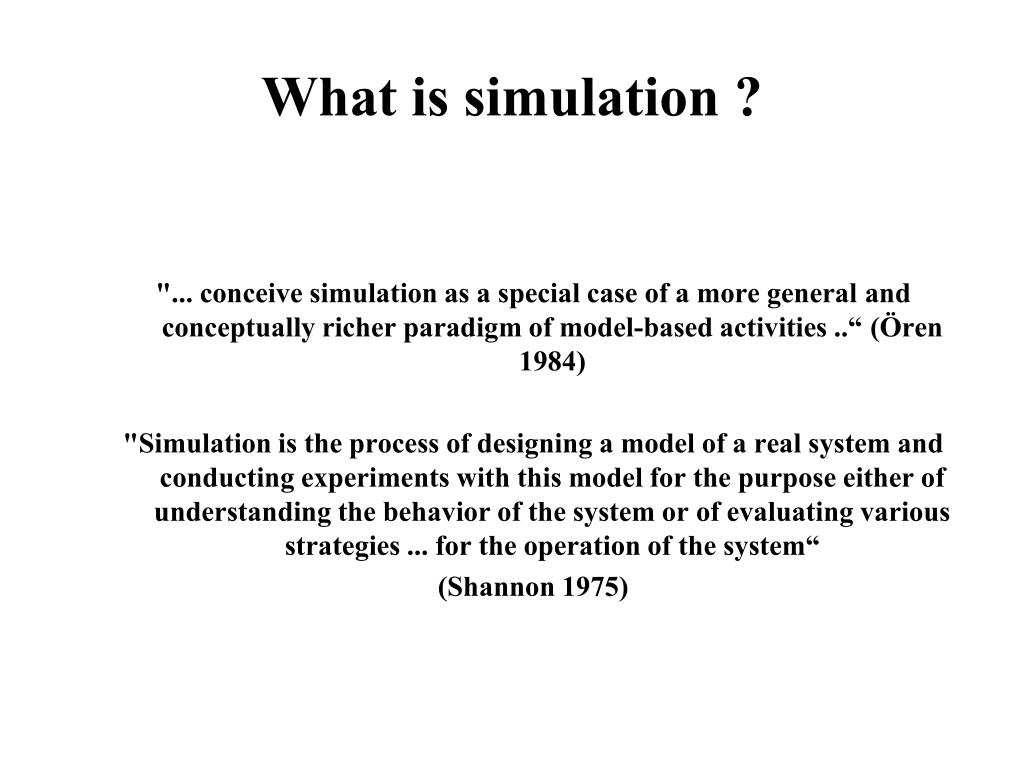
The term “simulation” has permeated our discourse, from casual conversations about video games to complex scientific endeavors. At its core, a simulation is a powerful tool, a digital or physical model designed to mimic the behavior of a real-world system or process. It allows us to explore, understand, and even predict outcomes without directly interacting with the original subject. In the realm of technology, simulations are not just theoretical constructs; they are foundational to innovation, driving advancements across diverse fields and shaping the very way we interact with the digital and physical worlds.
This exploration delves into the multifaceted nature of simulations within the technological landscape, examining their fundamental principles, diverse applications, and the transformative impact they are having on how we design, develop, and deploy technology. From the intricate algorithms that power our favorite games to the sophisticated models that guide the development of self-driving cars, simulations are an indispensable component of modern technological progress.

The Core Principles of Simulation
At its heart, a simulation is an approximation. It’s an attempt to capture the essential dynamics of a system in a way that is manageable and insightful. This requires a careful balance between fidelity and computational feasibility. The goal is not to replicate reality perfectly, which is often impossible and computationally prohibitive, but to create a model that exhibits key behaviors and allows for meaningful analysis.
Modeling the Real World
The first step in creating a simulation is developing a model. This model can take many forms, from mathematical equations and statistical distributions to graphical representations and agent-based systems. The choice of model depends heavily on the system being simulated and the specific questions being asked. For instance, simulating the aerodynamics of an aircraft requires a different modeling approach than simulating the spread of a virus.
Key considerations in model building include identifying the relevant variables, defining their relationships, and determining the parameters that govern their behavior. A good model is parsimonious, meaning it includes only the necessary elements to capture the phenomena of interest. Overly complex models can become unwieldy and computationally expensive, while overly simplistic ones may fail to provide accurate or useful insights.
The Role of Algorithms and Data
Once a model is established, algorithms are employed to drive the simulation. These algorithms dictate how the system evolves over time, how different components interact, and how external factors are incorporated. In many modern simulations, especially those involving complex systems, data plays a crucial role. This data can be historical, experimental, or even generated by other simulations. It serves to calibrate the model, validate its outputs, and inject realism into the simulated environment.
For example, in training artificial intelligence for image recognition, vast datasets of labeled images are used to train models that can then be tested and refined through simulated scenarios. The accuracy and relevance of this data directly impact the effectiveness of the simulation and, consequently, the performance of the AI system. The development of sophisticated algorithms, coupled with access to massive datasets, has been a major catalyst for the increasing prevalence and power of simulations.
Validation and Verification
A critical aspect of any simulation is ensuring its trustworthiness. This involves two key processes: verification and validation.
Verification: Is the Model Built Correctly?
Verification focuses on ensuring that the simulation has been implemented correctly according to the intended model. It asks the question: “Are we building the model right?” This involves rigorous testing of the code, checking for bugs, and ensuring that the mathematical or logical constructs are accurately translated into the simulation’s execution. Techniques like unit testing, integration testing, and code reviews are essential for verification.
Validation: Is the Model Built Appropriately?
Validation, on the other hand, addresses the question: “Are we building the right model?” This process involves comparing the simulation’s outputs to real-world data or expert judgment. If the simulation’s predictions align with observed reality, then the model is considered validated for its intended purpose. If discrepancies arise, it suggests that the model may need refinement, or the underlying assumptions may be flawed. Validation is an ongoing process, as systems evolve and new data becomes available.
Diverse Applications of Simulations in Technology
The power of simulation lies in its adaptability. It has found its way into nearly every facet of technological development, offering solutions to complex problems and enabling breakthroughs that would otherwise be impossible.
Gaming and Entertainment
Perhaps the most visible application of simulations is in the gaming industry. Video games are, in essence, complex simulations of virtual worlds, governed by intricate physics engines, AI-driven characters, and dynamic environmental interactions. These simulations provide immersive experiences, allowing players to explore fantastical realms, engage in strategic combat, or even manage virtual economies. The continuous advancement in graphics, processing power, and AI has led to increasingly realistic and engaging simulated environments, pushing the boundaries of interactive entertainment.
Beyond traditional gaming, simulations are integral to the development of augmented reality (AR) and virtual reality (VR) experiences. These technologies rely heavily on creating believable simulated environments that users can interact with, blurring the lines between the digital and physical. The fidelity of these simulations is paramount to their success, influencing user immersion and the overall effectiveness of the experience.
Engineering and Design
In engineering and design, simulations are indispensable for prototyping, testing, and optimizing products before they are ever physically manufactured. This drastically reduces costs, speeds up development cycles, and minimizes risks associated with physical prototypes.
Product Development and Testing
Engineers use simulations to test the structural integrity of bridges, the aerodynamics of aircraft, the performance of engine components, and the safety of automotive designs. Finite Element Analysis (FEA) and Computational Fluid Dynamics (CFD) are powerful simulation techniques widely used in these fields. For instance, before a new car model goes into production, simulations can predict how it will perform in a crash, how its fuel efficiency will fare under various conditions, and how its components will withstand wear and tear. This allows engineers to identify and rectify potential design flaws early in the development process.
Urban Planning and Architecture
Simulations are also revolutionizing urban planning and architecture. Digital twins, which are virtual replicas of physical assets, systems, or processes, allow city planners and architects to simulate the impact of new infrastructure, traffic flow, energy consumption, and environmental factors. This enables more informed decision-making, leading to more sustainable, efficient, and livable urban environments. Simulating how sunlight will interact with a building throughout the day or how a new public transport system will affect traffic patterns are common applications.
Scientific Research and Discovery
Scientific exploration heavily relies on simulations to model complex phenomena, test hypotheses, and generate new insights. From understanding the behavior of subatomic particles to modeling the vastness of the universe, simulations are powerful tools for scientific advancement.
Climate Modeling and Environmental Science
Climate scientists use sophisticated simulations to model the Earth’s climate system, predict future climate change scenarios, and assess the impact of various human activities. These simulations take into account numerous variables such as atmospheric composition, ocean currents, solar radiation, and land surface processes. While inherently complex and subject to uncertainties, these models are crucial for informing policy decisions and developing strategies to mitigate climate change.
Medical Research and Drug Development
In the medical field, simulations are accelerating drug discovery and development. Researchers can simulate how potential drug molecules will interact with biological targets, predict their efficacy and potential side effects, and optimize dosages. This reduces the need for costly and time-consuming laboratory experiments. Furthermore, simulations are used to train surgeons on complex procedures using realistic anatomical models, improving patient safety and surgical outcomes.
Artificial Intelligence and Machine Learning
The field of Artificial Intelligence (AI) and Machine Learning (ML) is intrinsically linked to simulations. In fact, simulations are often the proving ground for AI algorithms.
Training AI Agents
AI agents, whether they are designed to play chess, navigate a robot, or drive a car, are often trained in simulated environments. This allows them to learn from a vast number of experiences without the risks and costs associated with real-world training. For example, AI systems for autonomous vehicles are trained on billions of miles of simulated driving data, encountering a wide range of traffic scenarios, weather conditions, and potential hazards. This allows them to develop robust decision-making capabilities before being deployed in the real world.
Reinforcement Learning
Reinforcement learning, a prominent paradigm in AI, heavily relies on simulated environments where an agent learns to achieve a goal through trial and error, receiving rewards or penalties based on its actions. The ability to create highly customizable and repeatable simulated environments is crucial for efficiently training reinforcement learning agents across a wide spectrum of tasks.
The Future of Simulations in Technology
The trajectory of simulations in technology is one of increasing sophistication, accessibility, and impact. As computational power continues to grow exponentially and AI techniques become more advanced, the capabilities of simulations will expand significantly.
Enhanced Realism and Fidelity
Future simulations will likely exhibit unprecedented levels of realism and fidelity. Advancements in computing power, particularly with the advent of quantum computing and specialized AI hardware, will enable simulations of previously intractable complexity. This will lead to more accurate predictions, more immersive virtual experiences, and more profound scientific discoveries. We can anticipate simulations that can model biological processes at the molecular level with incredible detail or that can replicate entire ecosystems with a high degree of accuracy.
Democratization of Simulation Tools
While once the domain of specialized researchers and large corporations, simulation tools are becoming increasingly accessible. User-friendly interfaces, cloud-based platforms, and open-source software are empowering a wider range of users, from students and small businesses to individual creators, to leverage the power of simulation. This democratization will foster innovation and lead to novel applications of simulation across various sectors. Imagine a student being able to simulate complex chemical reactions for a science project or a small business owner simulating customer flow for their retail store.
The Rise of Digital Twins
The concept of digital twins, as mentioned earlier, will become even more pervasive. These dynamic virtual replicas of physical assets will not only be used for design and testing but will also become integral to the ongoing operation and maintenance of systems. Imagine a digital twin of a city that constantly updates with real-time data, allowing for predictive maintenance of infrastructure, optimized energy grids, and proactive management of public services. Similarly, digital twins of individual products can monitor their performance in the field, predict potential failures, and even remotely optimize their operation.

Ethical Considerations and Challenges
As simulations become more powerful and integrated into our lives, ethical considerations and challenges will inevitably arise. The ability to create hyper-realistic simulations raises questions about the nature of reality and the potential for deception. The use of simulations in training AI, particularly in critical applications like autonomous vehicles or defense systems, necessitates careful consideration of bias, fairness, and safety. Ensuring the robustness and ethical deployment of these advanced simulation technologies will be a paramount concern for technologists, policymakers, and society as a whole. The responsible development and application of simulation technologies will be key to harnessing their full potential for positive impact.
aViewFromTheCave is a participant in the Amazon Services LLC Associates Program, an affiliate advertising program designed to provide a means for sites to earn advertising fees by advertising and linking to Amazon.com. Amazon, the Amazon logo, AmazonSupply, and the AmazonSupply logo are trademarks of Amazon.com, Inc. or its affiliates. As an Amazon Associate we earn affiliate commissions from qualifying purchases.