
The pursuit of advanced academic opportunities often leads students to consider Advanced Placement (AP) courses. These college-level classes offer the potential for college credit, a more rigorous academic experience, and the development of valuable skills. However, the perception of AP courses can be daunting, with many students wondering which might be the “easiest” to tackle. This article delves into the nuances of AP course difficulty, reframing the concept of “easy” not as a lack of rigor, but as accessibility, manageability, and a strong correlation with student aptitude and prior knowledge. We will explore categories of AP courses that are frequently cited as more approachable, focusing on how to identify them and the strategic considerations involved in selecting one that aligns with individual strengths.
Understanding the Spectrum of AP Course Difficulty
The notion of an “easy” AP class is subjective and highly dependent on individual student strengths, learning styles, and prior academic preparation. What one student finds straightforward, another might find challenging. However, we can identify certain characteristics and subject areas that tend to be more accessible to a broader range of students. This accessibility isn’t about a lack of depth or college-level thinking, but rather about the foundational knowledge required, the nature of the assessment, and the learning curve involved.
Defining “Easy” in the AP Context
It’s crucial to clarify what we mean by “easy” when discussing AP courses. It is not about minimal effort or a lack of intellectual challenge. Instead, “easy” can be interpreted as:
- Lower Foundational Knowledge Barrier: Courses that require less specialized prior knowledge, building upon general academic skills rather than deep dives into specific, niche subjects.
- Objective Assessment Components: While all AP exams have subjective elements, some have a greater proportion of multiple-choice questions or assessments that are more directly graded based on recall and application of learned material, rather than extensive essay writing or complex problem-solving in a time crunch.
- Strong Correlation with Standardized Testing: Students who perform well on standardized tests like the SAT or ACT in certain areas may find the corresponding AP subjects more manageable.
- Abundant Study Resources: Subjects with a wealth of readily available study guides, practice materials, and online resources can significantly ease the learning process.
- Relatability and Everyday Application: Courses whose concepts can be more easily related to everyday experiences or are intuitively understood can feel less abstract and thus more accessible.
Common Misconceptions About AP Difficulty
Many students and parents operate under misconceptions about AP course difficulty. It’s important to dispel these:
- “Humanities are always easier than STEM”: While some humanities courses might have a lower math/science barrier, they often demand significant reading comprehension, analytical writing, and essay-writing skills, which can be challenging for some.
- “Multiple Choice means easy”: AP multiple-choice sections are notoriously challenging, designed to test deep understanding and critical thinking, not just memorization.
- “If I don’t major in it, it’s easy”: Even if a subject isn’t a student’s intended college major, an AP course in that area can still be demanding if the student lacks the foundational skills or interest.
AP Courses Frequently Cited for Accessibility
While “easy” is relative, certain AP courses consistently appear on lists of more approachable options for many students. These often fall into categories that leverage strong reading, writing, or general analytical skills, or those with a more concrete and less abstract curriculum.
The Social Sciences: Broad Appeal and Analytical Foundations
Several AP Social Science courses are often considered more accessible due to their reliance on critical thinking, reading, and general analytical skills, which are often developed throughout a student’s high school career.
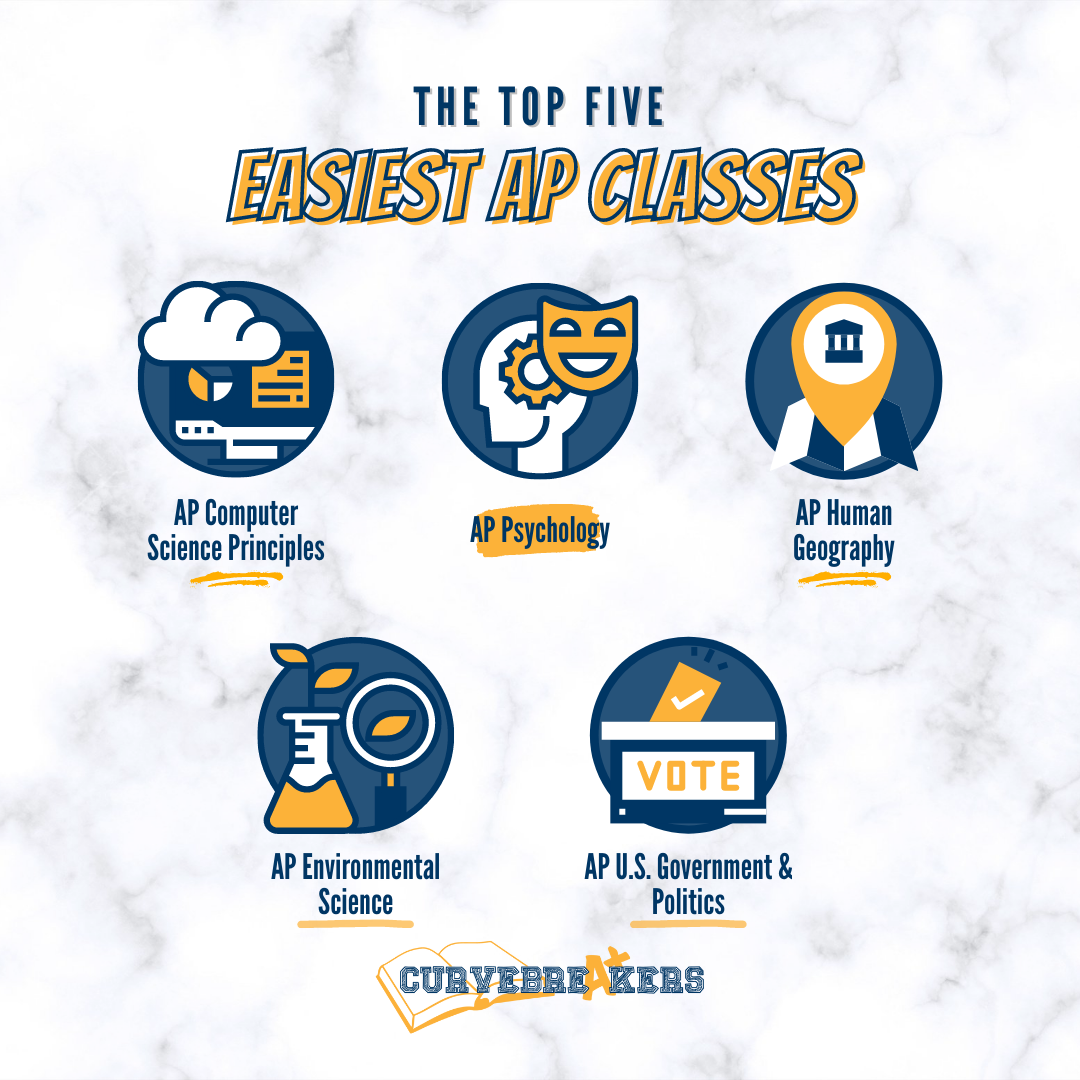
AP Human Geography
AP Human Geography is frequently cited as one of the most accessible AP courses. Its curriculum focuses on the spatial organization of human activities and the global patterns and processes that shape our world.
- Key Concepts: Understanding concepts like population distribution, cultural diffusion, economic development, and political organization.
- Skills Developed: Reading and interpreting maps, analyzing data, understanding spatial relationships, and developing analytical reasoning.
- Assessment Style: The exam typically includes multiple-choice questions that test understanding of key terms and concepts, and free-response questions that require students to apply geographic principles to scenarios. The content is often relatable to current events and observable phenomena.
AP Psychology
AP Psychology delves into the scientific study of the mind and behavior. It covers a broad range of topics, from the biological bases of behavior to cognition, development, and social psychology.
- Key Concepts: Learning theories, memory, motivation, personality, psychological disorders, and therapeutic approaches.
- Skills Developed: Memorization of terminology, understanding of research methodologies, and application of psychological principles to real-world situations.
- Assessment Style: The exam has a significant multiple-choice component that assesses recall of definitions and theories, alongside free-response questions that require students to explain concepts and apply them to given scenarios. Many students find the subject matter inherently interesting and relatable, which aids in learning.
AP United States Government and Politics
This course examines the U.S. system of government, including its institutions, political processes, and the underlying principles of American democracy.
- Key Concepts: The Constitution, branches of government, political parties, interest groups, civil liberties, and civil rights.
- Skills Developed: Understanding of governmental structures, analysis of political behavior, and interpretation of primary source documents.
- Assessment Style: The exam includes multiple-choice questions testing knowledge of facts and concepts, and free-response questions that require students to analyze governmental structures, explain policy, and use evidence to support arguments. Familiarity with civics and current events can provide a strong foundation.
The Arts and Language: Communication and Creative Expression
For students with a talent for language, creative thinking, or an aptitude for structured artistic principles, certain AP courses in these areas can be more manageable.
AP English Language and Composition
This course focuses on the development of argumentative and analytical writing skills, as well as rhetorical analysis of various texts.
- Key Concepts: Rhetorical devices, argumentation, synthesis of sources, and analysis of tone and style.
- Skills Developed: Advanced reading comprehension, sophisticated essay writing, critical analysis of persuasive techniques, and the ability to synthesize information from multiple sources.
- Assessment Style: The exam features multiple-choice questions focused on reading comprehension and rhetorical analysis, and free-response questions requiring argumentative essays and synthesis of provided documents. Students with strong reading and writing abilities from general English classes often find this course a natural progression.
AP Studio Art (Drawing, 2-D Design, 3-D Design)
AP Studio Art courses are project-based and portfolio-driven, allowing students to develop and showcase their artistic skills and conceptual thinking over the course of the year.
- Key Concepts: Principles of design, color theory, composition, and artistic processes specific to the chosen concentration (drawing, 2-D, or 3-D).
- Skills Developed: Artistic technique, visual problem-solving, critical self-evaluation, and the ability to articulate artistic intent.
- Assessment Style: The AP exam involves submitting a portfolio of student work, including a sustained investigation, creation of original works, and demonstration of mastery of technique. The “easiness” here is highly dependent on a student’s passion, dedication to artistic practice, and inherent talent in their chosen medium. The continuous project-based nature can be less stressful than a single high-stakes exam for some.
Strategic Considerations for Choosing Your “Easiest” AP Class
Selecting an AP course based on perceived ease requires a strategic approach that goes beyond simply looking at pass rates or anecdotal evidence. It involves self-assessment, understanding course demands, and leveraging available resources.
Self-Assessment: Aligning with Your Strengths and Interests
The most crucial step in identifying a manageable AP course is honest self-reflection. Consider:
- Academic Strengths: Are you a strong reader and writer? Do you excel at memorization and recall? Are you adept at logical reasoning and problem-solving?
- Interests and Passions: What subjects genuinely excite you? Learning is significantly easier and more engaging when you are intrinsically motivated. An AP course in a subject you love, even if it has a reputation for being challenging, might feel more manageable than a “known easy” course in a subject you dislike.
- Prior Academic Performance: Review your grades and performance in related subjects. If you consistently struggled with a particular type of content or skill in previous courses, an AP course demanding those same skills might be a poor choice.
Researching Course Demands and Assessment Styles
Once you’ve identified potential areas of strength, dive deeper into the specific AP courses:
- Review the AP Course Description: The College Board provides detailed outlines of each AP course, including learning objectives, topics covered, and the structure of the AP exam. This is invaluable for understanding the scope and rigor.
- Analyze the AP Exam Format: Pay close attention to the weighting of multiple-choice questions versus free-response questions. Understand the types of free-response questions (e.g., document-based questions, argumentative essays, data analysis).
- Talk to Current Students and Teachers: Seek out students who have taken the AP courses you’re considering, as well as the teachers who teach them. Their insights into the day-to-day workload, the difficulty of specific units, and the overall exam preparation can be incredibly informative.
Leveraging Study Resources and Teacher Support
Even the most “accessible” AP courses benefit from effective study strategies and resources.
- Utilize Official College Board Resources: The College Board offers practice questions, past exams (where available), and detailed syllabi that are essential for preparation.
- Invest in Reputable Study Guides: Companies like Barron’s, Princeton Review, and Kaplan offer comprehensive AP study guides that condense material, provide practice tests, and offer test-taking strategies.
- Form Study Groups: Collaborating with peers can enhance understanding, provide different perspectives, and create accountability.
- Maximize Teacher Support: Your AP teacher is your primary resource. Attend all classes, ask questions, seek clarification on challenging topics, and take advantage of any review sessions offered.
The True Value of an AP Course: Beyond “Easy”
Ultimately, the pursuit of an AP course, regardless of its perceived difficulty, should be about more than simply checking a box or seeking the path of least resistance. The true value lies in the intellectual growth, the development of critical thinking and study habits, and the preparation for future academic endeavors.
Building Foundational Skills for College and Beyond
Even AP courses labeled as more “accessible” demand a higher level of critical thinking, analytical reasoning, and time management than typical high school courses. These are precisely the skills that are crucial for success in college and in many professional fields. Mastering these skills within the structured environment of an AP class provides a significant advantage.
The Motivational Power of Success
While avoiding overwhelming difficulty is wise, choosing a course that aligns with your strengths and interests can lead to a more positive and rewarding learning experience. Achieving success in an AP course, even one that requires effort, can boost confidence and foster a greater appreciation for academic achievement. This positive reinforcement can motivate students to tackle more challenging subjects in the future.

Broadening Academic Horizons and Exploring Interests
AP courses offer a unique opportunity to explore subjects in greater depth than is typically possible in standard high school curricula. This exploration can help students discover new academic interests, clarify potential college majors, and develop a more well-rounded understanding of the world. Even if a course doesn’t become a primary focus in college, the knowledge and skills gained can be universally applicable.
In conclusion, while the question of “what’s the easiest AP class” is a valid starting point for many students, the most effective approach is to reframe it as “what AP class is the most accessible and best aligned with my strengths and interests?” By conducting thorough self-assessment, researching course demands, and leveraging available resources, students can strategically select an AP course that offers a manageable yet enriching academic challenge, setting them on a path for success in their academic journey.
aViewFromTheCave is a participant in the Amazon Services LLC Associates Program, an affiliate advertising program designed to provide a means for sites to earn advertising fees by advertising and linking to Amazon.com. Amazon, the Amazon logo, AmazonSupply, and the AmazonSupply logo are trademarks of Amazon.com, Inc. or its affiliates. As an Amazon Associate we earn affiliate commissions from qualifying purchases.